New Tank Setup Guide: Start Your Saltwater Aquarium the Right Way
Setting up a new saltwater tank is one of the most exciting parts of the hobby. It’s also the stage where good planning prevents months of frustration. This New Tank Setup Guide walks you through the key steps—from choosing equipment to starting the nitrogen cycle—so your first reef or fish-only system has the best possible start.
1. Planning Your New Saltwater Tank
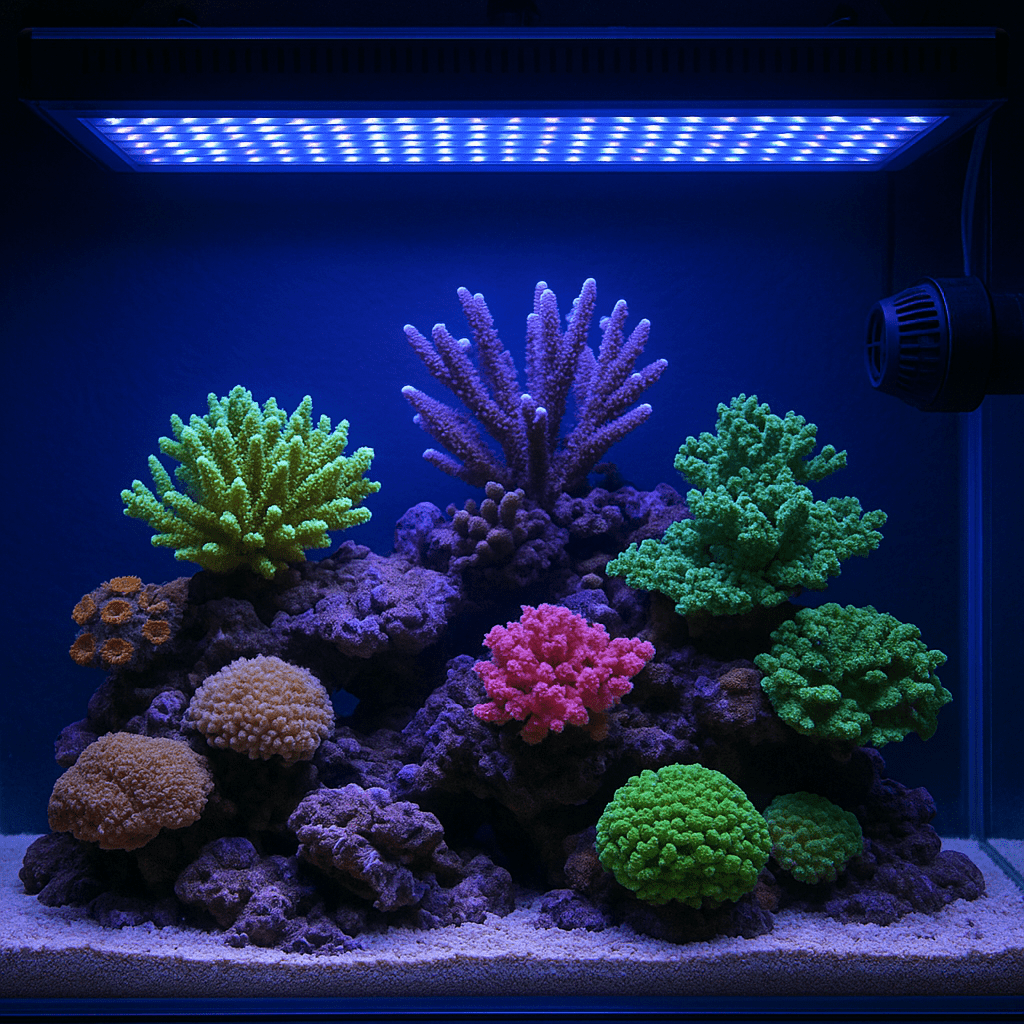
Before you buy equipment, decide what you want to keep. A fish-only-with-live-rock (FOWLR) system has different needs than a mixed reef packed with corals.
Consider these planning points:
- Tank size: 40–75 gallons is ideal for beginners—more stable than nanos, but still manageable.
- Location: Keep the tank away from direct sunlight, heat vents, and high-traffic areas. Ensure there’s a grounded outlet nearby.
- Budget: Account for the tank, stand, salt mix, test kits, rock, sand, and livestock over several months.
If you’re still comparing options, read our Choosing Your First Saltwater Tank guide for help picking the right size and style.
2. Essential Equipment and Setup Steps
Tank, Filtration, and Flow
For most new hobbyists, a standard glass tank with an internal overflow or a quality hang-on-back filter is a solid start. Aim for:
- Filtration: A reliable filter or sump with mechanical (filter socks or pads), biological (live rock or media), and optional chemical filtration (carbon, phosphate remover).
- Flow: 10–20x tank volume per hour using powerheads or wavemakers to prevent dead spots.
- Heater: A properly sized, adjustable heater and a thermometer to maintain 77–79°F (25–26°C).
Rock, Sand, and Saltwater
Live rock or dry rock is the biological backbone of your system. Plan on 0.5–1 pound of rock per gallon. A shallow sandbed of 1–2 inches of aragonite sand works well for most setups.
- Rinse dry sand in RO/DI water to reduce cloudiness.
- Aquascape your rock before adding water so structures are stable and secure.
- Mix saltwater in a separate container using RO/DI water and a quality salt mix, aiming for 1.025 specific gravity.
For detailed water-mixing tips, see our How to Mix Saltwater for a Reef Tank tutorial.
3. Cycling Your New Tank and Adding Livestock
The Nitrogen Cycle
Once the tank is full of saltwater with rock and sand in place, it’s time to start the nitrogen cycle. This is when beneficial bacteria establish themselves and make the tank safe for fish and inverts.
Never rush the cycle. A few extra weeks of patience at the start can save you from algae blooms, sick fish, and coral losses later.
Common cycling methods include:
- Fishless cycling: Add a bottled ammonia source and a bacterial starter, then test regularly.
- Live rock cycling: Using high-quality live rock can shorten the cycle, but still requires testing.
Use test kits to monitor ammonia, nitrite, and nitrate. The cycle is complete when ammonia and nitrite read zero and nitrate is present.
First Livestock and Ongoing Care
Start with a small, hardy cleanup crew (snails, hermits) and one or two beginner-friendly fish. Quarantine when possible and avoid adding multiple fish at once. Feed lightly and perform regular 10–20% weekly water changes to keep nutrients under control.
As your tank matures, you can slowly add more fish and, if desired, beginner corals like softies and LPS. For stocking ideas and compatibility, check out our Beginner Saltwater Fish Stocking List.
Conclusion
A successful new tank setup is all about planning, stable equipment, and patience during the cycle. By choosing an appropriate tank size, building a solid filtration and rock base, and adding livestock slowly, you’ll create a healthy, stable environment that can grow with you as your reef-keeping skills improve. Take your time, test often, and enjoy watching your new saltwater world come to life.
Sources
- Fenner, R. (2001). The Conscientious Marine Aquarist. Microcosm.
- Sprung, J., & Delbeek, J. C. (1994–2005). The Reef Aquarium Vol. 1–3. Ricordea Publishing.
- Holmes-Farley, R. (2007). Reef chemistry articles. Advanced Aquarist Archives.
Was this helpful?
Related Posts
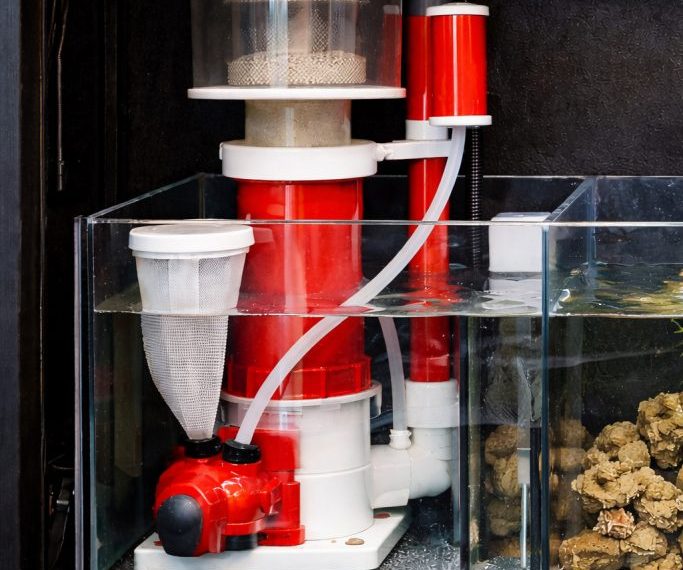
Protein Skimmer Reef Tank Guide
Learn how a protein skimmer works, how to size one, and how to tune it for a cleaner,…
 By
By
Reef Aquarium Water Parameters
Learn the ideal reef aquarium water parameters, safe ranges, and how to keep salinity, alkalinity, nutrients, and pH…