

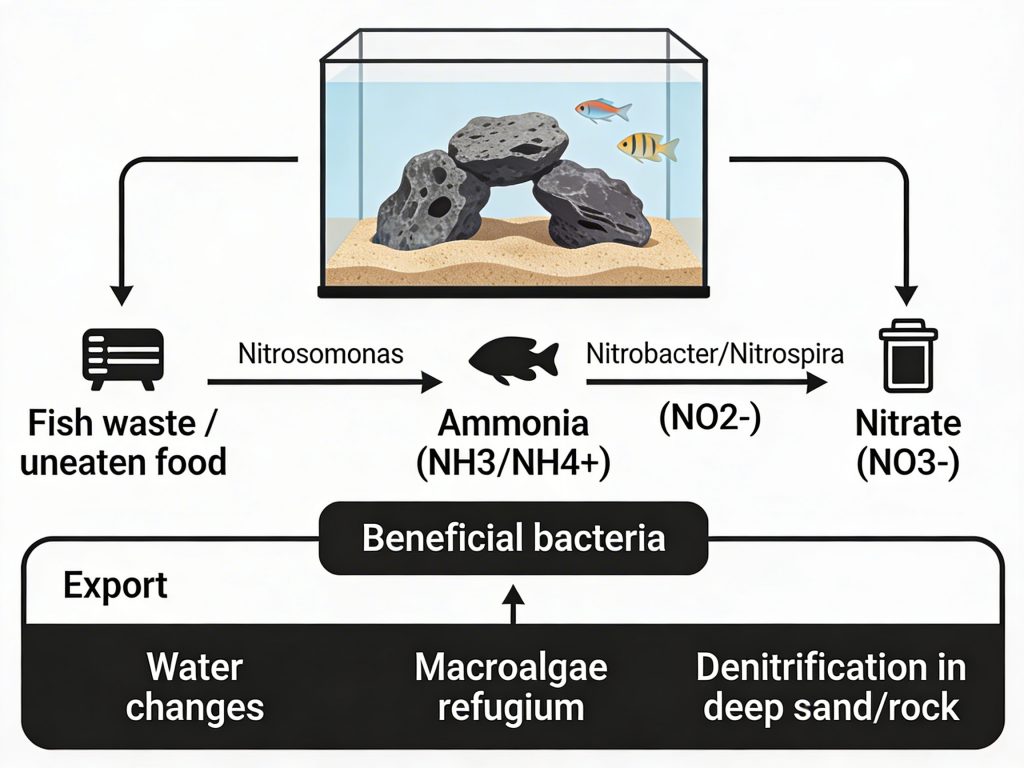
The nitrogen cycle in saltwater aquariums turns toxic fish waste into safer compounds. It is the foundation of every stable reef tank. When you understand how it works, you can cycle a new aquarium correctly, avoid common mistakes, and keep fish and corals healthier long term.
Many reef problems start with poor biological filtration. Ammonia spikes, stressed fish, cloudy water, and nuisance algae often trace back to an immature or disrupted cycle. In this guide, you will learn what the nitrogen cycle is, how beneficial bacteria process waste, how to cycle a marine tank step by step, and how to troubleshoot problems before they become disasters. Whether you are starting your first reef or improving an established system, mastering this process will make every other part of reef keeping easier.
Quick Reference Table
| Stage | What Happens | Why It Matters | Target Reading |
|---|---|---|---|
| Ammonia | Waste, uneaten food, and decay release ammonia | Highly toxic to fish and invertebrates | 0 ppm |
| Nitrite | Bacteria convert ammonia into nitrite | Still toxic, though less dangerous in saltwater | 0 ppm |
| Nitrate | Bacteria convert nitrite into nitrate | Safer, but builds up over time | Ideally under 10–20 ppm in reefs |
| Export | Water changes, macroalgae, and filtration remove nitrate | Prevents algae and long-term stress | Stable and low |
This table gives you the short version. The details matter, though. Reef tanks depend on stable bacteria populations. Those bacteria live on rock, sand, filter media, and every hard surface in the system. The more stable your tank conditions are, the more reliable your biological filtration becomes.
What Is the Nitrogen Cycle?
The nitrogen cycle is the natural process that breaks down waste in your aquarium. Fish release waste constantly. Uneaten food also decays. Dead algae, dying bacteria, and other organics add more waste. That waste first becomes ammonia. Ammonia is extremely dangerous, even at low levels.
Beneficial nitrifying bacteria then consume ammonia and convert it into nitrite. Nitrite is also toxic. Another group of bacteria converts nitrite into nitrate. Nitrate is much less toxic than ammonia or nitrite, but it still needs control. High nitrate can stress corals, fuel nuisance algae, and reduce color and growth.
In simple terms, the cycle moves waste from very toxic to less toxic. Your job is to provide enough surface area and stable conditions for those bacteria to thrive. Live rock, porous media, and oxygen-rich flow all help. This is why reef keepers often say patience is the most important additive.
Why the Nitrogen Cycle Matters in Reef Tanks
Freshwater and saltwater tanks both rely on the nitrogen cycle. Reef tanks are less forgiving, though. Corals, shrimp, snails, and other invertebrates often react badly to even small ammonia spikes. Marine fish can also decline quickly when biological filtration is weak.
A properly cycled saltwater aquarium gives you a buffer against daily waste production. It helps fish breathe easier. It keeps corals from facing constant chemical stress. It also supports a healthier microbiome across the whole system.
Without a stable cycle, every feeding becomes risky. Every new fish adds pressure. Every dead snail becomes a possible ammonia event. This is why experienced reef keepers never rush the cycle. Fancy equipment helps, but mature biology matters more. A skimmer, filter socks, and reactors are useful tools. None of them replace beneficial bacteria.
If you are building a reef from scratch, read our guides on how to start a reef tank and reef tank water parameters after this article.
How Beneficial Bacteria Work
Beneficial bacteria need three main things. They need a food source, oxygen, and surface area. In a marine aquarium, their food source is waste. Their oxygen comes from strong gas exchange and water movement. Their home is every porous surface in the tank.
Live rock is the classic biological filter in saltwater systems. It provides huge surface area. Dry rock also works well once bacteria colonize it. Sand beds support bacteria too, though they should not be your only filtration base in most modern reef tanks.
Canister media, ceramic blocks, sponge filters, and sump biomedia can all support nitrifying bacteria. The key is consistency. If you scrub all media at once, let it dry out, or expose it to untreated tap water, you can damage the bacterial colony. That can weaken the cycle and cause a mini-cycle.
Bacteria also grow slowly compared with the waste load from new fish. That is why adding livestock too fast often causes trouble. Your tank can only process the waste its bacteria population can handle today, not what you hope it can handle next week.
Step-by-Step: How to Cycle a Saltwater Aquarium
There are several ways to cycle a tank. The safest modern method uses an ammonia source and bottled bacteria. It is predictable and avoids exposing fish to toxic conditions.
- Set up the aquarium fully. Add saltwater, heater, flow, rock, and filtration.
- Bring salinity and temperature to stable reef levels before starting.
- Add a measured ammonia source. Pure ammonium chloride works best.
- Add a trusted bottled bacteria product if you choose to use one.
- Test ammonia, nitrite, and nitrate every few days.
- Wait for ammonia to rise, then fall to zero.
- Watch nitrite appear, then drop to zero as well.
- Confirm nitrate is present. This shows the process is working.
- Redose a small amount of ammonia to verify the tank can process it within 24 hours.
- Perform a water change if nitrate is high before adding livestock.
This process usually takes a few weeks. Some tanks cycle faster. Some take longer. Dry rock systems often need more patience than systems started with high-quality live rock. Avoid adding fish before ammonia and nitrite both test at zero. That single choice prevents many beginner losses.
If you want a deeper setup guide, see reef tank cycling guide.
What You Need to Test During the Cycle
Testing is how you know whether the cycle is progressing. Do not guess. Use reliable test kits and write results down. At minimum, test ammonia, nitrite, and nitrate. Salinity and temperature should also stay stable throughout the process.
Ammonia should rise first. Then it should fall as bacteria establish. Nitrite usually appears next. Then nitrate rises as the final product. Once ammonia and nitrite both hit zero, your biological filter is becoming functional. In reef systems, nitrate should then be managed with water changes, macroalgae, deep export methods, or careful feeding.
Many hobbyists also test pH and alkalinity during cycling. Low pH can slow bacterial activity. Good aeration helps. Stable alkalinity also supports overall system stability. If you are using cured live rock, the cycle may be mild. If you are using dry rock and dead sand, expect a more obvious progression.
Natural Habitat and Why It Helps to Think Like Nature
In the ocean, waste does not build up in a small glass box. Reefs have massive water volume, constant flow, oxygen exchange, and endless microbial surfaces. Waste is diluted and processed across rock, sand, algae, and plankton-rich environments. Your aquarium is a tiny closed system by comparison.
That is why overfeeding causes trouble so quickly in marine tanks. Nature has scale. Your aquarium does not. Understanding this helps you make better choices. Feed lightly. Stock slowly. Maintain strong flow. Use porous rock. Export nutrients before they accumulate. The goal is not to copy the ocean perfectly. That is impossible. The goal is to build a stable miniature ecosystem that processes waste efficiently.
This mindset also explains why live rock and refugiums are so effective. They create more habitat for the tiny organisms that keep the tank balanced.
Aquarium Setup for a Strong Nitrogen Cycle
Good setup choices make cycling easier and long-term maintenance simpler. Start with enough rock. Most reef tanks benefit from porous aquascape that allows flow around and through the structure. Avoid stacking rock into a dense wall. Dead spots trap waste and reduce oxygen.
A sump adds water volume and room for biomedia. It also improves gas exchange and equipment options. Filter socks and roller mats remove solids, but they do not replace biological filtration. Protein skimmers help reduce organic waste before it breaks down. They support the cycle indirectly.
Sand can be decorative and useful, but keep it clean. Dirty sand beds can trap detritus and release nutrients later. Moderate flow helps suspend waste so filtration can remove it. Stable salinity is also critical. Sudden swings stress fish and bacteria alike. For more on system design, check best live rock for reef tanks.
Common Problems
Why is my tank stuck with ammonia?
This usually means the bacterial colony is still immature, the ammonia dose was too high, or something is inhibiting bacteria. Check temperature, salinity, and pH. Make sure the tank has strong circulation and oxygen. Avoid overdosing ammonia. Some medications and untreated tap water can also interfere with the process.
Why is nitrite taking so long to drop?
Nitrite often lingers longer than ammonia. This is common in new marine tanks. Be patient and keep testing. Do not add fish just because ammonia is zero. Wait for nitrite to finish falling too. Bottled bacteria can help, but time is still the main factor.
Can I do water changes during cycling?
Yes, but only when needed. If ammonia was overdosed or nitrate becomes very high, a water change is useful. Small changes do not ruin the cycle. The bacteria live on surfaces, not in the water column. Just avoid making constant changes that interrupt your ability to read the process clearly.
What causes a mini-cycle in an established tank?
Large livestock additions, dead animals, overcleaning biomedia, power outages, medication use, or major rock disturbance can all trigger a mini-cycle. Watch for cloudy water, stressed fish, and rising ammonia. Add fresh carbon, increase aeration, reduce feeding, and test immediately.
Why do I have nitrate if the tank is cycled?
That is normal. A cycled tank converts waste into nitrate. The next challenge is nutrient export. Water changes, macroalgae refugiums, media reactors, careful feeding, and regular maintenance all help keep nitrate in range.
Frequently Asked Questions
How long does a saltwater tank take to cycle?
Most tanks take two to six weeks. Dry rock setups often take longer. Mature live rock can shorten the timeline.
Can I cycle a reef tank with fish?
It is possible, but not recommended. Fish-in cycling exposes animals to toxic ammonia and nitrite. Fishless cycling is safer and more humane.
Do corals help with the nitrogen cycle?
Corals can absorb some nutrients, but they do not replace nitrifying bacteria. A reef still needs mature biological filtration.
Should ammonia always be zero in a reef tank?
Yes. In a healthy established reef, ammonia should test at zero. Any detectable level needs quick investigation.
What is the safest way to add fish after cycling?
Add fish slowly. Start with one or two small fish. Feed lightly at first. Test ammonia after each addition. Quarantine is strongly recommended.
Final Thoughts
The nitrogen cycle is not just a startup phase. It is an ongoing process that supports every reef aquarium every day. When you respect that biology, your tank becomes more stable, more predictable, and easier to maintain. Cycle patiently, stock slowly, test often, and protect your beneficial bacteria. Those habits will save you money, prevent livestock losses, and set the stage for long-term reef success.
Was this helpful?
Related Posts
Juvenile Orange Shoulder (acanthurus Olivaceus)
Juvenile orange shoulder tangs are bright, hardy, and reef safe, but they grow large and need a spacious…
 By
By
Best Filtration Systems
Best Filtration Systems for a Healthy Saltwater Aquarium Choosing the best filtration system for your saltwater aquarium is…
[favorite_button]
My Bookmarks:
To see full list click here
[user_favorites user_id="" include_links="true" site_id="" post_types="" include_thumbnails="true" thumbnail_size="thumbnail" include_excerpt="false"]