

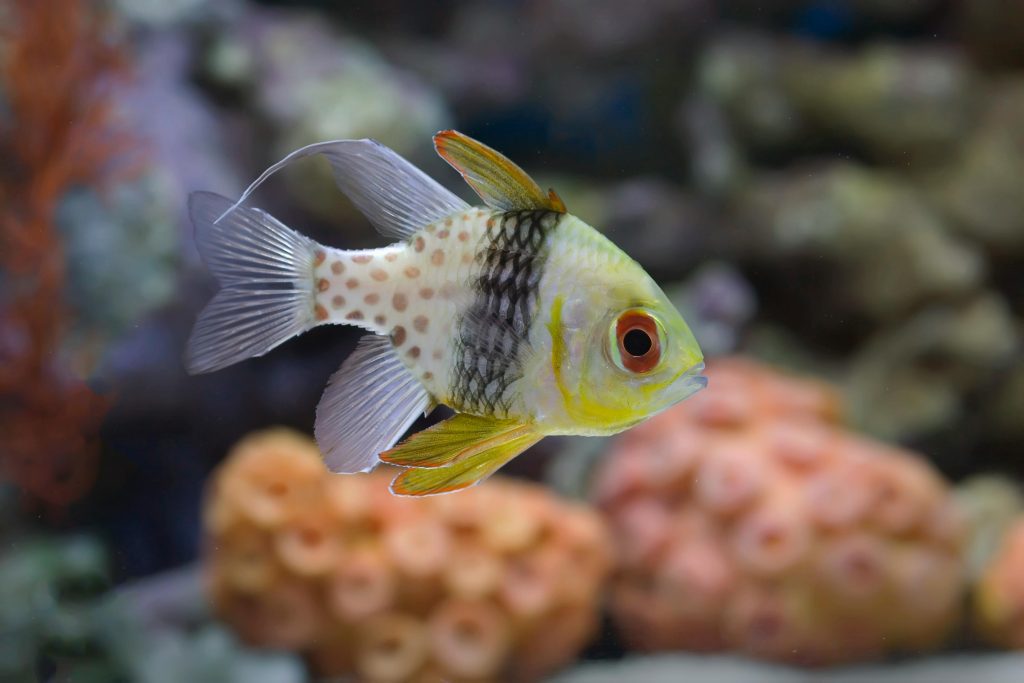
Pajama cardinalfish are peaceful, hardy reef fish with a striking spotted body and bright green-yellow accents. They suit beginner and intermediate reef keepers well, as long as you provide calm tankmates, stable water, and a gentle feeding routine.
In this guide, you will learn how to care for Sphaeramia nematoptera in a home reef aquarium. We will cover tank size, aquascaping, diet, behavior, compatibility, and common problems. You will also learn what makes this species different from other cardinalfish and how to keep a group successfully. Their unusual shape and calm nature make them a favorite in mixed reefs, nano reefs, and peaceful community systems.
Pajama Cardinalfish Quick Care Table
| Common name | Pajama Cardinalfish |
| Scientific name | Sphaeramia nematoptera |
| Care level | Easy |
| Temperament | Peaceful |
| Adult size | About 3 inches |
| Minimum tank size | 30 gallons for one or a pair |
| Diet | Carnivore |
| Reef safe | Yes |
| Ideal temperature | 76–80°F |
| pH | 8.1–8.4 |
| Salinity | 1.024–1.026 |
| Water flow | Low to moderate |
| Lighting | No special need |
This species is forgiving and adaptable. That makes it a strong choice for newer reef keepers. It also works well in established mixed reefs where aggressive fish are avoided.
Natural Habitat
Pajama cardinalfish come from the tropical Indo-Pacific. They are found around Indonesia, the Philippines, and nearby reef regions. In the wild, they often hover in calm areas near branching corals, sea urchins, and sheltered reef structure.
They are not strong open-water swimmers. Instead, they prefer protected spaces with cover nearby. During the day, they often remain in loose groups. They hover quietly and move only short distances. At dusk and night, they become more active and search for tiny crustaceans and planktonic foods.
This natural behavior explains their aquarium needs. They do best with caves, overhangs, and branching rockwork. They also appreciate a peaceful setting without constant chasing. If you understand where they live in nature, their care becomes much easier.
Aquarium Setup
A 30-gallon tank is a practical minimum for one fish or a bonded pair. A larger tank is better for a group. In groups, start with at least 55 gallons. Extra space helps reduce social stress and gives weaker fish room to avoid dominant individuals.
Build the aquascape with caves, arches, and shaded pockets. Branching rock structures work especially well. The fish like to hover beside cover rather than hide deep inside it. Leave some open water in the front and middle of the tank. They need room to hover and feed comfortably.
Stable water matters more than fancy equipment. Use a reliable heater, protein skimmer, and regular maintenance schedule. Keep ammonia and nitrite at zero. Keep nitrate low, though this species tolerates moderate nitrate better than many delicate reef fish. For more help with system planning, see: reef tank setup guide, saltwater aquarium cycling, reef aquarium maintenance schedule.
Water Parameters
Pajama cardinalfish are hardy, but they still need stable marine conditions. Aim for a temperature between 76 and 80 degrees Fahrenheit. Keep salinity between 1.024 and 1.026. A pH of 8.1 to 8.4 is ideal. Alkalinity should remain stable, especially in reef tanks with corals.
Sudden changes cause more trouble than slightly imperfect numbers. Avoid rapid salinity swings during top-off. Match temperature closely during water changes. Quarantine new fish whenever possible. This lowers disease risk and helps the fish begin feeding before entering the display.
Because cardinalfish are calm and slow-moving, they can suffer when housed in unstable tanks with aggressive feeders. Good water quality supports appetite, color, and immune function. If your fish stop eating, always test water first. Poor oxygen, rising nitrate, or pH swings can all trigger stress.
Lighting Requirements
This species has no demanding lighting needs. Pajama cardinalfish adapt well to low, moderate, or bright reef lighting. Their needs are driven more by security than by light intensity. In brightly lit tanks, they often seek shaded zones under ledges or beside coral colonies.
If your reef contains strong lighting for SPS or clams, that is usually fine. Just provide dimmer retreats. Overhangs, caves, and branching corals help them feel secure. In tanks with no shade, they may look washed out or remain hidden more often.
Use your coral lighting plan as the main guide. Design the rockwork so fish can choose brighter or darker areas. That simple choice reduces stress. It also lets the fish display more natural hovering behavior in the open.
Water Flow
Pajama cardinalfish prefer low to moderate flow. They are not built for constant high-energy current. In strong flow, they may struggle to hold position. This wastes energy and can reduce feeding success over time.
That does not mean the tank should be stagnant. Good circulation still matters for oxygen and filtration. The goal is varied flow. Create calmer pockets behind rockwork and around coral structures. Let stronger pumps serve the corals while sheltered zones serve the fish.
Watch how the fish hover. If they constantly lean into the current or hide in corners, flow may be too intense. If debris settles everywhere, flow may be too weak. A mixed-flow reef usually works best for this species.
Feeding
Pajama cardinalfish are carnivores. In nature, they eat zooplankton and tiny drifting prey. In aquariums, they usually accept frozen mysis shrimp, enriched brine shrimp, finely chopped seafood, and quality marine pellets. Many also learn to take flakes, though frozen foods are often accepted first.
Feed small portions once or twice daily. Slow feeders need time to eat. Fast tankmates can outcompete them easily. Target feeding with a turkey baster or feeding tube can help in busy community tanks. Rotate foods for better nutrition. Variety supports color, weight, and long-term health.
New arrivals sometimes refuse dry food. Start with frozen mysis or copepod-based foods. Once they feed reliably, mix in pellets slowly. Avoid overfeeding. Uneaten food raises nutrients and harms water quality. For nutrition basics, see: best foods for reef fish.
Compatibility
Pajama cardinalfish are reef safe and peaceful. They do well with clownfish, gobies, blennies, firefish, assessors, dartfish, and many peaceful wrasses. They usually ignore corals, shrimp, snails, and other common reef invertebrates.
Avoid housing them with aggressive fish. Dottybacks, larger hawkfish, big wrasses, and territorial damsels can intimidate them. Even if no direct attacks occur, constant pressure causes chronic stress. That often leads to poor feeding and disease.
Groups can work, but social structure matters. In small tanks, a loose group may turn into a dominant pair and several bullied fish. Watch closely for chasing and exclusion. If you want multiple cardinalfish, introduce them together and provide enough space and cover. A bonded pair is often the safest long-term choice.
Step-by-Step Acclimation Guide
Step 1: Dim the lights before opening the bag. Lower light reduces stress.
Step 2: Float the bag for 15 to 20 minutes. Match temperature first.
Step 3: Use drip acclimation for 30 to 45 minutes. This helps with salinity adjustment.
Step 4: Transfer the fish gently with a specimen container or soft net. Avoid adding store water to the tank.
Step 5: Offer shelter immediately. The fish should see caves or shaded branches nearby.
Step 6: Do not feed right away if the fish looks stressed. Try a small feeding later that day or the next morning.
Step 7: Monitor breathing and posture for the first week. Rapid breathing, clamped fins, or hiding without feeding may signal stress or disease.
Propagation and Breeding
Pajama cardinalfish are mouthbrooders. The male carries the eggs in his mouth after spawning. This behavior is one reason cardinalfish fascinate marine hobbyists. Breeding is possible in captivity, though raising the fry takes planning and suitable foods.
Spawning Behavior
A bonded pair may court in a peaceful, stable tank. The female produces eggs, and the male collects them after spawning. He then incubates them in his mouth. During this period, he may eat very little or stop feeding entirely.
Raising Fry
Once released, the fry need tiny live foods. Rotifers and newly hatched baby brine shrimp are commonly used. Gentle flow and excellent water quality are essential. Most hobbyists find pairing easier than fry rearing, but successful breeding is still an exciting project.
Common Problems
This species is hardy, but several issues appear often in home aquariums. Most are linked to stress, poor tankmate choice, or feeding competition.
Why is my pajama cardinalfish not eating?
New fish often need time to settle. Stress from shipping is common. Aggressive tankmates can also block feeding. Start with frozen mysis in a quiet area. Check ammonia, pH, and temperature. If the fish still refuses food after several days, consider quarantine and closer observation.
Why is it hiding all the time?
Too much light, too much flow, or bullying are common causes. Add shaded cover. Rearrange rock if another fish claims the area. Observe at feeding time. Shy fish often reveal social problems first.
Why is it breathing fast?
Rapid breathing can signal stress, low oxygen, poor water quality, or disease. Test the water immediately. Increase surface agitation if needed. Check for visible spots, mucus, or flashing behavior. Quarantine may be necessary if disease is suspected.
Why are my cardinalfish fighting?
Groups often sort themselves into a dominant pair. Extra fish may be chased. This is more common in small tanks. Add more structure, reduce crowding, or rehome bullied individuals if needed.
Frequently Asked Questions
Are pajama cardinalfish good for beginners?
Yes. They are among the better beginner marine fish. They are peaceful, reef safe, and fairly hardy.
Can pajama cardinalfish live alone?
Yes. A single fish can do very well. A bonded pair also works well. Groups need more space and closer monitoring.
Do pajama cardinalfish eat coral?
No. They are considered reef safe. They do not nip at corals under normal conditions.
How big do pajama cardinalfish get?
Most reach about 3 inches in length. Their body shape makes them look larger than they are.
How long do pajama cardinalfish live?
With good care, they often live three to five years. Some may live longer in stable, peaceful systems.
Final Thoughts
Pajama cardinalfish are excellent reef fish for calm community tanks. They combine unusual looks with easy care and gentle behavior. Give them stable water, sheltered aquascaping, and slow feeding opportunities. In return, they reward you with steady, graceful presence and strong reef compatibility. If you want a peaceful fish that stands out without causing trouble, Sphaeramia nematoptera is a smart choice. You may also find these helpful: reef fish compatibility chart, quarantine for saltwater fish.
Was this helpful?
Related Posts
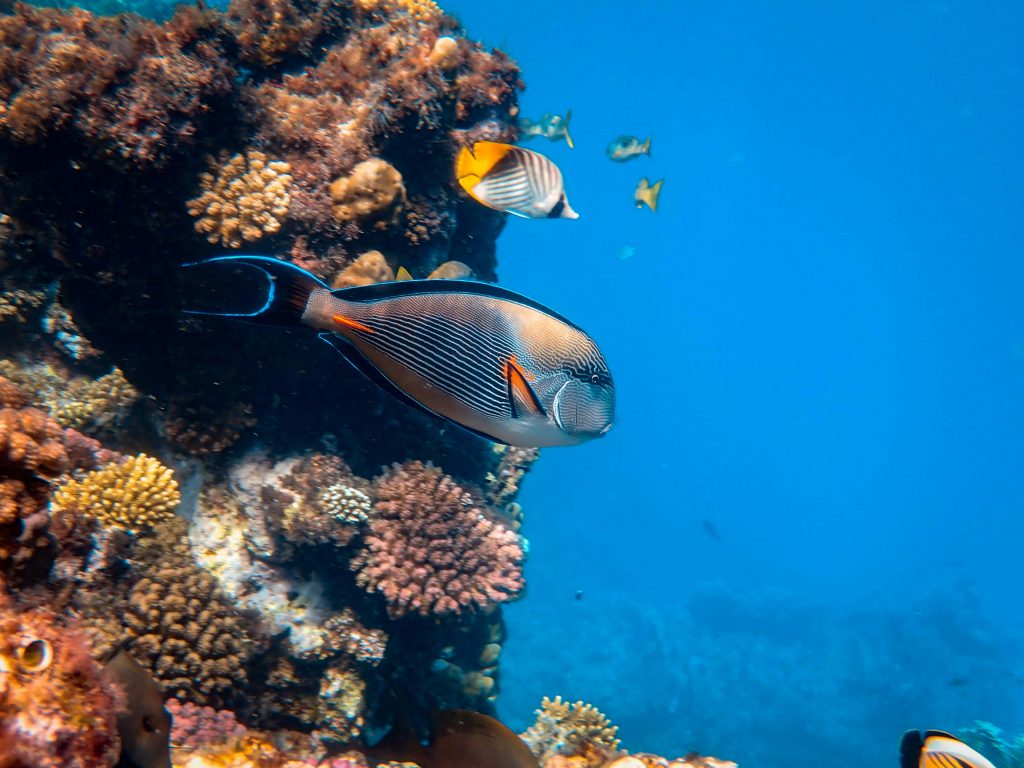
Sohal Tang (Acanthurus Sohal)
Sohal Tang care centers on space, heavy feeding, and aggression control. Learn tank size, diet, compatibility, and common…
 By
By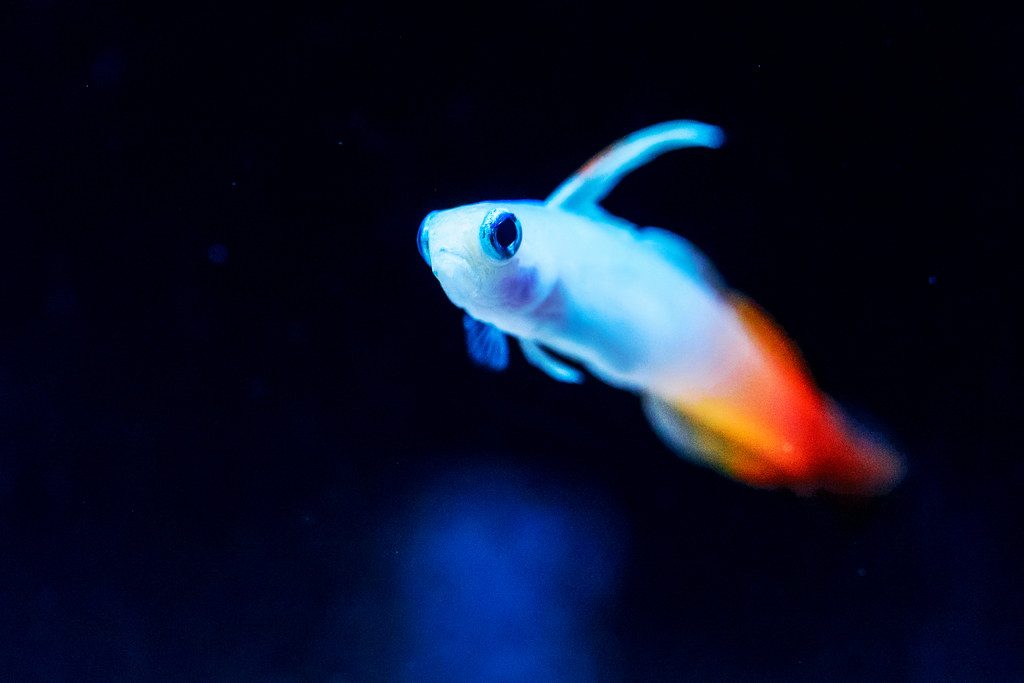
Reef Safe Fish Guide
Learn which reef safe fish work best in coral tanks, plus species to avoid, compatibility tips, and beginner-friendly…
[favorite_button]
My Bookmarks:
To see full list click here
[user_favorites user_id="" include_links="true" site_id="" post_types="" include_thumbnails="true" thumbnail_size="thumbnail" include_excerpt="false"]