

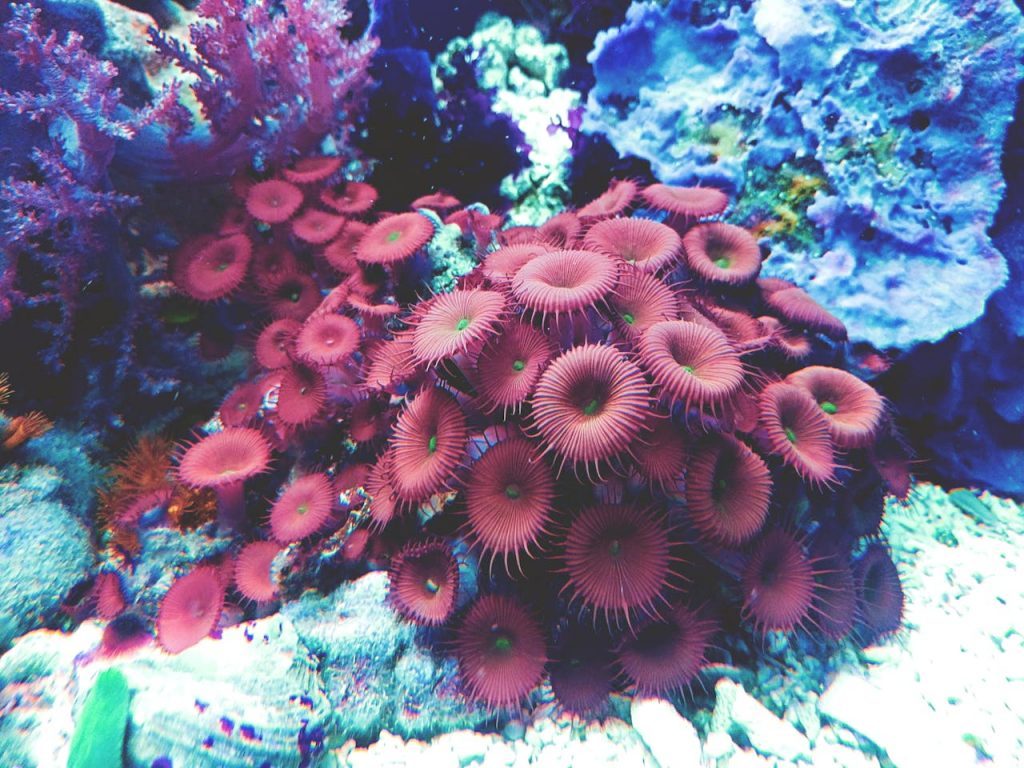
Palythoas, often called palys, are hardy zoanthid relatives with bold color and fast growth. They can be great starter corals, but they demand smart handling. Good care means stable water, steady light, and strict safety habits.
Placement, light, and flow for steady growth
Palys adapt to many tanks, but they still prefer consistency. Start new frags low in the tank. Use a sand bed spot or a low rock shelf. Then move them up over 10 to 14 days.
Aim for moderate light at first. Many tanks land well at 80 to 150 PAR. Some strains tolerate 200 PAR after acclimation. Too much light can cause shrinking and a tight, closed look.
Provide moderate, indirect flow. You want the polyps to sway, not fold over. Strong laminar flow can keep them closed. Dead spots can trap detritus and fuel algae around the mat.
Give them room to spread. Palys can overtake nearby rock fast. Place them on an “island” rock if possible. That makes trimming easier later. For planning ideas, see reef aquascaping basics.
- Start at 50% of your normal light setting for 7 days.
- Increase intensity by 5% every 3 to 4 days.
- Keep flow random with a wavemaker pulse mode.
Water parameters, feeding, and nutrient balance
Stable parameters beat “perfect” numbers. Keep salinity at 1.025 to 1.026 specific gravity. Hold temperature at 25 to 26 C (77 to 79 F). Avoid daily swings over 0.5 C.
Maintain alkalinity at 8 to 9 dKH for mixed reefs. Keep calcium at 400 to 450 ppm. Keep magnesium at 1250 to 1400 ppm. Test weekly until your tank is predictable.
Palys like some nutrients in the water. Target nitrate at 5 to 15 ppm. Target phosphate at 0.03 to 0.10 ppm. Ultra-low nutrients can lead to pale color and slow growth.
They can live on light and dissolved nutrients. They still respond to feeding. Offer fine foods once or twice weekly. Try reef roids, powdered plankton, or minced mysis. Turn off pumps for 10 minutes.
- Do 10% water changes every 1 to 2 weeks.
- Use activated carbon if you run many soft corals.
- Stop chasing numbers after each test result.
If your nutrients climb, reduce feeding first. Then increase export slowly. Add a small refugium or adjust skimmer wetness. For a step plan, read nitrate and phosphate control.
Safety, fragging, and common problems
Palys can contain palytoxin. It is rare, but it is serious. Never boil rock with palys on it. Avoid hot water, steam, and aerosols. Wear nitrile gloves and eye protection when handling.
Fragging is simple with the right approach. Remove the rock if you can. Use a sharp scalpel or bone cutters. Cut the mat with a small buffer of rock under it. Rinse the frag in clean saltwater.
Use gel superglue on dry rock. Pat the base dry with a paper towel. Press for 20 to 30 seconds. Then place the frag in low flow for a day. Expect closing for 24 to 72 hours.
Common issues are algae, nudibranchs, and irritation. If polyps stay closed, check for pests at night. Look for tiny slugs or egg spirals. Dip frags in coral dip for 5 to 10 minutes. Then rinse well. For quarantine routines, see coral quarantine guide.
- Never scrub palys with a toothbrush in the sink.
- Run carbon after heavy fragging or a coral dip day.
- Use a turkey baster to blow detritus off the mat.
If a colony melts, act fast. Improve flow and remove detritus. Check alkalinity for swings over 1 dKH per day. Inspect for vermetid snails nearby. Relocate the colony away from stinging neighbors.
Palys reward steady care and safe habits. Start them in moderate light and flow. Keep nutrients detectable and stable. With routine trimming, they stay a colorful, fast-growing feature.
Sources: Borneman, E. (2001) Aquarium Corals; Sprung, J. (2005) Corals: A Quick Reference Guide; Delbeek & Sprung (1994–2005) The Reef Aquarium (Vol. 1–3)
Was this helpful?
Related Posts
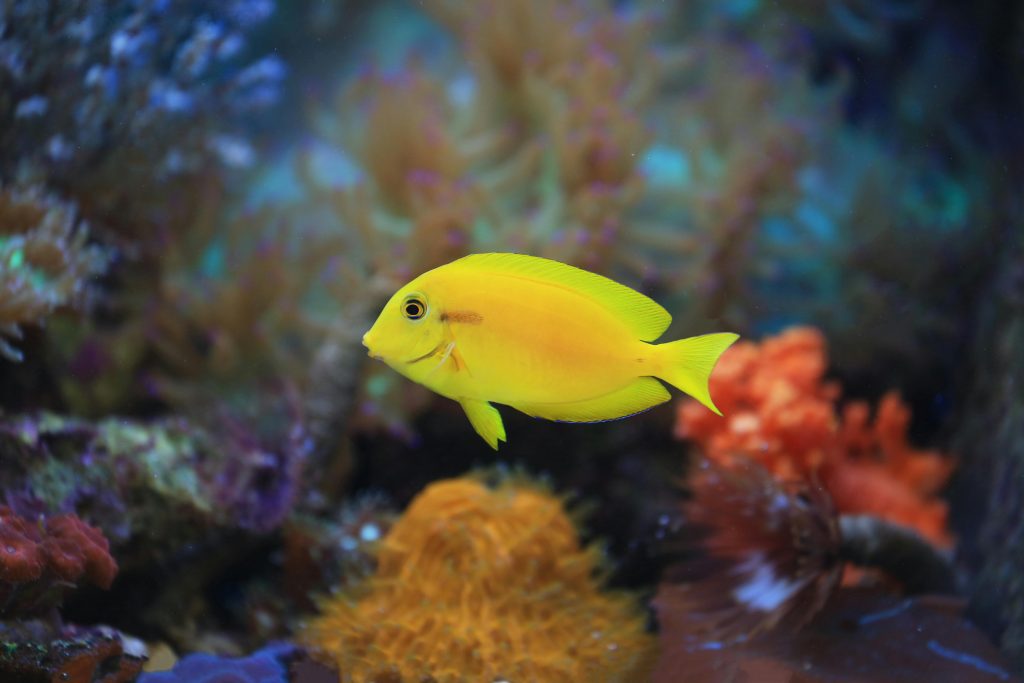
Juvenile Orange Shoulder (acanthurus Olivaceus)
Juvenile orange shoulder tangs are bright, hardy, and reef safe, but they grow large and need a spacious…
 By
By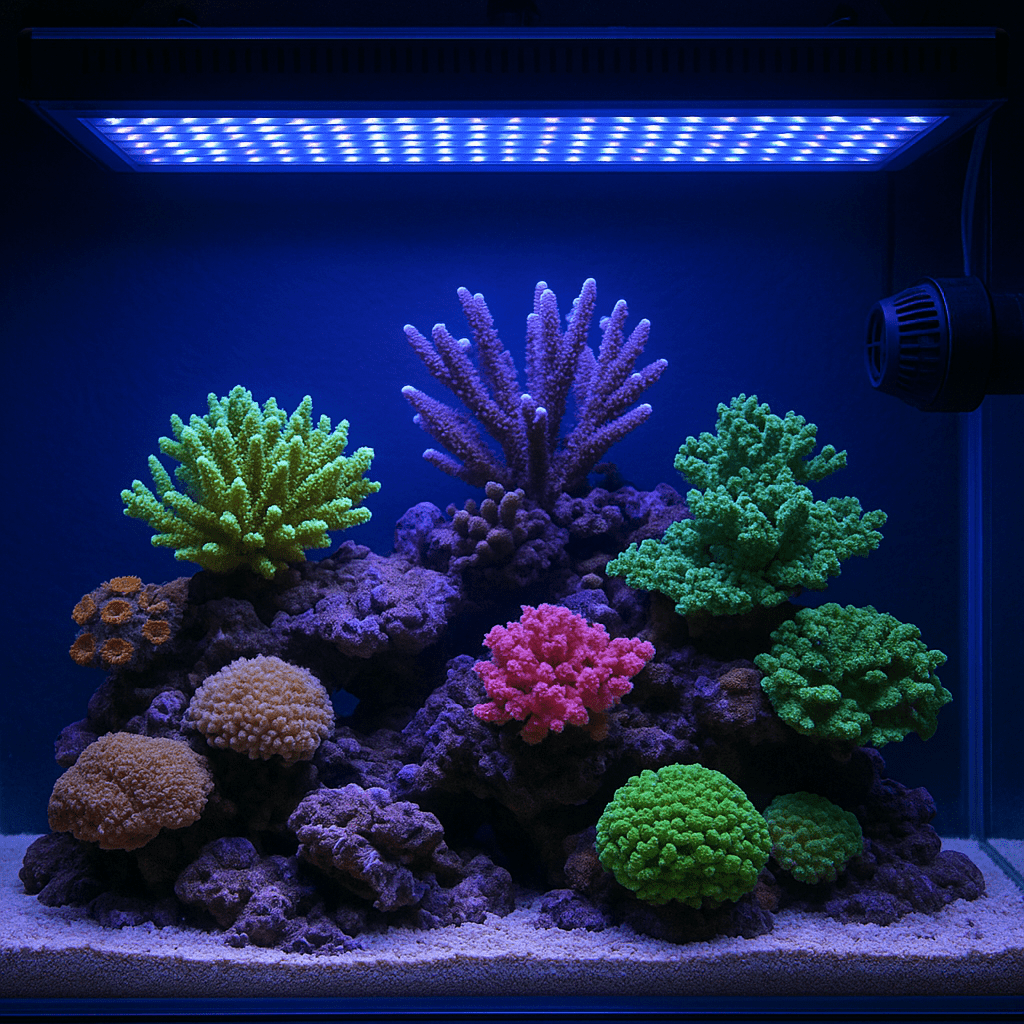
Best Filtration Systems
Best Filtration Systems for a Healthy Saltwater Aquarium Choosing the best filtration system for your saltwater aquarium is…
[favorite_button]
My Bookmarks:
To see full list click here
[user_favorites user_id="" include_links="true" site_id="" post_types="" include_thumbnails="true" thumbnail_size="thumbnail" include_excerpt="false"]