
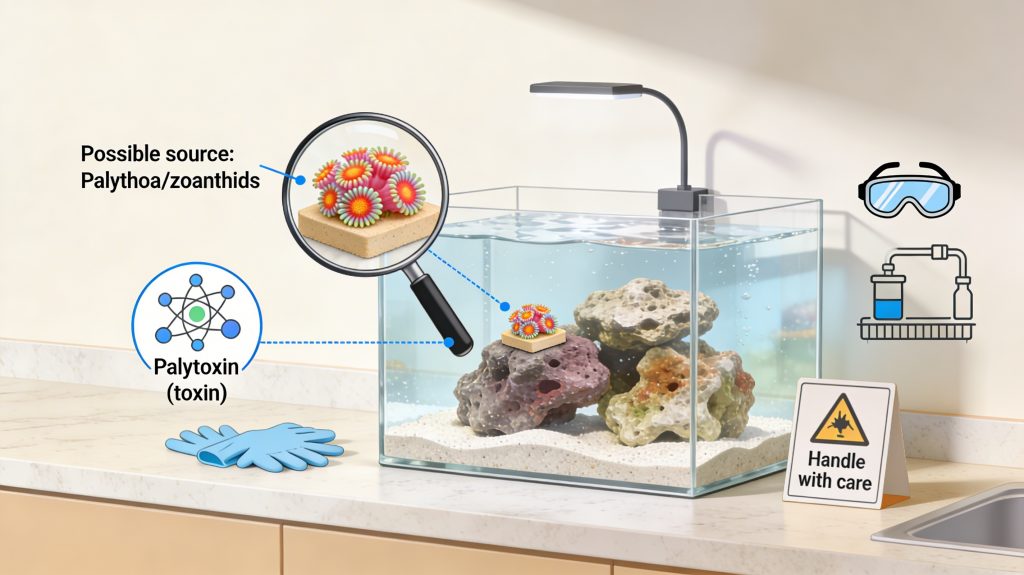
Palytoxin is one of the most serious hazards in reef keeping. It is linked most often to some palythoas and zoanthid-like colonial polyps. Most hobbyists will never have a problem. The risk rises during fragging, scrubbing, boiling rock, or handling damaged colonies. Good habits greatly reduce that risk.
This guide explains what palytoxin is, where it may show up, and how exposure happens in a marine aquarium. You will learn practical safety steps for handling suspect corals, cleaning live rock, protecting your family, and responding to emergencies. The goal is simple. Enjoy your reef while treating potentially toxic corals with respect.
Quick Reference Table
| Topic | Key Point |
|---|---|
| Primary source | Some palythoas and related colonial polyps |
| Main risk moments | Fragging, scrubbing, cutting, hot water, aerosol exposure |
| Highest-risk mistake | Boiling or using very hot water on live rock with palys |
| Basic protection | Gloves, eye protection, ventilation, hand washing |
| Warning signs | Eye pain, cough, fever, chest tightness, skin irritation |
| Emergency step | Seek medical help and mention possible palytoxin exposure |
| Safer coral work | Use tools, isolate the workspace, avoid splashing |
Keep this table in mind before you handle any unknown polyp colony. The biggest accidents happen when reef keepers underestimate how easily coral slime or aerosol can spread.
What Is Palytoxin?
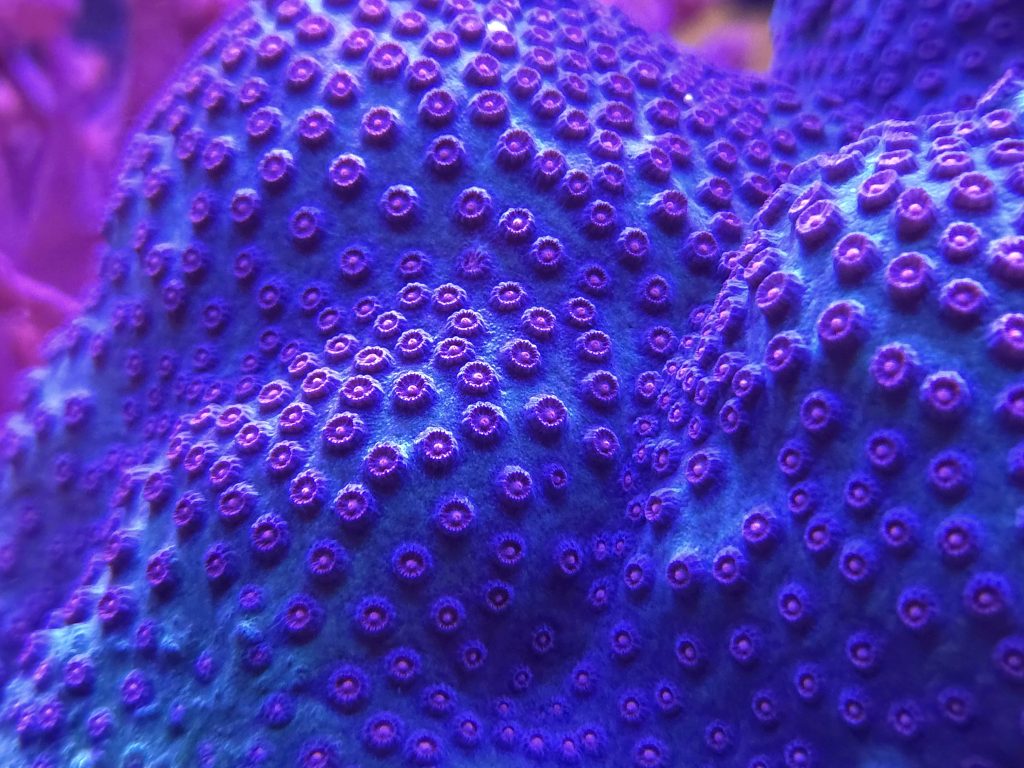
Palytoxin is a potent natural toxin associated with certain marine organisms. In reef aquariums, hobbyists usually discuss it in relation to palythoas. These are colonial polyps that can resemble zoanthids. Not every colony contains the same amount. Some may contain little or none. Others may pose a real hazard.
The problem is not casual viewing. The problem is exposure during disturbance. Cutting a colony can release mucus and tissue. Scrubbing rock can spread contaminated spray. Hot water can create aerosol. That is why many incidents happen during maintenance, not normal tank enjoyment.
Palytoxin can affect people through skin contact, eye contact, inhalation, or accidental ingestion. Severity varies. Mild cases may involve irritation. Serious cases can require urgent medical care. This is why reef keepers should treat unknown palys carefully, even if they have handled them before without issues.
Which Corals Are Most Often Suspected?
Most hobby discussions focus on palythoas rather than typical small-polyp zoanthids. Large button polyps are often mentioned. Brown or green hitchhiker colonies on live rock also raise concern. Still, appearance alone does not prove toxicity. Visual identification is imperfect.
Many stores label colonies broadly as zoas or palys. That is not enough for safety decisions. If you cannot confirm the coral, assume caution is needed. The same rule applies to nuisance polyps growing on old live rock. If they look like colonial button polyps, handle them as potentially toxic.
This cautious approach is practical. It avoids false confidence. It also reduces the chance of exposing family members, children, or pets during tank work. In reef keeping, safe assumptions are often better than perfect identification.
Natural Habitat
Palythoa species and related colonial polyps occur in tropical and subtropical marine habitats. Many live on shallow reefs, rocky shorelines, and lagoon areas. They often grow in strong light and moderate to strong flow. Some encrust rock surfaces in dense mats. Others spread between crevices and reef rubble.
In nature, these animals compete hard for space. They tolerate changing conditions better than many delicate corals. That toughness helps explain why they often thrive in home aquariums. It also explains why they can become pests on mature live rock. Fast growth is useful in the wild. In a reef tank, it can become a management issue.
The natural setting also matters for safety. These are not fragile animals that collapse at the first touch. Many recover quickly after irritation. That means hobbyists may not realize how much mucus or residue was released during handling.
How Exposure Happens in a Home Aquarium
Most exposure events happen during direct handling. Fragging is a common cause. Cutting through a colony can release fluid. That fluid may contact skin or eyes. It may also contaminate tools, towels, and work surfaces.
Cleaning live rock is another major risk. Some hobbyists try to kill nuisance polyps with boiling water or very hot tap water. This is dangerous. Heat can create aerosol that spreads through the room. People nearby may inhale it without touching the rock at all.
Scrubbing colonies with brushes can also throw droplets. Power tools increase that risk. Even removing a rock and letting it dry on a counter can leave residue where others may touch it later. Shared sinks are another problem area. Good reef safety extends beyond the aquarium glass.
Aquarium Setup and Risk Reduction
You do not need to avoid all palys to keep a reef safely. You need systems and habits. Start by knowing where suspect colonies are located. Keep them on removable rocks when possible. Avoid placing them deep in a structure where future removal becomes difficult.
Use dedicated reef tools. Keep coral cutters, tweezers, tubs, and towels separate from kitchen items. Store gloves and eye protection near the tank. Make safe behavior easy. If supplies are hard to reach, shortcuts become more likely.
Think about airflow too. If you ever cut or remove suspect polyps, work in a well-ventilated area. Keep children and pets away. Do not perform risky coral work in small closed rooms. A simple setup change can prevent a serious mistake later.
Step-by-Step Safe Handling Guide
- Identify the coral you plan to handle. If unsure, assume it may contain palytoxin.
- Prepare your workspace first. Clear clutter and keep food away.
- Wear disposable gloves and protective eyewear. Consider a mask if splashing is possible.
- Use a container to move the rock or frag. Avoid carrying dripping pieces openly.
- Keep the coral wet during handling. Dry tissue can splatter when cut.
- Use sharp, clean tools. Slow crushing motions release more mess.
- Cut away from your face. Never lean directly over the colony.
- Contain waste water and coral slime. Do not leave it in shared areas.
- Wash tools with care. Avoid high-pressure spray that creates mist.
- Remove gloves safely and wash hands well after the task.
This routine lowers risk without making coral work complicated. The key is preparation. Most accidents happen when someone rushes a quick job.
Lighting Requirements
Lighting does not directly change toxin risk, but it affects how these corals grow. Many palythoas tolerate a wide range of reef lighting. Moderate to high light often promotes faster growth and tighter polyp form. Lower light may produce stretching. Fast growth can mean more maintenance and more future handling.
If your goal is control, avoid placing aggressive colonial polyps in prime zones where they can spread rapidly. Give them defined boundaries. Isolated rocks work well. This is more a management strategy than a care requirement. Still, it matters because fewer invasive colonies mean fewer risky removal sessions later.
Stable lighting is always better than constant change. Healthy colonies are easier to predict. Stressed colonies may detach, melt, or foul nearby areas during intervention.
Water Flow
Most palythoas prefer moderate flow. The current should move debris away without blasting the polyps shut all day. Good flow helps reduce detritus buildup and nuisance algae around the colony. It also keeps the tank cleaner overall.
From a safety angle, flow matters during maintenance. Turn off pumps before cutting or removing suspect polyps. This prevents mucus from spreading through the display and onto other surfaces. It also makes the colony easier to handle without accidental splashing.
After work is complete, run fresh carbon and restore circulation. Carbon is not a cure-all, but it is a sensible step after disturbing any potentially toxic or noxious coral.
Feeding
Most palythoas rely heavily on light and dissolved nutrients. They can also capture fine foods. In many reef tanks, direct feeding is unnecessary. Overfeeding may simply increase nutrients and fuel nuisance growth. That can make colonial polyps spread faster.
If you do target feed, use small amounts and avoid overhandling the colony. Healthy, stable growth is easier to manage than boom-and-bust growth. This is especially true in mixed reefs where palys may compete with LPS and soft corals.
For many hobbyists, the best feeding strategy is indirect. Feed the tank normally. Let the colony take what it can from the water column. Less direct manipulation means less chance of accidental contact.
Compatibility
Palythoas are generally reef safe in the sense that they do not hunt fish or shrimp. The real compatibility issue is aggression and overgrowth. They can shade nearby corals and occupy valuable rock space. In mixed reefs, this becomes a long-term aquascape problem.
Fish usually ignore them, though some angels and butterflies may nip at colonial polyps. Invertebrates rarely solve a paly problem reliably. Do not count on cleanup crew animals for control. Manual management is usually needed.
If you keep expensive SPS or slow-growing LPS, isolate fast-spreading polyps early. It is much easier to control one island rock than a whole wall of encrusted aquascape. That strategy protects both coral health and your own safety.
Propagation and Fragging
Should You Frag Suspect Palythoas?
You can, but caution is essential. Many reef keepers choose not to frag unknown palys at all. If the colony is common and low value, removal may be safer than propagation. The less cutting you do, the lower the exposure risk.
Safer Fragging Practices
Work with full protection. Use eye protection, gloves, and a controlled container. Keep cuts precise. Avoid crushing tissue. Never use hot water to loosen a colony. Never use your mouth to start siphons or clear tubing. Dispose of waste carefully and sanitize the area afterward.
When to Skip Fragging
Skip the job if you lack protective gear, ventilation, or confidence. Also skip it if the colony is fused to a large rock that needs aggressive scraping. Sometimes the safest choice is to leave it alone or remove the entire rock later under controlled conditions.
Common Problems
Can Palytoxin Become Airborne?
It can become an inhalation risk when contaminated droplets or aerosol are created. This is why boiling rock is so dangerous. Scrubbing with hot water or pressure can also create airborne exposure. Avoid any method that makes mist.
What If I Touched a Paly With Bare Hands?
Wash your hands thoroughly with soap and water. Avoid touching your eyes, face, or mouth first. Monitor for irritation or other symptoms. If symptoms develop, contact medical help and explain that marine coral toxin exposure is possible.
What If Tank Water Splashed in My Eye?
Flush the eye with clean water right away. Do this for several minutes. Seek urgent medical advice, especially if pain, redness, blurred vision, or swelling occurs. Eye exposure should never be ignored.
How Do I Remove Palythoas Safely From Live Rock?
The safest method is controlled physical removal with protection and containment. Remove the rock if possible. Work outside the display. Avoid heat, boiling, and aggressive power tools. Bag waste securely and clean the area afterward.
Should I Get Rid of All Palys?
Not necessarily. Many hobbyists keep them for years without incident. The better approach is informed caution. If you dislike the risk, choose other corals. If you keep them, use safe handling habits every time.
When to Seek Medical Help
Get medical help quickly if you develop breathing trouble, chest tightness, severe cough, fever, eye pain, vision changes, widespread skin reaction, vomiting, or worsening symptoms after exposure. Tell the clinician that you may have been exposed to palytoxin from a marine aquarium coral. That detail matters.
Bring photos of the coral if possible. Note whether you cut it, scrubbed it, or used hot water. Doctors may not see aquarium toxin cases often. Clear information helps them assess the situation faster. Do not rely on internet advice alone when symptoms are significant.
Frequently Asked Questions
Are all zoanthids toxic?
No. Toxicity varies, and hobby identification is imperfect. Treat unknown palys and similar colonies with caution.
Is touching tank water dangerous after handling palys?
Normal tank water contact is usually low risk. Risk rises after cutting or disturbing suspect colonies. Wash up after maintenance.
Can carbon remove palytoxin from aquarium water?
Carbon is a helpful precaution after disturbance, but it should not be viewed as complete protection.
Can pets be affected by palytoxin?
Yes. Keep pets away from work areas, waste water, towels, and removed live rock.
What is the safest beginner approach?
Avoid buying unknown palys, isolate colonial polyps on separate rocks, and use gloves and eye protection for all coral work.
Final Thoughts
Palytoxin deserves respect, not panic. The average reef keeper can stay safe with simple habits. Know your corals. Avoid heat and aerosol. Wear protection. Work slowly. Treat unknown palythoas as potentially toxic. Those steps protect you, your family, and your reefing hobby for the long term.
For more reef safety and husbandry help, see our guides on reef tank parameters, how to dip corals, zoanthid care, and reef tank pest control.
Was this helpful?
Related Posts
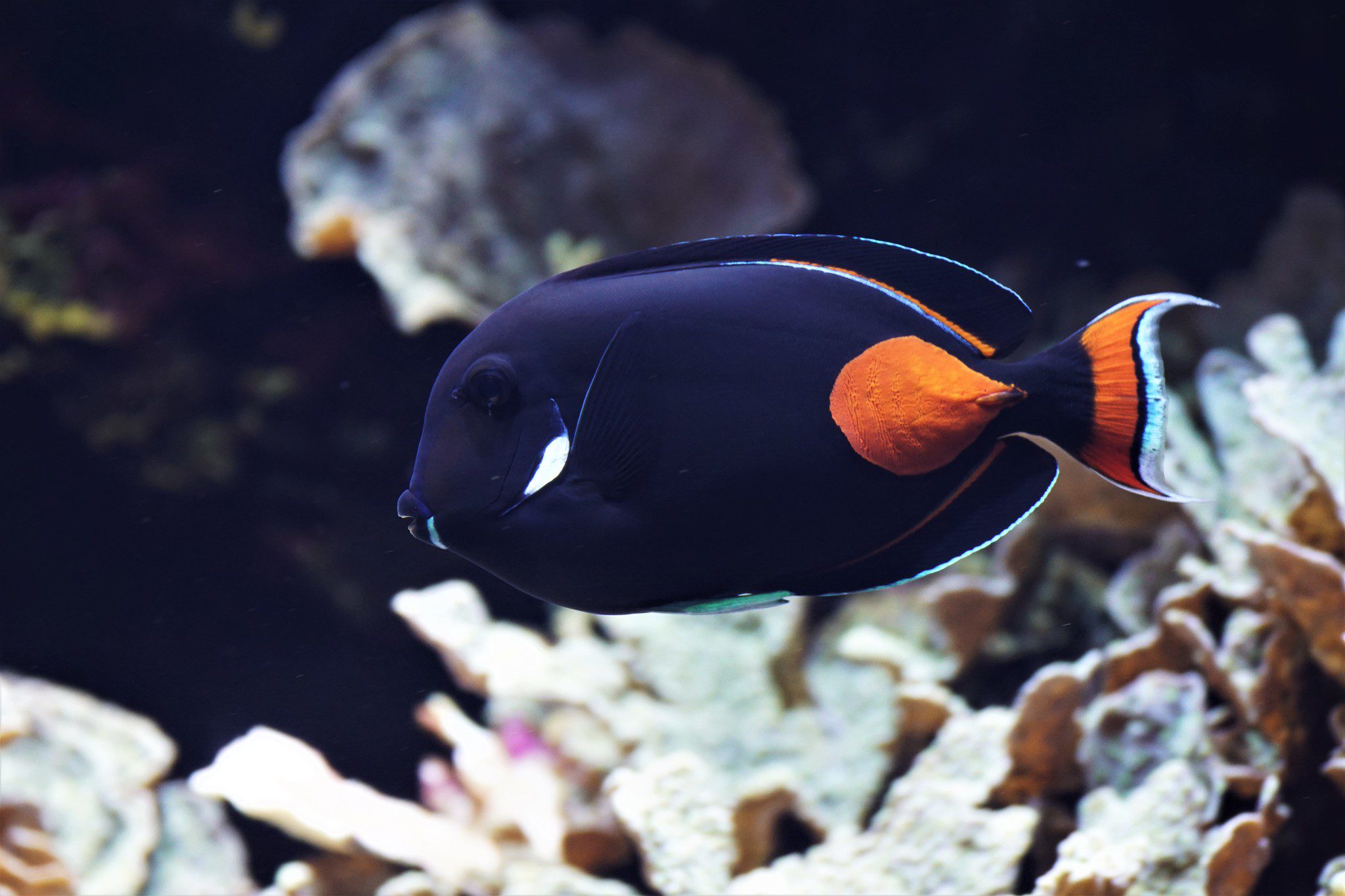
Juvenile Orange Shoulder (acanthurus Olivaceus)
Juvenile orange shoulder tangs are bright, hardy, and reef safe, but they grow large and need a spacious…
 By
By
Best Filtration Systems
Best Filtration Systems for a Healthy Saltwater Aquarium Choosing the best filtration system for your saltwater aquarium is…
[favorite_button]
My Bookmarks:
To see full list click here
[user_favorites user_id="" include_links="true" site_id="" post_types="" include_thumbnails="true" thumbnail_size="thumbnail" include_excerpt="false"]