Psammocora corals are hardy SPS with a subtle, textured look. They can thrive in mixed reefs when you match light, flow, and stability. This guide covers daily care, placement, and common problems.
Getting to know Psammocora and choosing a spot
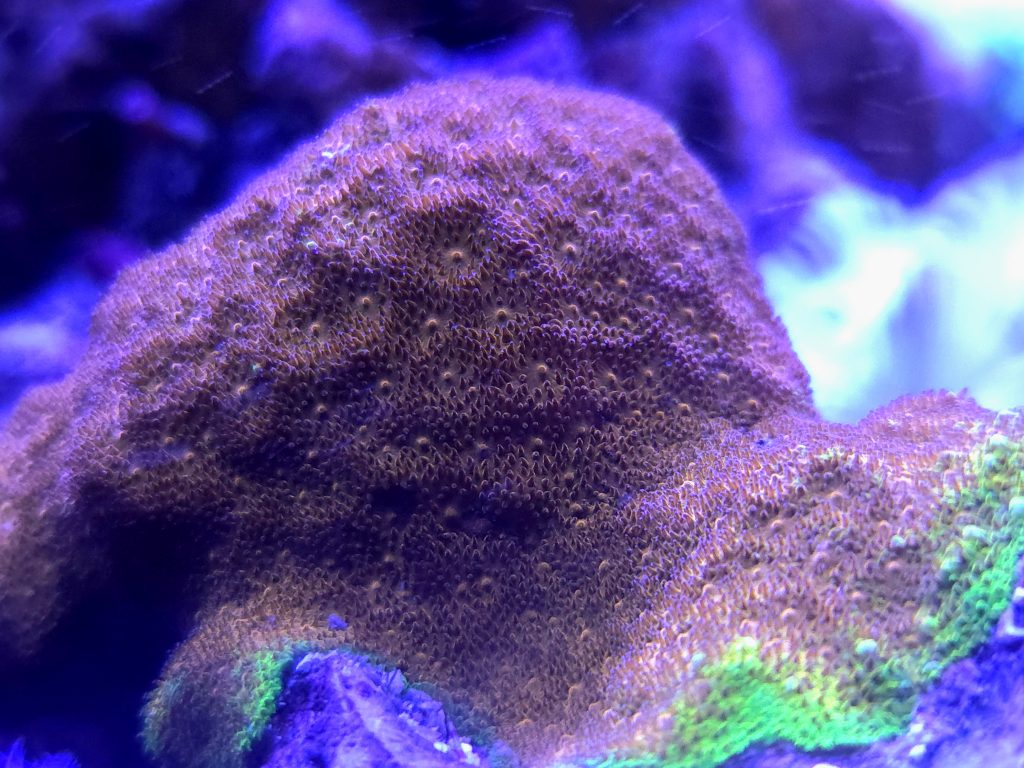
Psammocora is an SPS coral with small polyps and tight growth. Many colonies look like plates, mounds, or encrusting patches. Color often stays understated under white light. It can glow green, tan, or teal under blues.
Start with a healthy frag with clean edges. Avoid pieces with peeling tissue or algae on the base. Ask how long it has been in the shop system. Two weeks or more is a safer sign.
Place new frags on a rack for seven to ten days. Use moderate light at first. Aim for 150–200 PAR to start. Then move toward 200–300 PAR if color stays strong.
Flow should be strong and changing. Avoid a direct jet that strips tissue. Use crossflow from two pumps when possible. Keep it away from stinging LPS sweeper tentacles.
- Start placement mid-level with 150–200 PAR for the first week
- Increase light by 10–15% per week if polyp extension stays normal
- Use random flow that makes polyps sway, not flatten
For more SPS placement ideas, see SPS coral placement guide. If you run a mixed reef, review mixed reef lighting basics.
Water parameters, stability, and feeding
Psammocora rewards stable alkalinity and nutrients. Keep temperature at 25–26°C (77–79°F). Maintain salinity at 1.025–1.026 specific gravity. Keep pH near 8.1–8.3 with good gas exchange.
Target alkalinity at 8.0–9.0 dKH for most reef tanks. Keep calcium at 420–450 ppm. Keep magnesium at 1300–1400 ppm. Avoid swings larger than 0.3 dKH per day.
Nutrients should not be stripped to zero. Aim for nitrate at 2–10 ppm. Aim for phosphate at 0.03–0.10 ppm. Low nutrients can cause pale color and slow growth.
Psammocora can live on light and fish waste. It still benefits from fine foods. Feed 1–2 times weekly with reef roids, rotifers, or amino acids. Turn off return flow for 10–15 minutes during feeding.
- Test alkalinity 2–3 times per week in new systems
- Use a dosing pump once daily dosing exceeds 10–15 ml per day
- Keep nitrate above 2 ppm to prevent “SPS paling”
If your numbers drift, calibrate tools and slow down changes. Check refractometer calibration with 35 ppt fluid. Replace old test kits every 12–18 months. For dosing help, read alkalinity and calcium dosing.
Troubleshooting: color loss, tissue recession, and pests
Brown color often means excess nutrients or low light. Raise PAR by 20–40 over two weeks. Also improve skimming and detritus removal. Verify phosphate stays under 0.15 ppm.
Pale or “washed out” tissue often points to low nutrients or too much light. Confirm nitrate is not at 0 ppm. Confirm phosphate is not at 0.00. Reduce light intensity by 10% and feed heavier for a week.
Tissue recession can be slow or rapid. Rapid loss often follows an alkalinity swing. Check dKH now and compare to yesterday. If dKH changed by more than 1.0, correct slowly over days.
Pests are less common than on Acropora, but still possible. Look for flatworms, nudibranchs, and vermetid snails nearby. Dip new frags for 5–10 minutes in a coral dip. Rinse in clean saltwater before placing back.
- Recession at the base can signal low flow or detritus buildup
- Recession at tips can signal light shock or alkalinity spikes
- Stable dKH beats “perfect” dKH for long-term growth
Example scenario helps. A frag looks fine for three days. Then it pales under 350 PAR. You measure nitrate at 0 and phosphate at 0.01. Lower PAR to 250 and raise nitrate to 5 ppm. Color often returns within two weeks.
Conclusion
Psammocora corals are forgiving SPS when you prioritize stability. Give them strong, random flow and moderate to high light. Keep alkalinity steady and nutrients measurable for best color and growth.
Take it slow with changes and watch the coral daily. Small adjustments beat big corrections. Sources: Borneman, “Aquarium Corals”; Delbeek & Sprung, “The Reef Aquarium” Vol. 1–3; Paletta, “The New Marine Aquarium”.
Was this helpful?
Related Posts
Dragonets Fish Care
Dragonets are beautiful reef fish, but they need mature tanks and steady food sources. Learn how to keep…
 By
By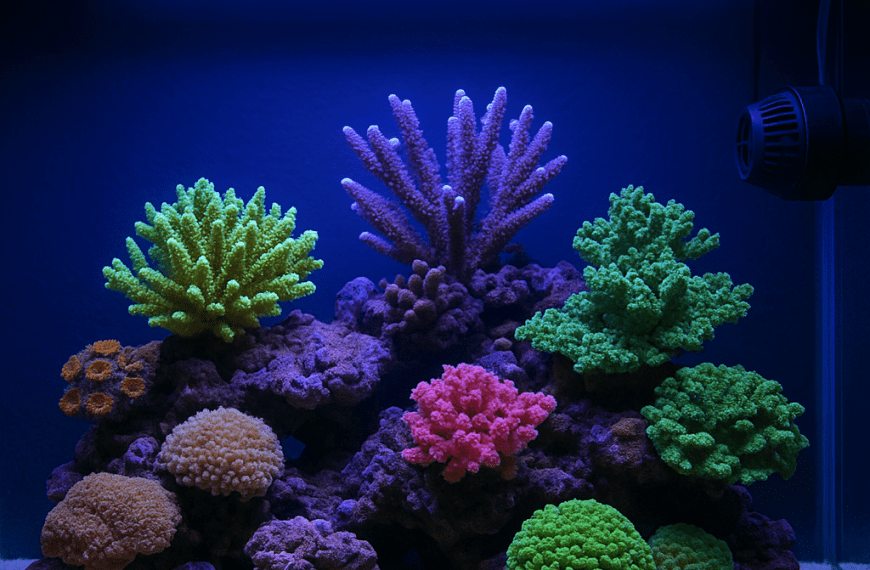
Lighting For Aquarium
Lighting for Aquarium: Getting Saltwater Illumination Right Lighting for a saltwater aquarium is about much more than simply…