Reef fish behavior basics help you read your tank with confidence. Normal swimming, hiding, chasing, grazing, and sleeping patterns reveal fish health, stress, and compatibility before bigger problems appear.
Many reef keepers focus on gear first. That makes sense. Lights, flow, and filtration matter. But fish behavior is just as important. Your fish show you what the tank feels like every day. A calm clownfish, a grazing tang, or a goby guarding its burrow can all signal stability. Sudden hiding, flashing, aggression, or labored breathing often point to stress or poor conditions. In this guide, you will learn how reef fish behave, what patterns are normal, and when behavior suggests trouble. You will also learn how territory, feeding style, social structure, and tank design shape daily activity in a reef aquarium.
Quick Reference Table
| Behavior | Usually Normal | Possible Warning Sign | What To Check |
|---|---|---|---|
| Hiding | New fish, night time, startled fish | Constant hiding, refusal to eat | Aggression, water quality, acclimation stress |
| Chasing | Territory defense, mating displays | Relentless attacks, torn fins | Stocking order, tank size, rockwork |
| Grazing | Tangs, blennies, rabbitfish picking all day | Sudden stop in feeding | Illness, bullying, lack of algae or food |
| Heavy breathing | Short term after capture | Persistent rapid gill movement | Ammonia, oxygen, disease, temperature |
| Sleeping in odd spots | Wrasses burying, tangs wedging into rock | Lethargy during daylight | Stress, parasites, unstable parameters |
| Flashing or scratching | Rare brief irritation | Repeated rubbing on rock or sand | External parasites, water irritation |
Use this table as a fast reference. Context matters. One behavior alone does not always mean trouble. Patterns over several days tell a clearer story.
Why Fish Behavior Matters In A Reef Tank
Fish behavior is one of the best diagnostic tools in reef keeping. Test kits show chemistry. Fish show how that chemistry feels. A tank can look clean and still stress its livestock. That stress often appears in behavior first.
Healthy reef fish usually follow a routine. They wake with the lights. They patrol known areas. They feed with interest. They react to movement outside the glass. They settle into shelters at night. When that routine changes, pay attention.
Behavior also helps you judge compatibility. Some fish are bold. Some are shy. Some need caves. Others need long open lanes. A peaceful fish placed with aggressive tank mates may survive, but it may never thrive. Watching behavior tells you if your stocking plan actually works in practice.
This is why experienced hobbyists spend time simply observing. Five quiet minutes each day can reveal stress, disease, hunger, or social conflict early. That often prevents a much bigger problem later.
Normal Daily Reef Fish Behaviors
Most reef fish show predictable daily patterns. Learning these patterns makes your tank easier to manage. It also reduces panic when fish do something unfamiliar but normal.
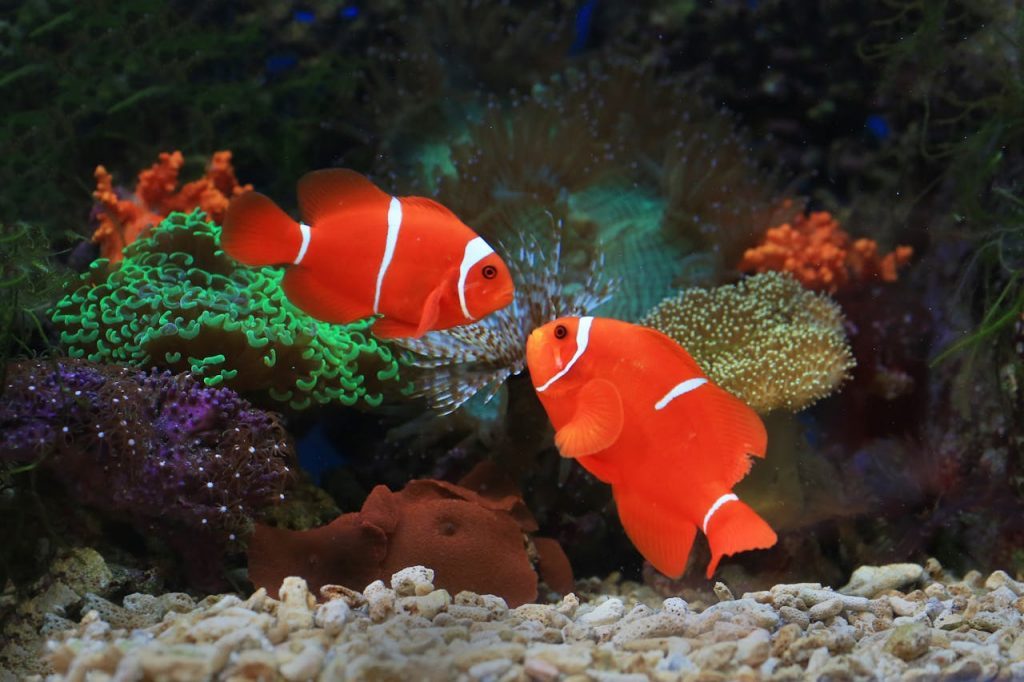
Swimming patterns vary by species. Tangs and anthias stay active in the water column. Gobies and blennies perch and dart. Clownfish often hover near one area. Wrasses patrol rockwork and sand. None of these styles are better. They are just different.
Hiding is also normal. New fish hide while they assess danger. Nocturnal fish hide by day. Many species retreat when startled. A fish that hides briefly but still eats may simply be cautious.
Feeding behavior also matters. Grazers pick all day. Planktivores rush into open water during meals. Bottom feeders search the substrate. Some fish appear lazy, but they may just feed in a different way.
Night behavior often surprises beginners. Tangs wedge into rock crevices. Wrasses bury in sand. Parrotfish and some wrasses form mucus cocoons in nature. Color can fade during sleep. That is often normal and temporary.
Territory, Hierarchy, And Social Signals
Reef fish do not use words. They use space, posture, and movement. Territory is one of the biggest drivers of behavior in home aquariums. Even peaceful fish may defend a cave, ledge, or feeding zone.
Common social signals include flared fins, side displays, short chases, and head-down postures. These behaviors can look dramatic. They are not always dangerous. In many tanks, fish establish rank through brief displays without serious injury.
Problems start when displays become relentless. A dominant fish may trap another in a corner. It may block food access. It may patrol the whole tank instead of one small area. That behavior creates chronic stress.
Stocking order strongly affects hierarchy. More aggressive fish added first often claim the entire tank. Later additions struggle to settle. Rearranging rockwork before adding a new fish can help reset old territories. So can using an acclimation box.
Schooling and shoaling fish add another layer. Anthias and chromis often sort out social rank quickly. Some pecking order is expected. Heavy losses or nonstop chasing are not.
How Tank Setup Shapes Behavior
Behavior is not only about species. Aquarium design shapes what fish do every day. A well-planned reef tank supports natural movement and reduces stress.
Rockwork should create both shelter and open water. Too much rock can trap timid fish. Too little rock can leave them exposed. Caves, arches, overhangs, and broken sight lines help reduce aggression. Fish feel safer when they can disappear from view.
Tank size matters too. Active swimmers need long tanks. Territorial fish need room to hold a small area without controlling everything. In cramped systems, even moderate aggression becomes severe.
Flow affects behavior as well. Some fish enjoy strong, chaotic movement. Others avoid direct blasts. If fish constantly struggle in one corner, flow may be too harsh. If debris settles everywhere, flow may be too weak.
Lighting influences activity and stress. Sudden bright light can spook fish. A ramp-up schedule works better. Dimming at night helps fish settle naturally. For more setup basics, see aquarium cycling guide, reef tank aquascaping tips, and beginner reef tank mistakes.
Feeding Behavior And What It Tells You
Feeding time is one of the best moments to assess fish health. Healthy fish usually show interest in food quickly. That does not mean every fish should rush to the surface. Species feed in different ways.
Tangs, rabbitfish, and blennies often graze between meals. Clownfish usually feed eagerly in midwater. Gobies may wait for food to settle. Wrasses often hunt actively through the rockwork. Knowing these patterns prevents false alarms.
A sudden drop in appetite is more important than a naturally shy feeding style. Fish may stop eating due to bullying, shipping stress, parasites, poor water quality, or unsuitable food size. Watch whether the fish wants food but gets chased away. That points to social pressure rather than illness.
Offer varied foods. Use pellets, frozen foods, algae sheets, and occasional live options when needed. Feed enough that timid fish get a chance, but not so much that nutrients climb. For nutrition help, read reef fish feeding schedule and best foods for marine fish.
Step-By-Step: How To Read Fish Behavior In Your Tank
Observation works best when it is simple and consistent. Use this routine to spot problems early.
- Watch the tank before feeding. Note who is visible and where they stay.
- Check breathing rate. Rapid gill movement can signal stress or poor oxygen.
- Feed a small amount. See who eats first, who hesitates, and who gets chased.
- Look for body language. Torn fins, clamped fins, flashing, and head shaking matter.
- Observe swimming style. Listing, darting, or hovering near pumps is not normal.
- Check favorite hiding spots. A fish using the same shelter nightly is often normal.
- Compare day and night routines. Sudden changes often reveal stress.
- Record changes for several days. Trends matter more than one odd moment.
This routine takes only a few minutes. It can save fish lives. It also helps you learn each species faster.
Common Problems
Why Is My Reef Fish Hiding All The Time?
Constant hiding usually means stress. New arrivals often hide for several days. That is common. If the fish also refuses food, investigate further. Check for bullying first. Many shy fish stay hidden because a dominant fish patrols the open water. Also test ammonia, nitrite, nitrate, salinity, and temperature. Poor acclimation can cause prolonged fear. Add more caves and visual barriers if the tank feels exposed.
Why Are My Fish Chasing Each Other?
Short chases can be normal. Fish often defend a sleeping spot or feeding lane. Trouble starts when one fish cannot rest or eat. Look for torn fins, pale color, and cornering. Rearrange rockwork to break territories. Feed several small meals. Consider an acclimation box for new additions. In some cases, one fish must be removed.
Why Is My Fish Breathing Fast?
Fast breathing is a serious sign. Check ammonia first. Then check temperature and oxygen. Low oxygen often appears at night or in overcrowded tanks. Surface agitation helps. Disease is another possibility. Gill parasites and marine ich can both increase breathing rate. If several fish breathe rapidly, suspect a water issue before a social issue.
Why Is My Fish Rubbing On Rocks?
Occasional rubbing may be minor irritation. Repeated flashing is more concerning. External parasites are a common cause. Poor water quality can also irritate skin and gills. Watch for white spots, cloudy eyes, excess mucus, or torn fins. Quarantine and diagnosis are often needed.
Compatibility Basics For Better Behavior
Good behavior starts with smart stocking. Choose fish that use different zones of the tank. A goby on the sand, a clownfish in midwater, and a blenny on the rocks often coexist well. Problems rise when several fish want the same shelter or feeding style.
Research adult size, not store size. A small juvenile can become a dominant adult. Also check temperament by genus, not only by common name. Some damsels are much harsher than beginners expect. Some wrasses are peaceful. Others are relentless hunters.
Invertebrates and corals also affect behavior. Fish that feel exposed may hide if the aquascape is too open. Fish that compete with shrimp or other bottom dwellers may guard burrows aggressively. Reef safe does not always mean socially easy.
Quarantine helps here too. It protects health, but it also lets you assess feeding response and temperament before release into the display.
Frequently Asked Questions
Do reef fish sleep?
Yes. Most reef fish rest at night. Some wedge into rock. Some bury in sand. Colors may fade while sleeping.
Is chasing always aggression?
No. Brief chasing can be normal territory behavior. Constant pursuit with injury is a problem.
Why does my new fish hide but still eat?
That is often normal acclimation behavior. Many fish need several days to feel secure.
Can behavior predict illness?
Often, yes. Loss of appetite, flashing, heavy breathing, and isolation can appear before visible disease signs.
What is the best way to reduce aggression?
Provide space, hiding spots, careful stocking order, and species with different niches. Use acclimation boxes when needed.
Understanding reef fish behavior basics makes you a better aquarist. Fish show stress long before equipment does. Watch them daily. Learn each species. Respect territory, feeding style, and social rank. With time, your tank becomes easier to read, and your fish become easier to keep healthy.
Was this helpful?
Related Posts
Peaceful Reef Fish Compatibility
Peaceful reef fish compatibility made simple. Learn tank size rules, safe stocking order, and quick fixes for bullying.
 By
By
Nuisance Algae Control Guide
Learn how to identify, remove, and prevent nuisance algae in reef tanks with practical nutrient control, maintenance, and…