Keeping stable water chemistry is one of the biggest keys to reef tank success. When corals sulk, algae explodes, or fish seem stressed, it’s time to run through a structured reef parameter troubleshooting checklist. This guide walks you step-by-step through diagnosing and correcting common issues before they turn into major losses.
1. Start With Testing and Recent Changes
Before chasing numbers, confirm what’s really going on in your tank.
Verify Your Test Results
- Use reliable test kits for salinity, temperature, pH, alkalinity, calcium, magnesium, nitrate, and phosphate.
- Test twice if a reading looks strange, and check the expiration date on your test kits.
- Compare with a friend’s kit or a trusted LFS if something seems way off.
For a refresher on ideal reef numbers and why they matter, see our guide on reef tank water parameters.
Review the Last 7–14 Days
- New livestock or coral additions?
- Changes to lighting schedule, intensity, or spectrum?
- Missed water changes or skipped dosing?
- Filter maintenance, new media, or equipment failures?
Quick tip: Keep a simple log of test results, dosing, and changes. When something goes wrong, that log becomes your best troubleshooting tool.
2. Core Reef Parameters: What to Check First
Once you’ve confirmed your tests, move through these key parameters in order of urgency.
Salinity and Temperature
- Salinity: Aim for 1.025–1.026 specific gravity. Recalibrate your refractometer with calibration solution, not RO/DI water.
- Temperature: Keep 77–79°F (25–26°C). Rapid swings are worse than being slightly off.
- If either is out of range, correct slowly over 24–48 hours.
Alkalinity, Calcium, and Magnesium
- Alkalinity: 7.5–9.0 dKH for most mixed reefs. Large daily swings stress SPS in particular.
- Calcium: 400–450 ppm; Magnesium: 1250–1400 ppm.
- Only adjust one major parameter per day, and avoid dosing “blind” without testing.
If you’re struggling to keep these stable, review your routine in our article on reef dosing basics.
Nitrate and Phosphate
- Nitrate: 5–20 ppm for most reefs; ultra-low is not always better.
- Phosphate: 0.03–0.10 ppm; zero phosphate can starve corals and beneficial microbes.
- Use water changes, reduced feeding, and media like GFO or carbon dosing to bring high levels down gradually.
3. Visual Clues and Practical Fixes
Numbers tell part of the story; your tank’s appearance tells the rest.
- Corals losing color: Often tied to low nutrients, too much light, or sudden alkalinity swings.
- Brown film or hair algae: Usually elevated nutrients, weak export, or old bulbs/dirty lenses.
- Closed polyps or receding tissue: Check alkalinity stability, pests, and flow patterns.
- Fish gasping at the surface: Suspect low oxygen—improve surface agitation and check temperature.
As you make corrections, avoid “yo-yo” adjustments. Make small changes, retest after 24 hours, and observe coral response. For a more proactive approach, see our reef maintenance schedule to prevent many of these issues before they appear.
By following this reef parameter troubleshooting checklist, you turn panic into a step-by-step process: verify tests, review recent changes, stabilize the basics, and then fine-tune. With consistent habits and careful adjustments, your reef will reward you with healthier corals, clearer water, and far fewer surprises.
Sources
- Borneman, E. J. Aquarium Corals. TFH Publications.
- Sprung, J. & Delbeek, J. C. The Reef Aquarium series. Ricordea Publishing.
- Holmes-Farley, R. “Reef Aquarium Water Parameters.” Advanced Aquarist.
Was this helpful?
Related Posts
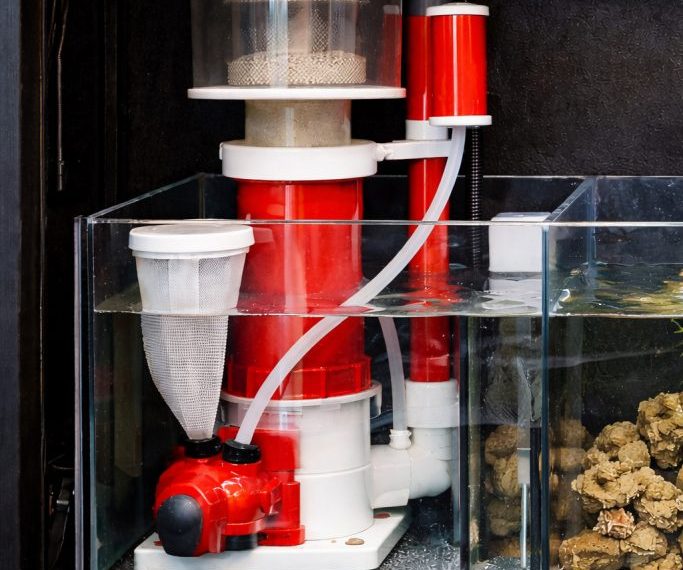
Protein Skimmer Reef Tank Guide
Learn how a protein skimmer works, how to size one, and how to tune it for a cleaner,…
 By
By
Reef Aquarium Water Parameters
Learn the ideal reef aquarium water parameters, safe ranges, and how to keep salinity, alkalinity, nutrients, and pH…