Reef Tank Automation Guide
Automating your reef tank is one of the best ways to keep your corals thriving while reducing daily maintenance. Smart automation can stabilize parameters, protect your livestock from common failures, and give you more time to enjoy the tank instead of constantly tinkering with it.
Core Systems to Automate First
Before adding fancy gadgets, focus on the systems that have the biggest impact on stability and livestock safety.
1. Auto Top-Off (ATO)
An auto top-off system replaces evaporated water with fresh RO/DI water, keeping salinity stable. This is usually the first automation upgrade reefers install.
- Why it matters: Sudden salinity swings stress corals, inverts, and fish.
- Basic setup: A small pump in a reservoir, a sensor in the sump, and a controller or ATO unit.
- Safety tips: Use dual sensors (primary + backup) and keep the reservoir sized so it can’t drastically lower salinity if it ever runs continuously.
For more on keeping your water stable, see our guide on reef tank water parameters.
2. Lighting Control
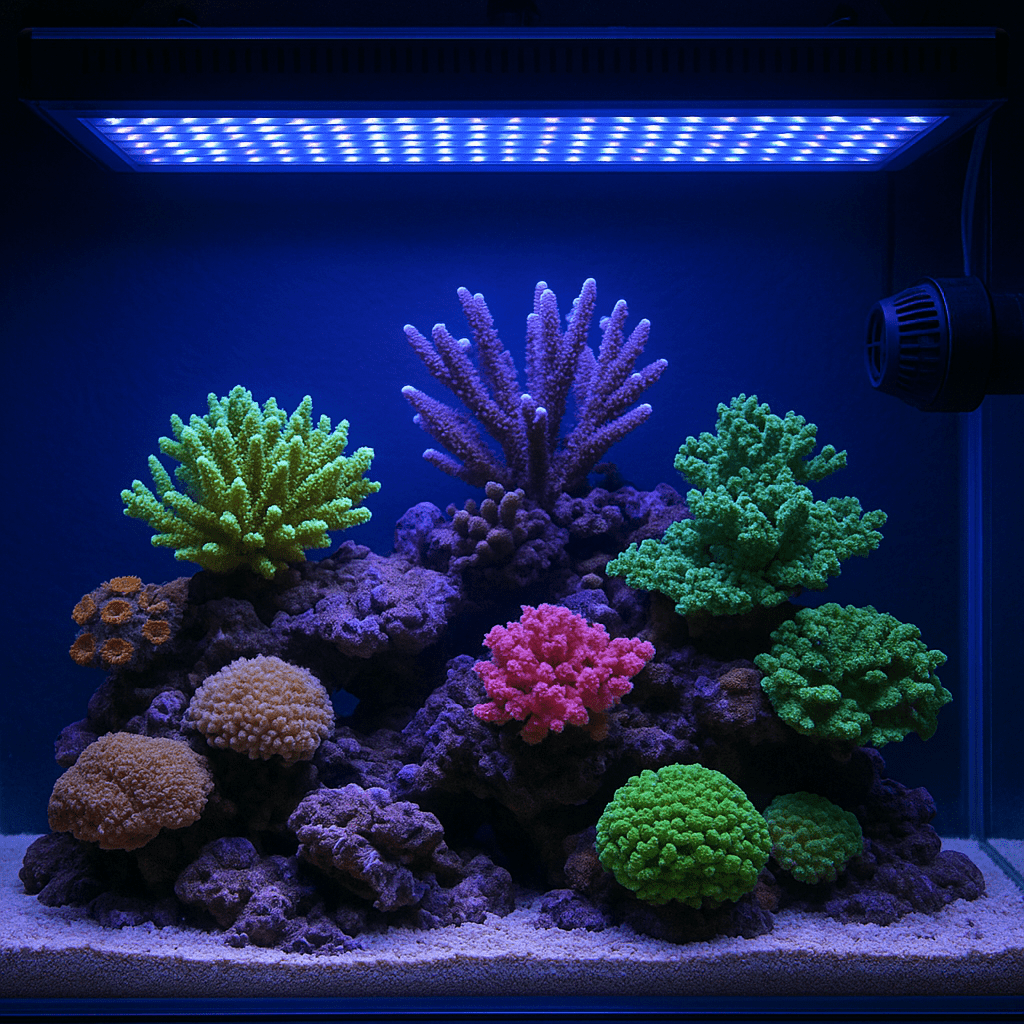
Modern LED fixtures usually include built-in timers and dimming, making light automation simple.
- Consistency: Program a regular photoperiod (e.g., 9–10 hours of full light).
- Ramp up/down: Use sunrise/sunset ramps to reduce light shock and mimic natural conditions.
- Acclimation mode: When adding new corals or upgrading lights, use a lower starting intensity and slowly increase over 2–4 weeks.
Pair your lighting schedule with a stable nutrient export routine like the ones discussed in our reef tank maintenance schedule article.
3. Heating, Cooling, and Temperature Safety
Temperature swings can be deadly, so automation here is crucial.
- Use a controller: Plug your heater into a temperature controller rather than trusting the heater’s internal thermostat alone.
- Set tight ranges: Aim for 77–79°F (25–26°C) with a narrow control band (e.g., 78°F on, 78.5°F off).
- Redundancy: Two smaller heaters instead of one large unit reduce the risk of catastrophic failure.
Taking Automation to the Next Level
Once the basics are covered, you can layer in smarter controls that actively protect your reef and fine-tune stability.
4. Dosing Pumps for Alk, Calcium, and More
As coral demand grows, manual dosing becomes inconsistent. Peristaltic dosing pumps can add alkalinity, calcium, and magnesium in small, frequent amounts.
- Start simple: Automate alkalinity first; it tends to fluctuate the most.
- Test often: Manually test alkalinity and calcium several times a week until you dial in your daily dosing volume.
- Spread doses: Dose small amounts multiple times per day to avoid parameter spikes.
5. Smart Controllers and Monitoring
Full-featured aquarium controllers can manage outlets, read sensors, and send alerts to your phone.
- Power management: Program fail-safes (e.g., turn off return pump if sump level is too low).
- Alerts: Get notifications for high temperature, low pH, or power loss.
- Remote access: Check on your tank and make adjustments when you’re away from home.
When planning controller layouts and cable runs, it helps to start with a clean setup like in our reef tank equipment setup walkthrough.
Hobbyist tip: Automate gradually. Add one system at a time, let it run for a few weeks, and verify everything works as expected before layering on the next piece of tech.
Conclusion: Automation as a Stability Tool
Reef tank automation isn’t about making the aquarium “hands-off” – it’s about making your hands-on time more effective. By automating top-off, lighting, temperature, and dosing, you dramatically improve stability and reduce the risk of human error. Start with the essentials, build in redundancy and safety, and let data and alerts guide your decisions. The result is a more resilient reef and more time spent enjoying the view instead of chasing problems.
Sources
- Holmes-Farley, R. (Reef Chemistry Articles), Reefkeeping Magazine Archives.
- Bulk Reef Supply, BRS TV Video Series on Reef Automation and Controllers.
- Manufacturer documentation for common ATOs, dosing pumps, and aquarium controllers.
Was this helpful?
Related Posts
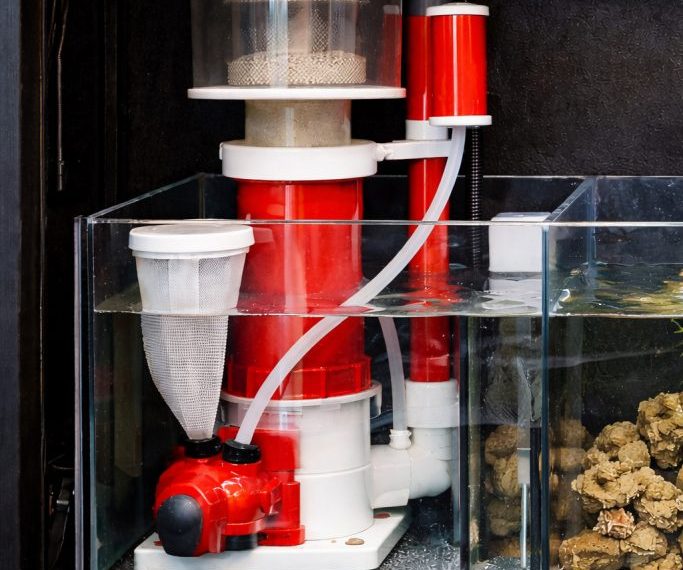
Protein Skimmer Reef Tank Guide
Learn how a protein skimmer works, how to size one, and how to tune it for a cleaner,…
 By
By
Reef Aquarium Water Parameters
Learn the ideal reef aquarium water parameters, safe ranges, and how to keep salinity, alkalinity, nutrients, and pH…