

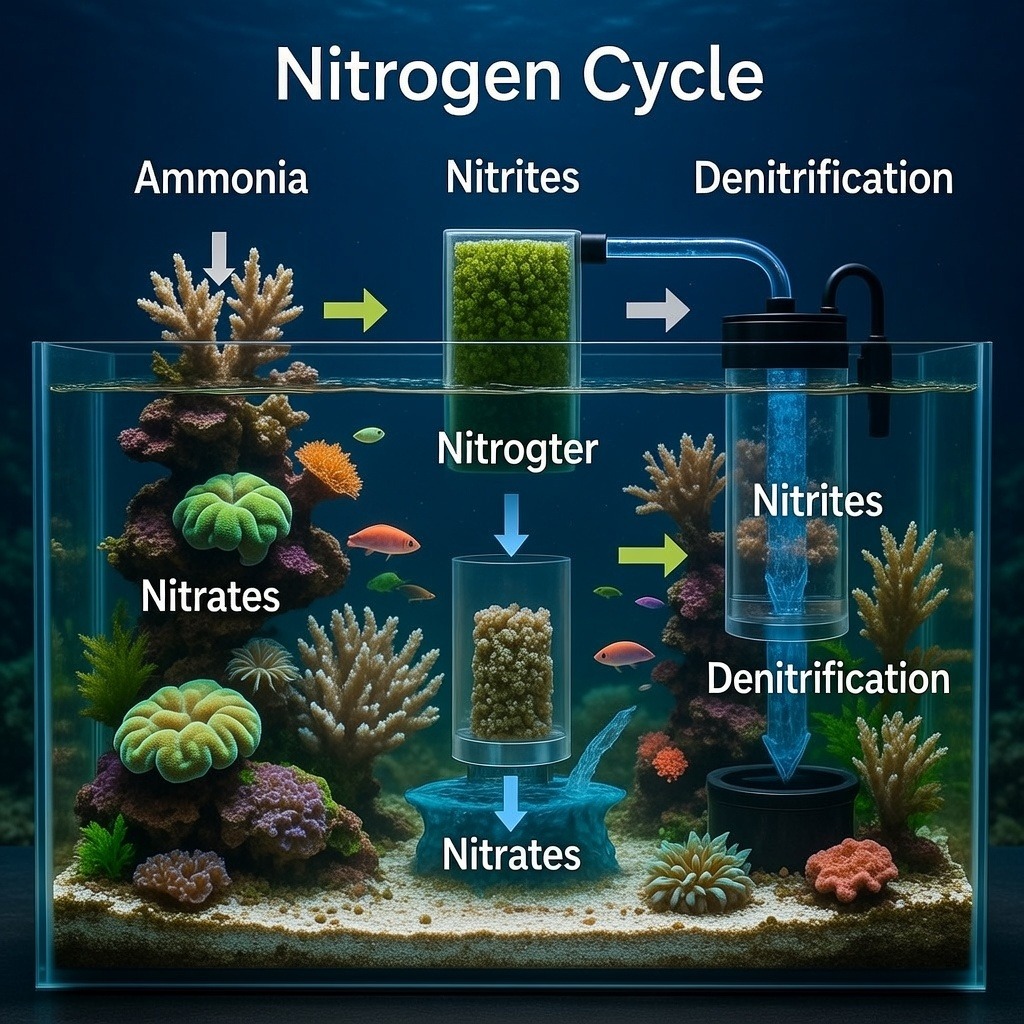
Cycling a reef tank builds the biological filter that keeps fish and corals alive. A proper cycle grows bacteria that turn toxic ammonia into nitrite, then into less harmful nitrate. If you rush this stage, livestock often pays the price. If you do it right, your reef starts on stable ground.
Many beginners hear the word cycle, but they do not know what to watch or test. This guide explains the reef tank nitrogen cycle in plain language. You will learn what happens in the water, how to start the cycle, what supplies help most, and how to know when the tank is ready. I will also cover common mistakes, troubleshooting, and the safest way to add your first reef animals.
Quick Reference Table
| Topic | Recommendation |
|---|---|
| Cycle length | Usually 2 to 6 weeks |
| Ammonia source | Pure ammonium chloride or fish food |
| Bacteria starter | Helpful, but not magic |
| Target ammonia dose | About 1 to 2 ppm |
| When cycle is complete | Ammonia and nitrite process to zero within 24 hours |
| Nitrate during cycle | Normal and expected |
| Lights during cycle | Keep low or off to limit algae |
| First water change | After cycle completes, if nitrate is high |
| Best first livestock | Hardy cleanup crew and quarantined fish |
| Biggest mistake | Adding fish too early |
This table gives the short version. The details matter, though. Small choices during the cycle can affect algae, stability, and livestock safety for months.
What Cycling a Reef Tank Really Means
A new reef tank has water, rock, sand, and equipment. It does not yet have a mature biological filter. That filter is made of beneficial bacteria. These bacteria live on rock, sand, glass, and inside filter media.
When waste enters the tank, it breaks down into ammonia. Ammonia is highly toxic. In a cycled tank, one group of bacteria converts ammonia into nitrite. Nitrite is also toxic. A second group converts nitrite into nitrate. Nitrate is far less toxic in most marine aquariums, though high levels can still stress corals and fuel algae.
This process is the nitrogen cycle. In reef keeping, cycling means establishing enough bacteria to handle the waste your tank will produce. That is why patience matters so much. The bacteria colony must grow to match the bioload. A tank that looks clear can still be biologically immature.
If you want a strong foundation, read more about reef tank water parameters and live rock for reef tanks.
What You Need Before You Start the Cycle
Set up the tank fully before cycling. Install your return pump, heater, powerheads, and filtration. Use saltwater mixed with RO/DI water if possible. Stable salinity matters from day one. Aim for around 1.025 specific gravity for a reef system.
Add your rock and sand before dosing ammonia. Dry rock is common today. It works well, but it usually cycles more slowly than true cured live rock. Dry sand is also fine. Just rinse if the product instructions recommend it.
You will also need test kits. At minimum, test ammonia, nitrite, nitrate, salinity, and temperature. A reliable heater is essential. Bacteria grow best in stable, warm water. Most reef keepers cycle between 77 and 79 degrees Fahrenheit.
Bottled bacteria can help seed the system. They often shorten the process. Still, they are not a substitute for testing. Use them as a tool, not a shortcut. If you are building a full system, our guides on reef tank setup checklist and best protein skimmer for reef tank can help.
Step-by-Step Reef Tank Cycling Guide
Step 1: Fill and stabilize the tank. Mix saltwater to the correct salinity. Turn on the heater and flow pumps. Let temperature and salinity stabilize for a full day.
Step 2: Add rock, sand, and bacteria. Place aquascape materials first. Then add bottled bacteria if you plan to use it. Follow the product dose exactly.
Step 3: Add an ammonia source. Use pure ammonium chloride if possible. This gives more control. Dose to about 1 to 2 ppm. You can use fish food instead, but it is less precise and messier.
Step 4: Test every few days. First, ammonia rises. Then nitrite appears. Later, nitrate rises. This pattern shows the cycle is moving forward.
Step 5: Wait for ammonia to hit zero. Once the first bacteria group grows, ammonia drops faster. Nitrite may stay elevated for a while. That is normal.
Step 6: Confirm nitrite also reaches zero. When both ammonia and nitrite read zero, your bacteria colony is much stronger. Nitrate should now be detectable.
Step 7: Perform a final test challenge. Dose a small amount of ammonia again, around 1 ppm. If the tank processes ammonia and nitrite back to zero within 24 hours, the cycle is complete.
Step 8: Do a water change if needed. If nitrate is high, do a large water change. This makes the tank safer for the first fish and early corals.
How Long Does a Reef Tank Cycle Take?
Most reef tanks cycle in two to six weeks. Some finish faster with cured live rock and bottled bacteria. Others take longer with dry rock, cooler water, or weak ammonia sources. There is no fixed calendar date that guarantees success.
That is why testing matters more than guessing. Many hobbyists ask if their tank is cycled after seven days. Sometimes it is close. Often it is not. A tank may show zero ammonia because there was never enough ammonia added in the first place. That does not prove the biofilter is ready for fish.
A complete cycle means the tank can process waste, not just sit at zero. This is an important difference. Always verify with a controlled ammonia source. If you skip that check, you may overload the tank on day one.
Patience here saves money, time, and livestock. It also reduces stress later, when you begin stocking corals and fish.
Lighting, Flow, and Equipment During the Cycle
Keep lights low or off during the cycle unless you are curing live rock with photosynthetic hitchhikers. Bright lights on a new tank often trigger ugly algae blooms. Diatoms, film algae, and cyanobacteria are common in immature systems.
Good water flow helps a lot. Bacteria colonize surfaces better when oxygen levels stay high. Run your return pump and powerheads as normal. Surface agitation is useful. It supports gas exchange and keeps oxygen available for nitrifying bacteria.
Your protein skimmer can run during the cycle. Some hobbyists turn it down for the first few days after adding bottled bacteria. Others run it normally. Both methods can work. The bigger issue is consistency. Keep temperature stable. Avoid large salinity swings. Do not keep changing equipment settings every day.
If you want to understand early nutrient control, see how to lower nitrate in a reef tank.
When to Add Fish, Corals, and Cleanup Crew
Do not add fish until the cycle is confirmed complete. Start with one or two hardy, quarantined fish. Add slowly. The bacteria colony adjusts to the new waste load over time. If you add too many fish at once, ammonia can return.
A cleanup crew can often go in after the cycle and first water change. Snails are common first additions. They help with film algae and diatoms, which usually appear in new tanks. Avoid overstocking cleanup crew animals. A sterile tank cannot feed a huge crew.
Corals are best added after the tank shows some stability. A freshly cycled tank is not always coral-ready. Parameters may still swing. Alkalinity, calcium, and phosphate often need tuning before stony corals thrive. Soft corals and some hardy LPS corals usually tolerate newer systems better than SPS corals.
Take a slow approach. Stability beats speed in reef keeping almost every time.
Common Problems
Ammonia Will Not Drop
This usually means the bacteria colony has not established yet. Check temperature first. Cold water slows bacterial growth. Confirm salinity is in a normal reef range. Very high ammonia can also stall the cycle. If you overdosed ammonia far above 2 ppm, a partial water change may help.
Nitrite Stays High for Weeks
This is common with dry rock systems. The second bacterial group often lags behind the first. Keep waiting and testing. Do not add fish just because ammonia reached zero once. Nitrite must also be processed reliably.
Cloudy Water During the Cycle
Cloudy water often comes from bacterial blooms or dusty sand. If the tank smells foul, check for decaying organics. If the smell is mild and livestock is absent, it is usually not serious. Maintain flow and oxygenation. Do not keep adding random chemicals.
Algae Explosion in a New Tank
New tanks often go through ugly phases. Diatoms are especially common. Reduce light duration. Use RO/DI water. Keep nutrients in range, but do not chase perfect zeros. Time and stability solve many early algae issues.
Cycle Crashed After Adding Fish
This usually points to overstocking or a weak initial cycle. Test ammonia immediately. Perform water changes if needed. Feed lightly. Consider adding more bacteria. Then slow down stocking for several weeks.
Frequently Asked Questions
Can I cycle a reef tank with fish?
It is not recommended. Fish-in cycling exposes animals to toxic ammonia and nitrite. Fishless cycling is safer, cleaner, and more humane.
Do I need live rock to cycle a reef tank?
No. Dry rock cycles well. It often takes longer, though. Bottled bacteria can help seed dry rock systems.
Should I do water changes during the cycle?
Usually not, unless ammonia was overdosed or something went wrong. Most hobbyists wait until the cycle finishes, then lower nitrate with a water change.
Is nitrate normal after cycling?
Yes. Nitrate is the expected end product of the cycle. High nitrate is common in new tanks and can be reduced with water changes.
Can I add corals right after the cycle?
You can add a few hardy corals later, but wait for stability first. A tank can be cycled for fish waste and still be immature for sensitive corals.
Final Tips for a Smooth Reef Tank Cycle
The best reef tank cycles are boring. That is a good thing. Stable temperature, stable salinity, measured ammonia dosing, and regular testing work better than constant tinkering. Avoid miracle claims. Avoid rushing livestock. Let the bacteria do their job.
Once your cycle is complete, stock lightly and feed modestly. Keep testing during the first month after adding fish. New tanks are still maturing, even after the initial cycle ends. If you build slowly, your reef will reward you with fewer losses and fewer surprises.
Was this helpful?
Related Posts
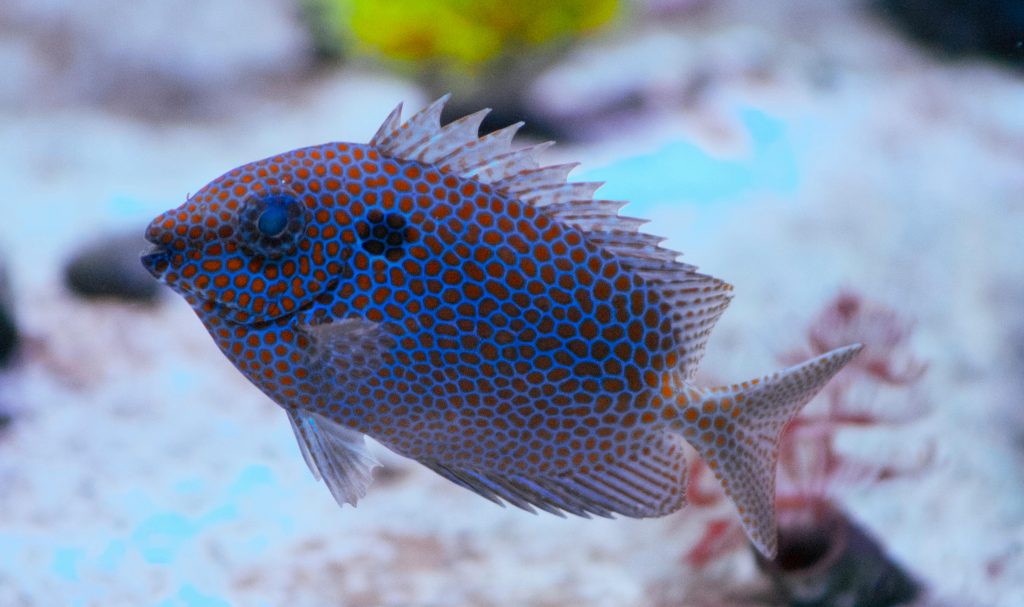
Gold Spotted Rabbitfish (Siganus Punctatus)
Gold Spotted Rabbitfish care includes large tanks, heavy algae feeding, and caution with corals. Learn tank size, diet,…
 By
By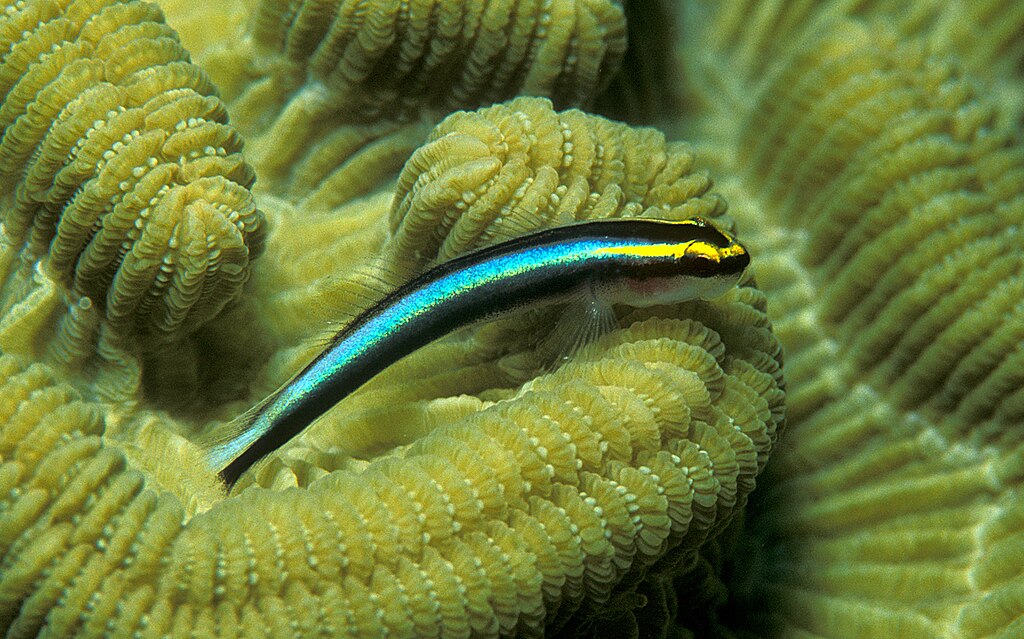
Sharknose Goby (Elacatinus evelynae)
Sharknose Goby care is simple in stable reef tanks. Learn feeding, tank setup, compatibility, and common problems for…
[favorite_button]
My Bookmarks:
To see full list click here
[user_favorites user_id="" include_links="true" site_id="" post_types="" include_thumbnails="true" thumbnail_size="thumbnail" include_excerpt="false"]