Reef tanks thrive on routine. A clear schedule keeps nutrients stable and livestock calm. It also helps you spot problems early.
Daily and weekly reef checks
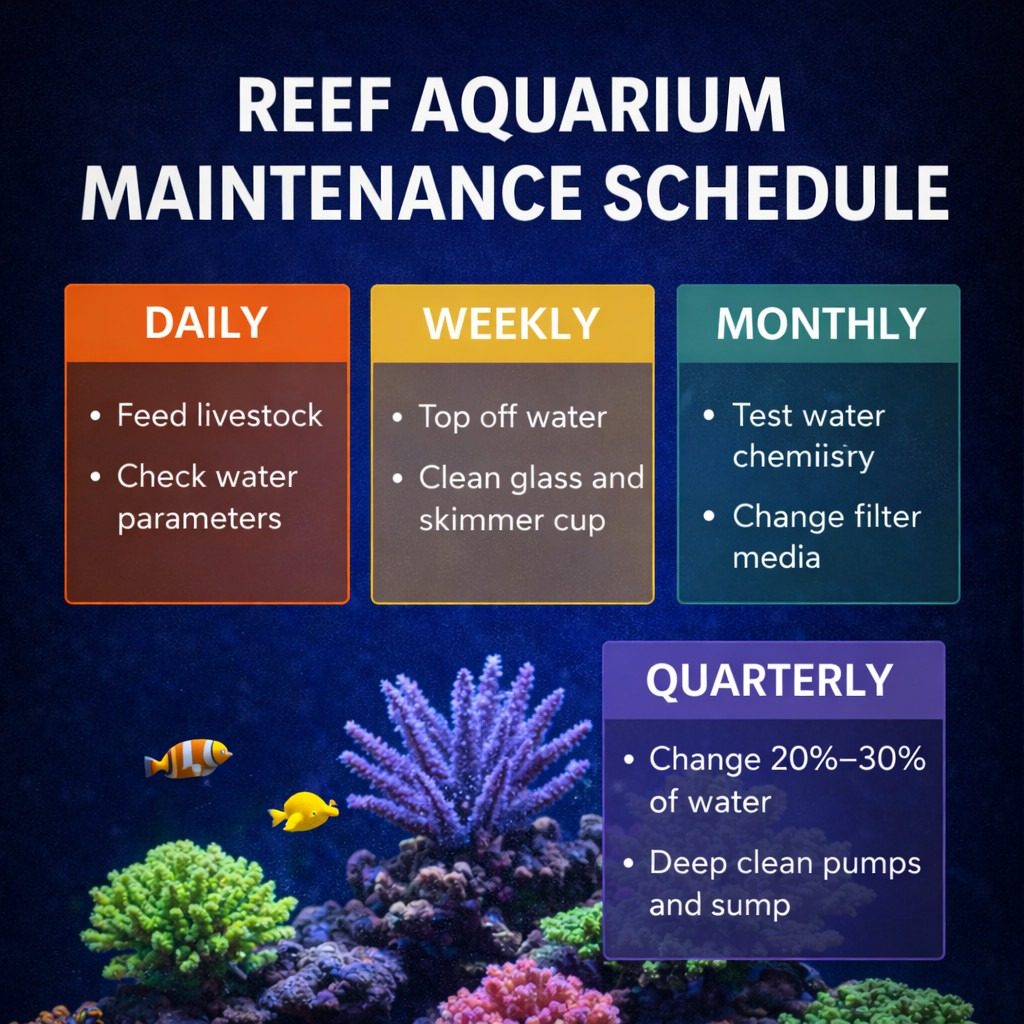
Start with short daily checks. Look at fish breathing and coral polyp extension. Confirm heaters and pumps run. Catching issues within hours can save a tank.
Top off evaporated water every day if you do not use an ATO. Use fresh RODI only. Never top off with saltwater. Evaporation raises salinity fast in small systems.
Feed with intent. Use small portions and remove uneaten food after five minutes. For most mixed reefs, feed fish 1–2 times daily. Feed corals 2–3 times weekly if nutrients allow.
Do weekly testing and light cleaning. Target these ranges: salinity 1.025–1.026, temperature 77–79°F, alkalinity 8–9 dKH, calcium 400–450 ppm, magnesium 1250–1400 ppm. Keep nitrate 2–15 ppm and phosphate 0.03–0.10 ppm for many reefs.
- Wipe the glass and inspect for new pests.
- Empty and rinse the skimmer cup with warm water.
- Test alkalinity weekly, even if you test nothing else.
- Check ATO reservoir level and float switch movement.
If alkalinity swings more than 0.5 dKH in a week, adjust dosing. Increase or decrease by 5–10% at a time. Re-test after two days. Stability matters more than chasing a perfect number.
For more on stability, review reef tank water parameters. If you are setting routines from scratch, see beginner reef tank checklist.
Monthly and quarterly deep maintenance
Plan one larger session each month. Perform a 10–15% water change for most systems. Mix saltwater for 24 hours with heat and flow. Match salinity within 0.001 and temperature within 1°F.
Clean pumps and powerheads monthly or every two months. Soak parts in a 1:1 vinegar and water mix for 20–30 minutes. Scrub calcium deposits with a soft brush. Rinse well with fresh water before reinstalling.
Replace or service filtration on a schedule. Change activated carbon every 2–4 weeks if you run it. Replace GFO only when phosphate rises. Many tanks need 4–8 weeks between changes. Rinse filter socks every 2–3 days to avoid nitrate spikes.
Calibrate probes and check equipment quarterly. Calibrate salinity probes with 35 ppt solution. Calibrate pH probes with 7.00 and 10.00 fluids. Replace RO/DI sediment and carbon when pressure drops or TDS rises.
- Monthly: 10–15% water change and pump inspection.
- Every 2–4 weeks: carbon change and skimmer neck cleaning.
- Quarterly: probe calibration and RO/DI performance check.
- Twice yearly: replace old light lenses and inspect wiring.
Troubleshooting and common schedule mistakes
Many issues come from missed small tasks. A dirty skimmer neck can cut foam production. A clogged filter sock can raise nitrate within days. A stuck ATO can drop salinity and stress corals.
Use simple triggers to act fast. If nitrate climbs above 20 ppm, reduce feeding by 20% for one week. Increase water changes to 15% weekly until it drops. Add more export only after testing confirms the trend.
If phosphate hits 0.00, slow down on removers. Corals can pale from starvation. Aim for 0.03–0.10 ppm in many reefs. Add more fish food or dose amino acids carefully if needed.
Quarantine and observation protect your schedule. New fish often bring parasites and stress. A simple two to four week quarantine reduces surprises. For a step-by-step process, read quarantine tank setup.
- Write tasks on a calendar and set phone reminders.
- Log test results and dosing changes in one notebook.
- Keep spare heater, return pump, and air pump on hand.
- Mix emergency saltwater and store 5–10 gallons ready.
Do not change many things at once. Make one adjustment and wait 48 hours. Test again before the next change. This avoids chasing numbers and stressing livestock.
Sources: Randy Holmes-Farley, “Reef Aquarium Water Parameters” (Advanced Aquarist); Julian Sprung, The Reef Aquarium (volumes); Eric Borneman, Aquarium Corals.
Was this helpful?
Related Posts
Best Reef Safe Cleanup Crew
The best reef safe cleanup crew includes hardy snails, selective scavengers, and a few specialty invertebrates matched to…
 By
By
Dragonets Fish Care
Dragonets are beautiful reef fish, but they need mature tanks and steady food sources. Learn how to keep…