

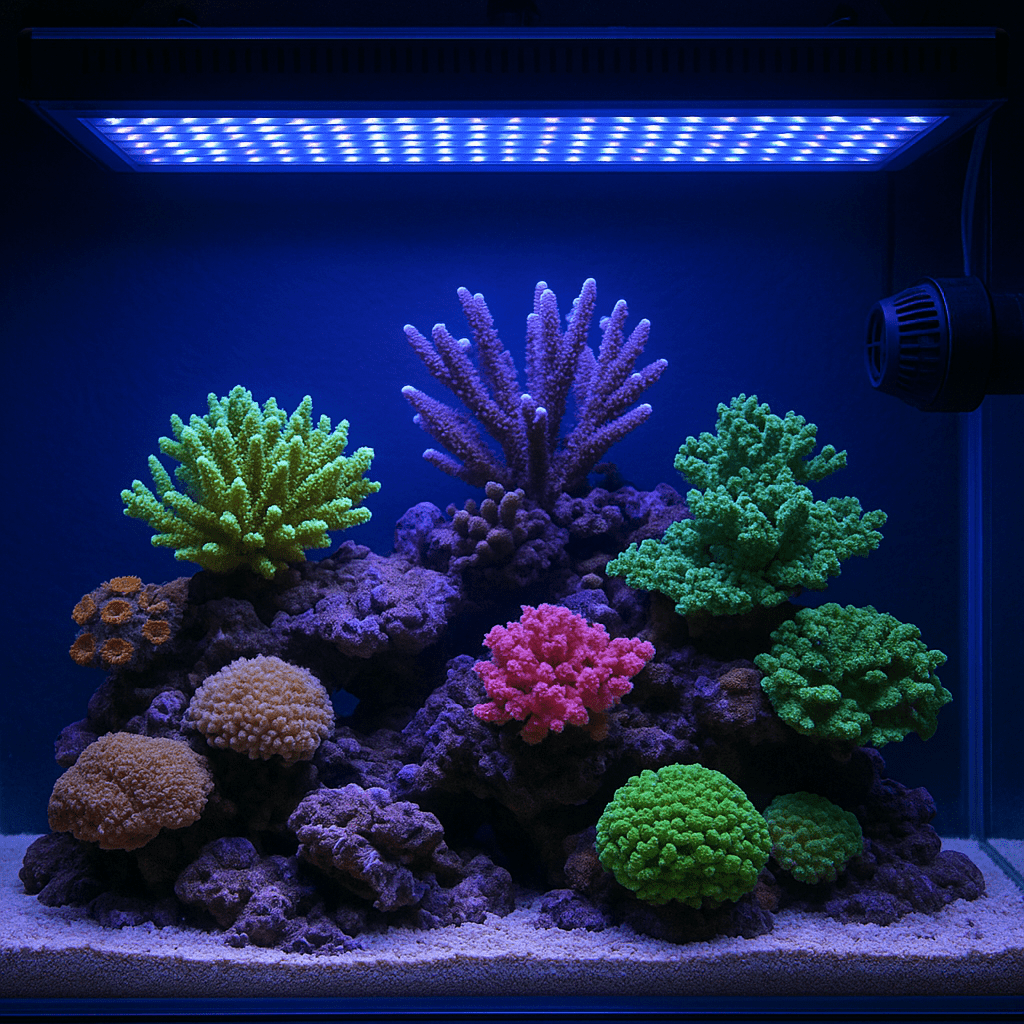
Stable salinity is one of the most important parts of reef keeping. Corals, fish, and invertebrates handle a specific salt level well. They do not handle rapid change well. This guide explains how to keep salinity steady, how to measure it correctly, and how to fix common problems before they stress your reef.
Many reef problems start with simple instability. Salinity swings are a common example. A tank may look fine in the morning and stressed by evening. Often, evaporation, poor top off habits, or inaccurate testing is the cause. In this guide, you will learn the ideal reef salinity range, the best tools for measuring it, and the daily habits that prevent drift. You will also learn how salinity affects coral health, fish behavior, and water chemistry. If you are a beginner, this article will help you build strong habits early. If you are experienced, it will help you troubleshoot subtle issues that can hold a reef back.
Quick Reference Table
| Topic | Recommended Range or Action |
|---|---|
| Target salinity | 1.025 to 1.026 specific gravity |
| Target ppt | 35 ppt |
| Temperature for testing | Use calibrated tools and test consistently |
| Top off water | Fresh RO/DI water only |
| Water change salinity | Match display tank before use |
| Best stability tool | Auto top off system |
| Safe correction speed | Slow changes over days, not hours |
| Main cause of drift | Evaporation and inconsistent top off |
Why Salinity Stability Matters
Salinity affects nearly every process in a reef tank. Fish use energy to regulate fluids in their bodies. Corals balance ions between tissue and surrounding water. Invertebrates are often even more sensitive. When salinity changes fast, animals must adapt quickly. That stress can reduce feeding, extension, and growth.
Stable salinity also supports stable chemistry. Calcium, alkalinity, and magnesium readings all shift with salinity. If salinity creeps upward, test results can appear stronger than they really are. If salinity falls, numbers can look lower. This confuses dosing decisions. It can lead to chasing numbers instead of solving the real issue.
Many reef keepers focus on the exact target. That matters, but stability matters more. A tank held at 1.025 every day is better than a tank swinging between 1.023 and 1.027. Aim for natural seawater levels, then keep them steady. Your corals will usually tell you when you succeed. Polyp extension improves. Tissue looks fuller. Fish breathe calmly and act normally.
What Salinity Should a Reef Tank Be?
Most reef aquariums do best at 35 ppt. That equals about 1.026 specific gravity on many hobby tools. A practical target is 1.025 to 1.026. Staying in that narrow range works well for mixed reefs, SPS tanks, soft coral systems, and most fish and invertebrates.
Some hobbyists run fish-only tanks slightly lower. That can reduce osmotic stress for some fish. It is less ideal for coral systems. Corals and many invertebrates evolved in stable ocean water. They generally respond best when your tank matches it closely.
Choose one target and stick with it. Do not bounce between values because of forum opinions. Consistency wins. If your tank has been stable at 1.025, there is rarely a reason to force 1.026 overnight. If you want to adjust, do it slowly. Changes should happen over several days. This protects shrimp, snails, starfish, and delicate corals.
You can learn more about reef chemistry basics in our water quality articles, including reef tank parameter guide, reef tank water changes, and how to use RO/DI water.
How to Measure Salinity Correctly
Good salinity control starts with good measurement. Many tank issues come from bad tools, poor calibration, or inconsistent technique. A refractometer is a solid choice. A quality digital salinity meter also works well. Swing arm hydrometers are cheap, but they are less reliable. Salt creep and trapped bubbles can skew readings.
Always calibrate your tool correctly. This is critical. Many reef keepers calibrate refractometers with pure water. That can introduce error at seawater strength. A 35 ppt calibration solution is better. It checks the tool at the range you actually use. Recalibrate often. Monthly is a good habit. More often is better if your room temperature changes a lot.
Take samples from a high-flow area. Avoid surface film and sump corners with stagnant water. Rinse the tool with RO/DI water after use. Dry it gently. Salt residue causes bad readings over time. If a reading seems odd, test again. Then test freshly mixed saltwater as a second check. Reliable measurement is the foundation of salinity stability.
Step-by-Step: How to Keep Salinity Stable
- Set a clear target, such as 35 ppt or 1.026 specific gravity.
- Use a calibrated refractometer or digital meter.
- Mark your normal sump water level.
- Replace evaporation with fresh RO/DI water only.
- Install an auto top off if possible.
- Mix new saltwater fully before water changes.
- Match new water salinity to the display tank.
- Check salinity at the same time each week.
- Watch for seasonal evaporation changes.
- Correct drift slowly over several days.
This routine prevents most salinity problems. The key point is simple. Salt does not evaporate. Water does. As water leaves the tank, salinity rises. When you top off with saltwater by mistake, it rises even more. Top off must always be fresh water. Water changes are different. Those should use saltwater that matches the tank.
An auto top off, or ATO, is one of the best reef upgrades you can buy. It adds small amounts of fresh water throughout the day. This prevents the daily rise that happens in open-top tanks and sump systems. It also saves time. For many hobbyists, an ATO improves stability more than any other piece of equipment.
Evaporation, Top Off, and Daily Stability
Evaporation is the main reason salinity changes. Tanks with strong lighting, open tops, and active fans lose water fast. Dry winter air can make this much worse. A small nano reef may swing quickly because even one quart of loss is a large percentage of total volume. Larger systems swing more slowly, but they still drift.
Manual top off can work, but it requires discipline. Add fresh RO/DI water every day. Better yet, add it twice daily. Morning and evening work well. Waiting several days is risky. The swing may be enough to irritate LPS corals, reduce soft coral extension, or stress shrimp during molts.
An ATO reservoir should hold enough water for several days. Use a reliable sensor and keep it clean. Test it often. A stuck float or dirty optical sensor can cause problems. Also check your return section size. In most sump systems, evaporation shows there first. If that section is too small, salinity can rise quickly between top offs.
For more equipment planning, see our guides on reef tank sump setup and best auto top off systems.
Mixing Saltwater the Right Way
Water changes should support stability, not disrupt it. Always mix saltwater in a separate container. Use RO/DI water first. Then add salt mix slowly with circulation. Let it mix fully. Many reef keepers wait several hours. Overnight is even better for consistency.
Check temperature and salinity before use. Match both to the display tank as closely as possible. A mismatch can shock corals, especially if the water change is large. This matters even more in nano reefs. A five-gallon change in a small tank can shift salinity fast if the new water is off.
Never add dry salt directly to a stocked display tank. It can burn tissue and create local spikes. Also avoid guessing salt amounts by eye. Measure carefully. Different salt mixes dissolve differently. Humidity can affect scoop volume too. Once you learn your preferred mix ratio, write it down. Consistent preparation creates consistent results.
Common Problems
Why does my salinity keep rising?
The most likely cause is evaporation without enough fresh top off. Check your sump return chamber. It may be dropping more than you realize. If you top off by hand, increase frequency. If you use an ATO, inspect the sensor, pump, and reservoir. Also confirm that your salinity tool is calibrated.
Why did salinity drop after a water change?
Your new saltwater was probably mixed too weak. Test the mixing container before every change. Also make sure you did not overfill the tank with fresh water before adding saltwater. In all-in-one tanks, small volume errors matter a lot.
Can I fix salinity fast?
Fast correction is risky. Raise or lower salinity slowly. Small daily adjustments are safer. For high salinity, use fresh water top off and let it drift downward. For low salinity, replace small amounts with slightly stronger saltwater over several days. Sudden change can stress fish and kill invertebrates.
My refractometer and digital meter disagree
Calibrate both tools with proper 35 ppt solution. Clean them well. Retest with a second sample. If one tool still drifts, replace or service it. Trustworthy equipment saves livestock.
Corals look irritated, but other parameters are fine
Check salinity next. Slow drift often hides behind normal alkalinity and nitrate numbers. LPS may stay retracted. SPS may lose polyp extension. Zoanthids may stay partly closed. Stability often solves these vague symptoms.
How Salinity Affects Corals, Fish, and Invertebrates
Corals prefer stable osmotic conditions. When salinity changes, tissue must adjust. That takes energy away from growth and repair. SPS corals often show stress quickly. LPS corals may inflate oddly or stay withdrawn. Soft corals may droop or stop opening fully.
Fish can tolerate some variation, but repeated swings still cause stress. They may breathe faster, hide more, or eat less. Sensitive species often show this first. Invertebrates are usually the least forgiving. Shrimp, snails, urchins, and starfish can react badly to rapid correction. That is why acclimation matters so much when adding them.
Stable salinity also helps maintain predictable dosing and testing. If your salinity drifts, your calcium and alkalinity consumption can appear inconsistent. Once salinity is stable, many chemistry puzzles become easier to solve. This is one reason experienced reef keepers check salinity early during troubleshooting.
Frequently Asked Questions
What is the best salinity for a reef tank?
The best target is usually 35 ppt, or about 1.025 to 1.026 specific gravity. Stability matters most.
Should I top off with saltwater or fresh water?
Always top off evaporation with fresh RO/DI water. Salt stays behind when water evaporates.
How often should I check salinity?
Check weekly in stable tanks. Check more often in nano reefs, new systems, or tanks without an ATO.
Is 1.023 too low for corals?
Some corals can survive it, but most reef tanks do better closer to natural seawater at 1.025 to 1.026.
How do I lower salinity safely?
Use fresh water top off and lower it gradually over several days. Avoid sudden drops.
Final Tips for Long-Term Salinity Stability
Keep your approach simple. Use one reliable measuring tool. Calibrate it often. Top off with fresh RO/DI water only. Match salinity before every water change. If possible, use an ATO. These habits solve most problems before they start.
When something looks wrong in a reef tank, check salinity early. It is easy to overlook. It also affects many other readings. A stable reef is usually built on stable basics. Salinity is one of the biggest basics of all. Get it right, keep it steady, and the rest of your reef keeping becomes much easier.
Was this helpful?
Related Posts
Yellowtail Damselfish (Chrysiptera Parasema)
Yellowtail Damselfish are hardy, colorful, and reef safe, but they can be territorial. Learn their care, feeding, tank…
 By
ByWater Chemistry Basics
Water chemistry basics are the foundation of reef success. Learn the key parameters, target ranges, and simple ways…
[favorite_button]
My Bookmarks:
To see full list click here
[user_favorites user_id="" include_links="true" site_id="" post_types="" include_thumbnails="true" thumbnail_size="thumbnail" include_excerpt="false"]