

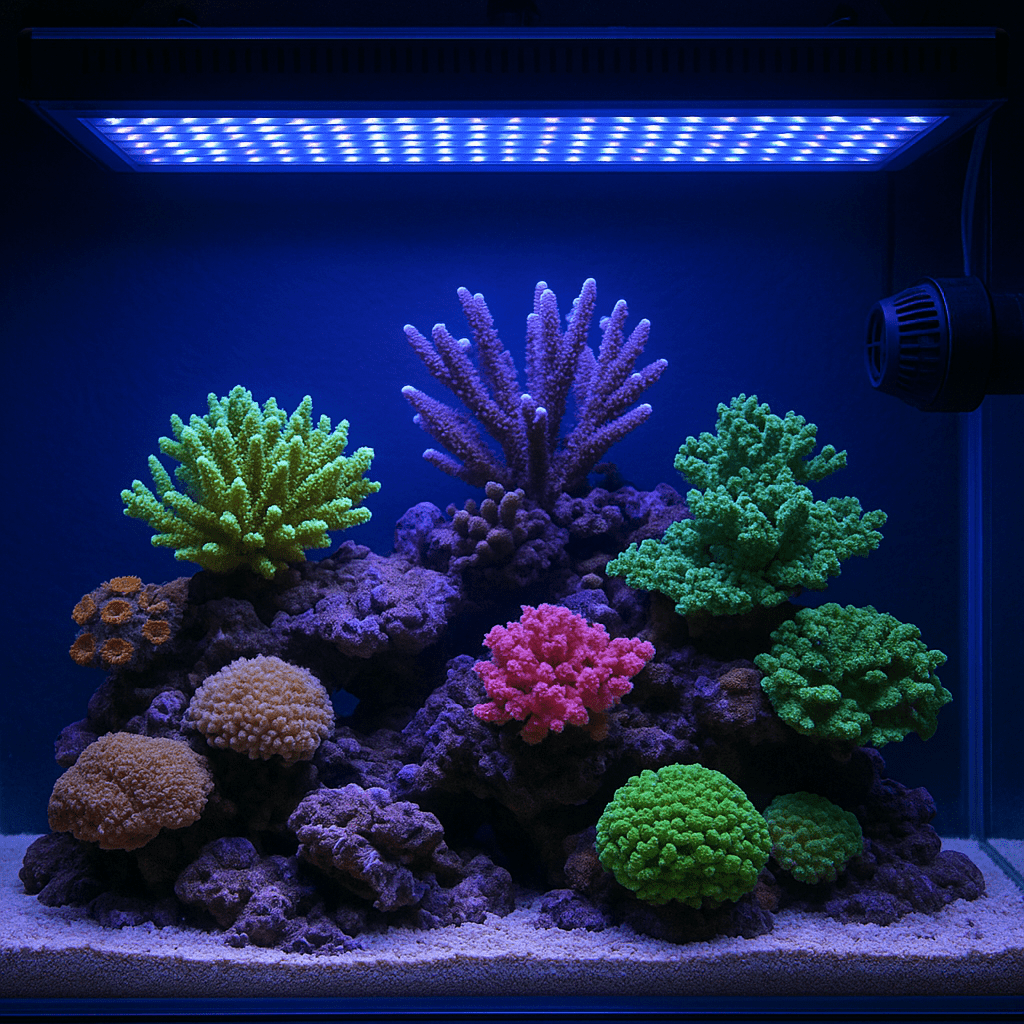
Reef tank top off replaces water lost to evaporation. It keeps salinity stable and protects corals, fish, and invertebrates from daily swings. Most reef tanks benefit from a simple, consistent top off routine. An automatic top off system makes the job easier and more reliable.
Many new reef keepers focus on lighting and filtration first. Those matter, but stable salinity matters just as much. When water evaporates, salt stays behind. That means the water level drops while salinity rises. Even small swings can stress sensitive corals. In this guide, you will learn what reef tank top off means, how to top off correctly, whether you need an ATO, what water to use, and how to avoid common mistakes. You will also learn how top off connects to dosing, kalkwasser, and everyday reef stability.
Quick Reference Table
| Topic | Best Practice |
|---|---|
| Water to use | RODI fresh water only |
| What top off replaces | Evaporated water, not salt |
| Target salinity | 1.025 to 1.026 specific gravity |
| Manual top off frequency | Daily, ideally same time each day |
| Best tool | ATO with reliable sensor and reservoir |
| Where to add water | Sump return section when possible |
| Top off speed | Slow and steady |
| Common mistake | Using saltwater for evaporation replacement |
What Reef Tank Top Off Means
Top off means adding fresh water back to your aquarium after evaporation. This is a daily need in most reef tanks. Heat, fans, dry room air, and open tops all increase evaporation. The amount can be small in a nano tank. It can be several gallons per day in a larger system.
The key point is simple. Only water evaporates. Salt does not. If you do not replace that lost water, salinity climbs. Corals dislike sudden salinity changes. Fish handle them better, but stress still builds over time. Invertebrates can be especially sensitive.
Top off is not the same as a water change. Water changes remove old saltwater and add new mixed saltwater. Top off only restores fresh water volume. That distinction matters. If you top off with saltwater, salinity will rise even more. That mistake is common with beginners. It is also easy to avoid once you understand the process.
Why Stable Salinity Matters in a Reef Tank
Salinity affects every animal in your reef. Corals rely on stable osmotic conditions. Fish regulate fluids through their gills and kidneys. Snails, shrimp, and other inverts can react poorly to sudden swings. Even beneficial bacteria perform best in stable water.
In a small reef tank, evaporation changes salinity faster. A half gallon lost from a nano system is significant. The same loss in a 150-gallon tank matters less. This is one reason beginners often struggle with nanos. Small tanks are less forgiving.
Stable salinity also helps you interpret test results. If salinity drifts, calcium, alkalinity, and magnesium readings become harder to compare. Coral stress may look like a lighting issue or a nutrient issue. Sometimes the real cause is daily salinity fluctuation. Good top off habits remove that variable. That makes the whole tank easier to manage.
If you are still dialing in stability, see reef tank salinity and reef tank water parameters.
What Water Should You Use for Top Off
Use fresh RODI water for reef tank top off. That is the standard. RODI removes chlorine, chloramine, nitrate, phosphate, silicate, copper, and other contaminants. Tap water may seem harmless, but it often fuels algae and adds unwanted impurities.
Do not use premixed saltwater for evaporation replacement. That raises salinity. Do not use untreated tap water unless you have no other option in an emergency. Even then, test your water source and understand the risks.
Store top off water in a clean container with a lid. Food-safe reservoirs work well. Label the container clearly. Keep it free from soap residue and household chemicals. If you mix kalkwasser in your top off reservoir, keep that setup separate from plain water storage. You want full control over what enters your tank.
If your RODI system is new to you, read RODI water for reef tanks for setup and maintenance basics.
Manual Top Off vs Automatic Top Off
Manual top off works, but it requires discipline. You add fresh water by hand each day. This can be fine for small systems or temporary setups. The downside is inconsistency. Miss one day and salinity may drift. Add too much at once and salinity may swing back too fast.
An automatic top off, or ATO, adds fresh water as the water level drops. Most systems use a sensor in the sump return section. When the water falls below the set point, a pump adds fresh water from a reservoir. This keeps the level stable and reduces daily work.
For most reef keepers, an ATO is worth it. It improves stability. It saves time. It also helps your return pump run consistently. If your skimmer sits in a section with fluctuating water depth, stable top off can improve skimmer performance too. Choose a reliable unit with fail-safes. Simple systems often work best.
How to Set Up a Reef Tank Top Off System
A good top off setup is simple. Start with a reservoir sized for several days of evaporation. Place it near the tank or inside the cabinet. Use a covered container to reduce contamination. Install the ATO sensor in the sump return chamber. That is where evaporation shows first.
Next, place the ATO pump in the reservoir. Route the tubing securely to the sump. Keep the output above the water line if possible. This helps prevent back siphon. Some systems include anti-siphon features. Check the manual and test it before trusting it.
Then, test the system several times. Lower the sump water level slightly. Confirm the sensor activates the pump. Make sure the pump stops at the correct level. Watch for overfilling. Check cable routing and drip loops. Small details matter around saltwater.
Finally, mark your reservoir and refill point. That helps you track evaporation trends. Sudden changes may point to a fan issue, room humidity change, or a hidden leak.
Step-by-Step Manual Top Off Guide
- Measure your tank salinity with a calibrated refractometer or digital meter.
- Check the sump or display water level against your normal line.
- Fill a clean container with RODI fresh water.
- Add the water slowly to the sump return section.
- Pause between additions in small tanks.
- Recheck the water level after a few minutes.
- Confirm salinity remains in your target range.
- Repeat daily at the same time when possible.
This routine works well for quarantine tanks and budget builds. It is less ideal for busy schedules. Consistency is the challenge. If you travel often, an ATO is much safer than asking someone to guess how much water to add.
Can You Use Kalkwasser in Top Off Water
Yes, many reef keepers use kalkwasser in top off water. It can maintain calcium and alkalinity while replacing evaporation. This method works best on tanks with moderate demand and steady evaporation. It is popular because it is simple and affordable.
Still, kalkwasser is not plug-and-play. It raises pH and can cause problems if overdosed. Your ATO must be reliable. Large accidental additions can spike pH and stress livestock. Start slowly. Test alkalinity often. Monitor pH, especially at night and after setup changes.
Kalkwasser also has limits. Heavy SPS systems may consume more calcium and alkalinity than top off alone can supply. In that case, you may need two-part dosing or a calcium reactor. Top off water can still be plain RODI while dosing happens separately. Choose the method that matches your tank’s demand and your comfort level.
For more on supplementation, visit reef tank alkalinity.
Common Problems
Salinity Keeps Rising
The usual cause is missed top off or an undersized reservoir that runs dry. Check your ATO pump, sensor, and water supply. Make sure your refractometer is calibrated. Verify that you are topping off with fresh water only.
ATO Adds Too Much Water
This can happen from a stuck float, dirty optical sensor, siphon issue, or poor placement. Clean sensors regularly. Keep snails and debris away from the sensor area. Use a controller or dual-sensor design if possible. Limit reservoir size if you worry about catastrophic overfill.
Water Level Fluctuates Too Much
Check where the sensor sits. It should be in the return section, not a chamber with changing flow. Make sure the pump output is stable. Review sump baffle design. In some tanks, an oversized return section improves daily stability.
ATO Pump Fails Often
Salt creep, kalk residue, and cheap pumps cause many failures. Inspect tubing for clogs. Clean the pump and reservoir. Replace worn parts early. If you dose kalkwasser, expect more maintenance. Deposits build up over time.
Corals Look Stressed After Top Off
Rapid salinity correction may be the issue. Add top off water slowly. Match your normal routine. Test salinity before and after. If the tank was allowed to drift too far, correct it over time instead of all at once.
Best Practices for Long-Term Success
Keep your top off routine boring. That is a good thing. Refill the reservoir before it runs empty. Clean sensors monthly. Calibrate salinity tools often. Watch evaporation changes during winter, summer, and when using cooling fans. Seasonal shifts are normal.
Do not chase exact numbers every hour. Aim for consistency. A stable salinity of 1.025 is better than a daily swing between 1.024 and 1.027. Place your ATO where it is easy to inspect. If maintenance is annoying, it often gets delayed.
It also helps to log reservoir refills. This gives you a rough evaporation rate. That number helps when choosing a larger reservoir or planning travel. If your top off demand suddenly jumps, investigate. You may have increased airflow, a cracked lid, or a plumbing issue.
Frequently Asked Questions
Do I top off a reef tank with saltwater or fresh water?
Use fresh RODI water. Evaporation removes water only. Salt stays in the tank.
How often should I top off my reef tank?
Daily is best for manual top off. An ATO handles this automatically throughout the day.
Is an automatic top off necessary for a reef tank?
It is not mandatory, but it is highly recommended. It improves salinity stability and reduces mistakes.
Where should top off water be added?
Add it to the sump return chamber when possible. That is the safest and most stable location.
Can top off water replace dosing?
Sometimes. Kalkwasser in top off can help. High-demand tanks often need additional dosing support.
Final Thoughts
Reef tank top off is simple, but it has a huge impact. Stable salinity supports healthy corals, steady chemistry, and fewer daily surprises. Start with clean RODI water. Add it consistently. Upgrade to an ATO when you can. A reliable top off system is one of the best quality-of-life improvements in reef keeping. It saves time, reduces stress, and helps your reef stay stable for the long run.
Was this helpful?
Related Posts
Juvenile Orange Shoulder (acanthurus Olivaceus)
Juvenile orange shoulder tangs are bright, hardy, and reef safe, but they grow large and need a spacious…
 By
ByBest Filtration Systems
Best Filtration Systems for a Healthy Saltwater Aquarium Choosing the best filtration system for your saltwater aquarium is…
[favorite_button]
My Bookmarks:
To see full list click here
[user_favorites user_id="" include_links="true" site_id="" post_types="" include_thumbnails="true" thumbnail_size="thumbnail" include_excerpt="false"]