

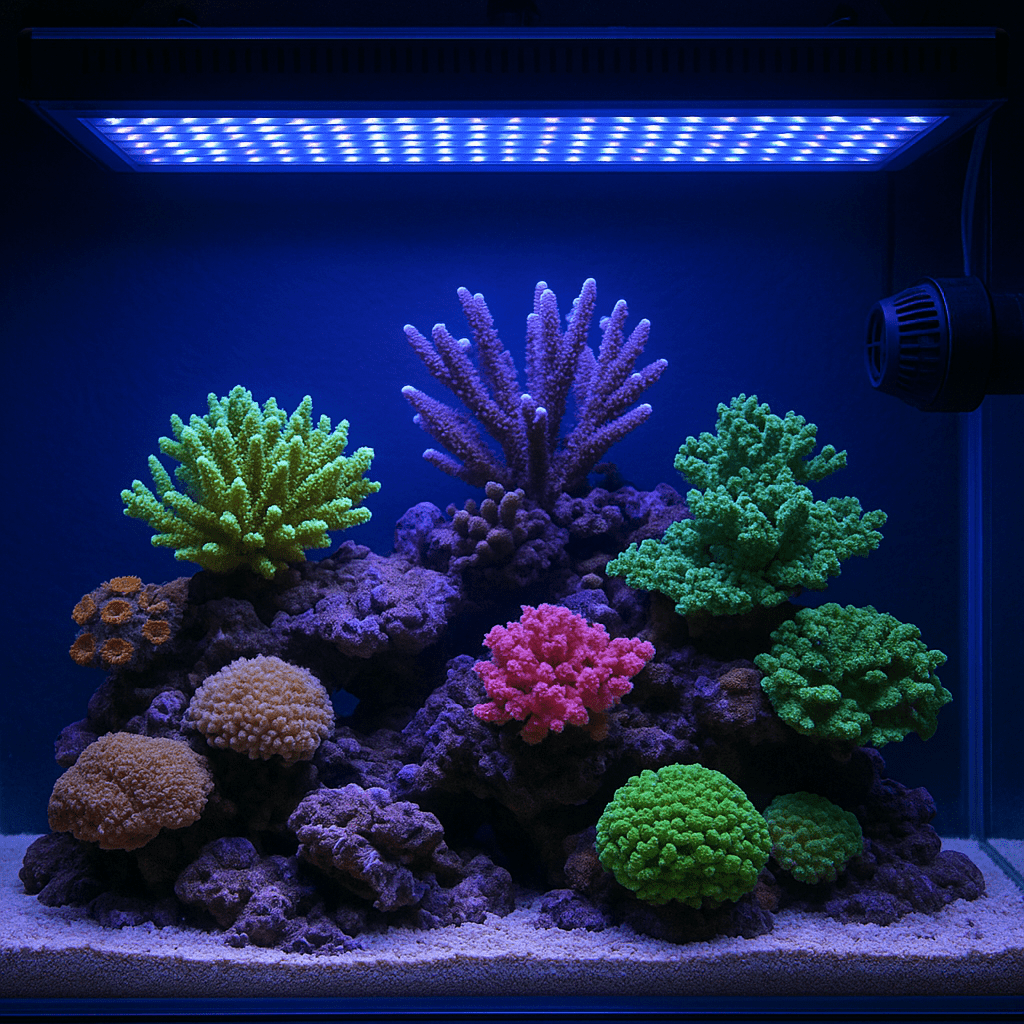
Reef tank troubleshooting starts with stability. Most reef problems trace back to a few basics. Test the water first. Then check equipment, flow, lighting, and livestock behavior. A calm, methodical approach fixes most issues before they become disasters.
Every reef keeper hits rough patches. Corals close up. Algae appears overnight. Fish breathe fast. Parameters drift for no clear reason. The good news is that reef tanks usually give warnings before they crash. You just need to know what to look for. In this guide, you will learn how to diagnose common reef tank problems, what causes them, and how to correct them without making things worse. We will cover water chemistry, coral issues, fish behavior, algae outbreaks, equipment failures, and practical recovery steps that work in real home aquariums.
Quick Reference Table
| Problem | Likely Cause | First Action |
|---|---|---|
| Corals closed | Parameter swing, pests, flow change | Test alkalinity, temperature, salinity |
| Brown algae | New tank, silicates, excess nutrients | Check source water and maintenance routine |
| Green hair algae | High nutrients, weak export | Manual removal and nutrient control |
| Fish gasping | Low oxygen, ammonia, high temperature | Increase aeration and test immediately |
| STN or RTN | Alk swing, stress, bacterial issue | Stabilize parameters and inspect affected coral |
| Cloudy water | Bacterial bloom, sand disturbance | Check oxygen and filtration |
| Cyanobacteria | Detritus, imbalance, low flow areas | Improve flow and nutrient export |
| Dinoflagellates | Ultra-low nutrients, imbalance | Confirm ID before treatment |
Use this table as a starting point. Do not assume the first guess is always correct. Similar symptoms can come from different causes. Good troubleshooting means confirming each step with observation and testing.
How to Troubleshoot a Reef Tank Step by Step
Start with the simplest checks. Look at the tank before touching anything. Are fish breathing heavily. Are corals retracted. Is the water cloudy. Is any pump off. Small visual clues matter. Write down what changed in the last week. New coral, new salt mix, missed top off, overfeeding, dosing error, or a dead snail can all trigger a chain reaction.
Next, test the key parameters. Check temperature, salinity, alkalinity, calcium, magnesium, nitrate, phosphate, ammonia, and pH. Use reliable kits. Recheck any surprising result. Then inspect equipment. Verify heater accuracy. Clean pump intakes. Make sure the skimmer is running correctly. Confirm auto top off function. Look for clogged filter socks and exhausted media.
Finally, fix one issue at a time. Large corrections create new stress. Raise salinity slowly. Adjust alkalinity carefully. Reduce light gradually if corals look shocked. Avoid panic dosing. Reef tanks reward patience more than speed.
Water Chemistry Problems
Water chemistry causes many reef tank problems. Corals need stable conditions more than perfect numbers. Alkalinity swings are especially dangerous. SPS corals often react first. You may see burnt tips, tissue loss, or poor polyp extension. LPS corals may stay shrunken for days. Soft corals can droop or stop opening.
Salinity is another common issue. Swinging salinity stresses all livestock. Refractometers need calibration. Auto top off failures can push salinity up fast. Overfilled systems can drop it too low. Temperature swings also cause trouble. A tank that hits 82 to 84 degrees daily may show coral stress and low oxygen at night.
Ammonia should always be zero in an established reef. If it appears, something died, the biofilter was damaged, or a test error occurred. Nitrate and phosphate should not be zero in every tank. Ultra-low nutrients can lead to pale corals and dinoflagellates. Moderate, stable nutrients are often healthier than extreme nutrient stripping.
Coral Troubleshooting
When a coral looks unhappy, check placement first. Lighting and flow changes often explain sudden decline. A coral moved from low light to strong light can bleach within days. A fleshy LPS in direct flow may stay closed and recede. SPS in weak flow can collect detritus and lose tissue at the base.
Look for aggression too. Corals sting neighbors at night. Sweepers from euphyllia, galaxea, and favia can damage nearby colonies. Chemical warfare also happens in mixed reefs. Soft corals can irritate stony corals when space is tight and carbon is not used regularly.
Pests are another major cause. Inspect for flatworms, nudibranchs, red bugs, vermetid snails, and algae growing on the skeleton. Dip new corals before adding them. Quarantine if possible. If one coral declines while others look fine, think local factors first. If many corals decline together, think system-wide instability.
Fish Behavior and Health Warnings
Fish often show problems before corals do. Rapid breathing is a serious warning. It can indicate low oxygen, ammonia, velvet, or gill irritation. Fish hiding constantly may be bullied, sick, or stressed by poor water quality. Flashing against rocks suggests parasites or irritation. Loss of appetite is another early sign.
Check oxygen at night if fish gasp near the surface by morning. Dense coral growth, high temperature, and weak surface agitation can lower oxygen. Make sure return nozzles break the surface. Add an air stone if needed during emergencies. If only one fish is affected, inspect for injury or aggression. If all fish act stressed, test the water immediately.
Quarantine remains one of the best troubleshooting tools. It prevents disease from entering the display. It also helps you observe feeding and behavior in a controlled setting. A healthy reef tank can still lose fish quickly if parasites are introduced without preparation.
Algae Outbreak Troubleshooting
Algae is not one problem. It is many different problems with similar looks. Green hair algae usually points to excess nutrients, trapped detritus, or weak herbivore pressure. Brown dusty algae is often diatoms, especially in newer tanks. Cyanobacteria forms slimy sheets and thrives in dirty, low-flow zones. Dinoflagellates can appear as brown strings with bubbles and often show up in very low nutrient systems.
The fix depends on correct identification. Do not treat every outbreak the same way. Manual removal helps almost all algae issues. So does better export. Clean detritus from the sump. Rinse mechanical filtration often. Feed more carefully. Use high-quality source water with a maintained RODI unit. Replace exhausted resin and carbon when needed.
Herbivores help, but they are not magic. Snails, urchins, tangs, and blennies support your cleanup plan. They do not replace it. If algae keeps returning, nutrients are entering faster than the system exports them.
Equipment and Mechanical Failures
Equipment problems can mimic biological problems. A weak return pump reduces oxygen and filtration. A dirty skimmer lowers export. A stuck heater can cook a tank in hours. A failed auto top off can swing salinity hard. Light schedule errors can stress corals without obvious signs at first.
Build a habit of weekly inspection. Clean pumps and powerheads. Confirm heater operation with a separate thermometer. Test backup power plans if you have them. Check dosing lines for clogs and siphoning. Inspect the skimmer air intake for salt creep. These simple checks prevent many emergencies.
Power outages deserve a plan. Keep battery air pumps on hand. Know how to maintain circulation and oxygen first. Heat and filtration matter too, but oxygen is the immediate priority. During long outages, feed lightly and avoid unnecessary disturbance.
Common Problems
Why are my corals not opening?
Start with alkalinity, salinity, and temperature. Then check flow and light changes. Inspect for pests and nearby stinging corals. Recent hands-in-tank work can also irritate sensitive species. Activated carbon often helps after chemical irritation in mixed reefs.
Why is my reef tank cloudy?
Cloudy water often comes from bacterial blooms, disturbed sand, or precipitation events. Check oxygen first if fish seem stressed. Review any recent dosing. Excessive bacterial additives or carbon dosing can trigger blooms. Improve aeration and mechanical filtration while you identify the cause.
Why is my alkalinity always unstable?
Unstable alkalinity usually means inconsistent dosing, low testing accuracy, or rising coral demand. Test at the same time each day. Calibrate dosing pumps. Measure actual consumption over several days. Small daily dosing works better than large occasional corrections.
Why are my fish breathing fast?
Rapid breathing points to low oxygen, ammonia, heat, or disease. Increase surface agitation immediately. Test ammonia and temperature. If symptoms continue with normal water quality, investigate parasites. Fast action matters here.
Why does algae keep coming back?
Recurring algae means the root cause remains. Nutrients, detritus, source water, weak flow, and old bulbs or poor spectrum can all contribute. Remove the algae you can see. Then reduce what feeds it.
Recovery Tips After a Reef Tank Problem
After a problem, resist the urge to overhaul the whole system. Big resets often create more instability. Focus on restoring consistency. Perform a reasonable water change if needed. Replace or clean mechanical filtration. Run fresh carbon when toxins or irritation are possible. Resume normal feeding, but avoid excess.
Document what happened. Keep notes on test results, livestock response, and corrective steps. This makes future troubleshooting much easier. It also helps you spot patterns, such as seasonal heat spikes or dosing drift. Reef keeping improves fast when you track changes instead of guessing.
Most important, give the tank time. Corals rarely bounce back overnight. Some improve in hours. Others need weeks. Stability, observation, and patience solve more reef problems than any bottle ever will.
Frequently Asked Questions
What should I test first when my reef tank looks off?
Test temperature, salinity, alkalinity, ammonia, nitrate, and phosphate first. These reveal many common issues quickly.
Can a water change fix most reef tank problems?
A water change helps many issues, but not all. It will not fix broken equipment, poor flow, pests, or disease by itself.
Should nitrate and phosphate be zero in a reef tank?
No. Many reefs do better with low but measurable nutrients. Zero nutrients can stress corals and encourage dinoflagellates.
How do I know if my problem is lighting or water chemistry?
If many corals decline at once, think chemistry first. If only one coral struggles, think placement, light, flow, or aggression.
How can I prevent reef tank problems long term?
Keep parameters stable, quarantine livestock, maintain equipment, use good source water, and avoid sudden changes. Prevention is easier than rescue.
Helpful FancyReef Guides
reef tank water parameters
how to lower nitrate in a reef tank
reef tank lighting guide
clean up crew for reef tank
reef tank cycling guide
Was this helpful?
Related Posts
Best Filtration Systems
Best Filtration Systems for a Healthy Saltwater Aquarium Choosing the best filtration system for your saltwater aquarium is…
 By
By
Clown Triggerfish (Balistoides Conspicillum)
Clown triggerfish are stunning but aggressive marine fish that need very large tanks, strong filtration, and careful tankmate…
[favorite_button]
My Bookmarks:
To see full list click here
[user_favorites user_id="" include_links="true" site_id="" post_types="" include_thumbnails="true" thumbnail_size="thumbnail" include_excerpt="false"]