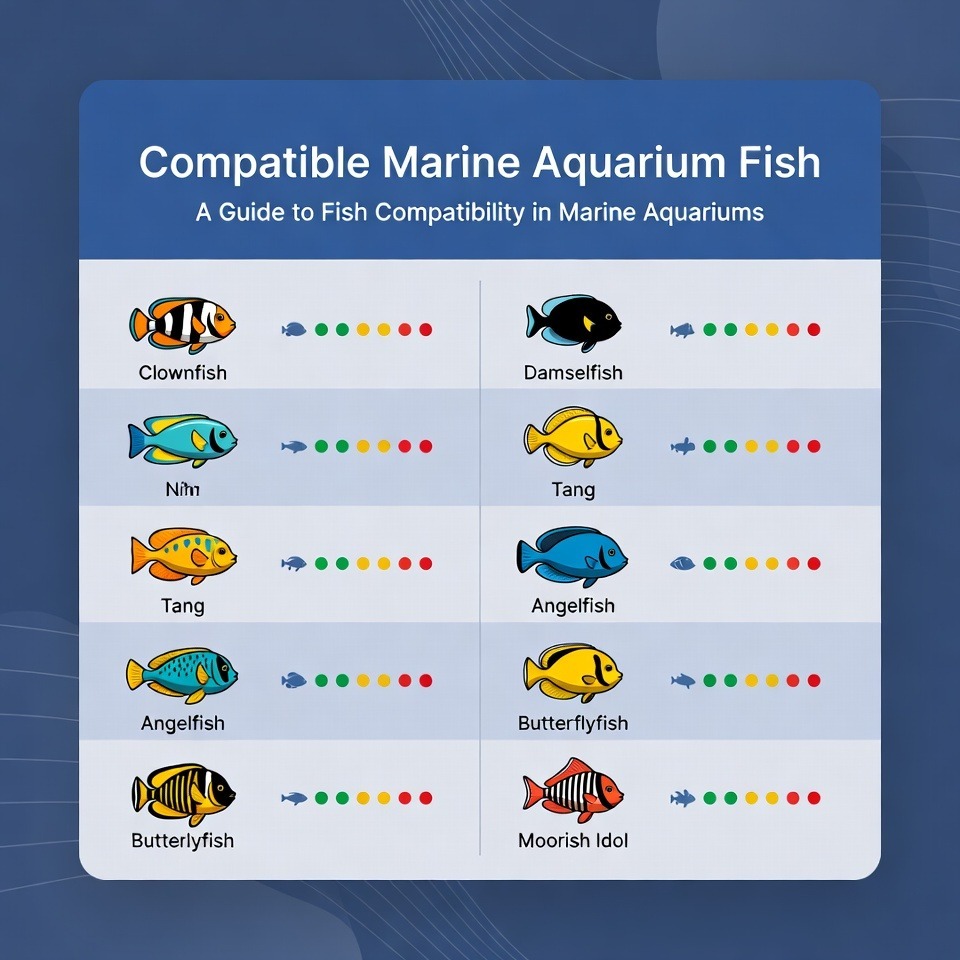
Choosing compatible saltwater fish is crucial for a thriving marine aquarium. Poor fish selection leads to aggression, stress, and costly losses. Understanding compatibility principles helps you build a peaceful underwater community.
Understanding Fish Compatibility Factors
Tank size plays the most important role in fish compatibility. Small aquariums limit your fish choices significantly. A 30-gallon tank can house only a few small, peaceful species. Larger tanks provide more territory and reduce territorial disputes. Most marine fish need at least 40 gallons to establish proper territories.
Temperament matching is equally critical for success. Aggressive species like triggerfish will harass peaceful fish constantly. Docile species such as cardinals and gobies work well together. Semi-aggressive fish need careful pairing with similar temperament species. Never mix highly aggressive fish with timid species in small spaces.
Diet compatibility affects long-term aquarium harmony significantly. Predatory fish will eat smaller tank mates eventually. Lionfish consume anything that fits in their mouths. Groupers grow large and become aggressive toward smaller fish. Research adult sizes and feeding habits before purchasing any species. Check species compatibility using reliable resources and tools.
Swimming level preferences help reduce territorial conflicts effectively. Bottom-dwelling fish like blennies rarely conflict with mid-water swimmers. Surface fish and deep swimmers can coexist peacefully. This vertical zoning maximizes your tank’s capacity safely. Plan your fish selection around different water column areas.
Compatible Fish Combinations That Work
Peaceful community tanks offer the most beginner-friendly option available. Clownfish pair excellently with cardinals and chromis species. These fish share similar temperaments and space requirements. Add peaceful wrasses like six-line or fairy wrasses carefully. They provide movement and color without excessive aggression. Gobies make excellent bottom-dwelling additions to peaceful setups.
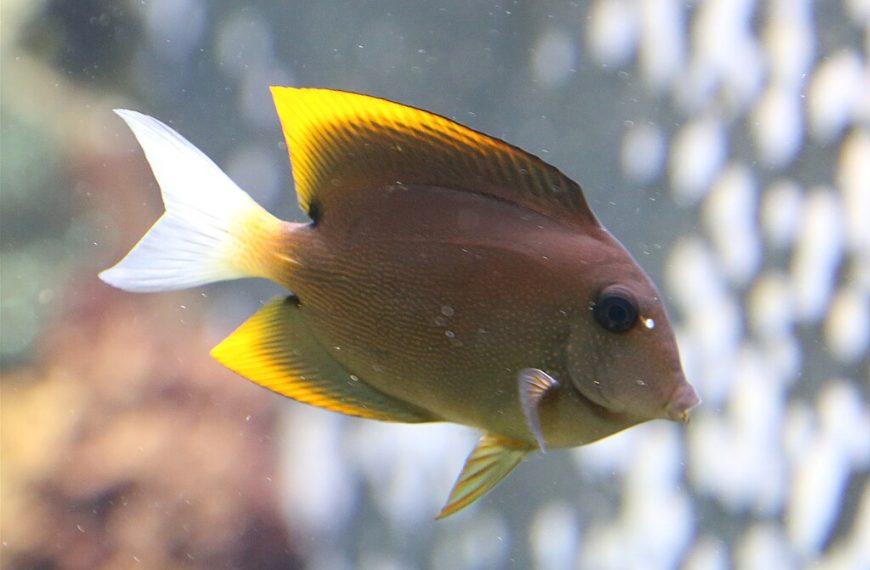
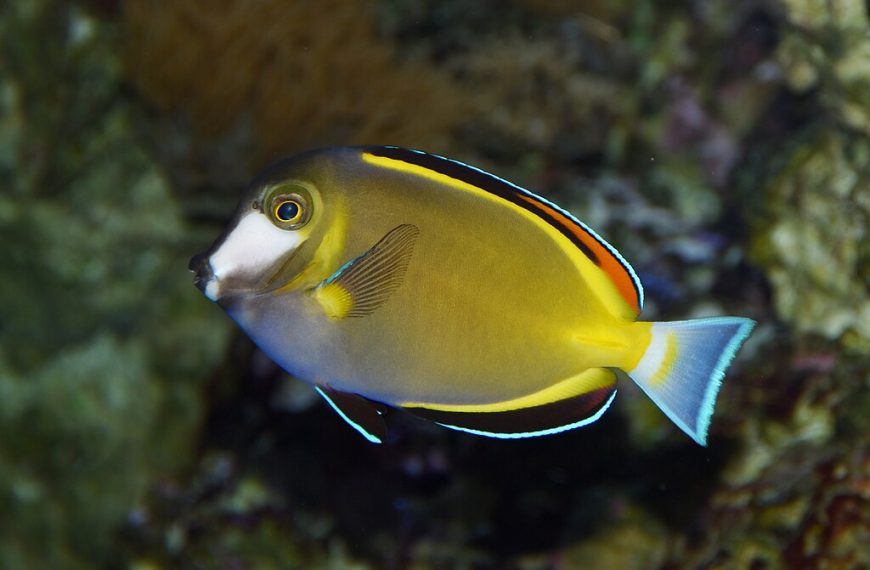
Semi-aggressive combinations require more planning and larger tanks. Tangs work well together in 100+ gallon systems. Add angelfish species that match their temperament levels. Dottybacks can work but watch for territorial behavior. These setups need multiple hiding spots and territories. Provide at least 20 gallons per semi-aggressive fish minimum.
Here are proven peaceful fish combinations for community tanks:
- Ocellaris clownfish with Banggai cardinals and green chromis
- Firefish gobies with royal gramma and pajama cardinals
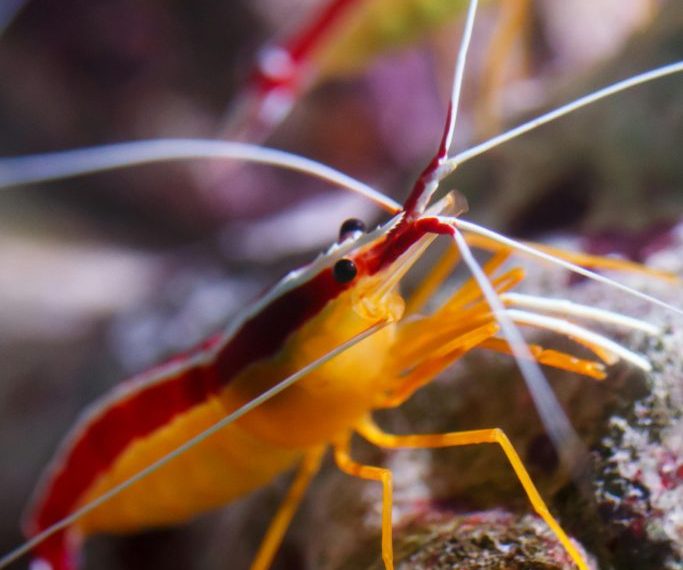
- Yellow watchman goby with pistol shrimp and neon gobies
- Fairy wrasses with peaceful tangs in larger systems
Advanced aquarists can attempt predator tanks with careful planning. Multiple lionfish species can coexist in large aquariums. Eels and large angelfish sometimes work together successfully. These setups require 150+ gallon tanks minimum. Feed all predators well to reduce hunting behavior.
Common Compatibility Mistakes to Avoid
Overcrowding causes most compatibility issues in marine aquariums. Too many fish creates constant territorial disputes. Stress levels increase dramatically in overcrowded conditions. Follow the one inch of fish per five gallons rule minimum. Aggressive species need even more space than this guideline suggests.
Size mismatching leads to predation and bullying problems consistently. Small fish become expensive snacks for larger species. Even peaceful fish may eat tiny tank mates. Research maximum adult sizes before making purchases. Plan for fish growth over several years of development.
Here are critical mistakes that destroy tank harmony:
- Adding aggressive fish to established peaceful communities
- Mixing different sized fish without considering predation risks
- Ignoring territorial requirements and adding too many bottom dwellers
- Introducing new fish without proper quarantine periods
Introduction timing affects compatibility success rates significantly. Established fish become territorial over their claimed areas. Add multiple new fish simultaneously to reduce targeting. Rearrange decorations when adding new species. This resets territorial boundaries and reduces aggression levels. Learn proper quarantine procedures before introducing any new fish.
Successful saltwater fish compatibility requires careful planning and research. Choose fish based on adult size, temperament, and space requirements. Avoid common mistakes like overcrowding and size mismatching. With proper selection, you’ll enjoy a thriving marine community for years.
Was this helpful?
Related Posts
Protein Skimmer Reef Tank Guide
Learn how a protein skimmer works, how to size one, and how to tune it for a cleaner,…
 By
By
Reef Aquarium Water Parameters
Learn the ideal reef aquarium water parameters, safe ranges, and how to keep salinity, alkalinity, nutrients, and pH…