


Soft coral care basics come down to stability, moderate light, suitable flow, and patient observation. Most soft corals are hardy, forgiving, and ideal for newer reef keepers. When you match their needs to the tank, they grow quickly, extend well, and add constant movement to the reef.
Soft corals are often the first corals hobbyists keep with success. They tolerate small mistakes better than many stony corals. They also come in many shapes, colors, and textures. In this guide, you will learn how to choose beginner-friendly soft corals, set up the right environment, feed them properly, and avoid common problems. You will also learn why some soft corals thrive in nutrient-rich tanks while others sulk in unstable systems. If you want a reef with motion, color, and easier coral care, soft corals are a smart place to start.
Quick Reference Table
| Category | Soft Coral Basics |
|---|---|
| Difficulty | Easy to moderate |
| Best For | Beginner and intermediate reef tanks |
| Lighting | Low to moderate, sometimes moderate-high |
| Flow | Moderate, indirect, varied |
| Feeding | Mostly photosynthetic, occasional fine foods help |
| Placement | Depends on species, avoid direct blasting flow |
| Growth Rate | Usually moderate to fast |
| Temperament | Can be chemical competitors |
| Ideal Temperature | 76-79°F |
| Salinity | 1.025-1.026 specific gravity |
| Alkalinity | 8-9 dKH |
| Nitrate | 2-15 ppm is often acceptable |
| Phosphate | 0.03-0.10 ppm is often workable |
Use this table as a starting point. Always adjust placement and flow based on the coral’s response. Polyp extension, color, and steady growth tell you more than any chart alone.
What Counts as a Soft Coral?
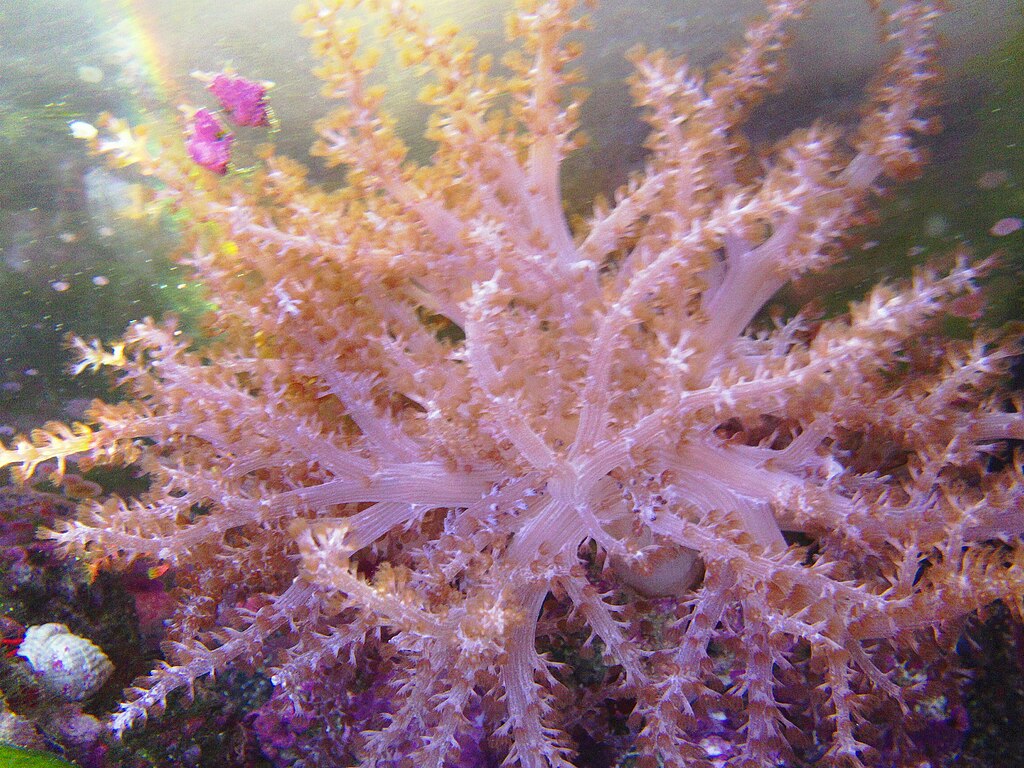
Soft corals do not build large hard skeletons like SPS or LPS corals. Instead, they have flexible tissues and small internal support structures. Common examples include zoanthids, mushrooms, leather corals, Kenya tree corals, clove polyps, xenia, and green star polyps. Some hobbyists group zoanthids and mushrooms separately, but beginners usually shop for them in the same soft coral category.
These corals are popular because they adapt well to many reef tanks. They also show visible behavior. Polyps open and close. Tissues sway in the current. Some species grow into large colonies quickly. That makes them satisfying for new reef keepers. It also means they can spread fast if ignored. Soft corals are easy compared with demanding SPS corals, but they still need stable salinity, temperature, and nutrients. They are hardy, not indestructible.
Natural Habitat
Soft corals occur across tropical reefs in the Indo-Pacific, Red Sea, and Caribbean. Many live in shallow reef zones with changing currents and bright sunlight. Others grow in turbid water with more dissolved nutrients. This matters in the aquarium. Soft corals often handle “dirtier” water better than many stony corals. They evolved in places where suspended food and organic matter are more common.
Leather corals often grow on reef slopes and lagoons with moderate flow. Xenia and Kenya tree corals are often found in nutrient-rich areas. Mushrooms can thrive in lower light and more sheltered spots. Zoanthids grow in many habitats, from bright rock faces to shaded zones. Understanding this range helps explain why there is no single placement rule for all soft corals. Their needs overlap, but each group has its own comfort zone.
Aquarium Setup
A stable tank matters more than a large tank, but size still helps. A 20-gallon reef can keep many soft corals. A 40-gallon breeder gives better stability and more room for growth. Larger tanks make it easier to separate spreading species. Use porous live rock or quality dry rock with open areas for coral placement. Create islands if you plan to keep fast growers like green star polyps or xenia.
Good filtration is important. Use a protein skimmer if possible. Run activated carbon to reduce chemical warfare. Many soft corals release compounds that irritate neighbors. Keep temperature stable at 76 to 79°F. Maintain salinity at 1.025 to 1.026. Avoid sudden swings. Soft corals usually accept moderate nitrate and phosphate levels. In fact, ultra-low nutrients can cause poor extension and faded color. Aim for consistency over perfection. A mature tank usually performs better than a brand-new system.
Lighting Requirements
Most soft corals prefer low to moderate light. Some tolerate stronger light once acclimated. Mushrooms often prefer lower PAR. Many leather corals do well in moderate light. Zoanthids can adapt to a wide range, depending on the variety. Start new corals lower in the tank. Then move them gradually if needed. Sudden exposure to intense LEDs can bleach soft corals quickly.
As a general guide, many soft corals do well around 50 to 150 PAR. Some leathers and zoanthids can handle more. Watch the coral’s behavior. Stretching, dull color, and weak extension can suggest too little light. Bleaching, shrinking, and staying closed can suggest too much. Use a gradual acclimation mode if your light has one. Keep the photoperiod steady. Around eight to ten hours of full lighting is common. Stability matters more than chasing exact numbers.
Water Flow
Soft corals like moderate, indirect flow. They want movement, but not a constant blast. Good flow helps carry oxygen, remove waste, and prevent detritus from settling on tissue. Leather corals especially benefit from enough flow to help them shed their waxy surface film. Without it, they may stay closed longer and look unhealthy.
Aim for varied flow rather than one harsh stream. Random flow patterns work well. If a coral bends hard in one direction all day, the flow is likely too direct. If debris collects on it, flow may be too weak. Pulsing xenia and some mushrooms can prefer gentler zones than toadstool leathers or clove polyps. Observe each colony. Polyp extension should look natural and relaxed. Constantly retracted tissue often means the coral dislikes its current position.
Feeding
Most soft corals rely heavily on photosynthesis. Their zooxanthellae provide much of their energy. Still, many benefit from dissolved nutrients and occasional fine particulate foods. Reef roids, powdered plankton foods, phytoplankton, and very small frozen foods can help some species. Feeding is not always required in mixed reefs with fish. Fish waste often supplies enough nutrients.
Do not overfeed. Excess food can raise phosphate and nitrate too fast. That can trigger algae and reduce water quality. Feed lightly once or twice weekly if your tank runs very clean. Turn off return flow briefly if target feeding. Many soft corals will not show an obvious feeding response, so judge results over time. Better extension, stronger growth, and richer color suggest your system is balanced. If nutrients are already moderate, extra feeding may do more harm than good.
Compatibility
Soft corals are generally reef safe with most common reef fish and invertebrates. Clownfish, gobies, blennies, wrasses, and many tangs coexist well with them. Avoid fish known to nip coral polyps, such as some angelfish and butterflyfish. Even “reef safe with caution” fish can irritate soft corals over time. Crabs and shrimp are usually fine, though large hermits may knock over frags.
The bigger issue is coral-to-coral aggression. Soft corals compete chemically. Leather corals are known for this. Running activated carbon helps. Give colonies room to grow. Fast spreaders like green star polyps, xenia, and some mushrooms can overtake rockwork. Isolate them on separate rocks if possible. Keep sensitive LPS and SPS away from aggressive soft coral colonies. A mixed reef can work very well, but spacing and filtration matter.
Step-by-Step Soft Coral Care Guide
- Start with a cycled, stable reef tank. Avoid adding corals to immature systems.
- Choose hardy species first. Toadstool leathers, Kenya tree, mushrooms, and many zoanthids are good starters.
- Dip new corals before adding them. This helps remove pests and hitchhikers.
- Place new frags in lower light and moderate flow. Acclimate slowly.
- Test salinity, temperature, alkalinity, nitrate, and phosphate weekly at first.
- Keep nutrients detectable. Soft corals often dislike overly sterile water.
- Run carbon and perform regular water changes. This limits chemical buildup.
- Watch extension and color daily. Corals show stress before they decline badly.
- Frag fast growers early. Do not wait until they take over the aquascape.
- Make changes slowly. Sudden shifts cause more problems than imperfect numbers.
Propagation and Fragging
How soft corals are commonly fragged
Soft corals are among the easiest corals to propagate. Many can be cut with clean scissors, a razor, or a scalpel. Leather coral branches can be trimmed and attached to rubble with mesh, toothpicks, rubber bands, or coral-safe glue on a plug base. Mushrooms can be cut into sections, though they need careful handling. Zoanthids are usually fragged by separating part of the mat from the rock.
Safety during fragging
Always wear gloves and eye protection. Some zoanthids may contain palytoxin. This is dangerous. Work in a ventilated area. Wash tools after use. Never boil rocks or corals. Keep fragging water away from food areas and pets.
Aftercare for fresh frags
Place fresh frags in moderate flow and lower light at first. This reduces stress. Expect a short sulking period. Keep water clean and stable. Carbon helps after fragging sessions, especially with leathers. Most healthy soft coral frags recover quickly and attach within days to weeks.
Common Problems
Why is my soft coral closed?
Closed polyps usually point to stress. Check salinity first. Then check temperature, alkalinity, and flow. Recent changes are often the cause. New corals may stay closed for several days while acclimating. Leather corals also close when shedding. If the tissue looks intact, give it time and steady flow.
Why is my leather coral shedding?
This is often normal. Many leather corals form a waxy film and then shed it. During this period, polyps retract. Increase indirect flow slightly to help the film lift away. Do not peel it off by hand. If the coral smells foul or turns mushy, then it may be rotting rather than shedding.
Why are my soft corals shrinking?
Shrinking often happens in ultra-low nutrient tanks, under excessive light, or under harsh flow. Test nitrate and phosphate. If both are near zero, the tank may be too clean. Soft corals often prefer some nutrients in the water. Also inspect for pests, fish nipping, or nearby chemical aggression from other corals.
Why is xenia melting?
Xenia can be oddly sensitive to instability. It often crashes after salinity swings, temperature stress, or sudden nutrient changes. It also dislikes aggressive chemical filtration in some systems. Keep parameters steady. Avoid making multiple corrections at once. If one colony declines, remove dying tissue quickly to protect water quality.
Why are soft corals taking over my tank?
This is a common success problem. Fast growers spread by runners, mat growth, or dropped fragments. Isolate invasive species on separate rocks. Trim colonies often. Trade or sell frags before they reach neighboring corals. Prevention is easier than removal once they attach across the aquascape.
Frequently Asked Questions
Are soft corals good for beginners?
Yes. Many soft corals are excellent beginner corals. They tolerate moderate nutrients and small mistakes better than many SPS corals.
Do soft corals need dosing?
Usually not in light to moderate stocking. Regular water changes often cover their needs. Heavily stocked mixed reefs may still need alkalinity and calcium support.
Can soft corals live in nano reefs?
Yes, but choose species carefully. Fast growers can fill a nano tank quickly. Stability is also harder in very small systems.
Do soft corals need dirty water?
No. They need stable water with some nutrients present. Dirty water causes algae and stress. Sterile water can also be a problem.
What are the easiest soft corals to keep?
Toadstool leather corals, Kenya tree corals, many mushrooms, and many zoanthids are among the easiest choices for most reef tanks.
Final Tips for Long-Term Success
Soft coral care basics are simple, but consistency is everything. Keep salinity stable. Avoid sudden lighting changes. Maintain moderate nutrients. Provide indirect flow. Run carbon in mixed reefs. Most important, watch your corals closely. They tell you when conditions are right. Open polyps, steady growth, and strong color are your best test kit.
If you are building your first coral collection, start with a few hardy frags. Let them settle in. Learn their behavior. Then expand slowly. A soft coral reef can be beautiful, active, and forgiving. It can also teach you the habits needed for success with every coral that follows.
Related reading: beginner reef tank setup, reef tank water parameters, best beginner corals, coral dipping guide, reef tank flow basics
Was this helpful?
Related Posts
Gold Spotted Rabbitfish (Siganus Punctatus)
Gold Spotted Rabbitfish care includes large tanks, heavy algae feeding, and caution with corals. Learn tank size, diet,…
 By
By
Sharknose Goby (Elacatinus evelynae)
Sharknose Goby care is simple in stable reef tanks. Learn feeding, tank setup, compatibility, and common problems for…
[favorite_button]
My Bookmarks:
To see full list click here
[user_favorites user_id="" include_links="true" site_id="" post_types="" include_thumbnails="true" thumbnail_size="thumbnail" include_excerpt="false"]