

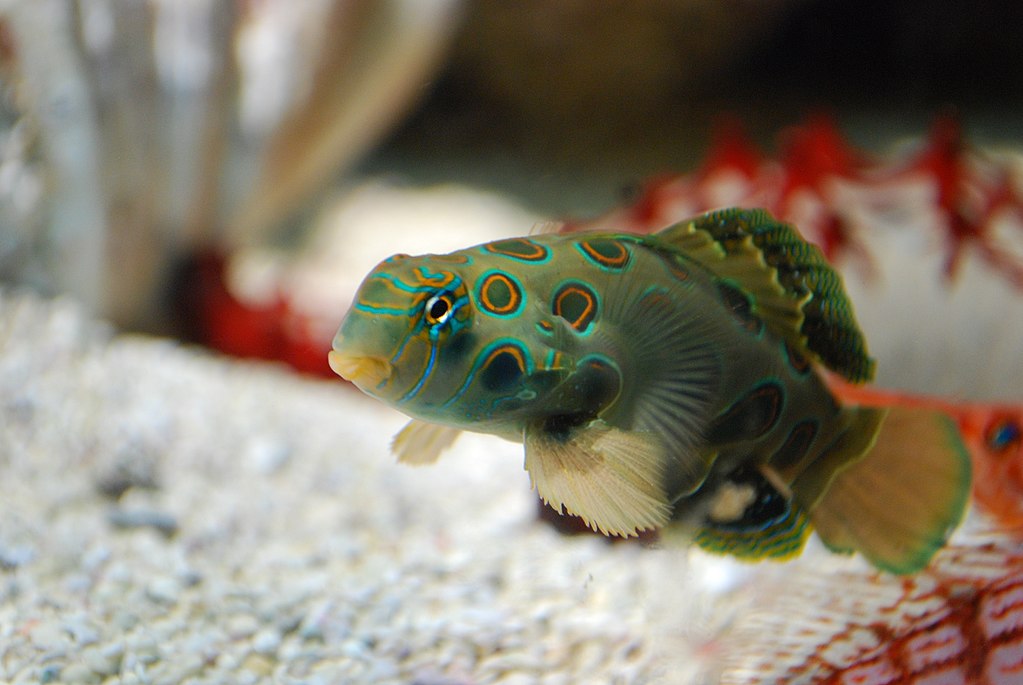
The spotted mandarin is one of the most beautiful reef fish in the hobby. It is also one of the most misunderstood. This fish can thrive in captivity, but only in a mature system with a constant supply of live microfauna. Most losses happen from slow starvation, not disease.
In this guide, you will learn how to keep Synchiropus picturatus successfully. We will cover diet, tank size, compatibility, setup, and common problems. If you are a beginner, this article will help you decide if this fish fits your reef. If you already own one, it will help you improve long-term care.
Quick Reference Care Table
| Common name | Spotted Mandarin |
| Scientific name | Synchiropus picturatus |
| Care level | Moderate to difficult |
| Temperament | Peaceful |
| Adult size | About 3 inches |
| Minimum tank size | 30 gallons for a single fish, larger is better |
| Diet | Copepods, amphipods, small live foods, sometimes frozen foods |
| Reef safe | Yes |
| Temperature | 76 to 80°F |
| Salinity | 1.025 to 1.026 |
| pH | 8.1 to 8.4 |
| Flow | Low to moderate in resting areas |
| Lighting | No special need for the fish itself |
This table gives the short version. The real challenge is food availability. A spotted mandarin may look active and healthy for weeks while still losing weight. Always judge success by body condition, hunting behavior, and long-term stability.
What Is a Spotted Mandarin?
The spotted mandarin is a dragonet, not a goby. It belongs to the family Callionymidae. It is famous for its green body, blue markings, and ringed spots. Many hobbyists also call it the psychedelic mandarin. Its movement is slow, deliberate, and almost hovering.
This species spends the day picking tiny prey from rock, sand, and algae-covered surfaces. It has a small mouth and a constant feeding style. That matters more than almost anything else in its care. Unlike many reef fish, it does not rush to food in the water column. It hunts one bite at a time all day long.
This fish also has a thick slime coat. That can make it somewhat less prone to external parasites than some species. Still, quarantine and observation are wise. Do not assume immunity. Good husbandry always matters more than myths.
Natural Habitat
Synchiropus picturatus occurs in the Indo-Pacific. It is found around sheltered reef flats, lagoons, rubble zones, and sandy areas with live rock. These fish stay close to the bottom. They move among crevices and low structures while searching for tiny crustaceans.
In nature, they live where food is available every day. They are not built for long fasts. Their habitat contains copepods, amphipods, worms, and other minute benthic life. This is why mature reef tanks work best. A new aquarium rarely has enough natural prey to support one for long.
They also prefer calm pockets between stronger currents. On the reef, they rest on rock and sand and avoid constant blasting flow. Recreating that mix in captivity helps them feed without stress. Think of a pod-rich reef floor, not an empty bare-bottom tank with aggressive circulation everywhere.
Aquarium Setup
A 30-gallon tank can work for one spotted mandarin, but only if the system is mature and productive. A larger tank is safer. Tanks of 50 gallons or more usually offer better stability and more surface area for pods. A refugium improves your odds even more.
Use plenty of porous live rock or established dry rock that has matured for many months. Build caves, ledges, and low hunting zones. Leave open sand and rubble areas too. The fish will inspect all of it. Avoid sterile layouts with little microfauna habitat.
Many reef keepers add this fish too early. That is the biggest mistake. Wait until the tank has visible pod life at night. Check the glass after lights out. Inspect the refugium if you have one. If you cannot easily find copepods, the tank may not be ready.
Stable water quality matters. Keep ammonia and nitrite at zero. Keep nitrate at a reasonable reef level. Maintain alkalinity, calcium, and magnesium for coral health if this is a reef tank. Stability supports the whole food web that this fish depends on.
Lighting Requirements
The spotted mandarin has no special lighting requirement. Choose lighting based on your corals and the overall reef plan. The fish adapts well to typical reef lighting. It often becomes most visible during the day when it hunts across the rockwork.
That said, intense lighting can influence pod populations indirectly. Tanks with healthy algae films, cryptic zones, and refugiums often support more natural food. Consider adding shaded areas and rock overhangs. These spaces help microfauna reproduce and give the fish resting spots.
If the fish seems shy at first, do not assume the lighting is wrong. New mandarins often need time to settle. Minimize sudden changes. Keep tank mates calm. Once established, they usually cruise openly if they feel secure and have food to hunt.
Water Flow
Moderate flow works best overall. The key is variety. Provide stronger movement for coral health in some areas, but create gentler zones near the rock and sand. The spotted mandarin feeds best where it can hover and peck without being pushed around.
Very high, chaotic flow can make feeding harder. It also increases stress if the fish has few sheltered areas. Watch its behavior. A comfortable mandarin moves steadily, lands often, and picks at surfaces all day. A stressed one may hide, rest too much, or struggle to navigate open areas.
Use your aquascape to break up current. Rock islands, caves, and lower ledges create calm feeding lanes. This helps the fish and benefits pod populations. Small crustaceans reproduce better when not every surface is blasted by direct flow.
Feeding
Feeding is the entire game with this species. Most spotted mandarins eat copepods and other tiny live prey all day. A healthy tank must produce enough food between feedings. Even fish that accept frozen foods still benefit from natural grazing.
The best setup includes a mature display, a refugium, and regular pod additions when needed. Seed the tank with reputable copepod cultures. Feed the pod population with phytoplankton or suitable microfauna foods. Do not expect one bottle of pods to solve a long-term shortage.
Some individuals learn to eat frozen Cyclops, baby brine shrimp, enriched brine, Calanus, or finely chopped mysis. Others never do. If you buy one, ask to see it eat. Target feeding stations can help. Use a small dish or shell in a quiet area. Add food there consistently. Over time, some fish learn the routine.
Watch the belly. A healthy mandarin looks rounded, not pinched behind the head. If the fish becomes thin, act fast. Increase pod production. Reduce competition. Offer live baby brine or live copepods. Early intervention is much easier than recovery from severe weight loss.
Compatibility
Spotted mandarins are peaceful and reef safe. They ignore corals and most invertebrates. They do best with calm tank mates that do not outcompete them for food. Good companions include small gobies, firefish, clownfish, blennies, and other non-aggressive reef fish.
Avoid housing them with aggressive feeders that hunt the same prey. Some wrasses, scooter dragonets, pipefish, and other pod-dependent fish can create serious competition. In smaller tanks, this often leads to starvation. Even if aggression is absent, food pressure can still be deadly.
Be careful with multiple mandarins. A bonded pair can work in a large, mature tank. Two males often fight. Sexing them is easier in striped mandarins than spotted forms, so buy established pairs when possible. If you are unsure, keep a single specimen unless the system is large and very productive.
For more peaceful stocking ideas, see clownfish tank mates, reef-safe cleanup crew, and beginner reef fish.
Step-by-Step Guide to Keeping a Spotted Mandarin
1. Mature the tank first. Wait several months. Confirm visible pod populations before purchase.
2. Build pod habitat. Use porous rock, rubble zones, and ideally a refugium.
3. Choose the right specimen. Look for a rounded belly, alert hunting behavior, and no sunken sides.
4. Ask about feeding history. A fish eating frozen foods has a major advantage.
5. Quarantine carefully. Use a mature observation setup if possible. Bare sterile tanks are difficult for mandarins.
6. Add the fish to a calm community. Avoid fast, aggressive feeders and pod competitors.
7. Support food density. Add copepods as needed. Feed the refugium and maintain microfauna habitat.
8. Monitor body condition weekly. Weight loss is the earliest warning sign.
9. Train to prepared foods if possible. Use a feeding station and repeat the routine daily.
10. Keep conditions stable. Sudden changes reduce feeding and stress the fish.
Propagation and Breeding
Mandarins have been bred in captivity, but this is still an advanced project for most hobbyists. Healthy pairs may perform evening spawning rises in mature systems. They rise into the water column together and release eggs and sperm near dusk.
How to Encourage Pairing
Start with a large, stable tank and abundant food. Keep only a compatible male and female. Stress, crowding, and poor nutrition stop breeding quickly. Well-fed fish with full body shape are much more likely to display courtship behavior.
Larval Rearing Challenges
The hard part is raising larvae. They need tiny live foods at the correct size and density. This usually means a serious live food culture setup. Most hobbyists focus on long-term care rather than breeding, and that is completely reasonable.
Common Problems
Why is my spotted mandarin skinny?
The most likely cause is insufficient food. The tank may not produce enough pods. Competition may also be too high. Check for wrasses, dragonets, or other constant grazers. Add live pods, improve refugium output, and offer live foods right away.
Why does my mandarin hide all day?
New arrivals often hide at first. Aggressive tank mates, excessive flow, or poor acclimation can also cause this. Check for chasing. Provide more rock cover. Reduce stress near the feeding area. If the fish remains hidden and thin, suspect food shortage.
Why will it not eat frozen food?
Many never fully switch. That is normal. Use live foods first. Then mix in frozen foods at a feeding station. Try small items like Cyclops or enriched baby brine. Keep other fish away during training. Patience matters here.
Can a spotted mandarin live in a nano reef?
Sometimes, but only under specific conditions. The tank must be mature, pod-rich, and lightly stocked. Many nano tanks cannot sustain enough natural food long term. A larger system with a refugium is safer and more forgiving.
Frequently Asked Questions
Is the spotted mandarin good for beginners?
Usually no. It is peaceful and hardy in some ways, but its feeding needs are specialized. Beginners often add one before the tank is ready.
How long do spotted mandarins live?
With proper care, they can live several years. Long-term success depends mostly on nutrition and a stable reef environment.
Do spotted mandarins eat flatworms?
Some may pick at small pests, but do not buy one as pest control. Their main diet should still be copepods and other microfauna.
Can I keep a spotted mandarin with a scooter blenny?
That is risky in most tanks. Scooter “blennies” are dragonets too. They often compete for the same limited food source.
Does this fish need sand?
Sand is helpful but not mandatory. What matters most is mature rockwork and abundant microfauna across the tank.
Final Thoughts
The spotted mandarin is not impossible to keep. It just needs the right system. If you provide a mature tank, strong pod production, and peaceful tank mates, this fish can become a stunning long-term resident. If your tank is still young, wait. Patience is the best tool in reef keeping.
If you want to prepare your tank first, read refugium setup guide and how to culture copepods. Those two topics make a huge difference with this species.
Was this helpful?
Related Posts
Palytoxin in the Marine Aquarium
Palytoxin in the marine aquarium is a real risk during coral handling. Learn safe practices, warning signs, and…
 By
By
Reef Tank Water Chemistry Basics
Learn reef tank water chemistry basics, including ideal parameters, testing routines, and simple ways to keep corals healthy…
[favorite_button]
My Bookmarks:
To see full list click here
[user_favorites user_id="" include_links="true" site_id="" post_types="" include_thumbnails="true" thumbnail_size="thumbnail" include_excerpt="false"]