

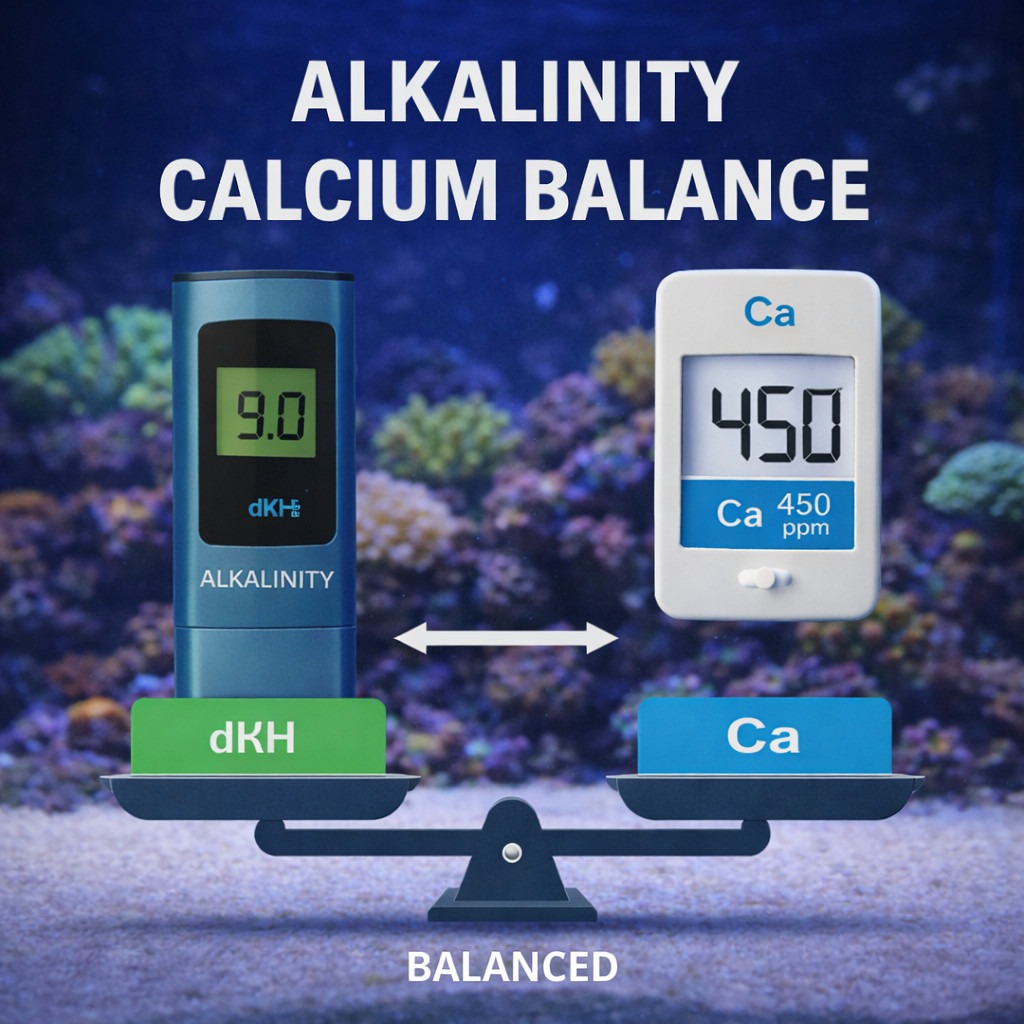
Stable reef parameters matter more than chasing perfect numbers. Corals, fish, and invertebrates handle slightly imperfect water well when conditions stay consistent. Most reef problems start when alkalinity, salinity, temperature, or nutrients swing too fast. This guide explains which parameters matter most, how to keep them stable, and what to do when things drift.
Many reef keepers focus on target ranges first. That makes sense. Beginners want clear numbers to follow. But successful tanks usually rely on stability before precision. A reef can thrive at 8.0 dKH or 8.7 dKH. Trouble starts when it moves between both in a few days. The same idea applies to salinity, calcium, magnesium, nitrate, and phosphate. In this article, you will learn the core reef parameters, realistic target ranges, testing routines, dosing basics, and practical ways to prevent swings. You will also learn how to troubleshoot common stability issues before they damage coral health.
Quick Reference Table
| Parameter | Recommended Range | Why Stability Matters |
|---|---|---|
| Temperature | 77–79°F | Rapid shifts stress fish and corals |
| Salinity | 1.025–1.026 SG | Swings affect osmotic balance |
| pH | 7.8–8.4 | Large daily drops reduce calcification |
| Alkalinity | 7.5–9.0 dKH | Fast changes can burn coral tips |
| Calcium | 400–450 ppm | Supports skeleton growth |
| Magnesium | 1250–1400 ppm | Helps balance calcium and alkalinity |
| Nitrate | 2–15 ppm | Zero can starve corals; excess fuels algae |
| Phosphate | 0.03–0.10 ppm | Too low stalls growth; too high promotes nuisance algae |
Use these ranges as a guide, not a strict rulebook. A healthy reef often sits near the middle. More important, it stays there. If your tank runs nitrate at 10 ppm and phosphate at 0.06 ppm, do not force a sudden correction. Corals adapt to stable conditions. They react poorly to abrupt changes.
What Stable Reef Parameters Really Mean
Stability means predictable water chemistry over time. It does not mean every test result is identical. Small daily variation is normal. Tanks warm slightly during the light cycle. pH often rises in the day and falls at night. Corals consume alkalinity and calcium every day. The goal is to keep those changes small and controlled.
Think of your reef like a living system with momentum. Fish respiration, coral growth, bacterial activity, and evaporation all push parameters around. Good reef husbandry builds systems that absorb those changes gently. Auto top off units replace evaporated water. Dosing pumps add supplements slowly. Heaters and controllers limit temperature swings. Regular testing catches trends early.
Many hobbyists lose coral after making large corrections. They see low alkalinity and add too much buffer. They see high phosphate and use too much remover. The number improves fast, but coral health declines. That is why stable reef parameters are the foundation of long-term success.
The Most Important Reef Parameters to Watch
Temperature and salinity are the first priorities. These affect every animal in the tank. Keep temperature stable with a reliable heater and, if needed, a fan or chiller. Avoid daily swings over 1°F. Maintain salinity with an auto top off. Manual top off works, but it is less consistent.
Alkalinity is the next major parameter. It often drives coral response faster than calcium or magnesium. SPS corals especially react to alkalinity swings. Burnt tips, tissue loss, and poor polyp extension often follow unstable dosing. Test alkalinity often in growing reef tanks.
Calcium and magnesium support skeletal growth and ionic balance. They usually change more slowly than alkalinity. Nitrate and phosphate also matter. Corals need some nutrients. Ultra-low nutrient systems can look clean but perform poorly. Pale coral, slow growth, and dinoflagellates often appear when nutrients bottom out.
For a deeper look at nutrient balance, see: reef tank nitrate and phosphate balance. For salinity basics, read: how to mix saltwater for a reef tank.
How to Keep Reef Parameters Stable
Start with consistency in your routine. Use the same salt mix. Match new water closely during water changes. Heat and aerate fresh saltwater before use. Check salinity with a calibrated refractometer. Small habits prevent large swings.
Automate where it helps most. An auto top off is one of the best upgrades for stability. It prevents salinity creep from evaporation. Dosing pumps are another strong tool. They spread alkalinity and calcium additions across the day. This avoids the sharp spikes caused by manual dosing.
Do not overreact to one test result. Retest before making major changes. Use quality kits and note expiration dates. Test at the same time of day when possible. Keep a log. Trends matter more than isolated numbers. If alkalinity drops from 8.4 to 8.1 over three days, that trend tells you more than a single low reading.
Strong export systems also help. Protein skimmers, refugiums, and measured feeding keep nutrients from swinging wildly. Learn more here: best reef tank maintenance schedule.
Step-by-Step Plan for Parameter Stability
- Set realistic target ranges for your tank.
- Calibrate your refractometer and probes monthly.
- Test alkalinity several times per week at first.
- Test calcium, magnesium, nitrate, and phosphate weekly.
- Install an auto top off to control salinity.
- Use dosing pumps if your tank consumes supplements daily.
- Mix new saltwater 24 hours before water changes.
- Match temperature and salinity before adding new water.
- Adjust parameters slowly over several days.
- Log every test, dose, and livestock change.
This process sounds simple because it is. Reef stability usually comes from repeatable habits, not expensive gear alone. A modest tank with good routines often outperforms a high-end tank with inconsistent care.
Alkalinity, Calcium, and Magnesium Balance
These three parameters work together. Alkalinity supports coral skeleton formation and buffering capacity. Calcium provides the raw material for growth. Magnesium helps prevent unwanted precipitation and keeps the system balanced. When one drifts too far, the others become harder to manage.
Many mixed reefs do well around 8 to 8.5 dKH, 420 ppm calcium, and 1350 ppm magnesium. Those are practical numbers, not strict rules. If your reef already thrives at slightly different values, maintain the pattern instead of forcing a reset.
Two-part dosing works well for many tanks. Kalkwasser can also maintain alkalinity and calcium when evaporation supports it. Calcium reactors suit larger, high-demand systems. Whatever method you choose, dose slowly. Sudden corrections often cause more harm than mild deficiency. If you are new to supplementation, read: reef tank alkalinity calcium magnesium guide.
Nutrients: Why Zero Is Not Always Better
Many reef keepers try to drive nitrate and phosphate to zero. That approach often backfires. Corals rely on dissolved nutrients and feeding. Symbiotic algae inside coral tissue also need nutrients. When nitrate and phosphate bottom out, coral color can fade. Growth can stall. Pest outbreaks like dinoflagellates may follow.
A balanced reef usually keeps measurable nitrate and phosphate. The exact number depends on coral type, feeding level, and export methods. Soft coral and LPS tanks often tolerate higher nutrients than SPS-dominant systems. The key is avoiding large swings. A tank that moves from 20 ppm nitrate to 2 ppm in two days may stress corals more than a tank that stays at 15 ppm.
Feed fish consistently. Export nutrients gradually. Make media changes in small steps. Replace only part of your phosphate remover at once. Increase refugium light slowly. Stability still matters more than chasing a trendy low-nutrient number.
Common Problems
Why does my alkalinity keep dropping?
Growing corals, coralline algae, and clams consume alkalinity daily. New tanks may also lose alkalinity through precipitation. Test at the same time each day for several days. This shows your true consumption rate. Then match that demand with small daily doses. Check magnesium too. Low magnesium can make alkalinity harder to maintain.
Why is my salinity always changing?
Evaporation causes salinity to rise. Topping off by hand once daily may not be enough. Install an auto top off for better control. Also inspect your refractometer calibration. Many salinity problems are actually testing errors. Use calibration fluid, not plain freshwater, for best accuracy.
Why are my corals unhappy after a water change?
The new saltwater may not match the tank. Differences in temperature, salinity, alkalinity, or pH can shock corals. Always mix water fully and test it before use. Some salt mixes have elevated alkalinity. Large water changes with high-alk salt can spike the display tank quickly.
Why did nuisance algae appear after I corrected nutrients?
Fast nutrient changes can shift microbial balance. Algae often exploits instability. Reduce nutrients gradually. Improve manual removal. Check feeding, detritus buildup, and source water quality. Stability plus patience usually works better than aggressive chemical fixes.
Frequently Asked Questions
What is the most important reef parameter?
Salinity and temperature come first. They affect every organism constantly. After that, alkalinity is usually the most sensitive chemistry value for coral health.
How often should I test reef parameters?
Test alkalinity two to four times weekly in growing reefs. Test calcium, magnesium, nitrate, and phosphate weekly. Test salinity often and after equipment changes.
Can I keep a reef tank with slightly high nutrients?
Yes, many tanks do well with moderate nutrients. Stable nitrate and phosphate are usually safer than repeated crashes to zero.
Should I fix low alkalinity in one day?
No. Raise alkalinity slowly. Large corrections can stress or damage corals. Spread changes across several days when possible.
Do water changes alone keep parameters stable?
They can in low-demand tanks. As coral growth increases, many reefs need dosing in addition to regular water changes.
Final Thoughts
Stable reef parameters are the real secret behind healthy coral growth and long-term success. Aim for good ranges, but prioritize consistency first. Test regularly. Make changes slowly. Match your maintenance to your tank’s actual demand. Over time, your reef will reward that patience with better color, stronger growth, and fewer mystery problems.
Was this helpful?
Related Posts
Gold Spotted Rabbitfish (Siganus Punctatus)
Gold Spotted Rabbitfish care includes large tanks, heavy algae feeding, and caution with corals. Learn tank size, diet,…
 By
By
Sharknose Goby (Elacatinus evelynae)
Sharknose Goby care is simple in stable reef tanks. Learn feeding, tank setup, compatibility, and common problems for…
[favorite_button]
My Bookmarks:
To see full list click here
[user_favorites user_id="" include_links="true" site_id="" post_types="" include_thumbnails="true" thumbnail_size="thumbnail" include_excerpt="false"]