

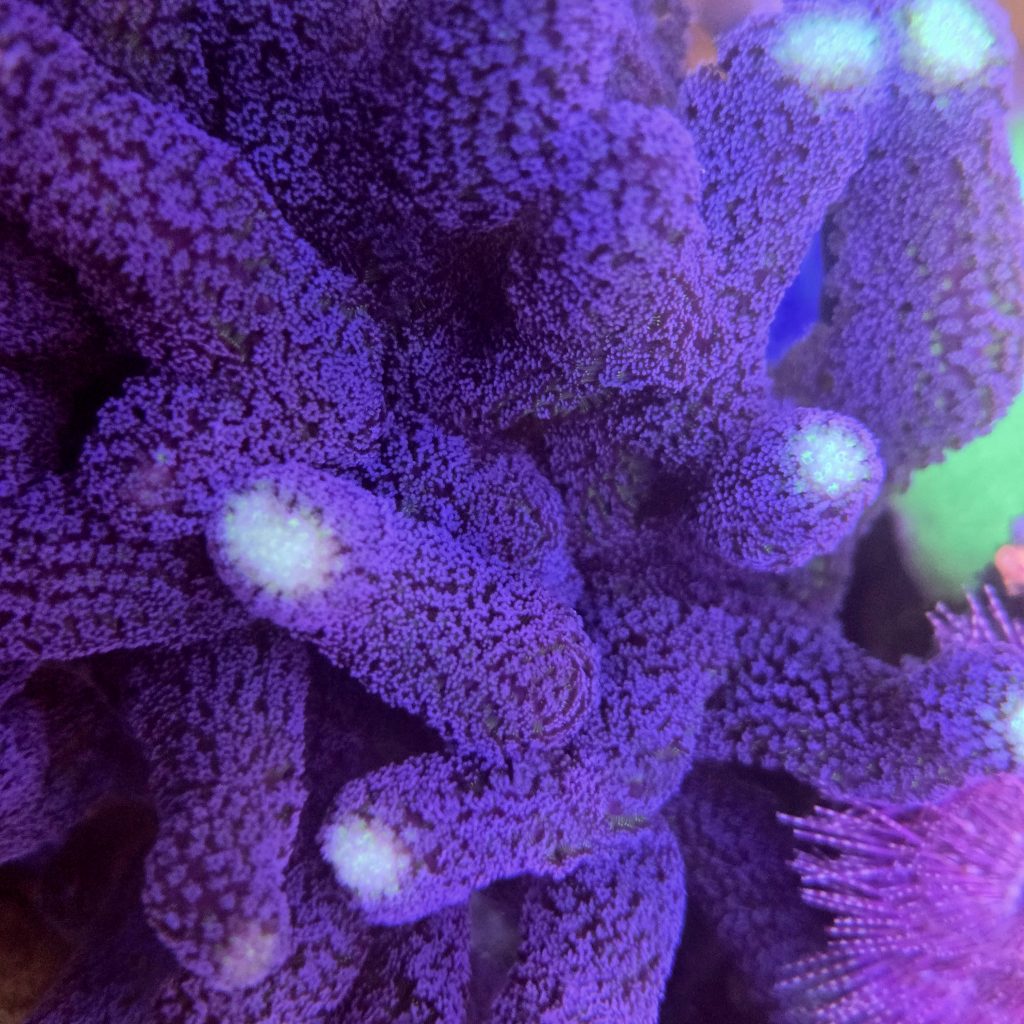
Stylophora corals are hardy small polyp stony corals that suit many reef tanks. They grow fast, show great color, and forgive minor mistakes better than many SPS corals when light, flow, and water chemistry stay stable.
Many reef keepers see Stylophora as a smart step into SPS coral care. It offers the branching look of more demanding sticks without the same level of frustration. This coral still needs stable parameters and good placement, but it usually adapts well once settled. In this guide, you will learn how to identify Stylophora, where to place it, what to feed it, and how to solve common problems like tissue loss, browning, and poor polyp extension. You will also learn fragging basics and compatibility tips for mixed reefs.
Stylophora Coral Quick Reference
| Common Name | Stylophora coral, cat’s paw coral |
| Type | SPS coral |
| Care Level | Moderate |
| Temperament | Semi-aggressive |
| Lighting | Moderate to high |
| Flow | Moderate to strong, turbulent |
| Placement | Middle to upper rockwork |
| PAR Range | 150 to 300 |
| Temperature | 76 to 79°F |
| Salinity | 1.025 to 1.026 specific gravity |
| Alkalinity | 8 to 9.5 dKH |
| Calcium | 400 to 450 ppm |
| Magnesium | 1280 to 1400 ppm |
| Nitrate | 2 to 15 ppm |
| Phosphate | 0.03 to 0.10 ppm |
| Growth Rate | Moderate to fast |
Use these values as a starting point, not a rigid rulebook. Stability matters more than chasing a perfect number. A Stylophora that lives in steady conditions usually performs better than one exposed to constant adjustments.
What Is a Stylophora Coral?
Stylophora is a branching stony coral in the family Pocilloporidae. Hobbyists often call it cat’s paw coral because of its thick, blunt branch tips. It is commonly sold in pink, green, cream, purple, and bicolor forms. Some pieces also show bright polyps that contrast with the base color.
This coral is often confused with Pocillopora and Seriatopora. Stylophora usually has chunkier branches than birdsnest coral. Its surface also looks more compact and knobby. That thicker structure helps it tolerate handling and transport better than many delicate SPS species.
For many reef keepers, Stylophora sits in the sweet spot between beginner-friendly and advanced. It is not a soft coral. It still needs strong reef husbandry. But it can be a very rewarding first SPS coral in a stable tank.
Natural Habitat
Stylophora corals occur across the Indo-Pacific. They are found on shallow reef slopes, lagoons, and reef crests. In nature, they often live where water movement is strong and light is intense. Waves and surge bring oxygen, remove waste, and deliver suspended food.
These corals host zooxanthellae, which provide much of their energy through photosynthesis. That is why they need solid lighting in aquariums. Their natural habitat also explains why they dislike stagnant water and unstable chemistry.
Stylophora colonies grow into dense branching clumps. This shape helps them capture light and resist some physical stress from moving water. In captivity, you can mimic this environment with bright reef lighting, random flow, and open space around the colony.
Aquarium Setup
A mature reef tank works best for Stylophora coral care. I suggest waiting until the tank is at least six months old. New tanks often swing in alkalinity, nutrient levels, and microbial balance. SPS corals react badly to these swings.
A tank of 20 gallons can keep a small frag, but larger systems are easier. A 40-gallon breeder or larger gives better stability. Build your aquascape so the coral can sit in open water. Avoid tight caves or dead spots. Leave room for future growth because Stylophora can become a dense colony faster than expected.
Use strong filtration and reliable dosing if the tank is packed with stony corals. Stylophora consumes alkalinity and calcium as it grows. Test often. Then match dosing to demand. If you want help building a stable system, see our guides on reef tank cycling, reef tank water parameters, and best salt mix for reef tanks.
Lighting Requirements
Stylophora prefers moderate to high lighting. A practical PAR range is 150 to 300. Many frags do well near 180 to 250 PAR. Stronger light can work, but acclimation is essential. Sudden jumps often cause bleaching or faded tissue.
LED, T5, or hybrid systems can all work well. The key is even coverage and consistency. Stylophora usually colors best under a balanced spectrum with enough blue for fluorescence and enough broad output for healthy growth. Very dim light often leads to browning. Excessive light can wash out color or burn branch tips.
Start new frags lower in the tank. Then move them upward over one to two weeks if needed. Watch the coral closely. Good signs include daytime polyp extension, steady color, and visible encrusting at the base. If you are tuning your fixture, our reef tank lighting guide can help.
Water Flow
Stylophora likes moderate to strong, chaotic flow. Random water movement keeps detritus from settling between branches. It also helps gas exchange and brings nutrients to the tissue surface. In weak flow, the colony can trap waste and develop dead spots.
Aim for indirect turbulent flow rather than a harsh direct blast. If one powerhead points straight at the coral, the tissue may retract on the exposed side. Good flow should make the polyps move gently without flattening them nonstop.
As the colony grows, its own branches block circulation. Reassess flow every few months. A coral that looked fine as a frag may need more varied movement later. This is a common reason older colonies decline from the inside out.
Water Chemistry and Stability
Stable chemistry is the core of Stylophora coral care. Keep salinity steady at 1.025 to 1.026. Maintain temperature between 76 and 79°F. Avoid daily alkalinity swings. Those swings often cause rapid tissue stress in SPS corals.
Good target ranges include alkalinity at 8 to 9.5 dKH, calcium at 400 to 450 ppm, and magnesium at 1280 to 1400 ppm. Nutrients should not be stripped to zero. Stylophora usually looks better with some measurable nitrate and phosphate. Ultra-low nutrients can reduce color and slow growth.
Test alkalinity frequently if the coral is growing fast. In mixed reefs, rising SPS demand often catches hobbyists by surprise. Dose small amounts throughout the day if possible. This keeps levels flatter and helps avoid stress.
Feeding
Stylophora gets much of its energy from light, but feeding still helps. It can capture fine particulate foods from the water column. Offer reef roids, powdered plankton blends, oyster eggs, rotifers, or other small coral foods once or twice weekly.
Feed lightly. Too much food can raise nutrients and reduce water quality. Turn off return pumps for a short period if you target feed. Broadcast feeding also works well in tanks with several filter feeders. Watch the coral after lights dim. Many colonies extend polyps more strongly in lower light.
Do not expect feeding alone to fix poor color or slow growth. Lighting, flow, and chemistry matter more. Think of food as support, not a substitute for stable husbandry.
Compatibility
Stylophora is generally reef safe, but placement matters. It can sting nearby corals if they grow too close. Leave several inches of space around the colony. This is especially important near other SPS, euphyllia, and aggressive LPS corals.
Most reef-safe fish ignore Stylophora. Still, some angelfish, butterflyfish, and large crabs may pick at polyps. Certain clownfish may also try to host in dense colonies. This repeated rubbing can irritate tissue and slow growth.
Invertebrates are usually fine if they are reef safe. Keep an eye on nuisance pests. Flatworms, nudibranchs, and red bugs are not common on every colony, but any SPS coral should be dipped and quarantined when possible. For stocking ideas, check our reef safe fish guide.
How to Acclimate and Place a New Stylophora Frag
Start with a healthy frag from a trusted source. Look for intact tissue, visible polyps, and no white recession at the base. Avoid frags with algae growing on exposed skeleton.
- Float the bag to match temperature.
- Dip the coral in a reef-safe coral dip.
- Inspect for pests and eggs.
- Mount the frag securely on rock or a plug shelf.
- Place it in moderate light and moderate flow first.
- Adjust upward over several days if needed.
- Test alkalinity often during the first two weeks.
Do not move the frag every day. Stylophora needs time to adapt. Constant relocation slows encrusting and increases stress.
Propagation and Fragging
When to Frag
Frag Stylophora when the colony is healthy and actively growing. Avoid fragging during recent parameter swings, disease, or heat stress. A stable, growing colony heals much faster.
How to Frag Stylophora
Use clean bone cutters or coral shears. Snip a healthy branch tip with good color and polyp extension. Keep the cut clean. Then glue the frag to a plug or small rock with thick cyanoacrylate gel. Place the new frag in moderate flow so mucus and debris clear quickly.
Healing After Fragging
Fresh frags may stay closed for a day or two. That is normal. Stable alkalinity and good flow help them recover. Avoid heavy handling after mounting. Once the base starts encrusting, growth usually speeds up.
Common Problems
Why Is My Stylophora Turning Brown?
Browning usually points to low light, excess nutrients, or both. Check PAR first. Then review nitrate and phosphate. Improve export slowly if nutrients are high. Do not strip them too fast. Also confirm the coral is not shaded by rock or larger colonies.
Why Is My Stylophora Bleaching?
Bleaching often follows sudden light increases, heat stress, or chemistry swings. Reduce light intensity slightly and stabilize temperature. Check salinity and alkalinity right away. If the tissue is still present, the coral may recover with time.
Why Does My Stylophora Have Poor Polyp Extension?
Poor extension can come from too much direct flow, pests, fish picking, or unstable water chemistry. Inspect the colony after lights out. Look for bite marks or tiny pests. Review alkalinity history. Many SPS issues trace back to daily alk swings.
Why Is Tissue Receding at the Base?
Base recession often links to low flow, detritus buildup, shading, or parameter instability. Increase random flow around the colony. Remove trapped debris during water changes. If recession spreads, frag healthy tips as a backup.
Frequently Asked Questions
Is Stylophora a good beginner SPS coral?
Yes. It is one of the better starter SPS corals for stable tanks. It still needs strong reef husbandry, but it is usually tougher than many Acropora.
How fast does Stylophora grow?
Growth is usually moderate to fast under strong conditions. A healthy frag can encrust quickly and branch out within months.
Where should I place Stylophora in my tank?
Place it in the middle to upper rockwork. Give it moderate to high light and strong, random flow. Leave room around it for future growth.
Can Stylophora live in a mixed reef?
Yes. It does well in many mixed reefs if chemistry stays stable and aggressive neighbors are kept at a safe distance.
Does Stylophora need feeding?
Feeding is not mandatory every day, but occasional fine coral foods can improve growth and polyp response. Keep feeding light and consistent.
Final Thoughts
Stylophora is a colorful and practical SPS coral for reef keepers ready to move beyond soft corals and many LPS species. It rewards stable water chemistry, strong random flow, and sensible lighting with fast growth and dense branching structure. If you keep alkalinity stable, avoid sudden changes, and give the coral room to grow, Stylophora can become one of the most reliable SPS colonies in your reef. Start with a healthy frag, make changes slowly, and let consistency do the work.
Was this helpful?
Related Posts
Best Filtration Systems
Best Filtration Systems for a Healthy Saltwater Aquarium Choosing the best filtration system for your saltwater aquarium is…
 By
By
Clown Triggerfish (Balistoides Conspicillum)
Clown triggerfish are stunning but aggressive marine fish that need very large tanks, strong filtration, and careful tankmate…
[favorite_button]
My Bookmarks:
To see full list click here
[user_favorites user_id="" include_links="true" site_id="" post_types="" include_thumbnails="true" thumbnail_size="thumbnail" include_excerpt="false"]