

Sump flow and filtration basics are easier than they first seem. Your sump does not need extreme turnover. It needs stable, predictable flow. Good sump design improves gas exchange, filtration, and equipment access. It also makes your reef tank easier to maintain long term.
Many reef keepers chase big return pumps at first. That often creates noise, microbubbles, and overflow headaches. In most systems, moderate sump turnover works better. The display tank can get strong flow from powerheads. The sump handles filtration and water processing. In this guide, you will learn how sump flow works, how to size a return pump, how filtration stages fit together, and how to avoid common mistakes.
Quick Reference Table
| Topic | Best Practice |
|---|---|
| Sump turnover | Aim for about 3 to 7 times display volume per hour |
| Display flow | Use wavemakers or powerheads for coral flow needs |
| Mechanical filtration | Use filter socks, floss, or rollers and clean often |
| Protein skimmer section | Keep water depth stable for consistent skimmer performance |
| Refugium flow | Moderate flow works best for macroalgae and pod growth |
| Return pump sizing | Account for head height, elbows, and real-world losses |
| Microbubble prevention | Reduce turbulence and keep pump intake away from bubbles |
| Noise control | Match drain capacity to return rate and tune overflow correctly |
This table gives you the short version. The details matter, though. Small plumbing choices can change real flow a lot. Filtration choices also affect maintenance, nutrient control, and system stability.
What Sump Flow Actually Does
A sump is not just extra water volume. It is the service area of the reef tank. Water leaves the display through the overflow. It passes through filtration stages. Then the return pump sends it back upstairs. That loop supports oxygen exchange, waste export, and equipment operation.
Many beginners think higher sump flow means better filtration. That is only partly true. More flow can move water faster. But it can also reduce contact time in some filtration zones. It can also make drains louder. Very high turnover often creates salt spray and bubbles. It may even lower skimmer consistency if the water level swings.
Your display tank still needs strong internal circulation. Corals depend on that flow. SPS corals especially need chaotic movement. That job belongs to powerheads and gyres. The return pump should not carry the whole burden. Think of sump flow as processing flow, not coral flow.
How Much Sump Turnover Do You Need?
For most reef aquariums, 3 to 7 times display volume per hour is a solid target. A 75 gallon reef usually does well with roughly 225 to 525 gallons per hour through the sump. Many tanks run happily near the middle of that range. You do not need to force 10 times turnover through the sump.
Lower turnover has several benefits. It is quieter. It uses less power. It gives drains more room for error. It also reduces bubble issues. Mechanical filtration can still work well. Protein skimmers do not need extreme feed rates to remove waste. Refugiums often perform better with gentler movement too.
There are exceptions. Heavy fish systems may benefit from somewhat higher processing rates. Some large systems use manifold-fed reactors and need more return pressure. Even then, avoid oversized flow unless the plumbing supports it. Stable operation beats raw pump numbers almost every time.
Step by Step: How to Size a Return Pump
Start with your display volume. Multiply that number by your target turnover rate. Then estimate your head height. Head height is the vertical distance from the return pump to the display return outlet. Next, account for plumbing resistance. Every elbow, valve, and pipe reduction lowers real flow.
- Choose a target turnover rate. Most reefs need 3 to 7 times per hour.
- Calculate desired flow. Example: 90 gallons x 5 equals 450 gallons per hour.
- Measure head height. Include the full vertical rise.
- Review the pump chart. Look at flow at your actual head height.
- Add a safety margin for elbows and valves.
- Choose a controllable DC pump if possible.
- Install a gate valve only if needed for fine tuning.
DC return pumps are popular for good reason. They are efficient and adjustable. That makes tuning easier. If your pump is slightly oversized, you can dial it back. If it is too small, you are stuck. Still, avoid buying a pump that is wildly oversized. Running a huge pump at low output is not always ideal.
Also remember that pump ratings can be misleading. The box often shows zero-head flow. That number is not what your tank gets. Always use the manufacturer flow chart. Real-world performance matters more than marketing numbers.
Mechanical, Biological, and Chemical Filtration in the Sump
A good sump usually combines several filtration types. Mechanical filtration catches particles. Biological filtration supports bacteria. Chemical filtration removes specific dissolved compounds. Each stage has a job. Each stage also needs maintenance.
Mechanical filtration often comes first. This may be filter socks, filter floss, or an automatic roller mat. These trap detritus and uneaten food before they break down. Dirty mechanical media can become a nutrient source if ignored. Clean or replace it often. That one habit improves water quality fast.
Biological filtration happens on live rock, porous media, and other surfaces. Beneficial bacteria convert ammonia into nitrite and then nitrate. In mature systems, this process is constant. The sump adds more stable surface area for these microbes. Chemical media like activated carbon or GFO can then polish the water. Carbon helps remove yellowing compounds. GFO can reduce phosphate when needed. Use both with care. Too much media can strip water too aggressively.
Protein Skimmers and Sump Layout Basics
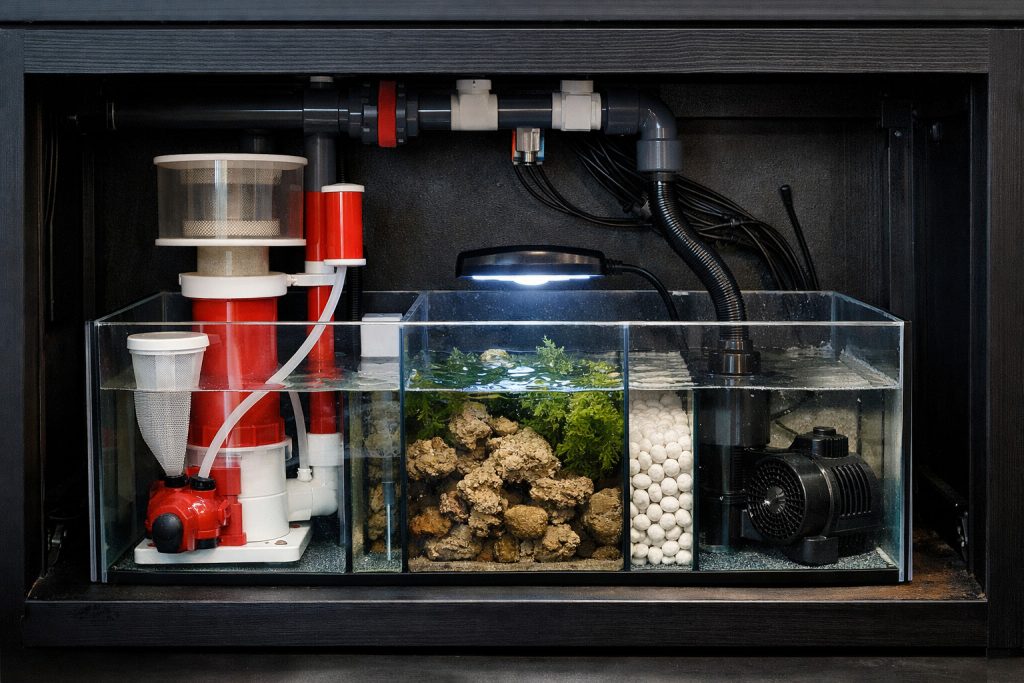
The protein skimmer is often the heart of sump filtration. It removes dissolved organic waste before it breaks down further. Skimmers work best in stable water depth. That is why many sumps include a dedicated skimmer chamber. If the water level changes too much, skimmer performance becomes inconsistent.
A basic sump layout often follows this order: drain section, mechanical filtration, skimmer chamber, refugium or media section, then return chamber. Not every sump uses every section. Simpler systems can still work very well. The key is predictable water movement and easy maintenance access.
The return chamber is usually the section where evaporation shows up. As water evaporates, this chamber drops first. That is why auto top off systems are so useful. They keep salinity stable. They also protect the return pump from running dry. If you only automate one thing, an ATO is a strong choice.
For more on nutrient control, see nutrient export methods. For equipment planning, review reef tank equipment checklist.
Refugiums and Flow Through the Sump
A refugium can be a great sump feature. It often holds macroalgae, live rock rubble, and pods. This section helps with nutrient export and biodiversity. It does not need blasting flow. In fact, many refugiums work better with moderate movement. Macroalgae like chaeto should tumble gently or receive broad circulation.
If flow is too strong, the refugium can trap less detritus in useful ways and more in messy ways. Pods may also have fewer calm zones. If flow is too weak, waste can settle heavily and create dead spots. Aim for enough movement to keep the section oxygenated and active. Avoid sandstorms and constant debris suspension.
Lighting matters here too. Refugium lights are often run opposite the display schedule. That can help reduce nighttime pH drops. It also keeps macroalgae growing steadily. If your chaeto keeps shrinking, check flow, light intensity, and nutrient levels together. One missing piece can stall the whole section.
Common Problems
Why is my sump so noisy?
Noise usually comes from mismatched drain and return rates. It can also come from air entering the drain line. Check your overflow tuning first. Herbie and BeanAnimal systems are usually quieter than simple standpipes. Reduce return flow if needed. Make sure the drain is not partially blocked. Also inspect the sump water level. Water falling too far into a chamber creates extra splash and gurgle.
Why am I getting microbubbles in the display?
Microbubbles often come from the skimmer, drain turbulence, or a low return chamber. If the return pump pulls in bubbles, they go straight to the display. Raise the sump water level if safe. Add or adjust baffles if needed. Move the skimmer output away from the return intake. Check for leaks on the suction side of external pumps too.
Why does my return section run dry so fast?
Evaporation shows up in the return chamber. If that section is small, the water level drops quickly. An auto top off solves this well. You can also redesign the sump to increase return chamber volume. Check for excessive fan-driven evaporation. Open tops and dry rooms increase daily loss.
Does higher sump flow improve filtration?
Not always. Higher flow can improve turnover, but it can also reduce stability and increase maintenance. Efficient mechanical filtration, a tuned skimmer, and proper display circulation matter more. Most reef tanks do not need extreme sump turnover to thrive.
Practical Setup Tips for Beginners
Keep the system simple at first. Use a return pump you can control. Use easy-to-clean mechanical filtration. Leave room to remove the skimmer cup. Test power outage behavior before stocking the tank. Make sure the sump can hold drain-down volume when the pump stops.
Label valves and cords. Use unions on plumbing where possible. That makes pump service much easier. Avoid packing every chamber with gadgets. Empty space is useful. It improves access and reduces frustration. Reef tanks are easier to maintain when equipment is easy to reach.
When in doubt, choose reliability over complexity. A quiet, moderate-flow sump usually beats a high-flow system that needs constant adjustment. Consistency is a major part of reef success. Corals respond well to stable salinity, oxygen, and nutrient export. Your sump should support that stability, not fight it.
If you are still planning your build, read beginner reef tank setup, sump vs canister filter, and protein skimmer sizing guide.
Frequently Asked Questions
How much flow should go through a reef sump?
Most reef tanks do well with 3 to 7 times display volume per hour. Moderate flow is usually enough.
Can a return pump provide all display flow?
No. Use powerheads or wavemakers for coral flow. The return pump mainly handles sump turnover.
Is a bigger return pump always better?
No. Oversized pumps often add noise, heat, and bubbles. Properly sized pumps are easier to manage.
Do I need filter socks in my sump?
They help a lot, but they are not mandatory. If you use them, clean them often.
What is the most important sump upgrade?
For many hobbyists, it is an auto top off system. Stable salinity protects fish, corals, and equipment.
Was this helpful?
Related Posts
Setting Up A Reef Tank
Setting up a reef tank is easier when you focus on stability, smart equipment, and slow stocking. This…
 By
By
Powerhead Placement for Reef Tanks
Dial in reef tank flow with smart powerhead placement. Learn proven layouts, targets, and troubleshooting for cleaner sand…
[favorite_button]
My Bookmarks:
To see full list click here
[user_favorites user_id="" include_links="true" site_id="" post_types="" include_thumbnails="true" thumbnail_size="thumbnail" include_excerpt="false"]