
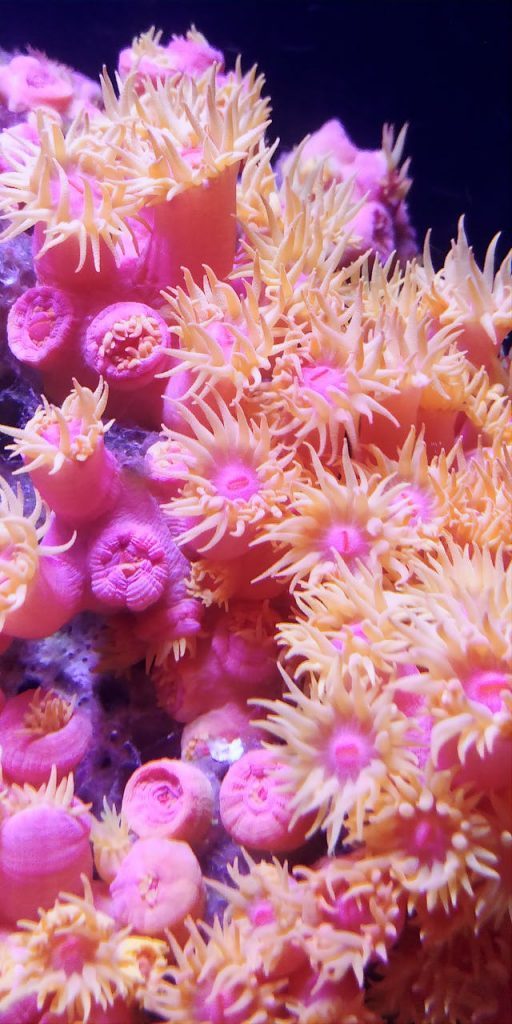
Sun corals are beautiful non-photosynthetic LPS corals that reward patient reef keepers. They need target feeding, steady water quality, and smart placement. When their needs are met, they open reliably and grow into bright colonies of yellow, orange, or black polyps.
Many beginners buy sun corals for their bold color, then struggle because these corals do not live from light alone. They need regular feeding to survive and thrive. This guide explains how to care for sun corals in a reef aquarium. You will learn about tank setup, lighting, flow, feeding, compatibility, propagation, and common problems. If you want better polyp extension and long-term success, this article will help you build a practical care routine.
Sun Coral Care Quick Reference
| Category | Recommendation |
|---|---|
| Scientific group | Tubastraea species |
| Care level | Moderate to difficult |
| Temperament | Peaceful |
| Lighting | Low to moderate, not light-dependent |
| Water flow | Moderate, indirect, turbulent |
| Feeding | Frequent target feeding required |
| Placement | Shaded ledges, caves, lower rockwork |
| Tank size | 20 gallons minimum, larger is easier |
| Temperature | 76-79°F |
| Salinity | 1.025-1.026 specific gravity |
| Alkalinity | 8-9 dKH |
| Nitrate | 2-15 ppm |
| Phosphate | 0.03-0.10 ppm |
Use this table as a starting point. Fine tuning matters with sun corals. Their feeding schedule often determines success more than any other factor.
What Are Sun Corals?
Sun corals belong to the genus Tubastraea. They are large polyp stony corals, often called LPS corals. Unlike many popular reef corals, they do not rely on symbiotic algae for energy. That makes them non-photosynthetic, or NPS. Their bright tissue can mislead new hobbyists into placing them under strong reef lighting. In reality, food matters much more than PAR.
Most hobbyists see orange or yellow sun corals first. Black sun corals also appear in the trade. Their skeleton forms branching heads with fleshy polyps that extend mostly at feeding time. A healthy colony looks dramatic when fully open. Long tentacles create a flower-like look that stands out in caves and shaded overhangs. Because they need regular feeding, they are best for keepers who enjoy hands-on coral care and consistent maintenance routines.
Natural Habitat
Sun corals occur in tropical marine habitats across the Indo-Pacific and other warm regions. In nature, they often grow in shaded crevices, vertical walls, caves, and under ledges. These areas receive less direct sunlight but steady water movement. Currents bring suspended plankton and organic particles to the colony. This natural feeding pattern explains why sun corals do not need intense light in aquariums.
Wild colonies usually anchor to hard surfaces where food drifts past regularly. They extend their polyps when conditions favor feeding. This often happens at dusk, at night, or when food is present in the water. In the home aquarium, you can train them to open during the day by feeding on a schedule. Understanding their habitat helps you recreate the right environment. Shade, moderate flow, and frequent food delivery are the key points to copy from nature.
Aquarium Setup
A 20-gallon tank can house a small sun coral colony, but larger systems are more forgiving. Frequent feeding adds nutrients to the water. Bigger tanks handle that waste load better. Stable salinity and temperature are also easier to maintain in larger aquariums. If you keep several NPS corals, a mature tank with strong filtration is the better choice.
Place sun corals on rockwork where they receive moderate indirect flow. Shaded ledges work well. Caves and overhangs are ideal if detritus does not collect there. Avoid burying the colony in sand or placing it where debris settles on the tissue. Leave enough space around the colony for feeding tools and future growth. Good aquascaping helps a lot with this coral. You want easy access for target feeding without removing the colony each time. For more placement basics, see: reef tank aquascaping ideas, coral placement guide, beginner reef tank setup.
Lighting Requirements
Sun corals do not require strong reef lighting. They lack the usual dependence on photosynthesis seen in many corals. Low to moderate light is usually best. Bright light will not help them grow faster if feeding is poor. In some tanks, very intense light can keep polyps retracted more often, especially during the day.
This does not mean darkness is required. Many colonies adapt to normal reef lighting if placed in shade. The goal is to avoid direct high PAR exposure when possible. If your tank uses strong LEDs, place the colony under an overhang or on the lower rockwork. Watch how the coral responds. If it opens well and feeds aggressively, your lighting is acceptable. If it stays closed, review both placement and feeding routine. For broader coral lighting help, see: reef tank lighting guide.
Water Flow
Moderate, indirect, turbulent flow works best for sun corals. They need enough movement to bring food to the polyps and keep waste from settling. At the same time, they do not like a harsh direct stream that prevents extension. Think of a gentle but active current that changes direction.
Too little flow can cause detritus buildup between heads. That can lead to irritation, algae growth, and tissue recession. Too much direct flow can keep the coral closed and make feeding difficult. Test placement by observing the tentacles during feeding. They should sway, not whip violently. If food blows away before capture, reduce direct flow or feed with pumps temporarily lowered. Good circulation also supports oxygen exchange and overall water quality, which matters because heavy feeding can increase organics in the system.
Water Parameters and Stability
Sun corals prefer stable reef parameters. Aim for temperature between 76 and 79 degrees Fahrenheit. Keep salinity at 1.025 to 1.026. Maintain alkalinity around 8 to 9 dKH. Calcium near 400 to 450 ppm and magnesium around 1250 to 1350 ppm support skeletal growth. These numbers do not need to be extreme. They need to be stable.
Nutrients should not be stripped to zero. Sun corals often do better with measurable nitrate and phosphate. A range of 2 to 15 ppm nitrate and 0.03 to 0.10 ppm phosphate is reasonable in many mixed reefs. Since target feeding adds waste, use strong export methods. A protein skimmer, regular water changes, and mechanical filtration help a lot. Test water often if you feed heavily. For chemistry basics, see: reef tank water parameters and how to lower nitrate in a reef tank.
Feeding
Feeding is the most important part of sun coral care. These corals need regular target feeding because they cannot meet their energy needs from light. Small meaty foods work best. Offer mysis shrimp, finely chopped seafood, enriched brine shrimp, calanus, copepods, and quality coral foods. Match the food size to the polyp size. Smaller heads need smaller pieces.
Most colonies do best when fed at least three times per week. Daily feeding often produces the best growth and strongest extension. Start by turning off or reducing flow. Use a turkey baster or feeding pipette to gently release a little food scent into the water. Once the polyps extend, place food on each head. Give the coral time to grab and swallow. Then restore flow. Consistency matters more than huge meals. Small, frequent feedings are safer for water quality and easier for the coral to digest.
How to Train Sun Corals to Open
New sun corals often open only at night. That is normal. You can train them to open during the day with a simple routine. Feed at the same time each day. Start with lights dimmed if possible. Release a small amount of food juice into the water near the colony. Wait several minutes for the tentacles to emerge.
Once a few polyps open, target feed lightly. Repeat this schedule daily. Over time, the coral learns that food arrives at that hour. Many colonies begin opening before feeding time. Be patient during the first weeks. Avoid forcing polyps open or handling the colony too often. If fish or shrimp steal food, use a feeding dome or cut bottle top to protect the colony during meals. This simple method greatly improves feeding success and reduces stress on the coral.
Compatibility
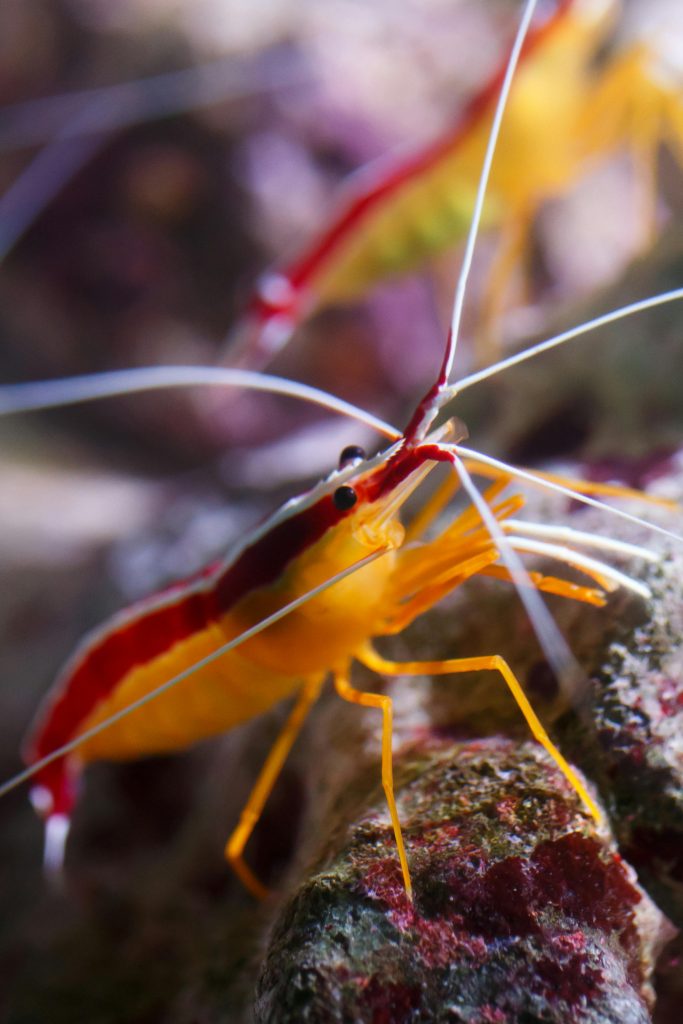
Sun corals are peaceful and usually mix well with reef-safe fish, corals, and invertebrates. Their main challenge is not aggression. It is food theft and crowding. Many fish quickly learn that target feeding means free meals. Cleaner shrimp, peppermint shrimp, hermit crabs, and some wrasses may steal food before the coral can eat it.
Give sun corals some space from aggressive stinging corals. Sweepers from euphyllia, galaxea, and other LPS can damage their tissue. Avoid placing them where fast-growing soft corals can shade or overgrow the colony. They work well in mixed reefs if you can protect them during feeding. In fish-only systems with live rock, they can also do well if nutrients stay controlled. Always observe tankmates at feeding time. Compatibility problems often show up then, not during the day.
Propagation and Fragging
Sun corals can be propagated in captivity, though they are slower than many soft corals. Healthy colonies may produce new buds from the base or between branches. This natural budding is the safest way to expand a colony. Good feeding and stable parameters encourage it over time.
When to Frag
Frag only a healthy, established colony. It should open well and feed strongly. Avoid fragging a stressed colony with tissue recession or algae growth. Wait until you can clearly see separate branches or heads that can be cut cleanly.
How to Frag Safely
Use bone cutters or a rotary tool to cut the skeleton between heads. Avoid crushing tissue. Wear eye protection. Dip the frag in clean tank water after cutting. Mount it securely with reef-safe glue or epoxy. Then place it in moderate flow and lower light. Resume feeding once the frag settles. A fed frag heals much faster than an unfed one.
Common Problems
Most sun coral issues come from underfeeding, poor placement, or unstable water quality. The good news is that many problems can be corrected early. Watch the coral closely during feeding sessions. That is when warning signs are easiest to spot.
Sun Coral Not Opening
This is the most common complaint. Likely causes include shipping stress, too much direct light, poor flow, or an inconsistent feeding schedule. Start feeding at the same time daily. Use food scent first. Move the colony to a shaded area with indirect flow if needed. Give it time. Some colonies take one to three weeks to adjust.
Tissue Recession
Receding tissue usually points to chronic starvation, detritus buildup, or damage from nearby corals. Increase feeding frequency. Improve flow around the colony. Check for hidden sweeper tentacles at night. Remove nuisance algae from exposed skeleton before it spreads.
Food Gets Stolen
Use a feeding dome, breeder box, or cut plastic bottle over the colony. Feed fish first to distract them. Then target feed the coral. This simple trick often doubles feeding success.
Algae on the Skeleton
Algae often grows on dead or exposed areas. It can block new budding. Improve nutrient export without starving the tank. Brush the skeleton gently outside the tank if needed. Most importantly, restore the coral’s feeding response so healthy tissue can recover and spread.
Frequently Asked Questions
Are sun corals hard to keep?
They are moderate to difficult for beginners. The challenge is frequent feeding. If you enjoy hands-on care, they become much easier.
Do sun corals need light?
They do not depend on light for nutrition. Low to moderate light is fine. Feeding matters far more than PAR.
How often should I feed a sun coral?
At least three times weekly. Daily target feeding usually gives the best growth and polyp extension.
Can sun corals live in a mixed reef?
Yes, if they are protected from aggressive neighbors and food thieves. Placement and feeding access are the main concerns.
Why is my sun coral only opening at night?
That behavior is normal. Train it to open during the day by feeding on a fixed schedule and using food scent first.
Final Tips for Long-Term Success
Sun corals are not passive display corals. They are interactive animals that need routine care. Feed them often. Keep them in shade with moderate indirect flow. Protect them from food thieves. Maintain stable parameters and good export. If you do those things well, sun corals can become one of the most rewarding corals in your reef tank. Their feeding response is dramatic, and a healthy colony becomes a true focal point over time.
Was this helpful?
Related Posts
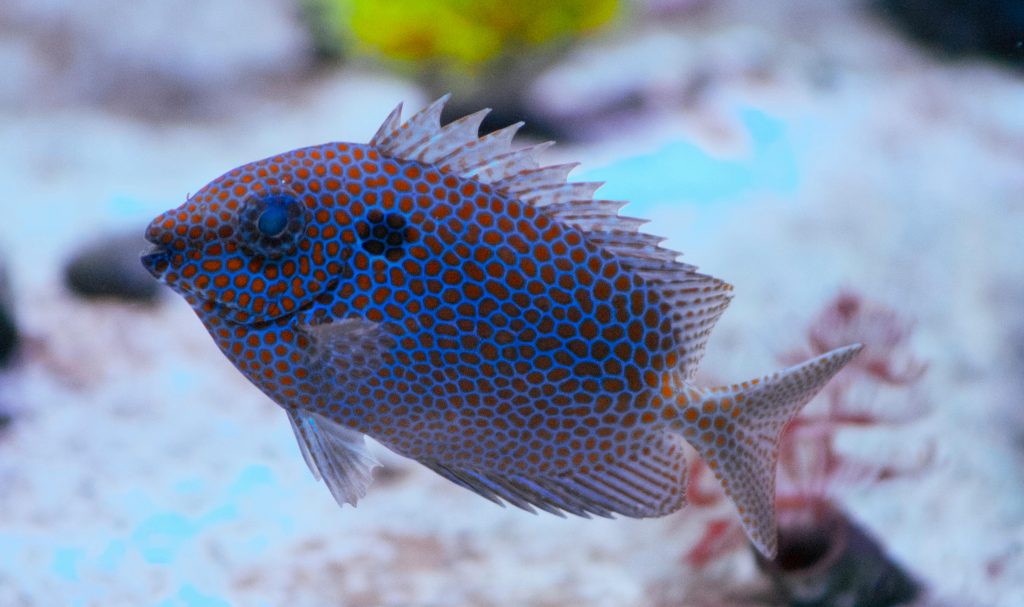
Gold Spotted Rabbitfish (Siganus Punctatus)
Gold Spotted Rabbitfish care includes large tanks, heavy algae feeding, and caution with corals. Learn tank size, diet,…
 By
By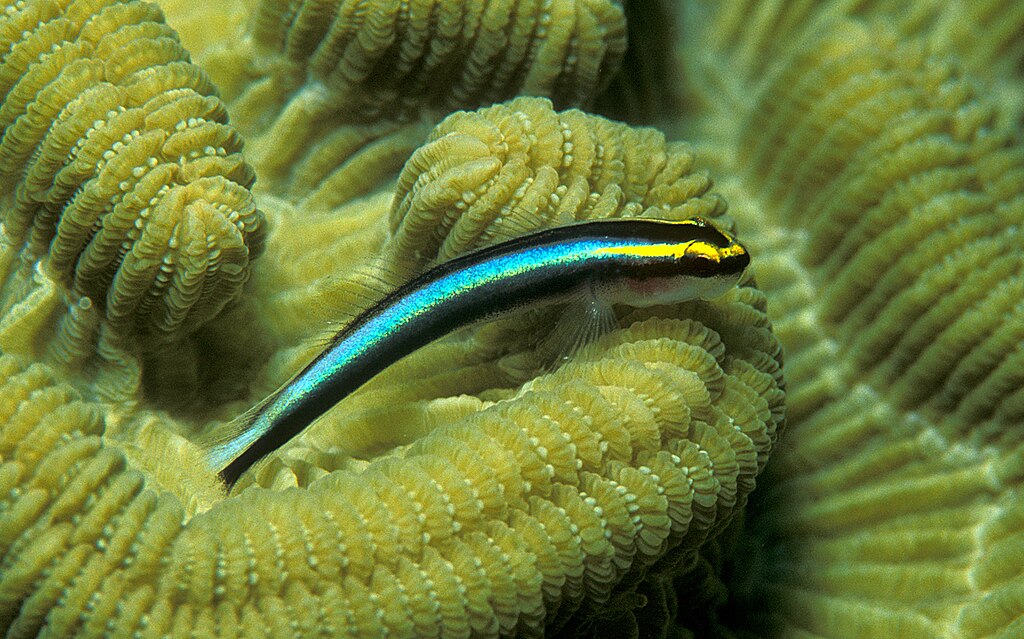
Sharknose Goby (Elacatinus evelynae)
Sharknose Goby care is simple in stable reef tanks. Learn feeding, tank setup, compatibility, and common problems for…
[favorite_button]
My Bookmarks:
To see full list click here
[user_favorites user_id="" include_links="true" site_id="" post_types="" include_thumbnails="true" thumbnail_size="thumbnail" include_excerpt="false"]