Water Chemistry Basics for a Healthy Saltwater Aquarium
Getting water chemistry right is one of the most important skills in the saltwater aquarium hobby. Stable, clean water keeps fish stress-free, corals growing, and nuisance algae under control. The good news: you don’t need a chemistry degree. With a few key parameters and simple routines, you can build a stable reef or fish-only system that thrives.
Core Water Parameters Every Saltwater Hobbyist Should Know
While there are many things you can measure, most home reef tanks stay healthy by focusing on a core group of parameters.
Salinity & Temperature
- Salinity: Aim for 1.025–1.026 specific gravity for reef tanks and 1.020–1.025 for fish-only systems. Always use a calibrated refractometer, not a swing-arm hydrometer.
- Temperature: Keep it stable between 76–79°F (24–26°C). Rapid swings are more stressful than being slightly high or low.
For more on basic setup and equipment that help stabilize these, see our guide on getting started with saltwater aquariums.
pH, Alkalinity, and Calcium
- pH: Most reef tanks do well between 8.0–8.4. A slightly low but stable pH is usually better than chasing a perfect number.
- Alkalinity (dKH): Target 8–10 dKH for mixed reefs. Alkalinity buffers pH and is one of the most important parameters to keep stable.
- Calcium: Corals and invertebrates use calcium to build skeletons. Aim for 400–450 ppm.
If you keep corals, you’ll eventually need to supplement alkalinity and calcium. Many hobbyists start with simple two-part dosing, then move to automated solutions as coral demand increases. Our article on reef tank maintenance schedules covers how often to test and adjust these levels.
Nutrients: Ammonia, Nitrite, Nitrate, and Phosphate
- Ammonia & Nitrite: In a fully cycled tank, both should read 0 ppm. Any detectable ammonia is an emergency for fish and inverts.
- Nitrate: Keep below 20 ppm for most reef tanks, and under 10 ppm for more sensitive SPS corals. Fish-only tanks can tolerate higher levels, but lower is still better.
- Phosphate: Aim for 0.02–0.10 ppm in reefs. Zero is not ideal; corals need a little phosphate, but too much fuels algae.
Regular testing and water changes are your first line of defense against nutrient buildup. If you’re battling algae, pairing solid water chemistry with the tips in our saltwater algae control guide can make a big difference.
Practical Tips for Stable Water Chemistry
- Test on a schedule: In new tanks, test 2–3 times per week. In mature systems, weekly testing is usually enough.
- Mix saltwater consistently: Always mix with RO/DI water, aerate for several hours, and match temperature and salinity before water changes.
- Avoid chasing numbers: Stability matters more than perfection. Make small, gradual corrections.
- Quarantine new livestock: This prevents disease and reduces the temptation to medicate the display tank, which can disrupt your water chemistry.
Tip: Keep a simple log of test results, dosing amounts, and water changes. Patterns in your log will often reveal problems before they become visible in the tank.
In the end, water chemistry basics come down to consistency: consistent testing, consistent maintenance, and consistent corrections. Once you understand how salinity, pH, alkalinity, calcium, and nutrients interact, your saltwater aquarium becomes far more predictable—and far more enjoyable.
Sources
- Sprung, J. & Delbeek, J. C. The Reef Aquarium, Vol. 1–3.
- Borneman, E. H. Aquarium Corals: Selection, Husbandry, and Natural History.
- Holmes-Farley, R. “Reef Aquarium Water Parameters” and related articles, Reefkeeping Magazine.
Was this helpful?
Related Posts
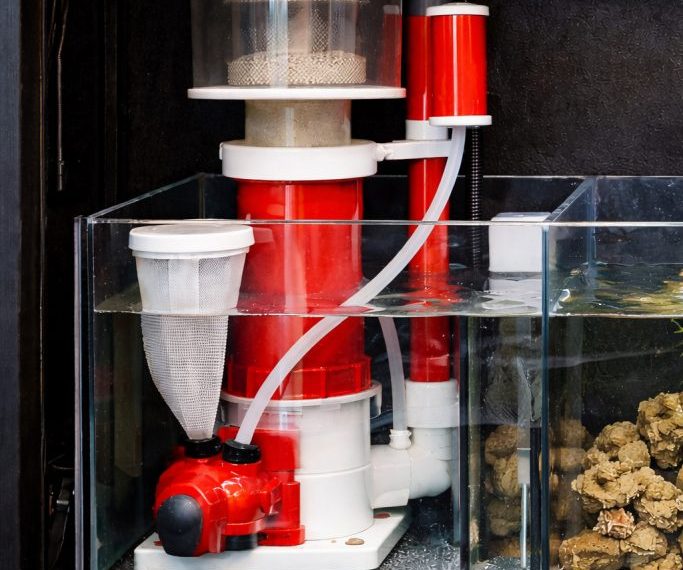
Protein Skimmer Reef Tank Guide
Learn how a protein skimmer works, how to size one, and how to tune it for a cleaner,…
 By
By
Reef Aquarium Water Parameters
Learn the ideal reef aquarium water parameters, safe ranges, and how to keep salinity, alkalinity, nutrients, and pH…