Water quality in aquariums determines fish health, coral growth, and long-term stability. Good water is not just clear water. It means stable chemistry, low pollution, strong gas exchange, and consistent maintenance habits that prevent problems before they start.
Many reef tank issues trace back to water quality. Algae blooms, coral recession, fish stress, and nuisance bacteria often begin with unstable parameters or hidden nutrient buildup. In this guide, you will learn what water quality really means, which parameters matter most, how to test them, and how to improve them without chasing numbers. The goal is simple. Build a stable system that supports healthy marine life every day.
Quick Reference Table
| Parameter | Recommended Range | Why It Matters |
|---|---|---|
| Temperature | 76–79°F | Supports stable metabolism and oxygen levels |
| Salinity | 1.025–1.026 SG | Critical for coral and invertebrate health |
| pH | 7.9–8.4 | Affects coral calcification and fish stress |
| Alkalinity | 7.5–9.5 dKH | Helps stabilize pH and coral skeleton growth |
| Calcium | 400–450 ppm | Needed for stony corals and coralline algae |
| Magnesium | 1250–1400 ppm | Supports calcium balance and alkalinity stability |
| Ammonia | 0 ppm | Highly toxic to fish and invertebrates |
| Nitrite | 0 ppm | Should remain undetectable in mature tanks |
| Nitrate | 2–20 ppm | Too low or too high can stress corals |
| Phosphate | 0.03–0.10 ppm | Excess fuels algae and slows calcification |
These ranges are general targets for reef aquariums. Fish-only tanks often tolerate broader values. Stability matters more than perfection. A tank that stays steady usually performs better than one with constant corrections.
What Water Quality Means in an Aquarium
Water quality includes chemistry, cleanliness, and biological balance. It is not one number. It is the combined effect of many conditions inside the aquarium. Fish and corals live in that water full time. Even small changes can affect them.
Good water quality means waste gets processed quickly. Oxygen stays available. Toxins remain near zero. Nutrients stay in a useful range. Salinity does not swing. Temperature remains steady. Corals can then spend energy on growth instead of stress.
Beginners often focus only on nitrate. That is understandable. Yet ammonia, alkalinity, salinity, and phosphate can be just as important. A reef tank can look fine one week and decline the next if these values drift. This is why regular testing matters. It shows trends before livestock shows damage.
Think of water quality as the foundation of the whole system. Lighting and flow matter too. But poor water quality undermines everything else.
The Most Important Aquarium Water Parameters
Temperature should stay stable every day. Sudden swings stress fish and reduce oxygen. Use a quality heater and a reliable thermometer. In warm homes, a fan or chiller may be needed.
Salinity is critical in marine tanks. Top off evaporated water with fresh RO/DI water, not saltwater. Evaporation removes water only. Salt stays behind. If you ignore top off, salinity climbs.
pH, alkalinity, calcium, and magnesium work together. Corals need them for skeleton growth. If alkalinity swings hard, many corals react quickly. LPS may recede. SPS may lose color or burn at the tips.
Ammonia and nitrite should stay at zero in established tanks. Any detectable ammonia is a warning sign. It may point to overfeeding, die-off, poor cycling, or failed filtration. Nitrate and phosphate are different. They should not be zero in many reef tanks. Corals need some nutrients. The goal is balance, not sterility.
Where Aquarium Pollution Comes From
Most aquarium pollution starts with food. Fish eat part of it. The rest breaks down. Waste then becomes ammonia. Bacteria convert ammonia into nitrite, then nitrate. That process is helpful, but it does not remove pollution completely.
Detritus also builds in low-flow areas. It collects under rocks, inside filter socks, and in the sump. As it breaks down, it releases nutrients back into the water. Dirty mechanical media often becomes a nutrient source if left too long.
Tap water can add more problems. It may contain phosphate, nitrate, copper, or silicate. These fuel algae and can harm invertebrates. This is why many reef keepers use RO/DI water for mixing salt and topping off evaporation.
Dead snails, dying corals, and hidden fish losses can also crash water quality fast. If a tank suddenly smells bad or tests oddly, inspect every part of the system.
How Biological Filtration Protects Water Quality
Biological filtration is the engine of a stable aquarium. Beneficial bacteria live on rock, sand, and filter media. They process toxic waste into less harmful compounds. Without them, fish and corals would not survive long.
Live rock remains one of the best biological filters in reef tanks. Its porous structure holds huge bacterial populations. Sand also helps, though it must be maintained. Deep, dirty sand beds can trap waste if neglected.
A protein skimmer supports filtration by removing dissolved organics before they fully break down. Refugiums help too. Macroalgae absorb nitrate and phosphate while adding system stability. Good flow keeps waste suspended so filtration can remove it.
Never clean all filter media at once. That can reduce bacterial populations too quickly. Rinse media in old tank water when possible. Preserve the biology that keeps ammonia at zero.
How to Maintain Good Water Quality Step by Step
- Test salinity, temperature, alkalinity, nitrate, and phosphate weekly.
- Top off evaporation daily with fresh RO/DI water.
- Perform regular water changes with well-mixed saltwater.
- Clean filter socks, cups, and mechanical media often.
- Do not overfeed. Feed enough, but keep waste low.
- Use a protein skimmer sized for the system.
- Blast detritus from rocks before water changes.
- Maintain strong, varied flow to prevent dead spots.
- Replace old RO/DI filters when TDS rises.
- Watch livestock behavior for early signs of stress.
This routine prevents most common water quality problems. It also makes the tank easier to manage over time. Consistency beats occasional deep cleaning. Small actions done weekly usually work better than big corrections done late.
Aquarium Setup Choices That Affect Water Quality
Tank design influences water quality from day one. Larger systems usually stay more stable than nano tanks. They dilute waste better and resist fast swings. Small tanks can still succeed, but they need tighter maintenance.
A sump adds water volume and equipment space. It also improves gas exchange. Skimmers, heaters, probes, and refugiums work better when kept out of the display. This creates a cleaner look and a more stable system.
Aquascaping matters as well. Rock should allow flow around and through the structure. Packed rock walls trap detritus. Open layouts are easier to clean and often support healthier corals. Bare bottom tanks are easier to keep clean. Sand beds look natural, but they need occasional care.
If you are planning a new system, read our guides on reef tank setup, best protein skimmer for reef tank, and how to mix saltwater.
Common Problems
Why Is My Aquarium Water Cloudy?
Cloudy water often comes from bacterial blooms, stirred sand, or fine particles. New tanks commonly go cloudy during cycling. Overfeeding can also trigger blooms. Check ammonia and oxygen if fish seem stressed. Improve mechanical filtration and reduce feeding for a few days.
Why Are Nitrate and Phosphate Always High?
High nutrients usually come from excess food, trapped detritus, weak export, or poor source water. Clean hidden waste zones first. Change filter socks more often. Verify your RO/DI unit works properly. Add macroalgae, improve skimming, or increase water change frequency if needed.
Why Do Corals Look Unhappy Even with Good Test Results?
Numbers can look fine while stability remains poor. Test at the same time each week. Watch for salinity drift, alkalinity swings, or large daily temperature changes. Corals also react to low flow, dirty water, and chemical contamination. Look at trends, not single test results.
Why Does Algae Keep Returning?
Recurring algae means nutrients are entering faster than they leave. Reduce waste at the source. Feed carefully. Remove detritus. Use purified water. Keep phosphate in range. Manual removal helps, but long-term success depends on fixing the nutrient cycle behind the outbreak.
Testing and Monitoring Tips
Use reliable test kits and replace them before they expire. Cheap or old kits can waste time. Digital tools help, but they still need calibration. Refractometers should be checked with calibration fluid, not plain water.
Keep a log of test results. This simple habit reveals patterns. You may notice alkalinity falls every five days, or phosphate rises after heavier feeding. Those trends help you respond early. They also make dosing and maintenance much easier.
Observe the tank every day. Polyp extension, fish breathing, water clarity, and skimmer output all tell a story. Testing gives numbers. Observation gives context. The best reef keepers use both.
For more help, see reef tank water parameters and reef tank water change guide.
Frequently Asked Questions
How often should I test aquarium water?
Test weekly in most reef tanks. Test more often in new tanks or after major changes. Alkalinity may need closer tracking in coral-heavy systems.
Is crystal clear water always healthy water?
No. Water can look clear and still contain ammonia, phosphate, or unstable alkalinity. Always confirm with testing.
Can I use tap water in a reef aquarium?
It is risky. Tap water often contains contaminants that fuel algae or harm invertebrates. RO/DI water is the safer choice.
What is the fastest way to improve water quality?
Do a properly matched water change, remove detritus, clean filtration, and stop overfeeding. Then identify the source of the problem.
Should nitrate and phosphate be zero?
Usually no. Many reef tanks do better with low but measurable nutrients. Zero nutrients can cause pale corals and instability.
Final Thoughts
Water quality in aquariums is about stability, not perfection. Keep waste under control. Use clean source water. Test consistently. Correct problems slowly. When the water stays stable, fish act naturally, corals expand better, and the whole reef becomes easier to enjoy. Strong water quality is the habit that makes every other part of reef keeping work better.
Was this helpful?
Related Posts
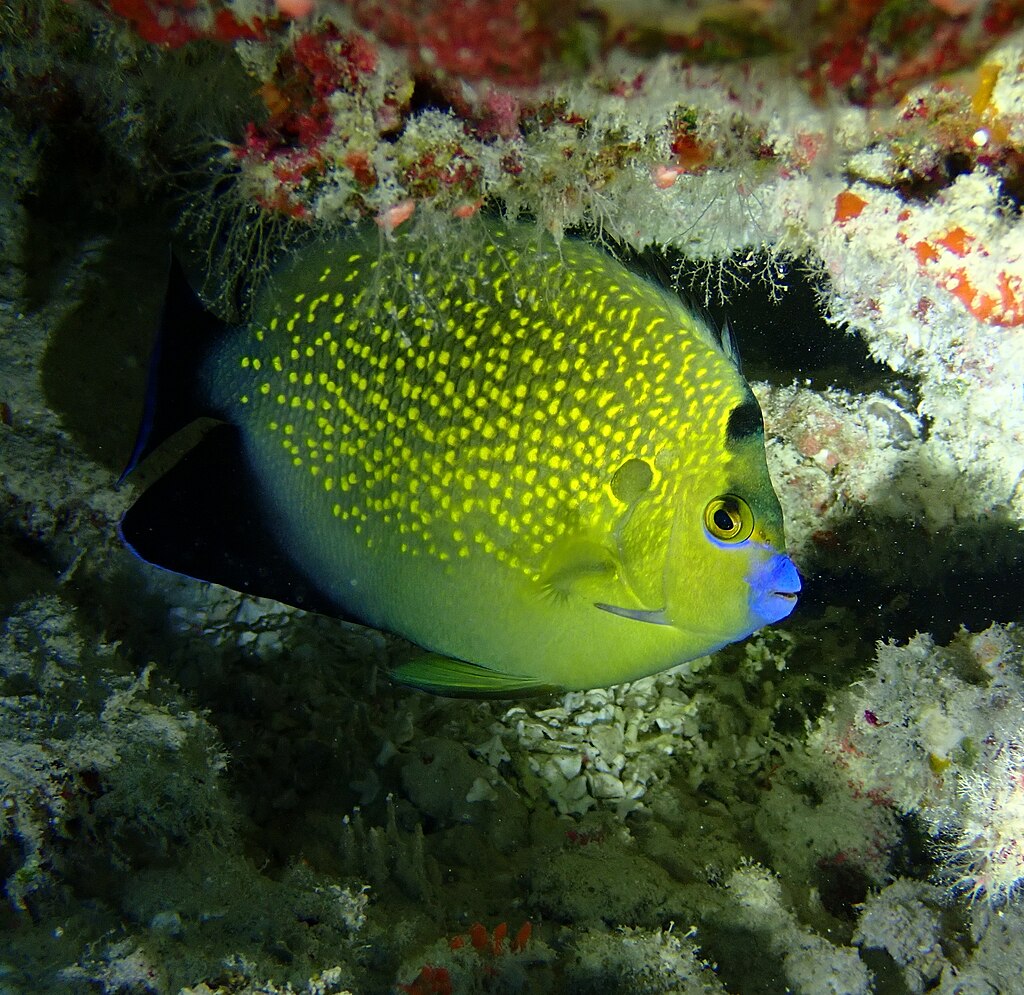
Goldflake Angelfish (Apolemichthys xanthopunctatus)
Goldflake Angelfish are stunning but need a large, mature tank, varied feeding, and caution in reef tanks due…
 By
By
Reef Aquarium Water Parameters
Learn the ideal reef aquarium water parameters, safe ranges, and how to keep salinity, alkalinity, nutrients, and pH…