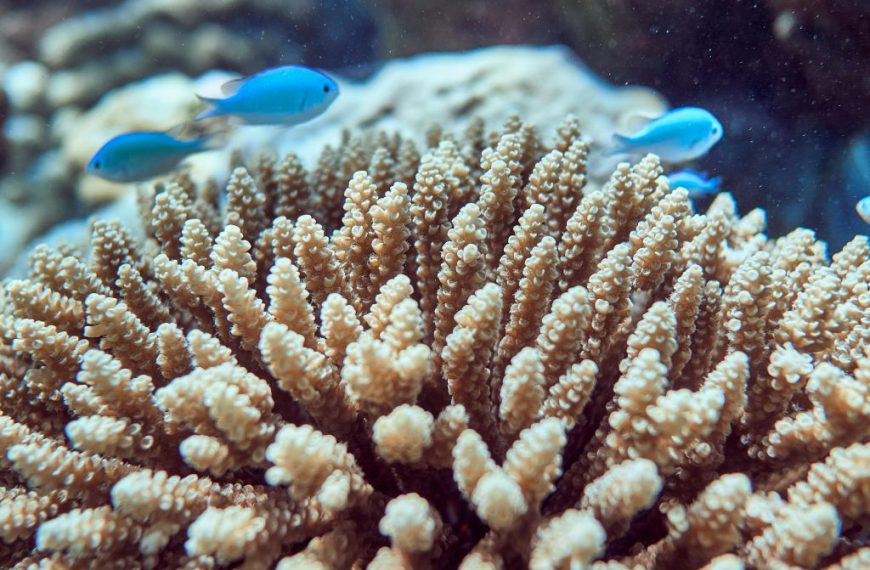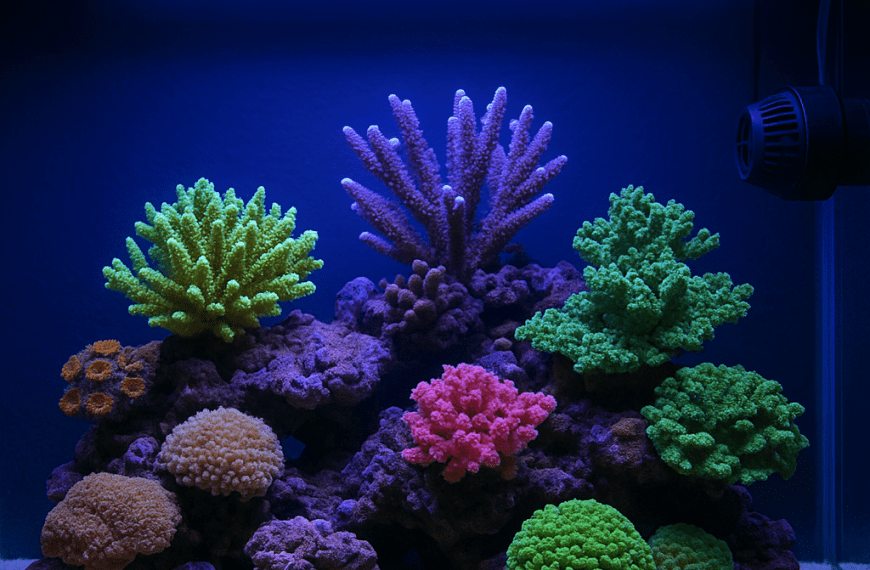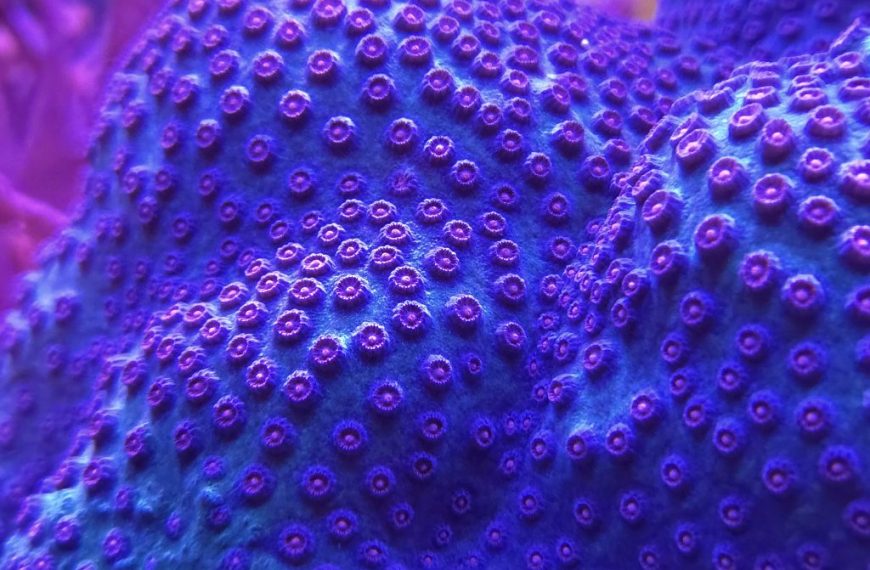
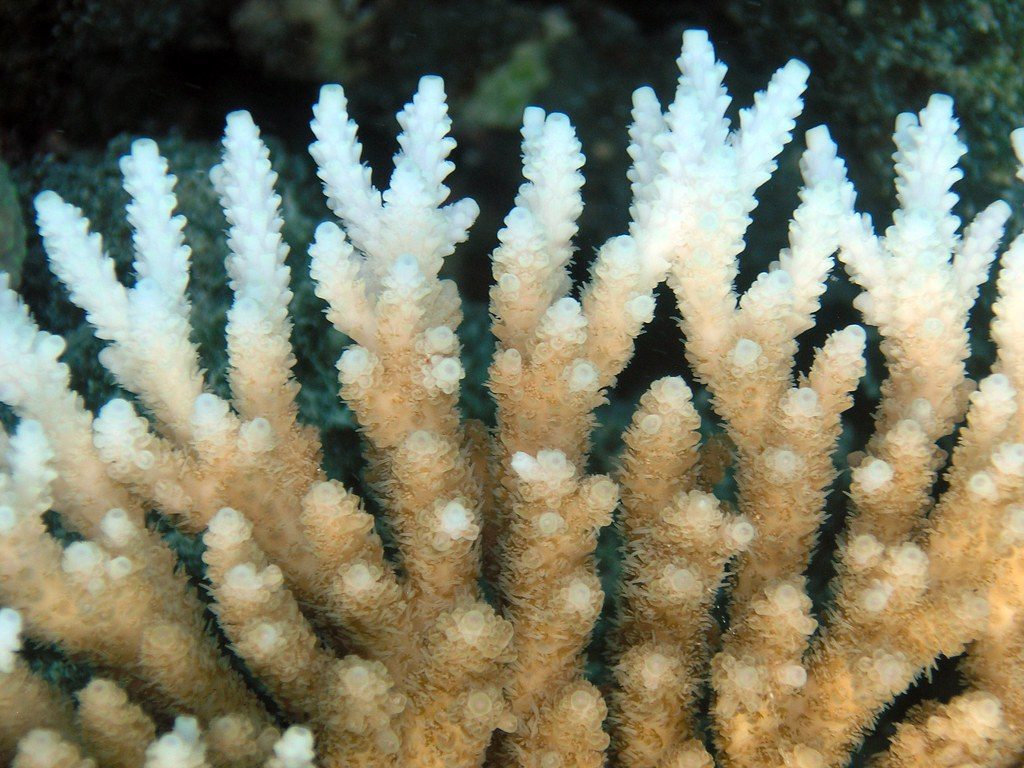
Coral bleaching is the loss of color caused when corals expel or reduce their symbiotic algae. In a home reef tank, bleaching usually points to stress. Heat, unstable alkalinity, excess light, poor acclimation, and sudden chemistry swings are the most common triggers. Fast action can save affected corals.
Many reef keepers first notice bleaching as a coral turning pale, pastel, or bright white. That change can happen slowly or almost overnight. It often creates panic. The good news is that bleaching is not always immediate tissue death. A bleached coral can recover if the stressor is found and corrected quickly. In this guide, you will learn what coral bleaching really is, how to tell it apart from other problems, what causes it in aquariums, and how to respond without making things worse.
Quick Reference Table
| Topic | Key Takeaway |
|---|---|
| What is bleaching? | Loss of zooxanthellae or their pigments, causing a pale or white appearance. |
| Most common causes | Heat, light shock, alkalinity swings, salinity changes, nutrient imbalance, and chemical stress. |
| Is it always fatal? | No. Mild bleaching can reverse if conditions stabilize quickly. |
| First response | Check temperature, salinity, alkalinity, pH, nitrate, phosphate, and recent changes. |
| Should you feed? | Yes, lightly if the coral accepts food. Do not overfeed the tank. |
| Can too much light cause it? | Yes. Sudden PAR increases are a major cause in home aquariums. |
Use this table as a fast checklist before making adjustments. Slow, measured corrections usually work best.
What Coral Bleaching Actually Means
Most reef-building corals live with microscopic algae called zooxanthellae. These algae live inside coral tissue. They provide energy through photosynthesis. In return, the coral gives them shelter and nutrients. This partnership drives coral growth and color.
When a coral is stressed, it may expel some of these algae. The algae may also lose pigment and function poorly. Either way, the coral looks lighter. In severe cases, the white calcium skeleton shows through the tissue. That is classic bleaching.
Bleaching does not always mean the coral is dead. Tissue can still be present over the skeleton. The coral is alive, but weakened. It has less energy available. That makes it vulnerable to starvation, infection, and tissue loss. A healthy response depends on stability. Corals recover best when the original stress is removed and the tank remains consistent afterward.
How to Tell Bleaching From Tissue Loss
This distinction matters. A bleached coral still has tissue on the skeleton. It looks pale, pastel, or bright white, but the surface often appears smooth or slightly glossy. Polyps may still extend, though less than normal. You may also see faint fluorescent color remain.
Tissue loss looks different. In that case, the tissue peels away or disappears. The exposed skeleton often looks stark, dry, or rough. Algae may quickly grow on dead areas. With stony corals, recession often starts at the base or edges. Soft corals may melt or collapse instead.
New hobbyists often confuse pale coloration with low nutrients. That can happen too. But true bleaching usually follows a clear stress event. Think about what changed recently. Did you install a stronger light? Raise intensity? Miss top-off water? Dose too much alkalinity? Those clues usually point you in the right direction.
Natural Habitat and Why It Matters
In nature, corals live in stable tropical seas. Temperatures change, but not wildly in a single day. Sunlight rises and falls gradually. Water chemistry stays far more stable than most aquariums. Ocean currents also bring oxygen, food, and waste export around the clock.
Home aquariums are different. They are small, closed systems. A failed heater can spike temperature fast. A new LED schedule can double usable light overnight. Evaporation can raise salinity in a day. Dosing mistakes can swing alkalinity within hours. Corals can tolerate many conditions, but they hate sudden change.
This is why reef success depends on stability more than chasing perfect numbers. A coral that adapts to slightly elevated nutrients may do well for years. The same coral may bleach after one day of overheating or a large chemistry swing. Understanding that natural preference for consistency helps explain most bleaching events in captivity.
Main Causes of Coral Bleaching in a Home Aquarium
Heat stress is one of the biggest causes. Corals often bleach when tank temperature rises above their normal range. Even a short spike can cause damage. The risk increases when high heat combines with strong light.
Light shock is another major cause. This often happens after a lighting upgrade, a lens cleaning, or moving a coral higher in the tank. Corals need time to adapt to higher PAR. Without acclimation, the algae become stressed and bleaching follows.
Alkalinity swings are common in reef tanks. A rapid rise or drop can shock SPS and LPS corals. Salinity swings from evaporation, skipped top-off, or bad water changes can do the same. pH instability can add more stress.
Nutrient imbalance also matters. Very low nitrate and phosphate can make corals more sensitive to strong light. Excess nutrients can also stress corals over time. Chemical warfare from soft corals, heavy metals, contaminated additives, or overdosed treatments may trigger bleaching as well.
Lighting Requirements and Light-Related Bleaching
Corals need light, but more is not always better. Each species has a useful range. Mushrooms and many zoanthids prefer lower light. Many Acropora prefer much stronger light. Problems begin when intensity changes too quickly.
Common light-related bleaching events happen after installing new LEDs, increasing intensity too fast, shortening mounting height, or changing from blue-heavy settings to stronger white channels. Corals may also bleach after moving from the sand bed to upper rockwork.
Use a PAR meter when possible. It removes guesswork. If you cannot measure PAR, use caution. Increase intensity slowly. A good rule is 5 percent per week. Use light acclimation modes on modern fixtures. Start new corals lower in the tank. Watch for paling on upper surfaces. That often signals too much light before full bleaching occurs.
If bleaching begins after a lighting change, reduce intensity modestly. Do not plunge the coral into darkness. Corals still need some photosynthetic support. Aim for a gentler light level and hold it steady.
Water Chemistry and Stability
Stable chemistry is the backbone of coral health. Temperature should stay steady, usually around 77 to 79 degrees Fahrenheit. Salinity should remain near 1.025 specific gravity. Large daily swings create stress even if the average looks acceptable.
Alkalinity is especially important. Rapid alkalinity changes are a common bleaching trigger, especially in SPS systems. Calcium and magnesium support skeletal growth, but abrupt alkalinity movement usually causes faster visible stress. Keep nitrate and phosphate detectable but controlled. Ultra-low nutrients can leave corals pale and fragile under strong light.
Test with reliable kits. Calibrate probes and refractometers often. Match new saltwater closely during water changes. Avoid large corrections unless there is an emergency. Slow correction protects corals better. If you want a deeper chemistry foundation, see water parameter guide, reef tank salinity tips, and how to lower alkalinity safely.
Water Flow, Oxygen, and Indirect Stress
Flow does not usually cause bleaching by itself, but poor flow can worsen stress. Corals need moving water to exchange gases, remove waste, and bring food and oxygen. Stagnant areas trap heat and detritus. That can irritate tissue and reduce resilience.
Too much direct flow can also be harmful. Tissue may retract or wear down over time. This is common with fleshy LPS corals. Aim for varied, indirect flow. SPS often prefer stronger, turbulent flow. LPS and soft corals usually like moderate, changing movement.
Oxygen matters more than many hobbyists realize. A warm tank holds less oxygen. If your aquarium overheats, low oxygen adds another layer of stress. Surface agitation, clean pumps, and a functioning skimmer all help. During summer, fans and open tops can improve both cooling and gas exchange.
Step-by-Step: What to Do if a Coral Starts Bleaching
- Stay calm and avoid making five changes at once.
- Check temperature immediately. Look for heater or cooling issues.
- Measure salinity with a calibrated refractometer.
- Test alkalinity, calcium, magnesium, nitrate, phosphate, and pH.
- Review recent changes. Think lights, dosing, new equipment, and water changes.
- If light shock is likely, reduce intensity slightly or shorten peak photoperiod.
- Move the coral only if placement is clearly the problem.
- Improve stability. Match top-off and water change practices carefully.
- Run fresh carbon if chemical irritation is possible.
- Feed lightly if the coral has feeding response.
Document what you find. Notes help more than memory. Watch the coral daily, but avoid constant repositioning. Corals recover slowly. A stable week often helps more than a dramatic rescue attempt. If several corals bleach at once, suspect a system-wide issue. Temperature, salinity, contamination, and dosing errors should be checked first.
Feeding a Bleached Coral
A bleached coral has less energy from photosynthesis. Feeding can help, but it must be done carefully. Many LPS corals accept small meaty foods like mysis, brine, or finely chopped seafood. Some soft corals and SPS benefit more from dissolved and particulate foods.
Feed small amounts. Watch for response. Target feeding a stressed coral with large portions can backfire. Uneaten food harms water quality. That creates more stress. It is better to feed lightly two or three times per week than to dump in excess food once.
Do not assume feeding alone will fix bleaching. It is support, not the cure. The real goal is removing the stressor. Once conditions stabilize, the coral can rebuild its algal population and regain color over time.
Compatibility and Hidden Stressors
Not all bleaching comes from chemistry or light. Tank mates can contribute. Aggressive corals sting neighbors at night. Soft corals release chemicals into the water. Some angelfish and butterflyfish nip coral tissue. Crabs and shrimp may irritate stressed polyps.
Placement matters too. A coral may bleach on one side because another colony shades it, stings it, or blocks flow. Mixed reefs need extra attention here. Running activated carbon and leaving enough space between colonies helps reduce chemical and physical warfare.
If one coral is bleaching while others thrive, inspect local conditions first. Look at flow pattern, nearby neighbors, and exact placement under the light. If many species show stress together, think system-wide. For broader planning, review reef-safe fish guide and beginner coral placement tips.
Common Problems
Why did my coral turn white overnight?
Sudden bleaching usually points to a rapid stress event. Common causes include a heater malfunction, a salinity jump, overdosed alkalinity, or a major lighting change. Check those first. Overnight changes rarely come from long-term nutrient issues alone.
Can a bleached coral recover?
Yes, many can recover. Recovery depends on species, severity, and how fast you correct the cause. Mildly bleached corals often regain color over weeks or months. Severely bleached corals may survive but stay pale for a long time.
Should I move a bleached coral?
Only if placement is clearly the issue. If the coral was recently moved into stronger light or harsh flow, a lower and calmer spot may help. Otherwise, repeated moving adds stress. Fix the tank issue first.
Do water changes help bleaching?
They can help if contamination or imbalance is involved. But large, poorly matched water changes can also worsen stress. Match salinity, temperature, and alkalinity closely. Think precision, not volume.
Frequently Asked Questions
Is coral bleaching the same as coral death?
No. Bleaching means the coral has lost much of its symbiotic algae or pigment. The tissue may still be alive. Death means the tissue is gone.
What parameter causes bleaching most often?
Temperature and alkalinity swings are top causes. Sudden light increases are also very common in home aquariums.
How long does recovery take?
It varies widely. Some corals improve within weeks. Others need several months to regain full color and growth.
Can low nutrients bleach corals?
Yes. Very low nitrate and phosphate can make corals pale and more sensitive to strong light. Balance matters more than chasing zero.
Should I dip a bleached coral?
Not unless you suspect pests or infection. Dips add stress. Most bleaching cases come from environmental issues, not pests.
Final Thoughts
Coral bleaching is a warning sign. It tells you the coral is under stress and running low on energy. In reef tanks, the usual causes are heat, light shock, and unstable chemistry. The best response is calm troubleshooting and stable care. Test carefully. Change things slowly. Support the coral with good flow, clean water, and gentle feeding if needed. In many cases, patience and consistency are what bring color back.
Was this helpful?
Related Posts
What is a Chaeto Reactor, and How Does it Help Control Nutrients?
A chaeto reactor grows macroalgae in a sealed chamber to remove nitrate and phosphate, helping reef tanks control…
 By
By
What is a Propagation Tank, and How Do Reef Hobbyists Use it to Grow Coral Frags?
A propagation tank is a dedicated coral grow-out system. It helps reef hobbyists heal, organize, and multiply coral…