

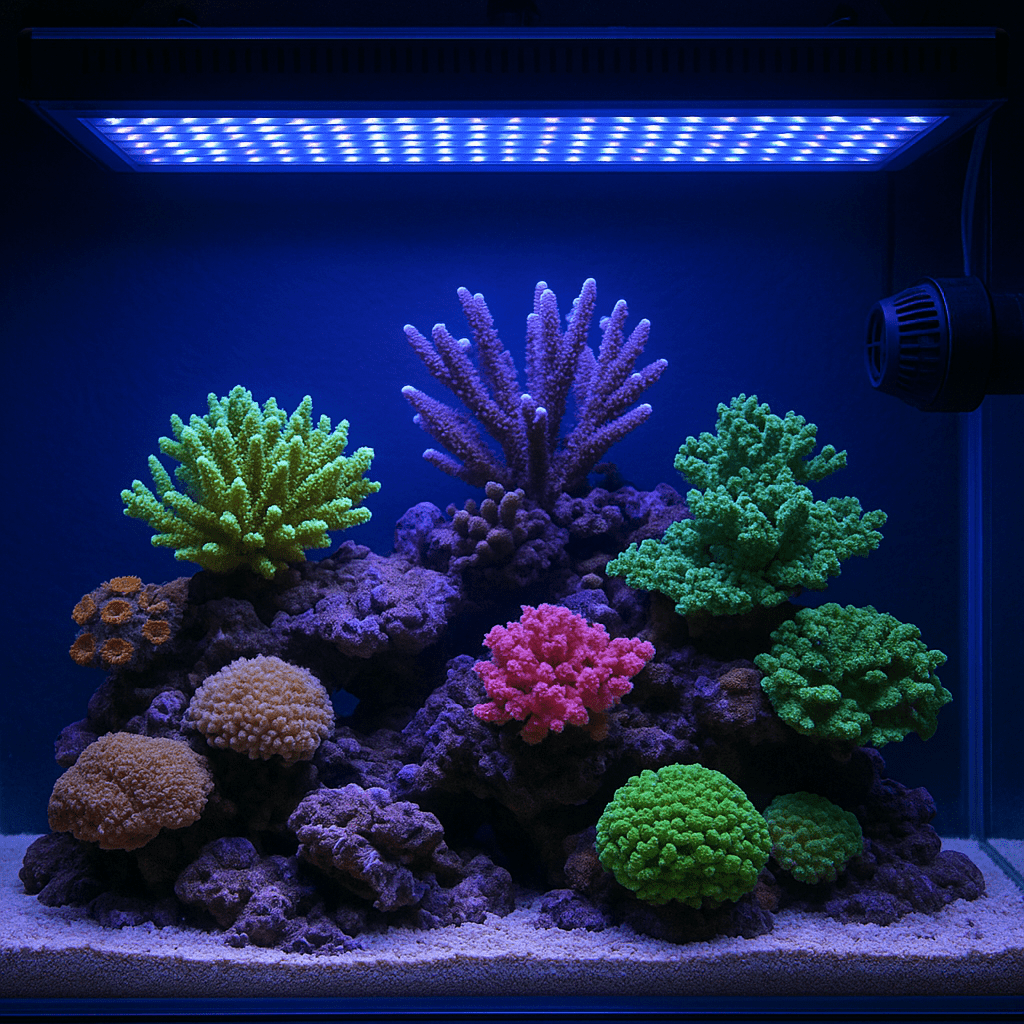
Zooxanthellae are microscopic, photosynthetic algae that live inside the tissues of many reef-building corals and other marine invertebrates. In reef aquariums, they are one of the most important concepts to understand because they explain why corals need light, why nutrient balance matters, and why corals “brown out” or bleach when stressed.
Even though hobbyists often say “corals are plants,” corals are animals. Their success in bright, nutrient-poor tropical seas comes largely from a tight partnership with these algae. When that partnership is stable, corals can grow, color up, and build skeleton efficiently. When it breaks down, coral health can decline fast.
Zooxanthellae: the reef aquarium definition
Zooxanthellae is a common aquarium term for symbiotic dinoflagellates (mostly in the family Symbiodiniaceae) that live within the cells of a host animal. In practical reef-keeping terms:
- The host (coral, anemone, some clams) provides protection, carbon dioxide, and nutrients.
- The zooxanthellae use light to photosynthesize and share energy-rich compounds back to the host.
This is a classic example of symbiosis, specifically a mutualistic relationship where both partners benefit.
Where do zooxanthellae live in the coral?
In most reef-building corals, zooxanthellae live inside the coral’s tissues, typically within specialized host cells. That location matters because it gives the algae access to:
- Light (especially in shallow water and under reef aquarium lighting)
- CO₂ produced by the coral’s metabolism
- Nitrogen and phosphorus in small amounts, which the algae need to reproduce and function
Because they are inside the coral, changes in your tank’s lighting, nutrients, temperature, and chemistry directly affect the algae and the coral together.
What do zooxanthellae do for corals?
Zooxanthellae help power coral life through photosynthesis. Using light, they convert CO₂ and water into sugars and other organic compounds. A portion of that energy is transferred to the coral host and can support:
- Daily energy needs (metabolism and tissue maintenance)
- Growth and tissue expansion
- Calcification (building the calcium carbonate skeleton, especially in stony corals)
- Coloration (indirectly, by influencing pigment expression and overall health)
This is why many corals thrive under strong, stable lighting even when the surrounding water is relatively low in nutrients. The coral is not “feeding only from light,” but light-driven energy is a major part of the budget.
What do corals do for zooxanthellae?
The coral host is not passive in this relationship. Corals provide a controlled environment where zooxanthellae can live safely and consistently access key inputs. The coral supplies:
- Shelter from predators and harsh conditions
- CO₂ from respiration
- Waste nutrients (small amounts of ammonia and phosphate can be valuable to the algae)
- Positioning in high-light zones on the reef (or in your aquascape)
In a well-run reef tank, you are essentially managing the environment for this coral-algae partnership.
Why zooxanthellae matter in reef aquariums
Understanding zooxanthellae helps explain several common reef aquarium outcomes that can confuse newer hobbyists.
1) Why corals need light (and why “more” is not always better)
Because zooxanthellae photosynthesize, corals need appropriate intensity and spectrum to meet their energy demands. But excessive light, sudden increases in PAR, or long photoperiods can stress the system and contribute to bleaching. The goal is stable, appropriate light, not maximum light.
2) Why corals “brown out”
A “browned out” coral often has a higher density of zooxanthellae or increased concentrations of photosynthetic pigments. Common triggers include:
- Elevated nutrients (especially nitrate and phosphate)
- Lower light than the coral is adapted to
- Post-shipping stress and acclimation changes
Brown coloration is not always a sign of imminent death, but it usually indicates the coral is not expressing its best coloration. Many hobbyists improve this by stabilizing nutrients, improving light placement gradually, and maintaining strong flow and consistent alkalinity.
3) Why corals bleach
Bleaching occurs when corals lose a significant portion of their zooxanthellae and or the algae’s pigments. With fewer algae in the tissue, the coral becomes pale or white because you are seeing more of the coral’s skeleton and underlying tissue structure.
In aquariums, bleaching is commonly associated with one or more stressors:
- Rapid light increase (no acclimation)
- Temperature spikes or swings
- Major alkalinity instability
- Severe nutrient starvation or sudden nutrient shifts
- Chemical stress (contaminants, aggressive carbon dosing, etc.)
A bleached coral is not automatically dead, but it is running an energy deficit. At that point, stable conditions and careful feeding become even more important.
4) Why nutrient balance is so important
Zooxanthellae need nitrogen and phosphorus in small amounts. In ultra-low nutrient systems, corals can become pale, stop growing, or look “washed out” because the algae population and pigment production drop too far. On the other hand, chronically high nutrients can push the algae population too high, leading to browning and reduced coloration.
In practice, reef keepers aim for a balanced middle ground with stable nitrate and phosphate, rather than chasing “zero.”
Do all corals have zooxanthellae?
Many of the corals commonly kept in reef tanks host zooxanthellae, including most SPS and LPS corals. However, not all corals rely on them equally. Some corals are considered azooxanthellate (they do not host zooxanthellae) and must capture food from the water column to survive. These species are typically more challenging in standard reef aquariums because they require frequent feeding and excellent nutrient export.
Even among zooxanthellate corals, the degree of dependence varies. Many LPS corals, for example, can gain meaningful energy from direct feeding in addition to photosynthesis.
Zooxanthellae and coral color: what hobbyists should know
Coral color is a mix of:
- Zooxanthellae density (often contributes brown or tan tones)
- Photosynthetic pigments inside the algae
- Coral host pigments (fluorescent proteins and chromoproteins that can appear green, red, blue, purple, and more)
Lighting spectrum and intensity influence both the algae and the host pigments. Nutrients influence algae density and pigment production. That is why a coral can look dramatically different between two tanks even if it is the same frag.
Practical reef tank tips based on zooxanthellae biology
If you remember nothing else, remember this: you are managing a partnership. Stable conditions usually beat aggressive adjustments.
Light acclimation prevents stress
When moving corals between systems or upgrading lights, acclimate slowly. Use one or more of these approaches:
- Lower intensity and ramp up over 2 to 4 weeks
- Shorten photoperiod temporarily
- Start corals lower in the tank and move them up gradually
Keep temperature and alkalinity stable
Zooxanthellae are sensitive to stress, and corals respond strongly to instability. Avoid big swings. As a general reef-keeping target, keep temperature stable (often 25 to 26 C, or 77 to 79 F) and maintain consistent alkalinity with an appropriate dosing strategy.
Don’t chase “zero nutrients”
Very low nitrate and phosphate can lead to pale corals and reduced growth, especially in brightly lit SPS systems. If you run heavy export (oversized skimmer, aggressive refugium, strong phosphate media, carbon dosing), watch coral color and polyp extension and test regularly so you do not strip the water too far.
Feed the tank appropriately
Even photosynthetic corals benefit from available nutrition. Fish feeding, amino acid supplementation (used carefully), and occasional coral foods can help, especially during recovery from stress. The key is to match feeding with export so nutrients stay in a healthy range.
Common misconceptions about zooxanthellae
“If my coral is brown, it’s healthy.”
Not necessarily. Brown often means the zooxanthellae population is high relative to the coral’s tissue and pigments. The coral may be surviving, but not thriving in terms of coloration and sometimes calcification.
“Bleaching is always caused by too much light.”
Light shock is common, but bleaching can also come from heat stress, alkalinity swings, contaminants, or rapid nutrient changes. Look for the most likely stressor based on what changed in the last 1 to 2 weeks.
“More nutrients will fix pale corals.”
Sometimes pale corals are nutrient-starved, but sometimes they are light-stressed or alkalinity-stressed. Raising nutrients without diagnosing the issue can lead to algae problems and browned-out corals. Make one change at a time and confirm with test results.
Quick FAQ
Are zooxanthellae harmful?
In the context of corals and many reef invertebrates, they are beneficial symbionts. Problems happen when stress disrupts the relationship or when conditions push the algae population out of balance.
Can corals live without zooxanthellae?
Some corals can survive periods with reduced zooxanthellae, but long-term loss usually leads to starvation unless the coral can capture enough food. Azooxanthellate corals can live without them, but they require heavy feeding.
Do anemones and clams have zooxanthellae too?
Many do. Bubble tip anemones and giant clams are classic examples of animals that rely heavily on zooxanthellae under strong lighting, although they also gain nutrition from feeding and dissolved nutrients.
Why did my coral turn white after I upgraded my lights?
A sudden increase in PAR can cause light stress and bleaching. Reduce intensity, shorten the photoperiod, and acclimate slowly while keeping temperature and alkalinity stable.
Is coral color mostly from zooxanthellae?
Some of it is. Zooxanthellae density often adds brown tones, while many bright colors come from coral host pigments influenced by lighting, nutrients, and overall health.
Was this helpful?
Related Posts
Butterflyfish Care in Marine Aquariums
Practical butterflyfish care for marine aquariums, including tank size, feeding steps, and quarantine tips for healthy long-term success.
 By
ByReef Tank Plumbing Basics
Learn reef tank plumbing basics, including drains, return pumps, sump flow, noise control, and flood prevention for a…
[favorite_button]
My Bookmarks:
To see full list click here
[user_favorites user_id="" include_links="true" site_id="" post_types="" include_thumbnails="true" thumbnail_size="thumbnail" include_excerpt="false"]