

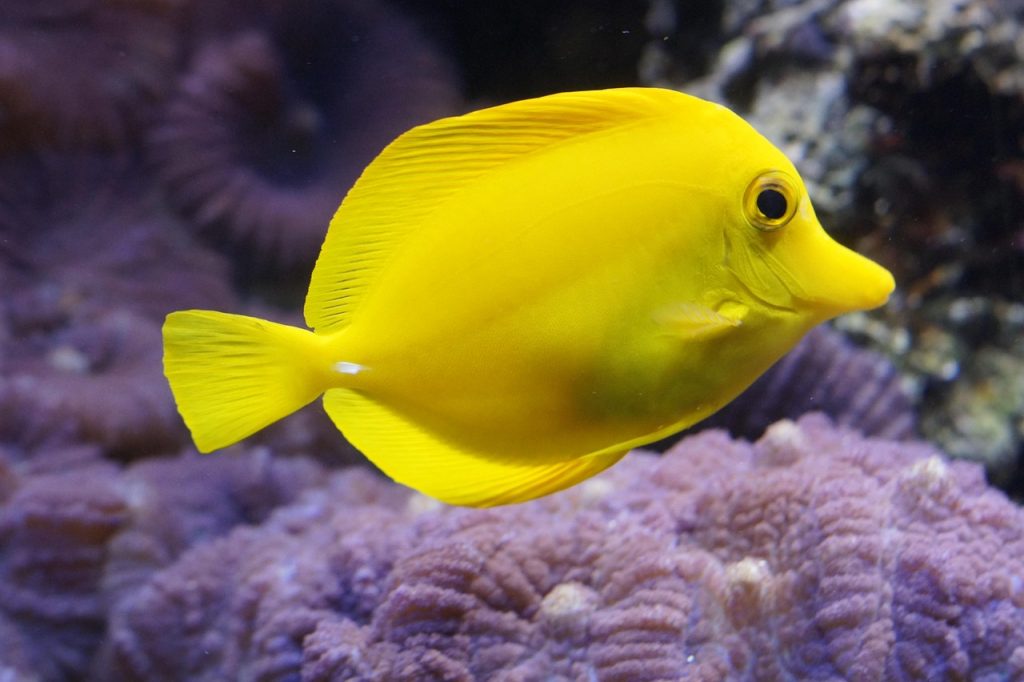
The Yellow Tang is one of the most iconic reef fish in the hobby. It is bright, active, and always visible in the display. This species can do very well in reef tanks when it has enough swimming room, stable water, and a steady supply of algae-rich foods.
In this care guide, you will learn tank size, diet, temperament, reef safety, and common health issues. You will also learn how to choose a healthy specimen and keep its color strong over time. For many hobbyists, the Yellow Tang is a dream fish. Success depends on planning ahead.
Yellow Tang Care Quick Reference
| Category | Recommendation |
|---|---|
| Scientific name | Zebrasoma flavescens |
| Common name | Yellow Tang |
| Care level | Moderate |
| Temperament | Semi-aggressive |
| Adult size | Up to 8 inches |
| Minimum tank size | 75 gallons, 100+ preferred |
| Diet | Herbivore with some meaty foods |
| Reef safe | Yes, with caution around some fleshy corals if underfed |
| Temperature | 76–80°F |
| Salinity | 1.025–1.026 |
| pH | 8.1–8.4 |
| Nitrate | Low to moderate |
| Flow | Moderate to strong |
| Lighting | No special need beyond reef tank standards |
This quick chart covers the basics. The details below matter just as much. Yellow Tangs are hardy once settled, but they dislike poor water quality, cramped tanks, and aggressive tankmates. Their long-term health depends on nutrition and stability.
Natural Habitat
The Yellow Tang comes from the Pacific Ocean. It is strongly associated with Hawaii, though collection rules have changed over time. In the wild, these fish live on coral-rich reefs and shallow surge zones. They spend much of the day grazing algae from rock surfaces.
This natural behavior explains many of their aquarium needs. They are constant swimmers. They also prefer mature rockwork with natural films and algal growth. A sterile new tank is not ideal. In nature, they use reef structure for shelter at night and open areas for daytime movement.
Yellow Tangs often occur alone or in loose groups, depending on size and habitat. They can defend feeding space from similar fish. That same instinct appears in captivity. Understanding their habitat helps you build a tank that supports normal behavior instead of fighting against it.
Aquarium Setup
A 75-gallon tank is the usual minimum for a small Yellow Tang. Bigger is always better. A 100-gallon or larger tank gives better swimming room and reduces aggression. Tank length matters more than height. This fish needs open lanes for cruising.
Build your aquascape with a mix of caves and open rock faces. Leave open water in the front and center. Avoid stacking rock wall-to-wall. That limits movement and creates territorial pressure. Stable live rock is important because tangs wedge into crevices when startled.
A mature reef tank is best. New systems often lack natural grazing and can swing in chemistry. Keep ammonia and nitrite at zero. Maintain nitrate at reasonable levels. Stable salinity is critical. Strong filtration and a good protein skimmer help a lot. If you are still planning your system, read our reef tank setup guide and live rock for reef tanks for layout ideas.
Lighting Requirements
Yellow Tangs do not need species-specific lighting. They adapt well to the same lighting used for reef aquariums. The real concern is how lighting affects algae growth, stress, and daily rhythm. A stable day and night schedule works best.
Bright reef lights can help promote natural grazing films on rock and glass. That gives the fish extra feeding opportunities. Sudden light changes can startle tangs, especially in bare or exposed aquascapes. Use ramp-up and ramp-down periods if your fixture allows it.
If your tank houses corals, set lighting for the corals first. The tang will adapt. Just provide shaded spots and rock overhangs. This allows the fish to retreat when it wants lower light. Consistency matters more than intensity for this species.
Water Flow
Yellow Tangs appreciate moderate to strong flow. In the wild, they live in active reef zones with constant water movement. Good flow keeps oxygen levels high and waste suspended for filtration. It also supports the overall reef environment.
Avoid one harsh stream aimed across the whole tank. Use broad, varied flow instead. This gives the fish areas to swim through and areas to rest. Random flow patterns work well in mixed reefs. Strong surface movement is also helpful.
If your tang constantly hides, flow may be too chaotic near its shelter sites. If it pants near the surface, oxygen may be low. Review pump placement and gas exchange. Stable flow helps prevent dead spots and supports cleaner rock surfaces for grazing.
Feeding
Diet is the biggest factor in Yellow Tang health. This fish is primarily an herbivore. It should eat algae-based foods every day. Dried nori is a staple. Attach it to a clip and offer fresh sheets daily. Remove leftovers before they foul the water.
Also feed quality pellets or flakes made for marine herbivores. Spirulina foods work well. Many Yellow Tangs also accept mysis shrimp and other frozen foods. These can be offered in smaller amounts for variety. Do not rely on meaty foods alone. That often leads to poor body condition.
Feed at least twice daily if possible. Frequent small feedings are better than one large meal. A well-fed tang is usually calmer and less likely to nip corals or bully tankmates. If you want a broader diet plan, see our best food for reef fish article.
Compatibility
Yellow Tangs are generally reef safe. They usually ignore corals, shrimp, snails, and crabs. Problems can happen if the fish is underfed. Hungry tangs may sample fleshy LPS corals or pick at clam mantles. This is not the norm, but it does happen.
With fish, they can be territorial. This is strongest toward other tangs and fish with a similar body shape. Introduce the Yellow Tang carefully in tanks under 125 gallons. Adding it last often helps. In larger tanks, tang groups are possible, but they require planning and space.
Good tankmates include clownfish, gobies, wrasses, blennies, and many reef-safe angels in larger systems. Avoid pairing with highly aggressive surgeonfish in smaller tanks. If you are building a peaceful community, our reef-safe fish guide can help with stocking ideas.
Step-by-Step Guide to Choosing a Healthy Yellow Tang
Start by watching the fish before you buy it. It should swim confidently and respond to movement. Avoid fish that stay pinned in corners or breathe very fast. The body should look full, not pinched behind the head. Sunken areas often signal starvation or stress.
Next, inspect the skin and fins. The yellow color should be clear and even. Minor shading changes can be normal. Heavy blotching, torn fins, cloudy eyes, or visible spots are warning signs. Look closely at the mouth and tail base. Damage there can suggest fighting or infection.
Ask to see the fish eat. A healthy Yellow Tang usually shows interest in algae sheets or prepared foods. Once home, quarantine is strongly recommended. Tangs are prone to marine ich and other parasites. A separate quarantine system protects your display and gives the fish time to recover from shipping stress. Review our quarantine reef fish guide before purchase.
Propagation or Breeding
Yellow Tang breeding is not a practical home aquarium project for most hobbyists. They are pelagic spawners. Their larvae are tiny and difficult to raise. Commercial breakthroughs have happened, but the process is advanced and resource-heavy.
Can hobbyists breed Yellow Tangs?
In typical home systems, the answer is no. Spawning behavior may occur in very large, stable aquariums, but raising the larvae is the real challenge. It requires specialized live feeds, larval systems, and precise timing.
Why aquacultured Yellow Tangs matter
Aquacultured specimens are a major win for the hobby. They can reduce pressure on wild populations and support more sustainable reef keeping. They may also adapt well to prepared foods and captive life. If available, they are worth considering.
Common Problems
Yellow Tang has white spots
This is one of the most common search questions. White spots often point to marine ich. Tangs are very susceptible. Stress, transport, and aggression can trigger outbreaks. Quarantine all new fish. If ich appears, move fish to a treatment system and leave the display fallow if needed.
Yellow Tang is turning pale or brown
Color changes can happen at night, during stress, or after aggression. Temporary dark patches are not always disease. Persistent fading suggests a problem. Check diet, water quality, and social pressure. A starving or bullied tang often loses brightness first.
Yellow Tang is not eating
New arrivals often refuse food for a short time. Offer nori first. Try red, green, and brown seaweed. Clip it near the fish’s preferred hiding area. Reduce stress from tankmates. Test ammonia and salinity. If the fish still refuses food after several days, inspect for parasites and consider quarantine support.
Yellow Tang is aggressive
Territorial behavior usually comes from limited space or competition. Rearranging rockwork can help during introductions. Add algae clips in more than one spot. Use an acclimation box for new fish. In some tanks, the tang simply needs more room than the system provides.
Frequently Asked Questions
Is a Yellow Tang good for beginners?
It can be, if the tank is large enough and stable. The fish is hardy once established. The main beginner challenges are tank size, quarantine, and feeding correctly.
How big does a Yellow Tang get?
Most reach around 7 to 8 inches in captivity. They also become deep-bodied fish. That is why small tanks become cramped quickly.
Can a Yellow Tang live in a 55-gallon tank?
That size is usually too small long term. A juvenile may fit for a short period, but adult care requires more swimming room and better territory spacing.
Do Yellow Tangs eat hair algae?
They may graze some filamentous algae, but they are not a guaranteed fix for an algae problem. Good nutrient control and maintenance still matter most.
Are Yellow Tangs reef safe with corals?
Yes, in most cases. They are considered reef safe. Keep them well fed to reduce the chance of occasional nipping at fleshy corals.
The Yellow Tang remains a top choice for reef aquariums for good reason. It adds color, movement, and personality. Give it space, algae-rich foods, and stable conditions. In return, you get a hardy show fish that can thrive for many years.
Was this helpful?
Related Posts
Best Filtration Systems
Best Filtration Systems for a Healthy Saltwater Aquarium Choosing the best filtration system for your saltwater aquarium is…
 By
By
Clown Triggerfish (Balistoides Conspicillum)
Clown triggerfish are stunning but aggressive marine fish that need very large tanks, strong filtration, and careful tankmate…
[favorite_button]
My Bookmarks:
To see full list click here
[user_favorites user_id="" include_links="true" site_id="" post_types="" include_thumbnails="true" thumbnail_size="thumbnail" include_excerpt="false"]