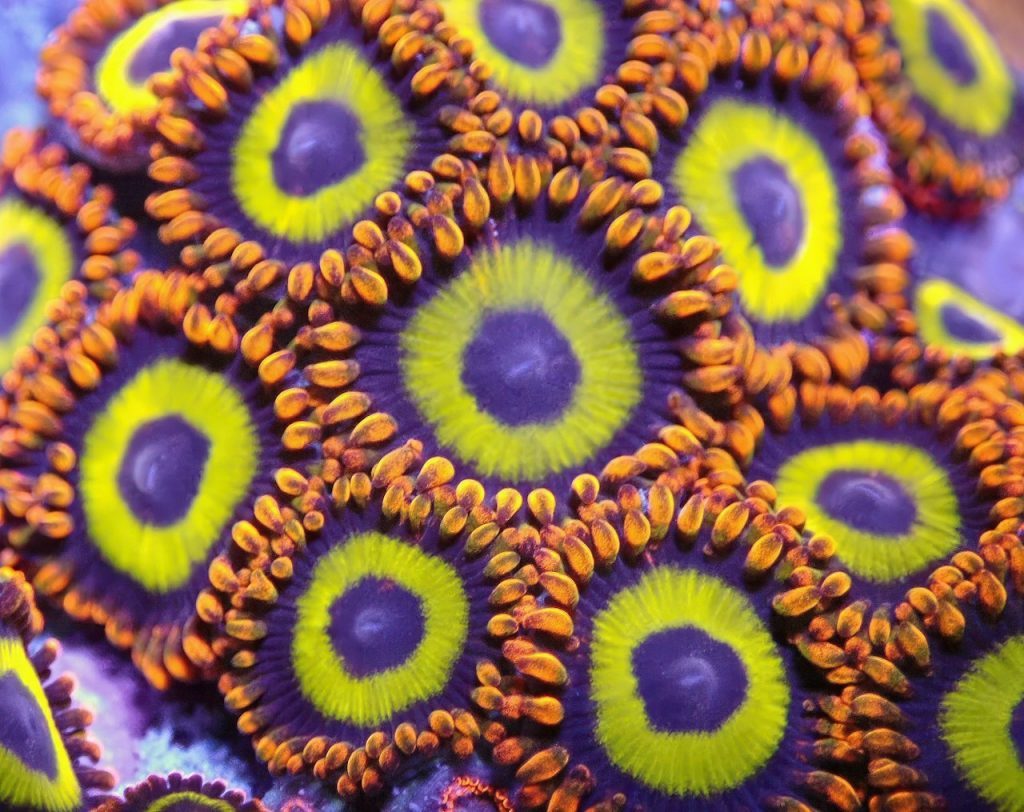
Zoanthids are colorful, hardy corals that suit many reef tanks. They spread fast and can cover rockwork in weeks. Good care keeps colors bright and prevents nuisance issues.
Tank setup and stable parameters
Zoanthids do best in stable reef conditions. Aim for 24–26°C (75–79°F) and salinity 1.025–1.026. Keep pH at 8.1–8.4 and alkalinity 8–9 dKH. Hold calcium at 400–450 ppm and magnesium at 1250–1350 ppm.
Nutrients matter for color and growth. Keep nitrate around 2–15 ppm for most tanks. Keep phosphate around 0.03–0.10 ppm. Ultra-low nutrients can cause pale polyps. High nutrients can fuel algae on the mat.
Flow should be moderate and indirect. Strong jets can keep polyps closed. Dead spots can trap detritus and irritate the colony. Start on the sand or lower rock. Move them up after two weeks.
Use a quarantine or observation container for new frags. Many pests hitchhike on plugs. A simple dip helps reduce risk. For a full plan, see reef tank quarantine guide.
- Test alkalinity twice weekly in new systems.
- Change 10% water weekly for steady trace elements.
- Blow detritus off colonies with a turkey baster.
Lighting, feeding, and placement for best color
Zoanthids handle a wide light range. Many thrive at 50–150 PAR. Some high-end morphs color best at 100–200 PAR. Too much light can cause shrinking or bleaching. Too little light can cause stretching.
Acclimate slowly when you change lights. Use a ramp schedule over 10–14 days. You can also lower intensity by 20% at first. Watch for closed polyps and faded skirts. Those are early stress signs.
Zoanthids get energy from light, but feeding helps growth. Feed 1–2 times per week. Use fine foods like reef roids, rotifers, or powdered plankton. Turn off return flow for 10 minutes. Target feed lightly to avoid nutrient spikes.
Placement affects long-term control. Put fast growers on isolated rocks. This makes trimming easier. Keep space from LPS sweepers and stinging soft corals. For mixing ideas, read coral placement and flow basics.
- Start frags low and shaded for the first week.
- Increase PAR by 10–15% per week if needed.
- Feed after lights out for better polyp response.
Common problems: closed polyps, pests, and safety
Closed polyps usually mean irritation or instability. Check alkalinity first, then temperature swings. A 1 dKH drop in a day can close colonies. Also check for sand or algae on the mat. Gently baste the colony clean.
Pests are common on zoas. Look for nudibranchs, sundial snails, and spider-like zoa-eating amphipods. Inspect at night with a flashlight. Remove pests with tweezers and repeat dips every 5–7 days. Eggs often survive the first dip.
Algae and cyano can smother the mat. This happens in low flow or high nutrients. Increase random flow and reduce feeding for a week. Keep phosphate under 0.15 ppm. Manual removal works best on small patches.
Zoanthids can contain palytoxin. Always wear gloves and eye protection. Never scrub them in hot water or boil rock. Use a dedicated coral tool set. Review safe handling steps in reef coral safety and palytoxin.
- Dip new frags and scrape plug edges clean.
- Use carbon after dips to polish the water.
- Trim colonies with bone cutters on an isolated rock.
Zoanthids reward steady parameters and patient placement. Keep nutrients in a healthy range and avoid sudden light changes. With simple pest checks and safe handling, your zoa garden can thrive for years.
Sources: Borneman, E. “Aquarium Corals” (TFH); Delbeek & Sprung, “The Reef Aquarium” Vol. 1–3; Julian Sprung, “Corals: A Quick Reference Guide”.
Was this helpful?
Related Posts
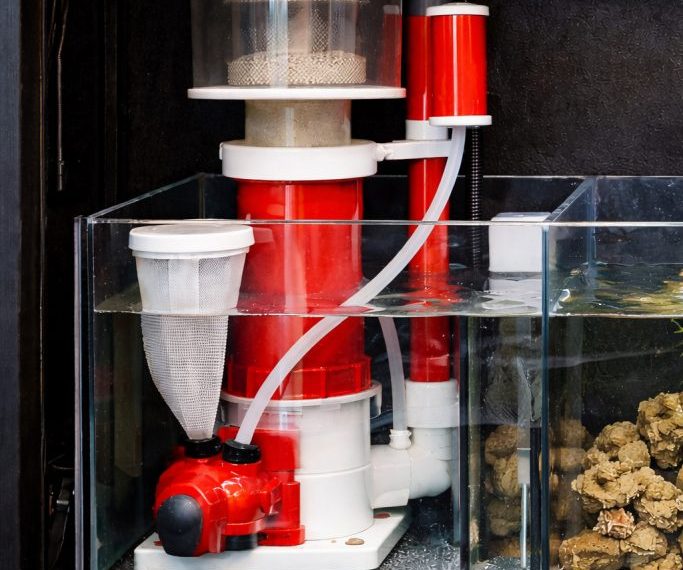
Protein Skimmer Reef Tank Guide
Learn how a protein skimmer works, how to size one, and how to tune it for a cleaner,…
 By
By
Reef Aquarium Water Parameters
Learn the ideal reef aquarium water parameters, safe ranges, and how to keep salinity, alkalinity, nutrients, and pH…