

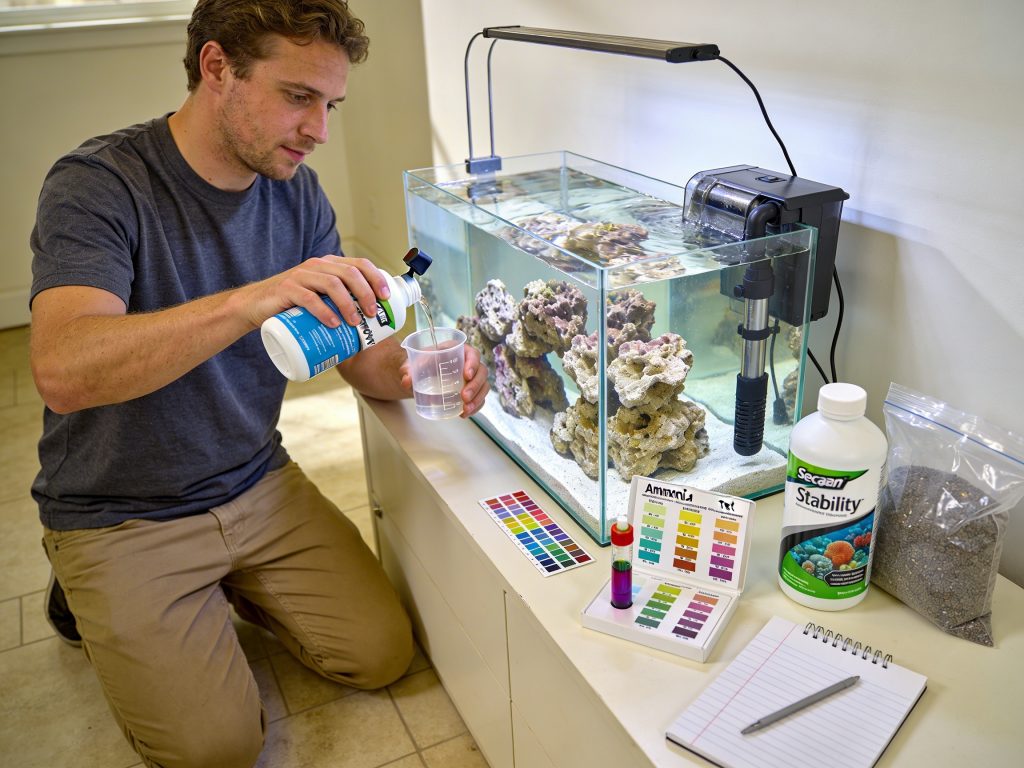
An ammonia spike is a reef tank emergency. It can burn fish gills, stress corals, and kill invertebrates fast. The good news is that most ammonia spikes follow a pattern. If you find the cause early and act in the right order, you can often save the tank and prevent the same problem from happening again.
This guide explains what an ammonia spike is, why it happens, how to confirm it, and what to do next. You will learn the most common causes in new and established reef aquariums. You will also learn how to protect livestock during the crisis. Just as important, you will learn how to stop future spikes through better stocking, feeding, maintenance, and biological filtration.
Quick Reference Table
| Issue | Likely Cause | Immediate Action |
|---|---|---|
| New tank shows ammonia | Cycle not complete | Pause stocking and test daily |
| Sudden spike in mature tank | Dead fish, overfeeding, filter disruption | Remove source and do water change |
| Fish gasping at surface | Ammonia stress and low oxygen | Increase aeration right away |
| Cloudy water with ammonia | Bacterial bloom or decay event | Reduce feeding and improve filtration |
| After medication or cleaning | Biofilter damage | Add bacteria support and monitor closely |
Use this table as a fast starting point. Then work through the full troubleshooting steps below.
What an Ammonia Spike Means in a Reef Tank
Ammonia is the first toxic waste product in the nitrogen cycle. Fish release waste into the water. Uneaten food also breaks down into ammonia. In a stable reef tank, beneficial bacteria convert ammonia into nitrite. Then other bacteria convert nitrite into nitrate. When that chain breaks, ammonia starts to rise.
Even a small ammonia spike can be dangerous. Saltwater fish are sensitive to it. Shrimp, snails, and other invertebrates can react even faster. Corals may not die immediately, but they often close up, lose color, or produce excess mucus. If levels keep rising, tissue loss can follow.
This is why stable biological filtration matters so much. Reef tanks depend on live rock, sand, and filter media to process waste every hour of the day. When the tank produces more waste than the bacteria can handle, or when the bacteria population gets damaged, ammonia appears.
How to Confirm an Ammonia Spike
Start with a reliable test kit. Liquid kits are usually more dependable than strips. If the result looks odd, test again. Then test a second sample. If possible, confirm with another brand or a digital monitor. False readings do happen, especially in tanks using conditioners or certain medications.
Look at the tank too. Fish may breathe fast. They may hover near pumps or the surface. Corals may stay closed. Shrimp may act weak or hide more than usual. A strong rotten smell can suggest a dead animal or heavy decay. Cloudy water often points to a bacterial bloom or excess organics.
Check recent changes. Did you add fish too quickly? Did you clean all filter media at once? Did a pump fail? Did you stir a dirty sand bed? Did you use medication in the display tank? The answer is often hidden in the last few days. Good notes make troubleshooting much easier.
Most Common Causes of Ammonia Spikes
The most common cause in a new reef tank is an incomplete cycle. Many tanks look ready before they truly are. A tank may process a small amount of waste, but fail after the first fish or feeding increase. This is why slow stocking matters. Bacteria need time to match the new bioload.
In established tanks, hidden death is a major cause. A dead fish behind the rock can foul water fast. Large snails, crabs, and sea cucumbers can do the same. Overfeeding is another common trigger. Extra food breaks down quickly. Heavy feeding can overwhelm a biofilter, especially in smaller aquariums.
Filter disruption also causes spikes. Replacing too much media at once removes bacteria. Washing media in tap water can kill them. Deep cleaning a sump, canister, or sand bed can strip out biological support. Power outages can also hurt bacteria if oxygen drops too long. In some cases, medications or copper exposure damage the biofilter directly.
Step-by-Step Emergency Response
First, stay calm and verify the reading. Panic often leads to bad decisions. Do not add random products without a plan. Once ammonia is confirmed, remove any obvious source of decay. Check behind rockwork. Inspect overflow boxes. Look in the sump. Remove dead livestock, uneaten food, and trapped debris.
Next, increase oxygen. Point powerheads toward the surface. Open up gas exchange. Add an air stone if needed. Ammonia stress makes breathing harder. Low oxygen makes the problem worse. Then perform a water change with well-mixed saltwater that matches temperature and salinity. A moderate change is usually safer than a huge swing.
Stop feeding for a day if fish are stable. Most healthy fish can handle that easily. If the spike is serious, use a trusted ammonia detox product according to label directions. Keep testing every 12 to 24 hours. Do not add new fish. Do not move corals unless absolutely necessary. Stability helps the tank recover faster.
When to Use Bottled Bacteria
Bottled bacteria can help, but they are not magic. They work best when the spike came from a weakened biofilter. Examples include over-cleaning, new tank instability, or a recent medication event. They can also help after adding new rock or media. Choose a reputable product and follow the dosing instructions carefully.
Do not expect instant results. Bacteria still need oxygen, surface area, and time. Keep flow strong through the sump and rockwork. Avoid sterilizing the system while trying to rebuild bacteria. If you use UV, some hobbyists turn it off temporarily during dosing. Follow the product guidance if it includes that step.
Bottled bacteria work best alongside basic corrections. Remove the waste source. Reduce feeding. Maintain stable salinity and temperature. Keep pH from swinging. If the root cause remains, bacteria alone will not solve the problem. Think of them as support for recovery, not a replacement for proper husbandry.
Reef Tank Setup Factors That Increase Risk
Small tanks spike faster than large ones. A nano reef has less water to dilute waste. One missed feeding issue can create a big problem. Heavy stocking raises risk too. A tank filled with active fish produces much more waste than a lightly stocked reef. This is why stocking plans should match tank size and filtration.
Weak flow can contribute as well. Dead spots trap food and detritus. That material breaks down over time. Poorly maintained filter socks can become nutrient traps. Dirty sponges can do the same. A neglected sump often hides the source. Good mechanical filtration helps, but only if it gets cleaned often.
Aquascape matters too. Dense rock piles can hide dead fish and block circulation. Sand beds can trap organics if flow is too low. Bare bottom tanks are easier to inspect, but they still collect waste in corners and under racks. Whatever your setup, the goal is simple. Waste should be easy to export before it decays.
Compatibility and Livestock Stress During a Spike
Fish usually show the first strong signs. Tangs, wrasses, and anthias often breathe fast when water quality slips. Clownfish may stay near the surface or powerheads. Gobies and blennies may become unusually still. Invertebrates can be even more sensitive. Shrimp may lose balance. Snails may stop moving. Urchins may drop spines under severe stress.
Corals react in different ways. Soft corals often stay closed and shrink. LPS corals may stop extending feeders and produce mucus. SPS corals may look dull, then lose tissue if the event is prolonged. Anemones can wander if water quality drops. That creates a second risk if they contact pumps or corals.
Avoid adding stress during the event. Do not rearrange rock unless you must remove a dead animal. Do not chase fish with nets. Do not start multiple major corrections at once. The best approach is controlled action. Improve oxygen, dilute toxins, remove the source, and let the system stabilize.
Common Problems
Ammonia reads high but fish look normal
This can happen with test interference. Some detox products affect certain kits. Expired reagents can also mislead you. Retest with a fresh kit or another method. Check pH too. Higher pH increases ammonia toxicity. If animals look normal and all other signs are good, confirm before taking extreme action.
Ammonia keeps returning after water changes
Water changes dilute ammonia, but they do not remove the cause. Look for a hidden dead animal, rotting food, clogged media, or a damaged biofilter. Inspect the sump and overflow. Review recent maintenance. If all media was replaced or washed in tap water, the tank may need time to rebuild bacteria.
Ammonia appeared after adding new fish
The tank may have been stocked too quickly. Every new fish adds waste. The bacteria population needs time to catch up. Feed lightly for a few days. Test daily. Delay the next livestock addition. In the future, stock in smaller steps. Quarantine also helps prevent disease-related losses that can trigger spikes.
Ammonia spike after deep cleaning
This usually points to biological filtration loss. Never replace all media at once. Never rinse bio media with chlorinated tap water. Clean in stages instead. Use old tank water for gentle rinsing. Preserve as much bacterial surface area as possible. If the tank is already spiking, support it with testing, water changes, and bacteria.
How to Prevent Future Ammonia Spikes
Prevention starts with patience. Cycle the tank fully before adding livestock. Add fish slowly. Feed measured amounts. Remove uneaten food after a few minutes if needed. Keep strong flow through the display and sump. Clean filter socks and sponges often. Avoid letting detritus build up in hidden areas.
Protect your biofilter during maintenance. Do not replace all biological media together. Rinse media gently in old tank water. If you use medications, use a separate hospital tank when possible. Keep a backup battery or aeration plan for outages. Stable oxygen helps fish and bacteria survive power interruptions.
Routine testing also helps. Watch ammonia in new tanks and after major changes. Monitor nitrate and phosphate too. They help reveal long-term waste trends. Good husbandry reduces emergencies. For broader tank stability, review reef tank cycling, reef tank water parameters, best cleanup crew for reef tank, and how often to water change a reef tank.
Frequently Asked Questions
How much ammonia is dangerous in a reef tank?
Any detectable ammonia deserves attention. Toxicity depends on pH and temperature. Higher pH usually makes ammonia more dangerous. In a reef tank, aim for zero detectable ammonia at all times.
Can corals survive an ammonia spike?
Sometimes, yes. Mild spikes may only cause temporary closure and stress. Severe or prolonged spikes can lead to tissue loss, bleaching, or death. Fast correction improves the odds.
Should I do a huge water change right away?
Usually, a moderate change is safer. Very large changes can swing salinity, alkalinity, and temperature. Match new water carefully. Repeat smaller changes if needed while you fix the root cause.
Can overfeeding alone cause an ammonia spike?
Yes, especially in small tanks or young systems. Excess food breaks down quickly. It also fuels bacterial blooms and oxygen demand. Feed less and improve waste export.
How long does it take a reef tank to recover?
Minor events may settle within a day or two. A damaged biofilter can take longer. Recovery depends on the cause, livestock load, and how quickly you corrected the issue.
Ammonia spikes are scary, but they are usually traceable. Test carefully. Remove the source. Protect oxygen levels. Support the biofilter. Then slow down and let the tank stabilize. In reef keeping, prevention always beats emergency correction.
Was this helpful?
Related Posts
Best Filtration Systems
Best Filtration Systems for a Healthy Saltwater Aquarium Choosing the best filtration system for your saltwater aquarium is…
 By
By
Clown Triggerfish (Balistoides Conspicillum)
Clown triggerfish are stunning but aggressive marine fish that need very large tanks, strong filtration, and careful tankmate…
[favorite_button]
My Bookmarks:
To see full list click here
[user_favorites user_id="" include_links="true" site_id="" post_types="" include_thumbnails="true" thumbnail_size="thumbnail" include_excerpt="false"]