New reef lights can shock corals fast. Even “reef safe” settings can be too intense. A simple acclimation plan prevents bleaching and stalled growth.
Why acclimation matters with modern reef LEDs
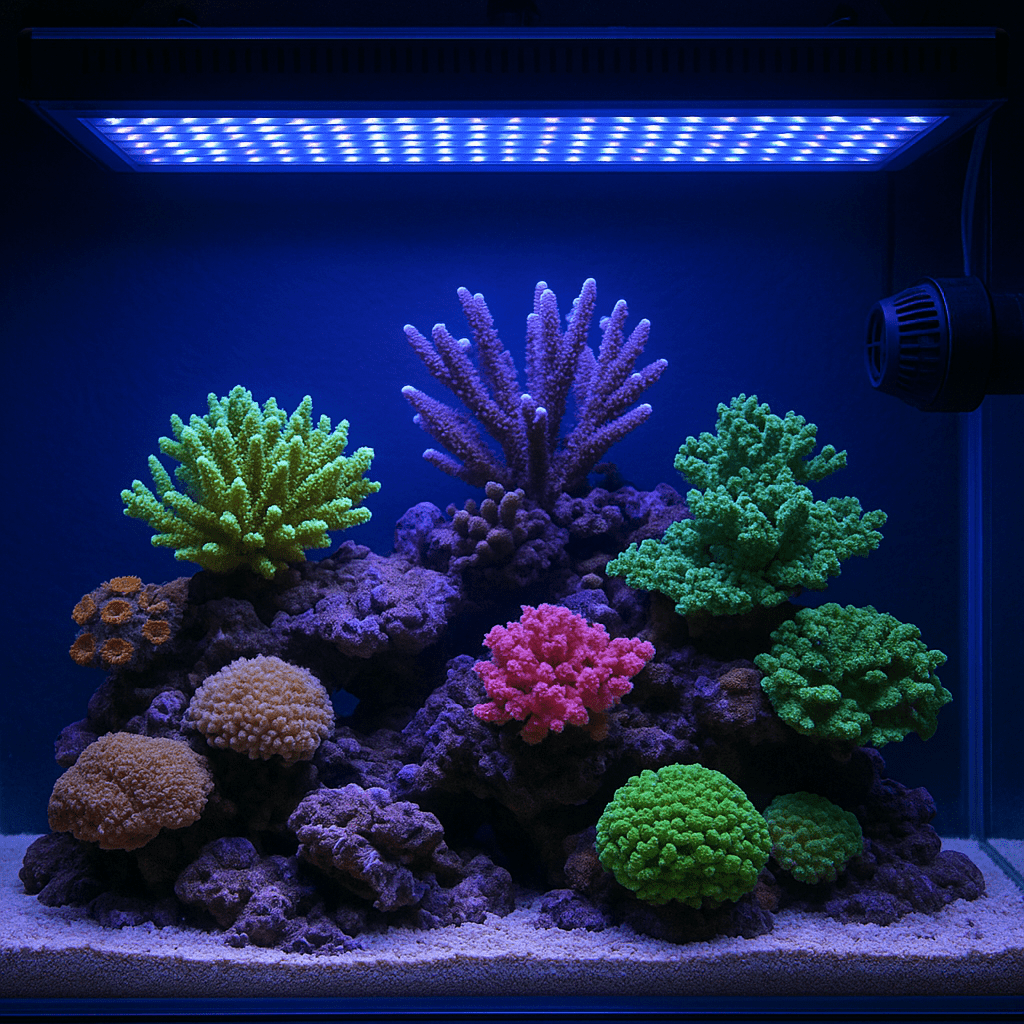
Most LEDs deliver high PAR in a narrow beam. Corals can get hotspots. Your eyes also misjudge intensity. Blue-heavy spectra look dim but hit hard.
Corals adapt by changing zooxanthellae density and pigments. That takes days to weeks. If PAR jumps too quickly, tissue can pale within 48 hours. LPS may inflate less and stop feeding.
Start by learning your current baseline. If you have a PAR meter, map the tank at 6 to 9 points. Aim for stable targets. Soft corals often do well at 50–150 PAR. Many LPS prefer 80–200 PAR. Many SPS thrive at 200–350 PAR.
If you do not have a meter, go slower. Assume your new light is stronger than the old one. Use the fixture’s acclimation mode, or set a manual ramp. Log changes in a notebook or in your reef maintenance schedule.
- Photoperiod target: 8–10 hours total, with 1–2 hour ramps.
- Keep temperature stable at 77–79°F and salinity at 1.025–1.026.
- Hold alkalinity steady at 8–9 dKH during the acclimation window.
A step-by-step lighting acclimation plan (14–21 days)
Use a two-lever approach. Control intensity and duration. Change only one lever at a time when possible. Most tanks do best with intensity changes first.
Day 1–3: Set intensity to 40–50% of your intended peak. Keep the same photoperiod you used before. If you switched from T5 to LED, start closer to 35–40%. Place light-sensitive corals lower for now.
Day 4–10: Increase peak intensity by 5% every 2–3 days. Watch for warning signs. If you see paling or retraction, hold at that level for 4–5 days. Then resume smaller steps. Keep nutrients available, since ultra-low nutrients raise bleaching risk.
Day 11–21: Fine-tune for coral zones. Keep SPS higher and LPS lower. Use rock overhangs as shade. If you need more total light, extend the peak period by 30 minutes per week. Keep ramps gentle to reduce daily shock. Review your results with reef parameter basics if growth stalls.
- If using PAR: raise SPS areas by 20–30 PAR per week.
- If no PAR: raise intensity by 5% per week after week two.
- Keep blues stable. Avoid big spectrum shifts during acclimation.
Troubleshooting and common mistakes
Bleaching is the big fear. It often starts on top-facing tips. Reduce intensity by 15–25% right away. Shorten peak by 1–2 hours for a week. Increase feeding for LPS and softies during recovery.
Brown corals can mean low light or high nutrients. Check nitrate at 5–15 ppm and phosphate at 0.03–0.10 ppm. If nutrients are high, do not crank lights to “burn off” brown. Improve export first. See nitrate and phosphate control steps.
Another mistake is chasing shimmer and color. Many hobbyists change spectrum weekly. That disrupts coral adaptation. Lock spectrum for a month. Adjust only intensity after that. Aim for a consistent peak window each day.
Also check mounting height and spread. Many LEDs need 8–12 inches above the water. Too low creates hotspots and shadowing. If you see bright rings on the sand, raise the fixture and lower intensity. You often get better coverage and less stress.
- Polyp retraction all day: reduce peak 10% and check alkalinity swings.
- Algae surge after new lights: shorten peak by 1 hour and increase flow.
- Uneven growth: re-map PAR and rotate coral placement every 2 weeks.
Reef lighting acclimation is slow by design. Small changes protect coral tissue and color. Use measured steps, stable parameters, and patient observation for best results.
Sources: Dana Riddle, “Lighting the Reef Aquarium” (articles and lectures); Julian Sprung, The Reef Aquarium (reef husbandry guidance); Sanjay Joshi, reef lighting measurement talks and PAR mapping methods.
Was this helpful?
Related Posts
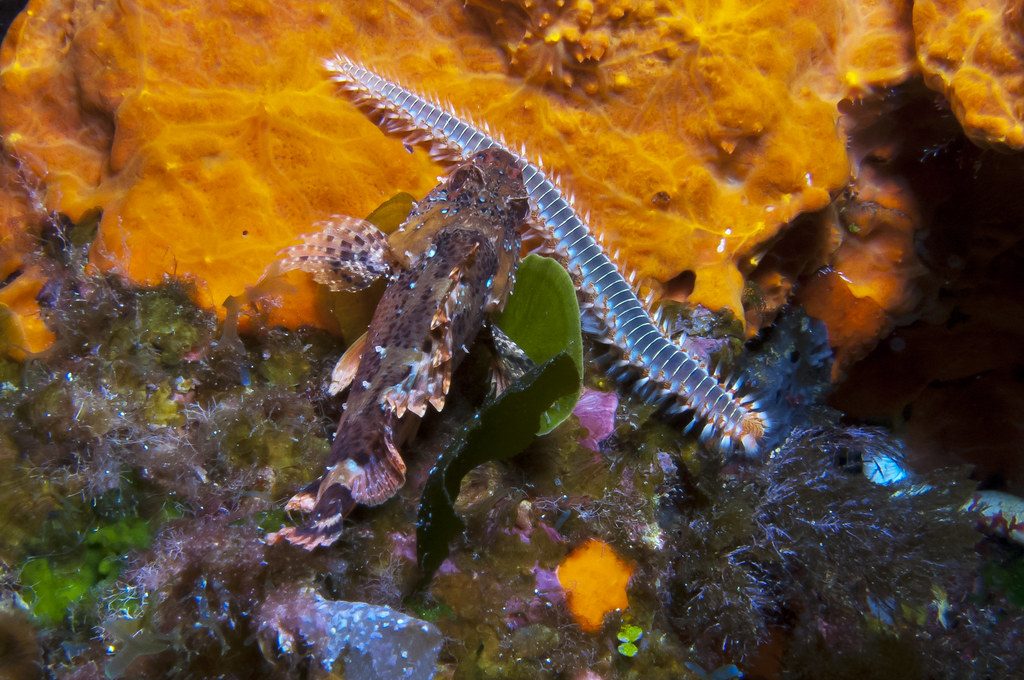
Bristleworms
Bristleworms are usually helpful reef tank scavengers. Learn how to identify them, control numbers, and spot the rare…
 By
ByManaging Ich in a Reef Tank
Learn practical steps for managing ich in a reef tank, from early detection to proven fallow and hospital-tank…