

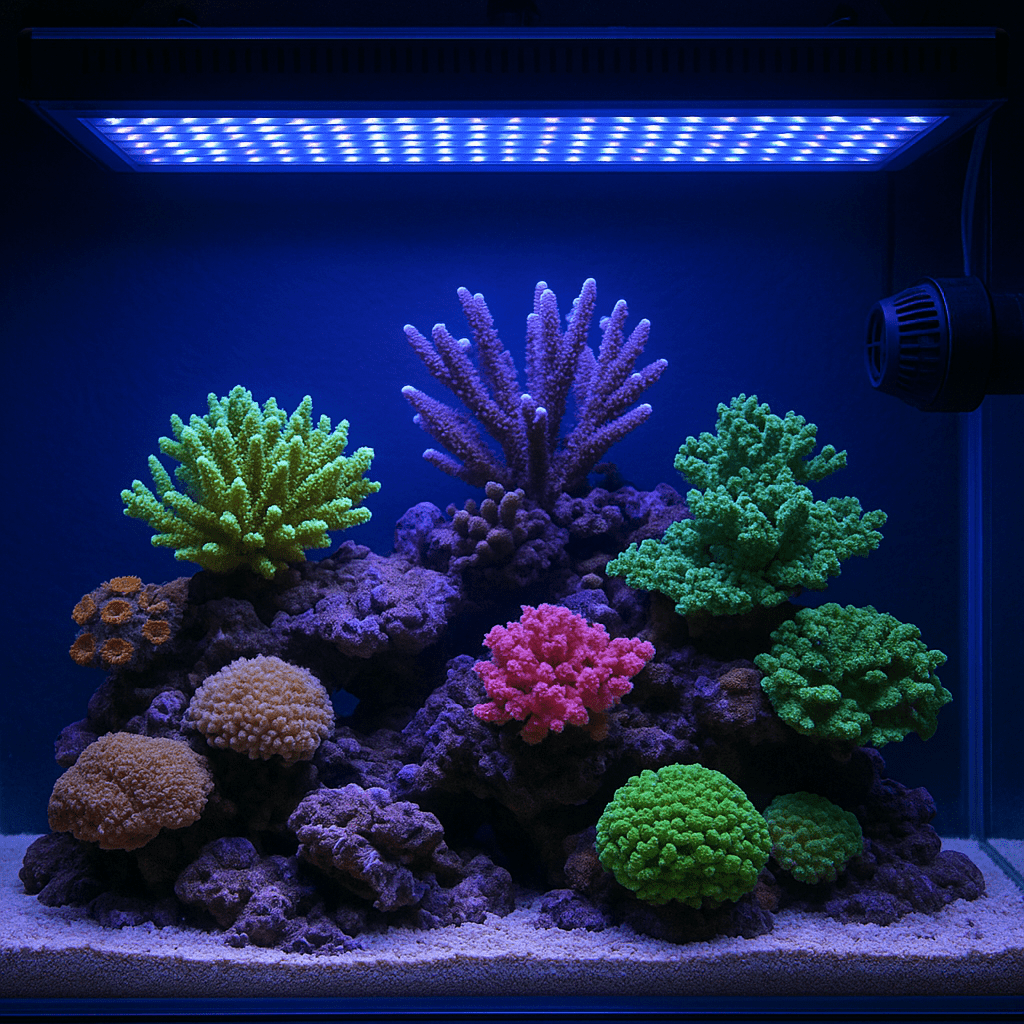
Good powerhead placement creates random, broad flow without blasting corals or leaving dead spots. In most reef tanks, the best approach is two or more pumps aimed to intersect, bounce flow off glass, and keep detritus suspended so filtration can remove it.
Water movement is one of the most overlooked parts of reef success. Many beginners buy a strong pump and point it across the tank. That often creates one harsh stream and several stagnant areas. Corals need more than speed. They need varied flow patterns that deliver oxygen, remove waste, and bring food to their tissues. Fish also benefit from well-oxygenated water and cleaner rockwork. In this guide, you will learn where to place powerheads, how high to mount them, how to avoid dead spots, and how to adjust flow for soft corals, LPS, and SPS tanks. You will also learn how to troubleshoot common circulation problems before they become algae, cyano, or coral health issues.
Quick Reference Table
| Tank Type | Suggested Turnover | Placement Goal | Flow Style |
|---|---|---|---|
| Soft coral tank | 10x to 20x per hour | Gentle full-tank circulation | Broad and indirect |
| LPS reef tank | 20x to 30x per hour | Moderate random flow | Alternating and dispersed |
| Mixed reef tank | 20x to 40x per hour | Strong flow with calm zones | Random with overlap |
| SPS-dominant tank | 30x to 60x per hour | High oxygen and no dead spots | Turbulent and varied |
| Powerhead height | Upper third is common | Surface movement plus crossflow | Aim slightly upward or across |
Use these ranges as a starting point. Coral shape, rockwork, and pump design matter just as much as raw turnover numbers.
Why Powerhead Placement Matters
Flow does several jobs at once. It carries oxygen into the water. It pushes carbon dioxide out. It keeps detritus from settling in rock crevices. It also helps corals exchange gases and shed mucus. Poor placement weakens all of those functions.
Many reef problems trace back to bad circulation. Cyanobacteria often appears in low-flow zones. Film algae collects where debris settles. Sand blows around when a narrow stream hits one area too hard. Corals may stay retracted if they receive constant direct pressure. Others suffer if water barely moves around them.
The goal is not simply strong flow. The goal is useful flow. Good placement creates movement throughout the tank, including behind rockwork and near the surface. It should keep particles suspended long enough for the overflow, filter socks, roller mat, or skimmer to export them. The best reef tanks usually have flow that looks natural and chaotic, not like a fire hose aimed from one side to the other.
Basic Rules for Powerhead Placement
Start with pumps in the upper third of the aquarium. This protects the sand bed and improves gas exchange. Aim them slightly upward if you need more surface agitation. Aim them across the front glass or opposite pane if direct flow feels too harsh.
Use at least two sources of flow when possible. Opposing pumps create better turbulence than a single strong unit. Intersecting streams break up laminar flow. That gives corals a more natural pattern. It also reduces dead zones behind rocks.
Avoid pointing a powerhead straight at fleshy LPS corals. Euphyllia, acans, scolys, and open brains can be damaged by constant direct blast. SPS corals tolerate stronger flow, but they still prefer varied movement over a single narrow stream. If your pump has a wide output mode, use it. Broad flow is easier on coral tissue and more effective across the tank.
Leave room to adjust. Small changes in angle can make a big difference. Revisit placement after adding new rock, corals, or fish. Flow needs change as corals grow.
Step-by-Step Guide to Positioning Powerheads
First, place one powerhead near the top on one side panel. Aim it across the tank and slightly toward the surface. Watch how the surface moves. You want visible ripple, not splashing.
Next, place the second powerhead on the opposite side. Set it a little lower or angle it differently. This creates intersecting flow. If both pumps sit at the same height and angle, you may create a strong channel instead of random movement.
Then test detritus movement. Use a small pinch of fine food or observe floating particles after feeding. Watch where debris settles. If particles collect behind the rockscape, redirect one pump to sweep that area. If sand starts shifting, raise the pump or point it more toward the glass.
After that, evaluate coral response over several days. Polyps should extend normally. Tissue should move gently or briskly depending on species. Corals should not stay folded, twisted, or stripped on one side. Fine-tune pump intensity before moving the coral. In many cases, placement fixes the issue.
Finally, sync pumps if your controller allows it. Alternating schedules, pulse modes, and anti-sync patterns usually create better turbulence than constant output.
Aquarium Setup Considerations
Tank dimensions shape flow more than total gallons. A long shallow tank spreads water differently than a cube. Long tanks often benefit from pumps on both ends. Cube tanks often need angled crossflow to reach behind central rock structures.
Rockwork matters too. Solid wall aquascapes block circulation and trap waste. Open arches, islands, and elevated structures allow better movement. If your aquascape is dense, you may need a small extra pump behind the rocks or lower on the back wall.
Overflow placement also affects circulation. In many tanks, suspended debris must reach the overflow to leave the display. Aim one pump so it helps guide particles toward that area. This improves export and reduces buildup on the sand bed.
Keep maintenance in mind. Pumps collect coralline algae, calcium deposits, and snail shells. Place them where you can easily remove and clean them. A perfectly placed pump is not useful if you avoid servicing it. Dirty pumps lose output and change your flow pattern over time.
Powerhead Placement for Different Coral Types
Soft corals usually prefer moderate, changing flow. Zoanthids, mushrooms, and leathers do well with broad movement that keeps debris off their surfaces. Too little flow encourages film and detritus buildup. Too much can keep polyps closed.
LPS corals need a careful balance. Hammer corals, torches, and frogspawn enjoy visible sway, but not violent whipping. Blast them directly and tissue can recede. Place pumps so flow reaches them indirectly after bouncing off glass or mixing with other streams.
SPS corals need the strongest overall circulation. Acropora, montipora, and similar species perform best in high, turbulent flow. They dislike stagnant pockets around branches. Use multiple pumps, alternating modes, and good rock spacing. Strong random flow helps prevent dead tissue zones and supports coloration.
Mixed reefs are the hardest. Create high-energy zones near the upper rockwork for SPS. Leave gentler lower areas for fleshy LPS and soft corals. This zoning approach is often easier than trying to make every inch of the tank identical.
Common Problems
Dead spots behind rockwork
This is one of the most common issues. Waste settles where water barely moves. You may notice cyano, diatoms, or dark detritus pockets. Redirect one pump to sweep behind the structure. If needed, add a small secondary pump low on the back wall. Open rockwork often solves this better than adding raw power.
Sand blowing everywhere
Fine sand shifts easily under direct flow. Raise the powerhead higher. Aim it toward the surface or front glass. Reduce pulse intensity if your controller creates sharp bursts. Wide-flow pumps usually work better than narrow jet-style pumps over shallow sand beds.
Corals staying closed
Closed polyps can signal too much direct flow or too little overall movement. Watch the coral, not just the pump setting. If tissue is folding hard in one direction, the stream is too direct. If mucus and debris sit on the coral, flow may be too weak. Adjust angle first. Then adjust output.
Surface film and poor gas exchange
A slick surface often means weak top-level movement. Angle one pump slightly upward. Make sure the return nozzle also disturbs the surface. Better agitation improves oxygen levels and pH stability, especially at night.
Detritus never reaches the overflow
If debris stays in suspension but circles endlessly, your flow loop may miss the overflow. Adjust one pump so the general current guides particles toward the weir. This small change can improve water clarity and reduce nutrient traps.
Advanced Tips for Better Random Flow
Use pulse modes carefully. Short pulses can create standing waves in some tanks. That looks impressive, but it is not always best for corals or seams. Random or reef crest style modes usually produce more natural variation.
Try asymmetry. One pump can run stronger than the other. One can sit higher. One can aim off glass while the other sweeps the back. Perfect symmetry often creates predictable patterns. Slight imbalance often creates better turbulence.
Reassess flow every few months. Coral colonies grow and block circulation. A tank that had great movement six months ago may now have hidden stagnant zones. This is common in mature SPS systems. Trim colonies or reposition pumps before problems appear.
You can learn a lot during feeding time. Watch where frozen food, reef roids, or fine particles travel. They reveal channels, calm pockets, and overflow paths. This is one of the easiest ways to judge real flow inside a stocked reef.
Frequently Asked Questions
How many powerheads does a reef tank need?
Most reef tanks do better with at least two. Two pumps create overlap and random movement. Larger or SPS-heavy tanks may need three or more.
Should powerheads point at each other?
They can, but not always directly. Intersecting flow is helpful. A slight offset usually works better than a head-on collision.
Where should I place a powerhead in a small reef tank?
Place it high on the side or back wall. Aim it across the surface or off the glass. Small tanks are easy to overpower, so start gently.
Is strong surface agitation always good?
Moderate surface ripple is good. Excess splashing causes salt creep and noise. You want movement, not a constant spray.
Can flow be too strong for SPS corals?
Yes. SPS like strong random flow, not tissue-stripping jets. If one side of a colony looks bare, the stream may be too direct.
Final Thoughts
The best powerhead placement keeps the whole reef active without punishing any single area. Start high, use more than one pump, and aim for broad intersecting flow. Watch detritus, coral behavior, and surface movement. Those signs tell the truth faster than turnover numbers alone. If you keep adjusting with purpose, your tank will stay cleaner, your corals will expand better, and your reef will look more natural.
Related reading: reef tank flow guide, how to remove dead spots in a reef tank, best water flow for LPS corals, SPS coral care basics, reef tank aquascaping tips
Was this helpful?
Related Posts
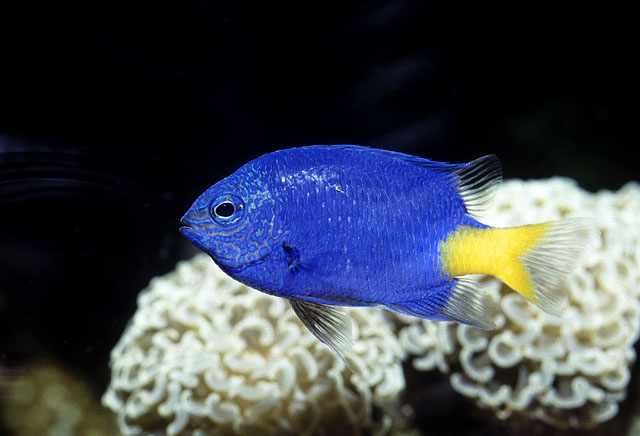
Yellowtail Damselfish (Chrysiptera Parasema)
Yellowtail Damselfish are hardy, colorful, and reef safe, but they can be territorial. Learn their care, feeding, tank…
 By
ByWater Chemistry Basics
Water chemistry basics are the foundation of reef success. Learn the key parameters, target ranges, and simple ways…
[favorite_button]
My Bookmarks:
To see full list click here
[user_favorites user_id="" include_links="true" site_id="" post_types="" include_thumbnails="true" thumbnail_size="thumbnail" include_excerpt="false"]