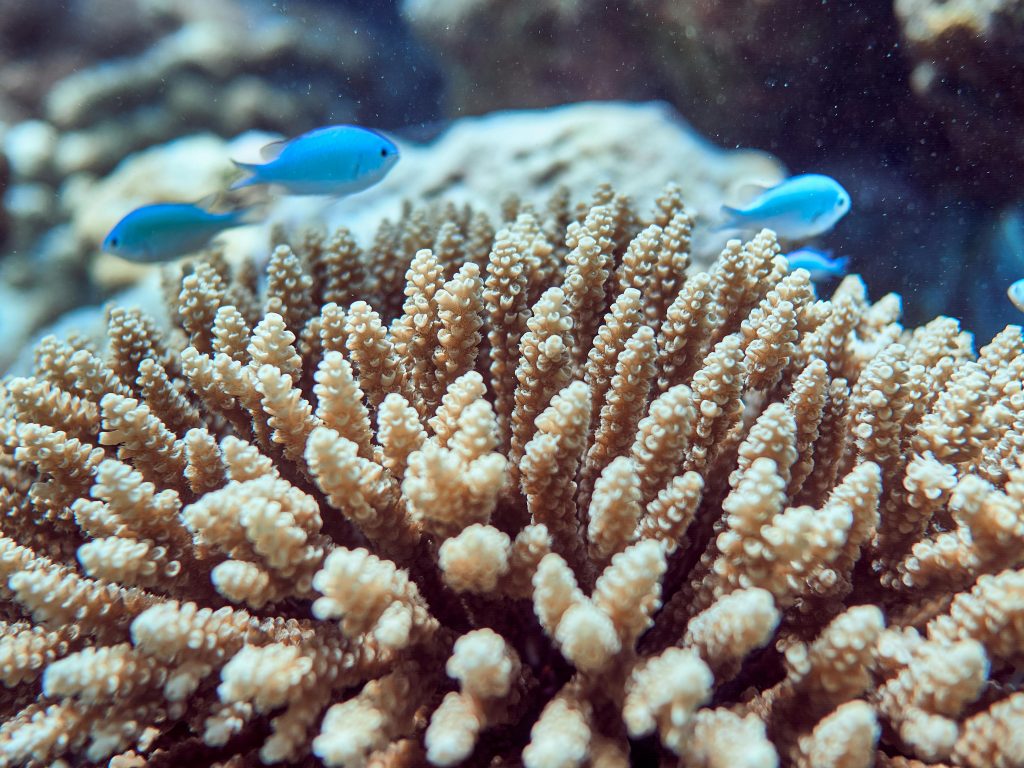
Among SPS corals, few are as rewarding—or as demanding—as Acropora. Their vivid colors and intricate branching make them the centerpiece of many reef tanks, but success with Acropora requires stability, patience, and attention to detail. In this guide, we’ll walk through practical, real-world Acropora care so you can grow healthy, colorful colonies in your saltwater aquarium.
Key Water Parameters for Healthy Acropora
Acropora are among the most sensitive corals in the hobby. They demand not only good parameters, but also stable ones. Before adding your first frag, make sure your tank is fully cycled and mature, with stable nutrients and a consistent maintenance routine.
Target Parameters
- Temperature: 77–79°F (25–26°C)
- Salinity: 1.025–1.026 specific gravity
- Alkalinity: 7.5–9 dKH (keep daily swing < 0.3 dKH)
- Calcium: 420–460 ppm
- Magnesium: 1300–1400 ppm
- Nitrate: 2–10 ppm
- Phosphate: 0.03–0.08 ppm
Acropora generally do poorly in ultra-low nutrient systems with nearly undetectable nitrates and phosphates. Aim for low but measurable nutrients. A reliable dosing system for alkalinity, calcium, and magnesium is strongly recommended once you see consistent SPS growth.
For a deeper look at dialing in your chemistry before attempting SPS, read our guide on beginner saltwater tank setup, which covers building a stable foundation for more demanding corals.
Lighting and Flow Requirements
Acropora thrive under strong light and high, chaotic flow. Getting both right will do more for color and growth than almost anything else.
Lighting for Acropora
- PAR range: 250–400 PAR for most species
- Spectrum: Blue-heavy spectrum (14–20K appearance) tends to enhance coloration
- Photoperiod: 8–10 hours of strong light with gentle ramp-up and ramp-down
Start new Acropora frags lower in the tank or on the sandbed and gradually move them up over 2–3 weeks to avoid light shock. If you’re upgrading lights or changing spectrum, make changes slowly and monitor polyp extension and coloration.
Flow for Polyp Health and Growth
- Use random, turbulent flow rather than a single, constant stream.
- Aim for medium to strong indirect flow that makes polyps sway without tissue peeling back.
- Point powerheads across the tank or at the glass to diffuse the stream.
Tip: If detritus can settle on your Acropora branches, flow is too low. If tissue is receding on the side facing the pump, flow is too direct.
For more ideas on pump placement and water movement, check out our article on reef tank flow setup and how to create randomized currents.
Placement, Feeding, and Long-Term Success
Once your parameters, light, and flow are in line, smart placement and consistent husbandry will keep your Acropora thriving.
Coral Placement and Space
- Place Acropora higher in the rockwork where PAR and flow are strongest.
- Allow room for upward and outward growth—they can shade corals below.
- Keep aggressive LPS (like euphyllia) far enough away to avoid sweeper tentacle stings.
Feeding and Maintenance
- Acropora rely heavily on light but benefit from dissolved and particulate foods (e.g., amino acids, fine coral foods).
- Feed lightly 1–3 times per week while monitoring nutrients to avoid algae blooms.
- Test alkalinity 2–4 times per week in SPS-dominant systems and adjust dosing as needed.
- Perform regular water changes (10–15% every 1–2 weeks) to replenish trace elements.
If you’re just getting started with hard corals, you might want to begin with some of the easier species first. Our overview of best beginner corals can help you build confidence before diving into Acropora-dominated reefs.
With patience, stable parameters, and careful observation, Acropora can become the highlight of your reef tank. Focus on consistency over quick changes, introduce new colonies slowly, and document your adjustments. Over time, you’ll learn how your particular system responds—and your Acropora will reward you with vibrant color, strong growth, and intricate reef structures that truly stand out.
Sources
- Borneman, E. H. Aquarium Corals: Selection, Husbandry, and Natural History. TFH Publications.
- Delbeek, J. C., & Sprung, J. The Reef Aquarium, Volumes 1–3. Ricordea Publishing.
- Peer-shared data and PAR/parameter ranges from long-term SPS hobbyist experiences documented in major reef-keeping communities.
Was this helpful?
Related Posts
Dragonets Fish Care
Dragonets are beautiful reef fish, but they need mature tanks and steady food sources. Learn how to keep…
 By
By
Lighting For Aquarium
Lighting for Aquarium: Getting Saltwater Illumination Right Lighting for a saltwater aquarium is about much more than simply…