Advanced Coral Care: Taking Your Reef to the Next Level
Once your reef tank is stable and you’re keeping beginner corals alive, the real fun begins: advanced coral care. This is where you dial in lighting, flow, nutrients, and trace elements so SPS, LPS, and demanding soft corals not only survive, but grow with vibrant color and structure.
Dialing In Light, Flow, and Nutrients
Light, flow, and nutrients form the core triangle of advanced coral husbandry. Any big change in one corner will affect the other two, so adjustments should be slow and deliberate.
Lighting for Growth and Color
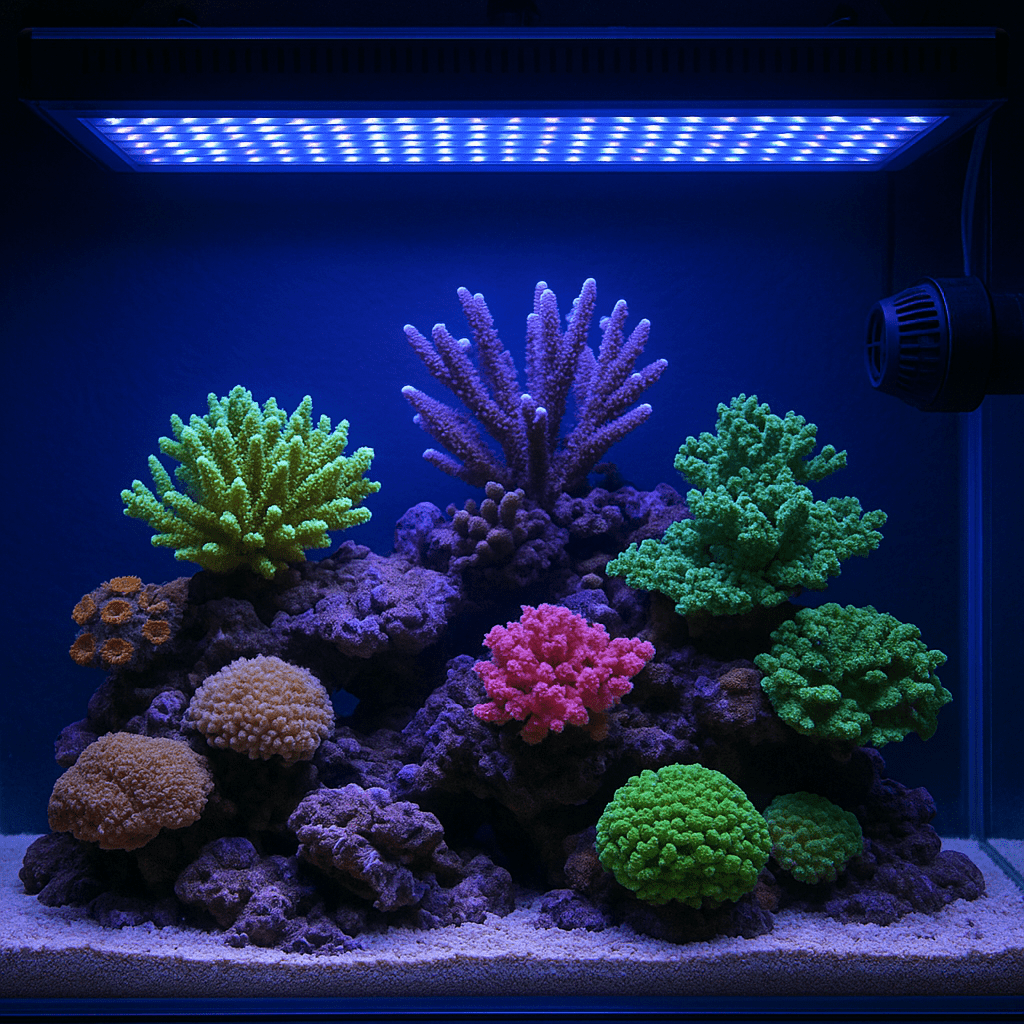
Modern reef LEDs make it easy to blast your tank with PAR, but more is not always better. Many advanced keepers aim for:
- PAR 250–350 for most SPS in the top half of the tank
- PAR 100–200 for LPS and zoas in the mid to lower zones
- Blue-heavy spectrum (peak around 420–470 nm) to support photosynthesis and color
Use a PAR meter if possible, and ramp intensity over 2–3 weeks when changing fixtures or schedules. Sudden increases can bleach coral even in otherwise stable systems. For more on preparing your system before adding demanding corals, see our Beginner Saltwater Aquarium Setup Guide.
Flow That Matches Coral Biology
Advanced coral care means thinking in terms of patterns, not just “high” or “low” flow:
- Random, turbulent flow for SPS-dominated sections using alternating or gyre-style pumps.
- Gentle, indirect flow for fleshy LPS (euphyllia, scolies) to avoid tissue damage.
- Periodic nutrient export by aiming occasional stronger pulses behind rockwork to lift detritus into the water column.
Watch the coral, not the pump settings. Polyps should sway and extend, not fold over or retract constantly.
Managing Nutrients, Not Chasing Zeros
Ultra-low nutrients often lead to pale, unhappy corals. Many successful advanced systems run:
- Nitrate: 5–15 ppm
- Phosphate: 0.03–0.10 ppm
Instead of chasing zero, focus on stability. Use a combination of skimming, refugium, and careful feeding. If nutrients bottom out, consider feeding more diverse foods or dosing nitrate/phosphate in controlled amounts. For a deeper dive into maintaining a healthy system, visit our Reef Tank Maintenance Schedule guide.
Trace Elements, Testing, and Coral Health
Once alkalinity, calcium, and magnesium are stable, trace elements become the next frontier. They’re consumed slowly, but their absence can mute color and slow growth.
Smart Dosing and Testing
Before dosing any trace element, establish a baseline with reliable ICP testing if possible. Then:
- Use a balanced two-part or calcium reactor as your primary supply of major and minor elements.
- Only fine-tune individual elements (iodine, iron, potassium, etc.) when you have test data to support it.
- Change 10–15% water monthly to reset minor imbalances.
Reading Coral “Body Language”
Advanced coral keepers learn to read subtle signs before problems become losses:
- Polyp extension shrinking over several days can point to pests, swings in alkalinity, or too much light.
- Color shifts (browning, paling, or neon tones) often reflect nutrient and light imbalance.
- Tissue recession from the base is frequently tied to unstable alkalinity or bacterial issues.
Tip: Keep a simple coral log. Note any changes in color, growth, or polyp extension alongside your test results. Patterns become clear much faster when you can look back over 4–8 weeks.
If you’re still building consistency with testing and logging, our Saltwater Aquarium Testing Basics article is a helpful refresher.
Conclusion: Consistency Over Complexity
Advanced coral care isn’t about chasing every new additive or gadget. It’s about understanding how light, flow, nutrients, and trace elements interact—and then keeping them stable. Make small changes, track your results, and let the corals guide you. With patience and consistent husbandry, your reef will transition from a collection of frags to a thriving, mature coral ecosystem.
Sources
- Borneman, E. H. (2001). Aquarium Corals. TFH Publications.
- Delbeek, J. C., & Sprung, J. (1994–2005). The Reef Aquarium Vol. 1–3. Ricordea Publishing.
- Holmes-Farley, R. (2002–2023). Reef chemistry articles. Advanced Aquarist and Reefkeeping Magazine.
Was this helpful?
Related Posts
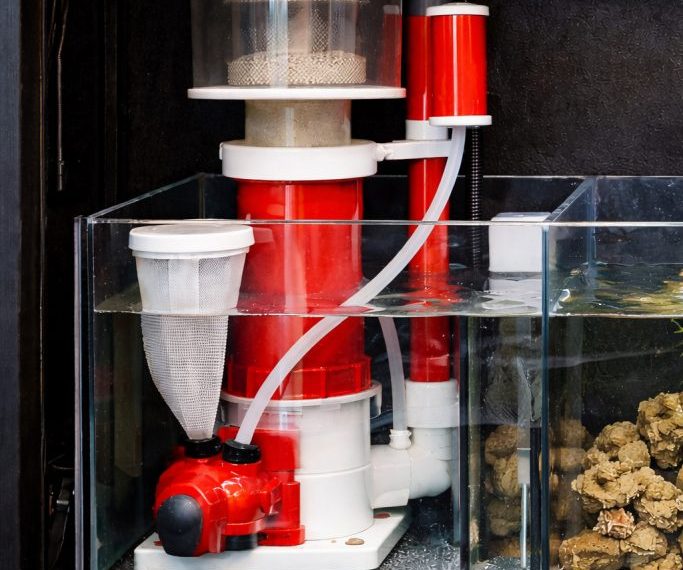
Protein Skimmer Reef Tank Guide
Learn how a protein skimmer works, how to size one, and how to tune it for a cleaner,…
 By
By
Reef Aquarium Water Parameters
Learn the ideal reef aquarium water parameters, safe ranges, and how to keep salinity, alkalinity, nutrients, and pH…