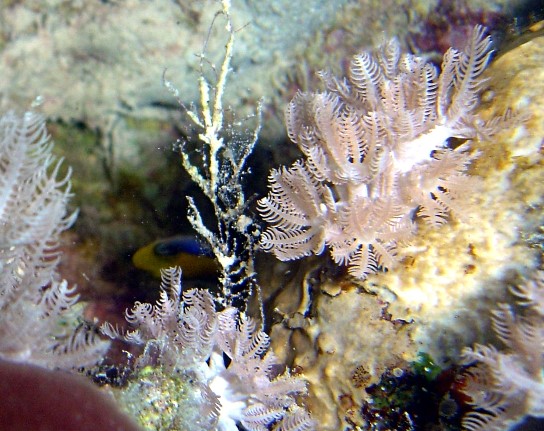
Anthelia, often called Waving Hand coral, is a fast-growing soft coral. It adds constant motion and can fill empty rockwork quickly. It also tests your ability to manage spread and stability.
Tank setup and placement for steady pulsing
Anthelia does best in stable reef conditions. Aim for 24–26°C (75–79°F) and salinity 1.025–1.026. Keep alkalinity 8–9 dKH and calcium 400–450 ppm. Maintain magnesium 1250–1350 ppm for balance.
Lighting should be moderate. Start around 80–150 PAR in most tanks. Too much light can shrink polyps and pale the tissue. Too little light can slow growth and reduce extension.
Flow should be moderate and indirect. Use a random, swaying pattern. Direct jets can prevent full extension. Dead spots can trap detritus and irritate the mat.
Place Anthelia on an isolated rock if possible. It can creep onto nearby structures. Leave a 5–8 cm gap from slower corals. For aquascape planning, see reef aquascaping basics.
- Start low in the tank for 7 days, then raise slowly.
- Target nitrate 5–15 ppm and phosphate 0.03–0.10 ppm.
- Use a powerhead guard to prevent tissue damage.
Feeding, nutrients, and growth control
Anthelia gets most energy from light and dissolved nutrients. It usually needs no direct feeding. In ultra-low nutrient systems, it may stall. You can increase fish feeding slightly to help.
If you want faster growth, dose amino acids lightly. Start at half the label dose. Watch for film algae and cyano after dosing. Stop dosing if nuisance growth spikes.
Growth control matters with Anthelia. It spreads by a creeping mat and can shade neighbors. Trim by peeling the edge from rock with tweezers. Siphon loose pieces during removal.
Use physical barriers to slow spread. Create a sand moat around the island rock. You can also glue a ring of rubble to define a border. For more nutrient strategy, read reef nutrient control guide.
- Trim monthly once it reaches the rock edge.
- Run carbon if the tank smells “chemical” after trimming.
- Do a 10–15% water change after heavy pruning.
Troubleshooting common problems and safe fragging
Closed polyps are the most common complaint. First check alkalinity swings. A 1 dKH drop in a day can cause sulking. Also check salinity with a calibrated refractometer.
Detritus buildup can smother the mat. Increase random flow and turkey baste weekly. If algae grows on the base, reduce light a bit. Improve export with a skimmer or filter floss.
Pests are less common, but watch for nudibranchs and flatworms. Inspect at night with a flashlight. Quarantine new frags for 14 days when possible. Use a coral dip and rinse well.
Fragging is simple and safe with clean tools. Cut a small section of mat with scissors. Rubber band it to rubble, but keep it loose. Better yet, use mesh and a toothpick for 7 days. For a full process, see coral quarantine and dipping.
- If it melts, check for heater failure and stray voltage.
- If it pales, lower PAR by 20% and hold two weeks.
- If it won’t pulse, improve flow randomness and stability.
Anthelia rewards stable parameters and thoughtful placement. Give it moderate light, indirect flow, and room to spread. With regular trimming, it stays a beautiful motion coral without taking over.
Sources: Borneman, E. (2001) Aquarium Corals; Delbeek, J.C. & Sprung, J. (1994–2005) The Reef Aquarium (Vols. 1–3); Fenner, R. (2003) The Conscientious Marine Aquarist.
Was this helpful?
Related Posts
Best Reef Safe Cleanup Crew
The best reef safe cleanup crew includes hardy snails, selective scavengers, and a few specialty invertebrates matched to…
 By
By
Reef Safe Fish for Beginners
Discover the best reef safe fish for beginners, plus tank size, feeding, and compatibility tips for a peaceful…