Aquarium Equipment Basics for a Healthy Saltwater Tank
Setting up a saltwater aquarium is exciting, but the amount of gear can feel overwhelming at first. The good news is you don’t need every gadget on the market to keep a thriving reef or fish-only system. By understanding the core pieces of aquarium equipment and what they actually do, you can spend wisely, avoid common mistakes, and give your livestock a stable, healthy home.
Essential Life-Support Equipment
Tank, Stand, and Sump
Your display tank is the centerpiece, but the stand and sump quietly do a lot of the heavy lifting.
- Display tank: Choose a size you can realistically maintain. Larger tanks are more stable, but they also cost more to equip and run.
- Stand: Make sure it’s level, rated for the full weight of the system, and offers access for maintenance.
- Sump (optional but highly recommended): A sump adds water volume, hides equipment, and improves filtration. If you’re unsure whether a sump is right for you, read our guide on sump setup for your reef tank.
Filtration and Water Movement
In saltwater systems, clean, well-oxygenated water is non‑negotiable. Filtration and flow work together to remove waste and keep detritus from settling.
- Protein skimmer: One of the most important pieces of gear. It removes dissolved organic waste before it breaks down into nitrates and phosphates. Aim for a skimmer rated for slightly larger than your actual water volume.
- Mechanical and biological filtration: Filter socks, sponges, or media cups catch debris, while live rock and bio media house beneficial bacteria that process ammonia and nitrite.
- Powerheads or wavemakers: These create turbulent flow, which helps gas exchange, nutrient export, and coral health. For most reef tanks, target 20–40x tank volume in turnover per hour.
Tip: Point powerheads toward the surface for better gas exchange and to avoid blasting corals directly.
Heaters, Temperature Control, and Lighting
Stable temperature and appropriate lighting are key to long‑term success.
- Heater: Choose a quality, fully submersible heater rated for your total water volume. Many hobbyists use two smaller heaters instead of one large one for redundancy.
- Temperature controller (optional but wise): Adds a layer of protection by cutting power if the heater sticks on. This can prevent catastrophic overheating.
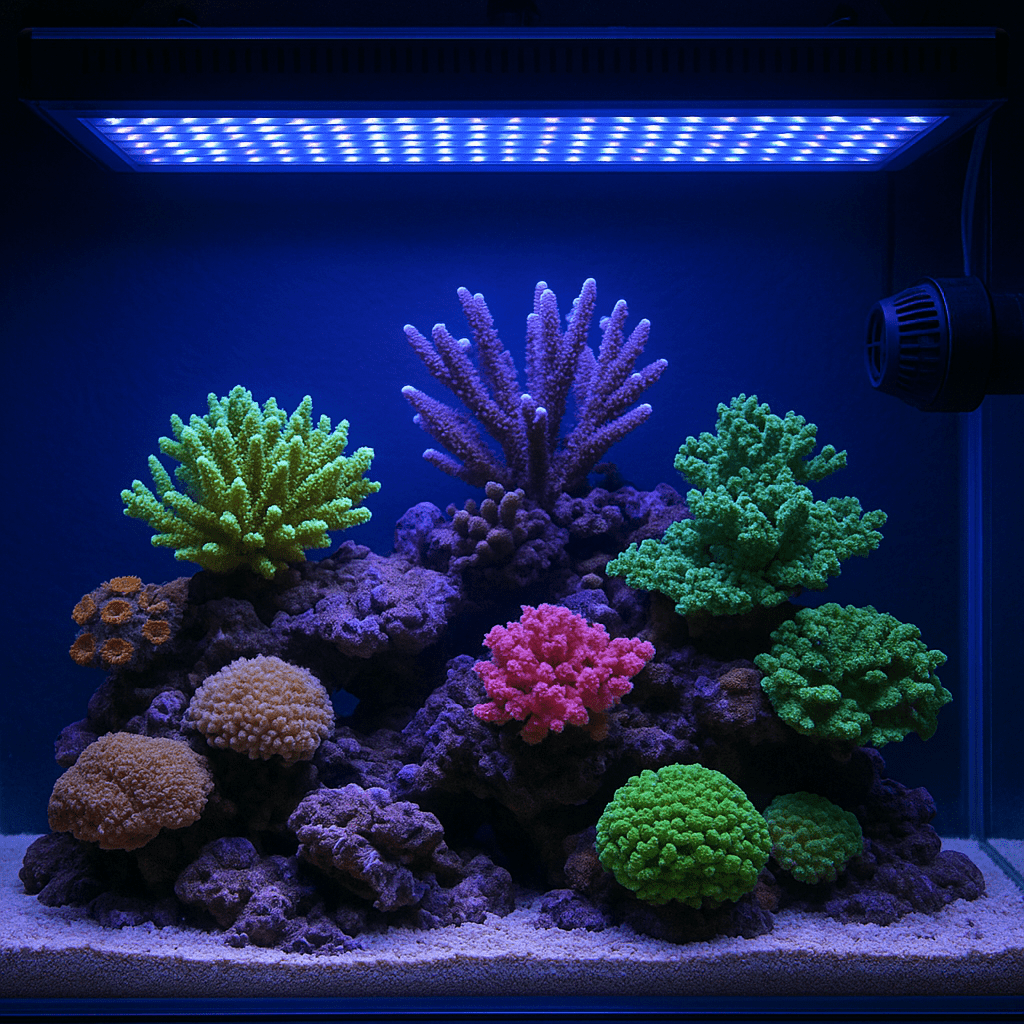
- Lighting: For fish‑only systems, simple LED fixtures are usually enough. For corals, you’ll need reef‑capable lighting with the right spectrum and intensity. If you’re unsure where to start, check our overview on reef tank lighting basics.
Water Quality Tools and Helpful Extras
RO/DI, Salt Mix, and Test Kits
Good water in equals good water out. Investing in water quality gear early will save headaches later.
- RO/DI unit: Produces pure water free of chlorine, chloramine, and most contaminants. This is the foundation for mixing consistent saltwater.
- Salt mix and mixing container: Use a dedicated food‑safe container, a small pump, and a heater to mix and aerate new saltwater before water changes.
- Test kits and refractometer: At minimum, monitor salinity, temperature, ammonia, nitrite, nitrate, and pH. A refractometer is far more reliable than a swing‑arm hydrometer.
Controllers, ATO, and Power Management
While not strictly required, some extras make daily care easier and your system more stable.
- Auto top-off (ATO): Automatically replaces evaporated water with fresh RO/DI, keeping salinity stable.
- Power strips and battery backup: Label your plugs and consider a backup for at least one powerhead to maintain oxygen in power outages.
- Aquarium controller (optional): Can monitor temperature, pH, and control outlets, but it’s best added after you understand your tank’s basic needs. See our beginner‑friendly breakdown in Do You Really Need an Aquarium Controller?.
Bringing It All Together
A successful saltwater aquarium doesn’t depend on owning every piece of high‑end equipment—it depends on choosing the right core gear and using it consistently. Focus first on a solid tank and stand, reliable filtration and flow, stable heat and lighting, and accurate testing. Add advanced tools like controllers and battery backups as your budget allows and your reef grows.
With a thoughtful equipment plan, you’ll spend less time fighting problems and more time enjoying the fish and corals you set out to keep. Start simple, buy the best you can reasonably afford, and upgrade gradually as your experience and ambitions grow.
Sources
- Sprung, J. & Delbeek, J. C. (1994–2005). The Reef Aquarium (Vols. 1–3). Ricordea Publishing.
- Fenner, R. (2001). The Conscientious Marine Aquarist. Microcosm.
- Paletta, M. (2003). Ultimate Marine Aquariums. Microcosm.
Was this helpful?
Related Posts
Reef Safe Fish for Beginners
Discover the best reef safe fish for beginners, plus tank size, feeding, and compatibility tips for a peaceful…
 By
By
Dragonets Fish Care
Dragonets are beautiful reef fish, but they need mature tanks and steady food sources. Learn how to keep…