

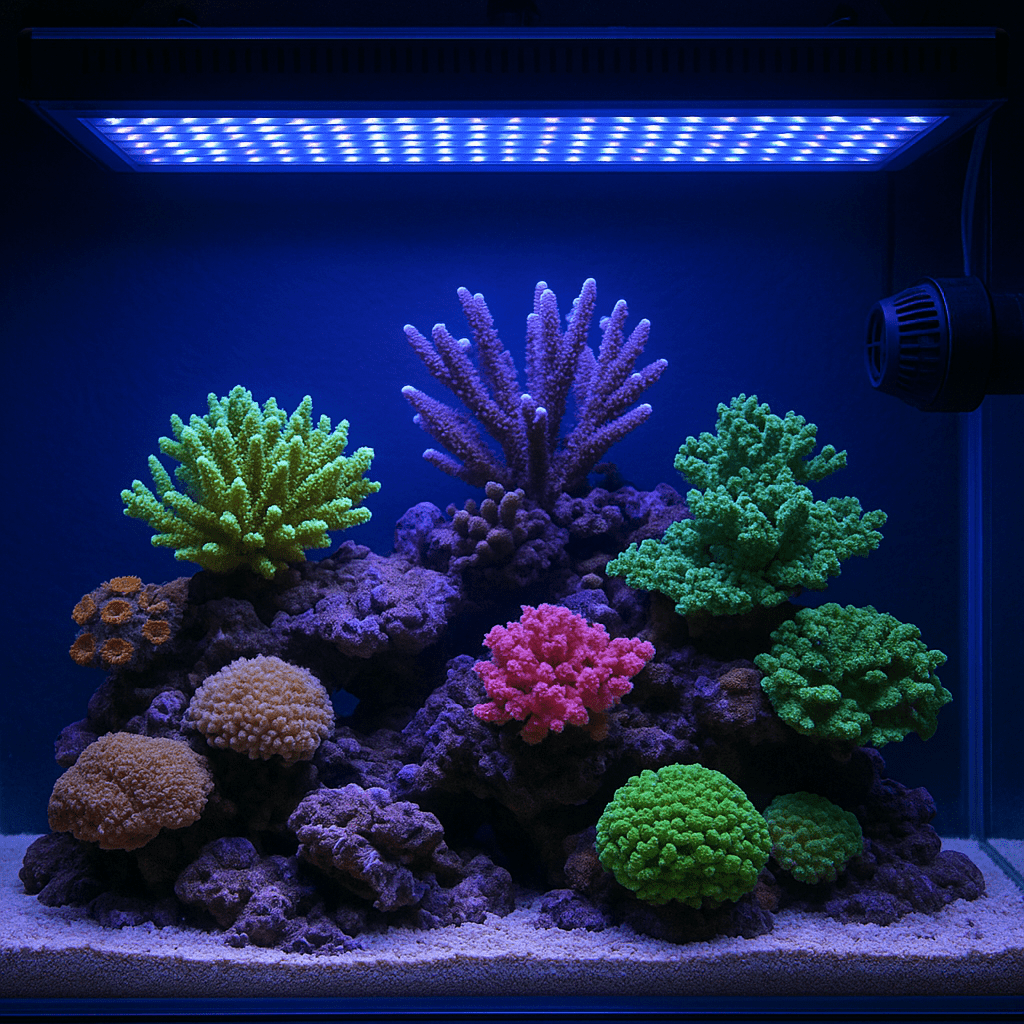
Choosing the best coral foods for reef tanks depends on the corals you keep, your nutrient levels, and how you feed. Most mixed reefs do best with a blend of fine particulate foods, occasional target feeding, and stable water chemistry. The goal is not simply to feed more. The goal is to feed smarter.
Many reef hobbyists assume corals only need light. That is only partly true. Zooxanthellae provide much of a coral’s energy, but many corals also capture plankton, dissolved organics, and suspended particles. Good feeding can improve growth, coloration, tissue thickness, and recovery after stress. Poor feeding can fuel algae, raise phosphate, and irritate corals. In this guide, you will learn which coral foods work best, how different coral groups feed, when to broadcast feed versus target feed, and how to avoid the common mistakes that cause cloudy water and nutrient spikes.
Quick Reference Table
| Coral Type | Best Food Type | Feeding Method | Frequency | Notes |
|---|---|---|---|---|
| Zoanthids and Mushrooms | Fine powdered foods | Broadcast | 2–3 times weekly | Often respond better to dissolved and suspended foods |
| LPS Corals | Mysis, pellets, reef roids, minced meaty foods | Target feeding | 1–2 times weekly | Avoid overfeeding fleshy polyps |
| SPS Corals | Very fine planktonic foods, amino acids | Broadcast | 2–4 times weekly | Need strong export and stable nutrients |
| Goniopora and Alveopora | Fine particulate foods, phytoplankton blends | Broadcast and light target feeding | 3–5 times weekly | Benefit from regular small feedings |
| Filter Feeders | Phytoplankton, microplankton | Broadcast | Several times weekly | Skimmer and filtration may remove food quickly |
Use this table as a starting point. Always watch coral response. Polyp extension, tissue inflation, and steady growth matter more than label claims.
Why Corals Benefit From Feeding
Corals are animals. They do not live on light alone. In nature, reefs receive a constant supply of plankton, detritus, bacteria, and dissolved nutrients. Aquarium water is much cleaner. That sounds good, but it can also limit available food. Corals in ultra-clean systems may survive, yet still show pale color, slow growth, or weak tissue.
Feeding supports several important functions. It gives corals extra nitrogen and phosphorus. It helps build tissue and mucus. It can improve skeletal growth. It also helps many LPS corals maintain fuller inflation. Some species, such as acans, blastos, scolies, and sun corals, show obvious feeding responses. Others, like Acropora, feed more subtly on tiny suspended particles.
Feeding is not a replacement for proper lighting. It is a complement to good husbandry. If alkalinity swings, salinity drifts, or flow is poor, coral foods will not solve the real problem. Feed only when the rest of the system is stable.
Types of Coral Foods for Reef Tanks
Coral foods fall into a few main categories. Each serves a different purpose. Fine powdered foods are popular because they stay suspended and reach many corals at once. These are useful for SPS, zoanthids, and small-polyp feeders. They work best when mixed well before use.
Meaty frozen foods are better for many LPS corals. Mysis shrimp, brine shrimp, copepods, and finely chopped seafood can trigger a strong feeding response. Large pieces are often a mistake. Corals digest smaller portions more easily.
Phytoplankton products mainly benefit filter feeders, clams, feather dusters, sponges, and some soft corals. Many reef keepers also use amino acid supplements. These can help with color and polyp extension, but they are easy to overdose. Liquid coral foods often combine several ingredients. Some are excellent. Others add nutrients without much visible benefit. Start small and judge results over several weeks.
Best Coral Foods by Coral Type
LPS corals usually show the clearest feeding response. Acans, favias, blastomussa, trachyphyllia, and euphyllia often accept mysis, enriched brine, pellets, and powdered reef foods. Feed when tentacles are extended. Use a pipette or turkey baster. Keep portions small.
SPS corals need much finer foods. Acropora, Montipora, and Birdsnest generally feed on suspended particles rather than large chunks. Powdered plankton substitutes, rotifers, oyster eggs, and amino acids are more suitable. Broadcast feeding works better than direct blasting. Too much direct flow can strip food away.
Soft corals vary. Zoanthids, palythoas, mushrooms, and leathers often benefit from fine particulate foods and dissolved organics. They usually do not need heavy target feeding. Goniopora and Alveopora are special cases. They often respond well to frequent small feedings of fine foods. This can improve extension and long-term health. If you keep non-photosynthetic corals, feeding becomes essential. These species need regular planktonic foods and much more planning.
Broadcast Feeding vs Target Feeding
Broadcast feeding means adding food to the water column for the whole tank. This method is ideal for SPS, soft corals, and mixed reefs with many small feeders. It is simple and natural. It also feeds pods, worms, and other microfauna. The downside is lower efficiency. More food may end up in the rocks or filtration.
Target feeding means placing food near a specific coral. This works well for LPS corals with visible mouths and feeding tentacles. It reduces waste when done carefully. It also lets shy corals eat before fish steal the food. The risk is overdoing it. Fleshy corals can regurgitate oversized meals. Leftover food can rot between heads.
Most reef tanks do best with a mix of both methods. Broadcast fine foods once or twice weekly. Target feed hungry LPS on a separate schedule. Turn off return pumps briefly if needed, but restore flow after feeding so detritus does not settle too long.
How to Feed Corals Step by Step
- Test your nitrate and phosphate first. Know your baseline.
- Choose a food that matches your coral type.
- Thaw frozen food and rinse if needed.
- Mix powdered foods in tank water before adding.
- Turn off the skimmer and return pump for a short period if desired.
- Broadcast fine foods gently into high flow areas.
- Target feed LPS with a pipette or baster.
- Wait 10 to 20 minutes before restarting equipment.
- Watch fish behavior and coral response.
- Retest nutrients over the next few days.
Start with less than the label recommends. Many product directions are too aggressive for small tanks. Increase slowly only if nutrients remain controlled and coral response improves.
When to Feed Corals
Many corals feed best after lights dim. LPS corals often extend feeder tentacles in the evening. Target feeding at that time improves capture rates. SPS and soft corals can be fed during the day if flow keeps food suspended. The perfect schedule depends on your tank’s rhythm.
Consistency matters more than chasing an exact hour. Feed on a repeatable schedule. Observe how your corals react. If fish steal food immediately, feed fish first. Then feed corals a few minutes later. This simple trick often works well.
Do not feed heavily right after major maintenance. Corals may stay retracted after fragging, water changes, or aggressive cleaning. Wait until they look settled again. A calm, stable tank always feeds better.
Water Quality and Nutrient Control
The best coral foods can still create problems if export is weak. Extra feeding adds nitrogen and phosphorus. That can help pale corals, but it can also fuel nuisance algae and cyanobacteria. The answer is balance. Feed enough to support coral health. Export enough to keep nutrients in range.
A protein skimmer helps remove dissolved waste. Filter socks and roller mats catch larger particles. Refugiums and macroalgae can absorb excess nutrients. Regular water changes also help. If you feed more, be ready to adjust maintenance. Watch nitrate and phosphate trends, not just one test result.
Very low nutrients can be a problem too. Some tanks become too clean. Corals may lose color or stop growing. In those systems, careful coral feeding can restore balance. Stable alkalinity, calcium, and magnesium remain essential. Food cannot replace core chemistry.
Common Problems
Corals Are Not Responding to Food
Check the coral type first. Not all corals show a dramatic response. Many SPS corals feed invisibly. If an LPS coral ignores food, review flow, timing, and coral health. Try feeding after lights dim. Offer smaller pieces. Make sure the coral is not stressed by pests, aggressive neighbors, or unstable alkalinity.
Nitrate and Phosphate Keep Rising
You are likely feeding too much, too often, or using food that is too rich. Cut the dose in half. Rinse frozen foods. Clean mechanical filtration more often. Increase export slowly. Do not starve the tank overnight. Make gradual changes and test weekly.
Food Gets Stolen by Fish and Shrimp
This is common in active reef tanks. Feed fish first. Then target feed corals. You can also use a feeding dome or a cut bottle top over a fleshy coral for a few minutes. Lower flow briefly so food stays in place.
Corals Regurgitate Food Later
The food piece was likely too large or the coral was overfed. Use smaller portions. Feed less often. Remove uneaten food if it sits on the coral too long. Repeated overfeeding can damage tissue and worsen water quality.
Best Practices for Long-Term Success
Keep your feeding plan simple. Match food size to coral size. Feed small amounts consistently. Test nutrients often. Do not chase every new bottle on the market. Many successful reef tanks use only one or two coral foods well.
Observe results over time. Better color, stronger polyp extension, and steady growth are good signs. Browned-out corals, algae growth, or cloudy water suggest excess feeding. Every tank processes food differently. Heavy fish populations already provide coral nutrition through fish waste and dissolved organics. Sparsely stocked tanks may need more direct feeding.
If you are new to coral feeding, start with one fine powdered food and one meaty LPS food. Learn how your tank reacts. Then expand only if needed. That approach saves money and prevents many problems.
Frequently Asked Questions
Do all corals need to be fed?
No. Many photosynthetic corals can survive without direct feeding. However, many grow and color up better with supplemental foods.
How often should I feed my corals?
Most reef tanks do well with coral feeding two to four times weekly. LPS target feeding is often best once or twice weekly.
Is phytoplankton enough for corals?
Not usually. Phytoplankton helps some filter feeders and soft corals, but many LPS and SPS need other food sizes and nutrient sources.
Can coral food cause algae?
Yes. Overfeeding can raise nitrate and phosphate. Feed lightly and maintain strong nutrient export.
What is the best coral food for a mixed reef?
A mixed reef usually benefits from a fine broadcast food plus occasional target feeding for LPS corals. Keep portions small and adjust to nutrient levels.
Related FancyReef Guides
- reef tank water parameters
- how to lower phosphate in a reef tank
- best LPS corals for beginners
- reef tank lighting guide
- how to target feed corals
Was this helpful?
Related Posts
Cuban Hogfish (bodianus Pulchellus)
Cuban Hogfish care is straightforward in larger reef tanks. Learn tank size, diet, compatibility, and reef safety before…
 By
ByWhat to Do During a Power Outage
A reef tank power outage demands fast action. Protect oxygen, temperature, and circulation first to keep fish and…
 By
By[favorite_button]
My Bookmarks:
To see full list click here
[user_favorites user_id="" include_links="true" site_id="" post_types="" include_thumbnails="true" thumbnail_size="thumbnail" include_excerpt="false"]