

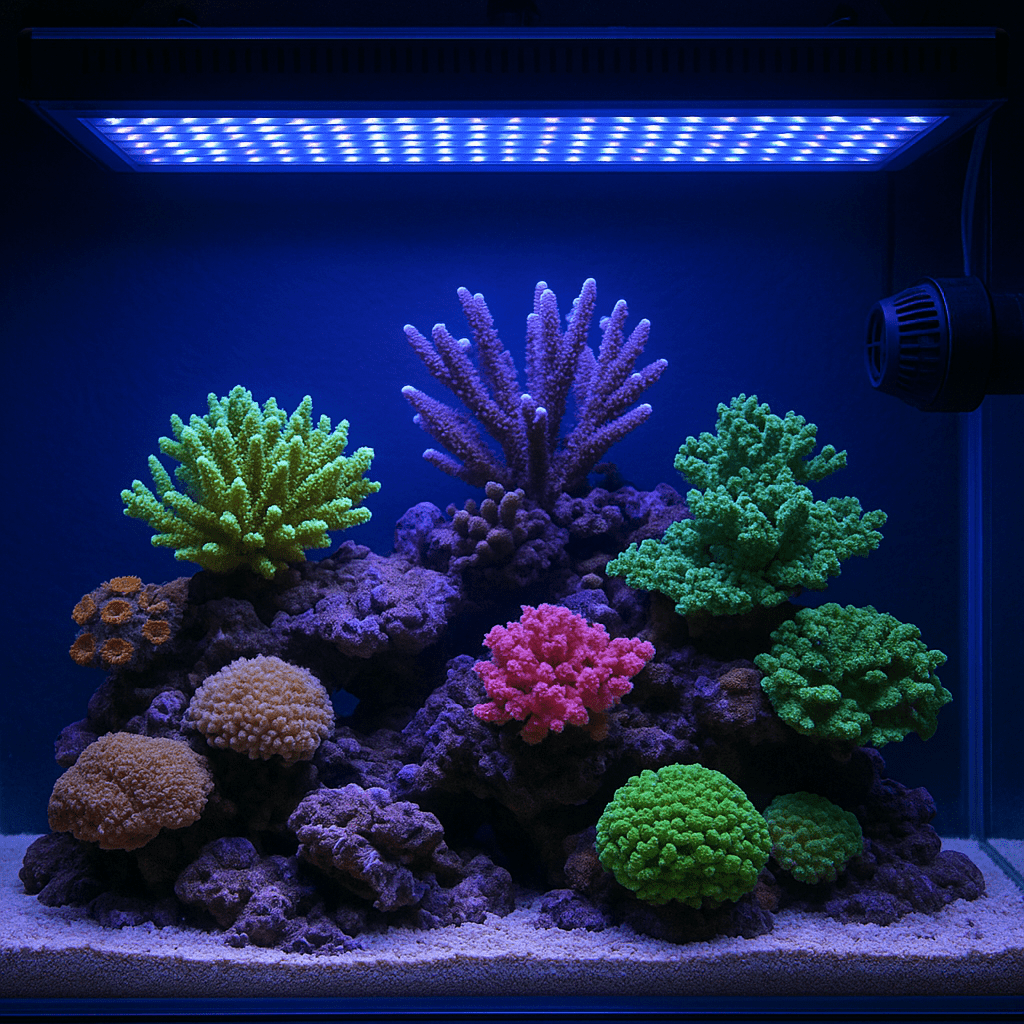
Choosing the best salt mix for reef tank success depends on your livestock, maintenance style, and target parameters. The right mix supports stable alkalinity, calcium, and magnesium. It also helps corals grow, color up, and recover from stress. Most hobbyists do best with a consistent, reputable reef salt rather than constantly switching brands.
Salt mix seems simple at first. You buy a bucket, mix it with RO/DI water, and do water changes. In practice, salt choice affects nearly every part of reef keeping. It influences alkalinity stability, coral growth, nutrient management, and even how often you need to dose. Some mixes target SPS systems with elevated calcium and alkalinity. Others aim for natural seawater levels and long-term stability. In this guide, you will learn how reef salt works, what parameters matter most, how to compare popular types, and how to choose the best salt mix for your reef tank goals.
Quick Reference Table
| Salt Mix Type | Best For | Typical Alkalinity | Main Benefit | Main Caution |
|---|---|---|---|---|
| High-alk reef salt | SPS growth, heavy demand tanks | 10-12 dKH | Supports fast calcification | Can shock low-nutrient tanks if parameters swing |
| Balanced reef salt | Mixed reefs | 8-9.5 dKH | Easy transition and broad compatibility | May still require dosing in mature systems |
| Natural seawater style salt | Ultra-stable reefs, low nutrient systems | 7-8 dKH | Closer to ocean parameters | Less forgiving if coral demand rises fast |
| Fish-only marine salt | FOWLR systems | Varies | Often lower cost | May lack ideal reef-level calcium and magnesium |
Use this table as a starting point. Always verify the actual batch parameters after mixing. Salt brands can vary slightly from one bucket to the next. Your own salinity and mixing method also affect the final numbers.
What Makes a Salt Mix Good for a Reef Tank?
A good reef salt does more than reach 1.026 specific gravity. It should mix cleanly, test consistently, and match your husbandry style. The key parameters are alkalinity, calcium, and magnesium. These three drive coral skeleton growth and help maintain stable chemistry. Trace elements matter too, but consistency matters more than marketing claims.
Beginners often chase the “best” brand. In reality, the best salt mix for reef tank use is the one that fits your tank and stays consistent over time. If your reef runs at 8.5 dKH, switching to a 12 dKH salt can create stress. If your corals consume calcium quickly, a low-calcium mix may force more dosing. Good salt should also dissolve well, leave minimal residue, and avoid large swings after water changes. Stable chemistry usually beats fancy labels.
For more chemistry basics, see water chemistry for reef tanks, reef tank salinity guide, and how to mix saltwater for a reef tank.
Key Parameters to Compare Before You Buy
Start with alkalinity. This is often the biggest deciding factor. High-alk mixes can work well in tanks with strong coral demand. They can also support systems that receive regular, larger water changes. Still, high alkalinity can irritate SPS corals in low-nutrient tanks. Burnt tips often follow unstable alkalinity, not just high alkalinity alone.
Next, check calcium and magnesium. Most reef salts provide enough for routine use. Balanced ranges are usually around 400-450 ppm calcium and 1250-1400 ppm magnesium. Higher numbers are not always better. They only help if your tank actually consumes them. Also compare potassium, mixing clarity, and residue. Heavy residue is not always harmful, but it can be annoying and suggest precipitation during mixing.
Finally, look at consistency and availability. A great salt is less useful if local stores never stock it. Reef tanks benefit from routine. You do not want to change brands every month because your preferred mix is unavailable.
Best Salt Mix for Reef Tank Types
Mixed reefs usually do best with a balanced reef salt. These mixes sit near moderate alkalinity and provide solid calcium and magnesium. They work well for tanks with soft corals, LPS, and some SPS. They also reduce the chance of parameter shock during water changes.
SPS-dominant tanks can benefit from either balanced or elevated-alk mixes. The right choice depends on your nutrient level and dosing plan. If you run a nutrient-rich system and perform frequent water changes, a higher-alk salt may fit. If you run low nutrients and tightly controlled dosing, natural seawater style mixes are often safer.
Soft coral and LPS tanks are usually forgiving. They still benefit from stable chemistry, but they rarely need extreme numbers. Fish-only systems do not need premium reef salt unless you plan to add corals later. In that case, starting with reef salt can make future upgrades easier. If you want help matching salt to coral type, read best beginner corals for reef tanks and LPS coral care guide.
How to Choose the Right Salt Mix Step by Step
- Test your current tank parameters. Measure alkalinity, calcium, magnesium, and salinity.
- List your livestock. Note whether you keep soft corals, LPS, SPS, or mostly fish.
- Review your maintenance routine. Large weekly water changes favor different mixes than light monthly changes.
- Match the salt to your target alkalinity. Avoid major jumps from your current baseline.
- Check local availability. Buy a brand you can replace easily.
- Mix a small batch first. Test it at your normal salinity before using it.
- Watch coral response after the first few water changes. Look for polyp extension, color, and tissue health.
- Stay consistent once you find a good fit. Constant switching causes more problems than it solves.
This simple process prevents many common mistakes. Reef keepers often buy a salt based on hype. They ignore how it fits their actual tank. Matching the mix to your reef is far more important than chasing the newest bucket.
Mixing Salt Correctly Matters as Much as the Brand
Even the best salt mix for reef tank use can perform poorly if mixed the wrong way. Always start with pure RO/DI water. Add salt to water, not water to dry salt. Use a powerhead for circulation. Heat the water to near tank temperature before testing salinity and alkalinity. Cold water can give misleading readings.
Do not assume every salt should mix for 24 hours. Some formulas work best after a few hours. Others can precipitate if mixed too long or too hot. Read the manufacturer instructions, but still verify with your own tests. If your freshly mixed water shows low calcium or cloudy residue, your process may be the issue. High heat, excessive aeration, or overshooting salinity can all cause problems.
Store dry salt sealed and away from humidity. Moisture causes clumping and can separate ingredients over time. If a bucket settles during shipping, roll it gently before opening. This helps redistribute fine and coarse particles.
Common Problems
Why does my salt mix test differently from the label?
Labels usually list target values at a specific salinity. Many hobbyists mix slightly low or high. That alone changes the numbers. Test kit error also plays a role. Batch variation happens too. Mix the full bucket evenly before use, and test at 35 ppt or 1.026 specific gravity. If results still seem off, compare with a second test kit or a trusted local store.
Why did my corals look worse after a water change?
This usually points to a parameter mismatch. Alkalinity swings are the biggest cause. Temperature and salinity differences also stress corals fast. Check the new water before every change. Match salinity, temperature, and alkalinity closely. Large changes with a very different salt mix can shock acropora, euphyllia, and other sensitive corals.
Why is there brown or white residue in my mixing container?
Some residue is normal. White residue often comes from calcium precipitation. Brown film can be impurities, organics, or normal byproducts from certain formulas. It does not always mean the salt is bad. Still, heavy buildup can signal overheating, overmixing, or poor storage. Clean the container regularly and refine your mixing process.
Should I switch salt brands to fix tank issues?
Usually not right away. Most reef problems come from instability, overfeeding, poor filtration, or weak testing habits. Salt can contribute, but it is rarely the only cause. If your current mix aligns with your target parameters, focus on consistency first. Switch only when you have a clear reason. Examples include chronic alkalinity mismatch, poor availability, or repeated batch inconsistency.
Is Expensive Salt Always Better?
No. Price does not guarantee better results. Premium salts may offer tighter consistency, cleaner mixing, or specific parameter targets. Those features can be useful. Still, many successful reef tanks run on mid-priced salts for years. The biggest gains usually come from stable salinity, regular testing, and smart water changes.
Spend where it matters most. Good RO/DI water, reliable test kits, and quality flow often matter more than buying the most expensive bucket. If a lower-cost salt matches your reef and tests consistently, it can be the best choice. Reef keeping rewards routine more than luxury.
Frequently Asked Questions
What is the best salt mix for a beginner reef tank?
A balanced reef salt is usually best for beginners. It offers moderate alkalinity and broad compatibility. It also makes water changes less risky.
Should I use reef salt for a fish-only tank?
You can, but it is not always necessary. Standard marine salt is often enough for fish-only systems. Reef salt helps if you plan to add corals later.
How often should I test a new salt mix?
Test every new bucket or box at first. Once you trust the brand, test each new batch periodically. Always test if coral behavior changes.
Can I mix two salt brands together?
It is possible, but not ideal. Mixed formulas create unpredictable parameters. It is better to finish one salt and transition slowly to another.
What salinity should I mix reef salt to?
Most reef tanks do best around 35 ppt or 1.026 specific gravity. Match your display tank closely. Stability matters more than chasing tiny differences.
Final Thoughts
The best salt mix for reef tank success is the one that matches your reef’s needs and stays consistent. Look for stable alkalinity, solid calcium and magnesium, and reliable availability. Avoid dramatic parameter shifts. Test every new batch. Mix it properly. Then stay consistent. In reef keeping, steady habits almost always beat constant changes.
Was this helpful?
Related Posts
What to Do During a Power Outage
A reef tank power outage demands fast action. Protect oxygen, temperature, and circulation first to keep fish and…
 By
By
What is Zooxanthellae, and What Role Does it Play in Coral Survival?
Zooxanthellae are symbiotic algae that power coral growth through photosynthesis. They are essential to coral color, health, and…
 By
By[favorite_button]
My Bookmarks:
To see full list click here
[user_favorites user_id="" include_links="true" site_id="" post_types="" include_thumbnails="true" thumbnail_size="thumbnail" include_excerpt="false"]