Anemones can thrive in reef tanks, but they are not beginner-proof animals. Most species need stable water, strong lighting, mature aquariums, and careful placement. This guide explains how to choose, place, feed, and troubleshoot common reef anemones so they stay healthy and avoid harming nearby corals.
Many hobbyists buy an anemone for the movement, color, or the dream of hosting clownfish. That excitement is understandable. Anemones are some of the most striking animals in a reef aquarium. They can also be some of the most frustrating. A healthy anemone may stay put for years. An unhappy one may shrink, wander, sting corals, and get pulled into a powerhead. Success comes from understanding their needs before purchase. In this updated FancyReef anemone care guide, you will learn which species adapt best to captivity, what tank conditions they need, how to feed them correctly, and how to solve the most common problems hobbyists face.
Quick Reference Table
| Anemone Type | Difficulty | Lighting | Flow | Tank Size | Best For |
|---|---|---|---|---|---|
| Bubble Tip Anemone | Moderate | Moderate to high | Moderate, indirect | 30+ gallons | Most reef hobbyists |
| Long Tentacle Anemone | Moderate | Moderate to high | Moderate | 40+ gallons | Sandbed setups |
| Magnifica Anemone | Advanced | High | Strong | 75+ gallons | Experienced keepers |
| Carpet Anemone | Advanced | High | Moderate to strong | 75+ gallons | Species-focused systems |
For most hobbyists, the Bubble Tip Anemone is the safest choice. It adapts well, comes in many colors, and often accepts clownfish. More demanding species should only be kept in mature, stable systems.
Which Anemone Is Best for a Reef Tank?
Not all anemones belong in the average home reef. Some species ship poorly. Others need intense light and very high flow. A few grow huge and can eat fish. That is why species selection matters so much. If you are new to anemones, start with a Bubble Tip Anemone, often called a BTA. This species is widely propagated in captivity. Captive-grown specimens usually adapt better than wild imports. They also tend to be hardier and less stressed.
Long Tentacle Anemones can also do well, but they prefer a deep sandbed and stable placement. Magnifica and carpet anemones are beautiful, but they are much less forgiving. They often need stronger lighting, stronger flow, and more space. They can also become dangerous to tankmates if conditions are poor. If your tank is under six months old, wait. Anemones do best in mature aquariums with stable chemistry and predictable nutrient levels.
Natural Habitat
Reef anemones occur across tropical Indo-Pacific reefs. They are found in shallow lagoons, reef slopes, sandy flats, and rocky outcrops. In nature, most host anemones live in bright water with steady movement. They attach their foot deep into rock crevices or bury it into sand near hard structure. This secure attachment protects them from waves and predators.
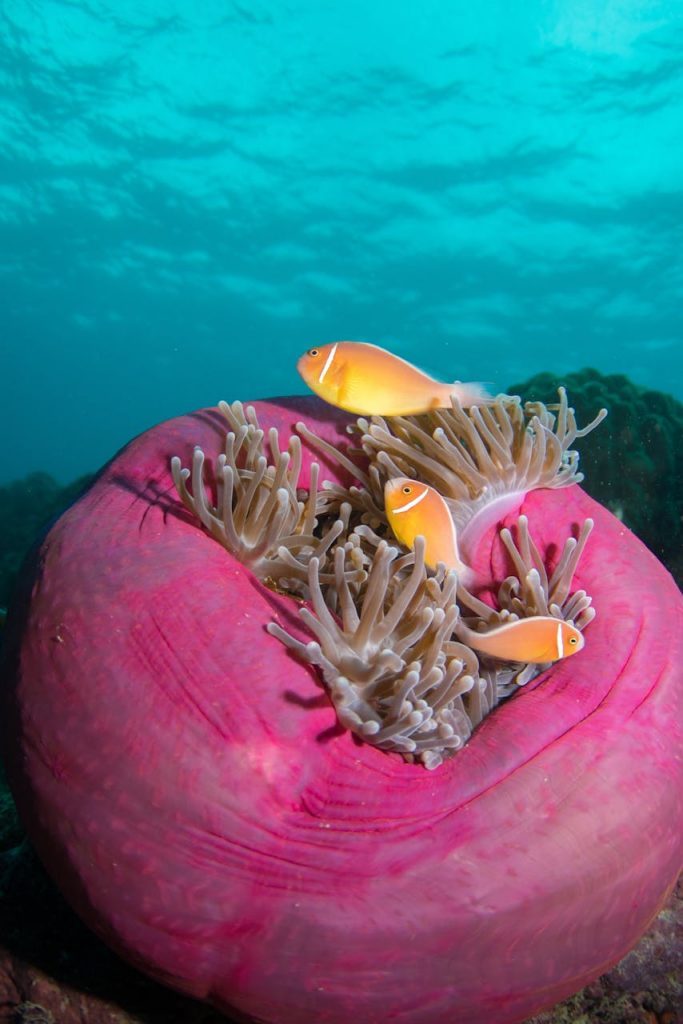
Many species also live in close partnership with clownfish. The fish gain protection from predators. The anemone may benefit from food scraps, waste nutrients, and improved water movement around its tentacles. This relationship is fascinating, but hobbyists should remember one key point. An anemone does not need clownfish to survive. It needs proper reef conditions. If you recreate stable light, flow, and placement, your anemone has a much better chance of settling and thriving in captivity.
Aquarium Setup
Anemones need a mature reef tank. Six months is a bare minimum. Nine to twelve months is even better. Stability matters more than chasing exact numbers. Aim for salinity around 1.025 to 1.026, temperature between 77 and 79 degrees Fahrenheit, and pH between 8.1 and 8.4. Keep ammonia and nitrite at zero. Nitrate should stay low but not necessarily zero. Phosphate should also remain controlled and stable.
Build your aquascape with secure attachment points. Bubble Tip Anemones prefer holes and crevices in rock. Long Tentacle Anemones prefer sand with rock beneath for the foot. Leave open space around the anemone. This reduces the risk of coral stings if it expands or moves. Cover all powerheads and overflows with guards. This step is essential. A wandering anemone can be shredded quickly. For more help with system planning, see reef tank setup guide and reef aquarium parameters.
Lighting Requirements
Most reef anemones contain zooxanthellae. These symbiotic algae provide much of their energy through photosynthesis. That means strong reef lighting is important. Bubble Tip Anemones usually do well under moderate to high LED, T5, or hybrid systems. A practical target is roughly 150 to 250 PAR for many BTAs, though some adapt outside that range. Magnifica and carpet anemones often need even more intense light.
Sudden lighting changes cause stress. If you buy a new anemone, acclimate it to your lights slowly. Reduce intensity at first or use an acclimation mode. Watch for signs of trouble. A bleached anemone looks pale or washed out. That often means it lost symbiotic algae from stress. Bleached specimens need stable care and gentle feeding while they recover. Do not blast a stressed anemone with maximum light on day one. For lighting basics, read reef lighting guide.
Water Flow
Anemones need flow, but not direct punishment. Good flow helps them breathe, remove waste, and keep detritus from settling on the oral disc. Most species prefer moderate, indirect, random flow. Their tentacles should sway naturally. They should not be pinned in one direction all day. If the flow is too weak, the anemone may look deflated and collect debris. If the flow is too strong, it may stay shrunken or move away.
Place pumps so the anemone receives broad movement instead of a narrow jet. Random flow patterns work best. Observe the animal after placement. A settled anemone that opens fully is usually comfortable. One that stretches, twists, or keeps relocating is telling you something is wrong. Check both flow and light before making major changes. Always use foam guards or protective covers on intakes and wavemakers.
Feeding
Anemones get much of their energy from light, but feeding still helps growth and recovery. Offer small meaty foods once or twice weekly. Good options include mysis shrimp, finely chopped raw shrimp, silverside pieces, clam, or other marine-based foods. Keep portions small. Large chunks can rot or be regurgitated. A good rule is to feed pieces smaller than the anemone’s mouth.
Target feeding works well. Use tongs or a turkey baster. Gently place food onto the tentacles and let the anemone move it inward. If it repeatedly spits food out, stop feeding for a few days and review tank conditions. Overfeeding can foul water and stress the animal. Underfeeding a bleached specimen can slow recovery. Balance is key. Healthy, established anemones in bright tanks often need less direct feeding than hobbyists expect. For coral and invertebrate nutrition ideas, see reef feeding guide.
Compatibility
Anemones are not passive decorations. They are stinging predators. Give them space from corals, especially LPS and soft corals with long sweeper tentacles. A wandering anemone can damage prized colonies overnight. Fish compatibility depends on the species. Most reef-safe fish ignore anemones, but very small or weak fish can be stung, especially by carpet anemones. Shrimp and crabs are usually safe, though some may steal food.
Clownfish may host an anemone, but hosting is never guaranteed. Some clownfish ignore anemones completely. Others dive in immediately. Large, aggressive clownfish can also irritate a small new anemone. If the anemone stays closed from constant clownfish attention, consider using a breeder box or temporary separation. Avoid keeping multiple anemone species in smaller tanks. Chemical warfare and movement issues can create problems fast. A dedicated anemone island often works best.
Step-by-Step Guide to Adding an Anemone
First, confirm the tank is mature and stable. Test salinity, temperature, nitrate, and phosphate before purchase. Second, choose a healthy specimen. Look for a closed mouth, sticky tentacles, good color, and a firmly attached foot. Avoid damaged feet and gaping mouths. Third, drip acclimate carefully and minimize air exposure if possible. Fourth, place the anemone in a suitable area based on species preference.
Fifth, dim the lights or use acclimation mode for several days. Sixth, turn down strong pumps briefly while the anemone grabs hold. Do not force it into place. Let it choose. Seventh, protect all intakes and monitor movement for the first week. Eighth, wait to feed until it settles and opens consistently. Ninth, keep hands out of the tank as much as possible. Constant repositioning usually makes things worse. Tenth, watch daily for inflation, color, attachment, and mouth condition.
Propagation and Fragging
How Bubble Tip Anemones Reproduce
Bubble Tip Anemones often reproduce by splitting in captivity. A healthy specimen may divide after growth, stress, or major changes in conditions. After a split, both halves need stable water and time to recover. Do not feed heavily right away. Let the mouths heal and the feet remain attached.
Should Hobbyists Manually Cut Anemones?
Manual cutting is possible with some Bubble Tip Anemones, but it is risky. It should only be attempted by experienced keepers with clean tools and a clear recovery plan. Poor technique can kill the anemone through infection or severe stress. For most hobbyists, natural splitting is the safer route.
Common Problems
Why Is My Anemone Shrinking?
Temporary deflation can be normal. Anemones often cycle water in and out. Constant shrinking is different. Common causes include unstable salinity, poor lighting, low flow, recent transport stress, or a damaged foot. Test parameters first. Then review placement and recent changes.
Why Is My Anemone Moving?
Anemones move when they dislike light, flow, or footing. They may also move after introduction while searching for a secure spot. Do not keep forcing them back. Instead, make the tank safe and let them settle. Protect pumps and give them room.
Why Is My Anemone Bleached?
Bleaching means the anemone lost much of its symbiotic algae. Stress is the usual cause. Shipping, poor lighting, heat swings, and unstable chemistry can all trigger it. Keep conditions steady, avoid sudden changes, and offer small feedings during recovery.
When Is an Anemone Dying?
A dying anemone often has a gaping mouth, failing attachment, foul odor, and tissue breakdown. Remove it quickly if it is melting. A decaying anemone can pollute the tank fast. Run fresh carbon and perform a water change if needed.
Frequently Asked Questions
Are anemones good for beginner reef tanks?
Usually not for brand-new tanks. They are better for beginners with a mature, stable system. Bubble Tip Anemones are the most forgiving choice.
How long should I wait before adding an anemone?
Wait at least six months. Many hobbyists have better results after nine to twelve months, once the tank is more stable.
Do clownfish need an anemone?
No. Clownfish can live healthy lives without one. An anemone is for the keeper’s goals, not a requirement for clownfish health.
How often should I feed my anemone?
Once or twice weekly is enough for most healthy specimens. Bleached or recovering anemones may benefit from careful small feedings.
Can an anemone kill corals?
Yes. Anemones can sting and damage nearby corals, especially if they move. Always leave open space around them.
Anemones reward patience more than impulse. If you give them mature water, strong light, safe flow, and room to settle, they can become a long-term centerpiece. Start with a hardy species, protect your equipment, and avoid constant adjustments. Stable reef keeping almost always beats quick fixes.
Was this helpful?
Related Posts
Bristleworms
Bristleworms are usually helpful reef tank scavengers. Learn how to identify them, control numbers, and spot the rare…
 By
By
What is a Chaeto Reactor, and How Does it Help Control Nutrients?
A chaeto reactor grows macroalgae in a sealed chamber to remove nitrate and phosphate, helping reef tanks control…