

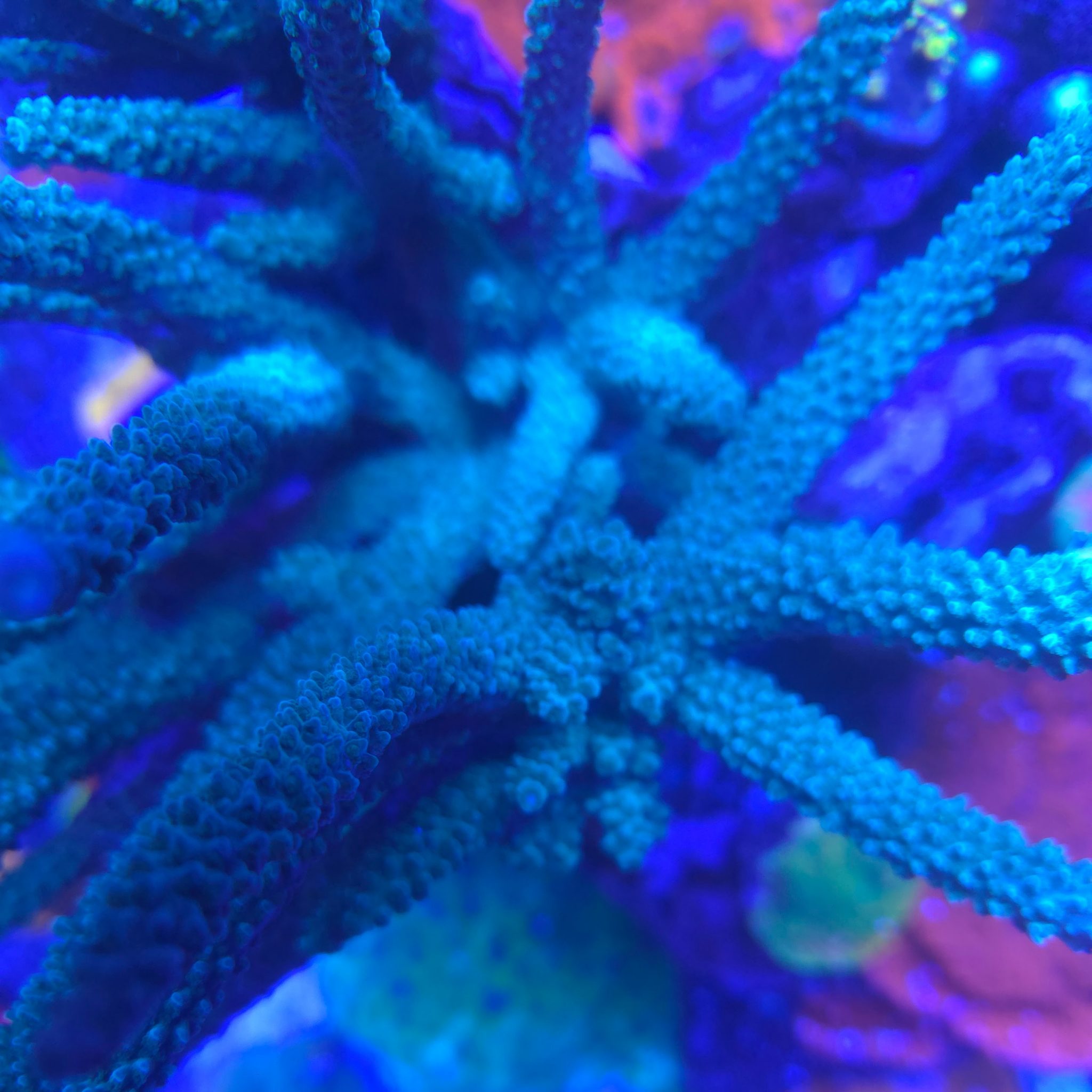
Blue Acropora staghorn is a fast-growing SPS coral prized for its branching shape and electric color. It needs strong light, high flow, and very stable water. In the right reef tank, it can become a stunning centerpiece and a rewarding coral for hobbyists ready to maintain consistency.
Many reef keepers love Acropora for its structure, color, and growth potential. Blue Acropora staghorn stands out even among SPS corals. Its branches add height and movement to a reefscape. Its blue tones can range from icy pastel to deep cobalt. This coral is not the best first coral for most beginners. Still, it is very achievable once your tank is mature and stable. In this guide, you will learn how to care for Blue Acropora staghorn, where to place it, what it needs to thrive, and how to solve common problems before they become serious.
Quick Reference Care Table
| Care Factor | Recommendation |
|---|---|
| Common Name | Blue Acropora Staghorn |
| Coral Type | SPS coral |
| Difficulty | Moderate to advanced |
| Tank Size | 40 gallons minimum, larger is better |
| Lighting | High PAR, roughly 250 to 400 |
| Water Flow | Strong, random, turbulent flow |
| Temperature | 76 to 79°F |
| Salinity | 1.025 to 1.026 specific gravity |
| Alkalinity | 7.5 to 9 dKH, stable |
| Calcium | 400 to 450 ppm |
| Magnesium | 1250 to 1400 ppm |
| Nitrate | 2 to 15 ppm |
| Phosphate | 0.03 to 0.10 ppm |
| Feeding | Mostly photosynthetic, benefits from fine coral foods |
| Placement | Upper rockwork with room to grow |
What Is Blue Acropora Staghorn?
Blue Acropora staghorn is a branching small polyp stony coral. It belongs to the Acropora group. These corals build hard skeletons from calcium carbonate. They are among the most iconic corals in reef aquariums. The staghorn form grows upright branches with many side shoots. This creates a natural reef look very quickly.
The blue color comes from coral pigments and lighting interaction. In some tanks, the coral looks sky blue. In others, it shifts toward teal, violet, or blue with green undertones. Color depends on genetics, nutrients, lighting spectrum, and overall health. A healthy frag may look different after moving into a new system. That is normal.
This coral is valued for fast growth. It can also be unforgiving. Sudden swings in alkalinity, salinity, or temperature often cause stress. Tissue loss can happen fast. That is why stable reef chemistry matters more than chasing perfect numbers.
Natural Habitat
Acropora staghorn corals occur in shallow tropical reefs. They are common in the Indo-Pacific region. Many grow on reef crests and upper reef slopes. These areas receive intense sunlight and strong water movement. Waves crash overhead. Currents change direction often. The water is oxygen-rich and clear.
That natural setting explains their care needs in captivity. Blue Acropora staghorn is adapted to high light and heavy flow. It does not come from calm lagoon conditions. It also does not tolerate dirty water well. In nature, detritus does not sit on the branches for long. Water keeps the coral clean and delivers gas exchange around the tissue.
These corals also host zooxanthellae. These symbiotic algae provide much of the coral’s energy through photosynthesis. That is why strong lighting is so important. In the wild, these corals also capture dissolved organics and tiny plankton from the water column.
Aquarium Setup
A mature reef tank is the best home for Blue Acropora staghorn. Avoid adding it to a new system. Most hobbyists should wait at least six months. Longer is even better. A stable tank handles nutrient shifts and bacterial changes more smoothly.
A 40-gallon tank can work for a small frag. Larger tanks are easier to keep stable. A 75-gallon or larger reef is ideal. You need enough room for vertical growth and branch spread. Leave space around the colony. Acropora can shade nearby corals as it grows.
Place the coral high on the rockwork. Secure the frag well with reef-safe glue or epoxy. Unstable frags can fall and break. That often damages tissue. Build an aquascape that allows flow around all sides. Avoid dead spots behind the colony. Bare branch bases often result from poor placement and low circulation. Strong export equipment helps too. A good skimmer, regular testing, and consistent dosing are all valuable.
Lighting Requirements
Blue Acropora staghorn needs high light. Most colonies do best around 250 to 400 PAR. Some strains tolerate more. Others prefer the lower end. Start lower if the coral is newly added. Then acclimate slowly over one to two weeks. Sudden jumps in intensity can bleach tissue.
Blue coloration often looks best under blue-heavy reef lighting. Still, color is not only about spectrum. Stability matters more. If nutrients are too low, color can become pale. If nutrients are too high, the coral may brown. Good balance usually gives the best result.
LED, T5, or hybrid systems can all work well. The key is even coverage. Acropora colonies have many branches. Shadowing becomes a real issue as they grow. If only the top receives light, lower sections may fade or die back. Watch polyp extension, tissue tone, and branch tip color. These signs tell you more than marketing claims about any light fixture.
Water Flow
Strong, random flow is essential for this coral. Acropora does poorly in weak or direct laminar flow. A single pump blasting one side can strip tissue. Low flow lets detritus settle between branches. Both situations create stress.
The goal is turbulent movement from changing directions. Gyres, wavemakers, and alternating pumps work well. You want the polyps and branches to experience constant water exchange. This supports respiration, nutrient delivery, and waste removal. It also helps prevent algae and cyanobacteria from collecting on the skeleton.
Observe the coral closely. If one side gathers debris, flow is too weak there. If tissue looks recessed on the blast side, the current may be too harsh. Adjust pumps until the colony receives broad, energetic movement without a constant jet. As the coral grows, revisit flow patterns. A large colony changes circulation around itself and can create new dead zones.
Water Chemistry and Stability
Stable parameters are the foundation of Acropora success. Many reef keepers focus on exact numbers. That matters less than consistency. Blue Acropora staghorn reacts badly to sudden changes. Alkalinity swings are especially risky.
Keep temperature between 76 and 79°F. Maintain salinity at 1.025 to 1.026. Aim for alkalinity between 7.5 and 9 dKH. Keep calcium around 400 to 450 ppm. Magnesium should stay near 1250 to 1400 ppm. Nitrate should not be zero. A range of 2 to 15 ppm is often productive. Phosphate should also remain measurable. Around 0.03 to 0.10 ppm works well in many systems.
Test often if your tank is stocked with SPS. Daily alkalinity checks can help when dialing in dosing. Calcium reactors, kalkwasser, and two-part systems all work. Pick the method you can maintain consistently. For more on chemistry basics, see reef tank water parameters and how to lower phosphate in a reef tank.
Feeding
Blue Acropora staghorn gets most of its energy from light. That does not mean feeding is useless. In a healthy reef tank, this coral can benefit from suspended nutrients and very fine particulate foods. Think of feeding as support, not the main calorie source.
You can offer coral foods made for SPS once or twice each week. Fine plankton substitutes, rotifers, and amino acid supplements are common choices. Turn off the skimmer briefly if needed. Keep water movement on enough to suspend food. Avoid heavy target feeding. Thick food clouds can raise nutrients too quickly.
Fish feeding also matters. A lightly fed tank often becomes too nutrient-poor for colorful Acropora. Balanced feeding supports the whole reef. The coral then benefits from dissolved and particulate organics. If your tank runs ultra-low nutrients, increase fish feeding carefully before adding many coral supplements. This is usually the safer route.
Compatibility
Blue Acropora staghorn is reef-safe with most peaceful fish and invertebrates. The bigger concern is coral placement and pest pressure. Give it room from aggressive neighbors. Sweeper tentacles from LPS corals can sting Acropora badly. Soft corals may also release chemicals that irritate SPS in smaller systems.
Good tankmates include reef-safe wrasses, gobies, blennies, and many tangs. Be cautious with angelfish and butterflyfish. Some nip coral polyps. Certain crabs can also irritate branch tips. Keep an eye on large hermits or unstable snails that may knock frags loose.
Pests are a major compatibility issue. Acropora eating flatworms and red bugs can devastate colonies. Always inspect and dip new frags before adding them. Quarantine is even better. If you are building an SPS system, read best reef-safe fish for beginners and coral dipping guide for safer stocking habits.
Step-by-Step Placement Guide
Start by inspecting the frag closely. Look for pests, damaged tissue, or algae on the base. Dip the coral in a trusted coral dip. Rinse it in clean saltwater before placement. This reduces the risk of introducing common Acropora pests.
Next, choose a high spot with strong, indirect flow. Avoid placing the frag at the very top on day one if your lights are intense. Start slightly lower than the final position. Secure the frag firmly with glue or epoxy. Make sure the branches will not touch nearby corals as they grow.
Over the next one to two weeks, watch color and polyp extension. If the coral stays dark and reaches, it may need more light. If it pales quickly, reduce intensity or move it lower. Test alkalinity often during this period. New SPS additions often reveal hidden instability in a reef system.
Propagation and Fragging
When to Frag
Frag Blue Acropora staghorn only when the colony is healthy and actively growing. Look for strong encrusting at the base and clean branch tips. Avoid fragging a stressed coral. Recent parameter swings, pest issues, or tissue recession are all reasons to wait.
How to Frag Safely
Use clean bone cutters or coral shears. Cut a healthy branch tip with good color and intact tissue. Avoid crushing the skeleton. Glue the frag onto a dry plug or rock. Then place it in moderate light and strong flow until it settles. Stable alkalinity speeds recovery.
Healing and Grow-Out
Fresh frags often keep polyps closed for a day or two. That is normal. Good flow helps prevent bacterial issues around the cut. Once the frag encrusts onto the plug, growth usually accelerates. Healthy frags often show new branch tips within weeks under strong conditions.
Common Problems
Why Is My Blue Acropora Turning Brown?
Browning usually points to excess nutrients, weak light, or both. Check nitrate and phosphate first. If they are elevated, improve export slowly. Also confirm PAR at the coral’s location. Do not make sudden changes. Fast corrections often create more stress than the original issue.
Why Is It Losing Color or Bleaching?
Bleaching often follows rapid light increase, temperature stress, or nutrient starvation. Review recent changes. Did you raise intensity? Did nutrients bottom out? Did alkalinity spike? Lower stress immediately. Reduce light if needed and restore balanced nutrients slowly. Avoid chasing color with many additives at once.
Why Is Tissue Peeling From the Base?
Base recession can result from low flow, shading, unstable alkalinity, or pests. Check for detritus around the colony. Inspect for flatworms or red bugs. Test alkalinity at the same time each day for several days. Hidden swings are common in growing SPS systems.
Why Are the Polyps Not Extending?
Poor polyp extension can mean irritation, pests, unstable chemistry, or simply daytime behavior. Some Acropora extend more at night. If extension suddenly drops, inspect closely. Look for fish nipping, crabs, flatworms, or recent parameter changes. Compare with other SPS in the tank for clues.
Frequently Asked Questions
Is Blue Acropora staghorn good for beginners?
Usually no. It is better for hobbyists with a mature tank and stable dosing routine. Beginners often do better with easier corals first.
How fast does Blue Acropora staghorn grow?
It can grow quickly under strong light and stable chemistry. Small frags may become mini colonies within months in a healthy SPS tank.
Can it live in moderate light?
Some frags may survive in moderate light, but they rarely show their best color or structure there. High light is the safer target.
Does Blue Acropora need direct feeding?
Not usually. It relies mainly on photosynthesis. Fine suspended foods can help, but heavy target feeding is unnecessary.
What is the biggest mistake with Acropora?
The biggest mistake is instability. Fast swings in alkalinity, salinity, or nutrients cause more losses than almost anything else.
Blue Acropora staghorn can be one of the most rewarding SPS corals in reef keeping. Its shape is dramatic. Its color is unforgettable. Success comes from patience and consistency. Give it strong light, powerful random flow, and stable chemistry. Avoid sudden changes. Inspect for pests. Let the colony settle and grow at its own pace. When those basics are in place, this coral can become a true showpiece in a thriving reef aquarium.
Was this helpful?
Related Posts
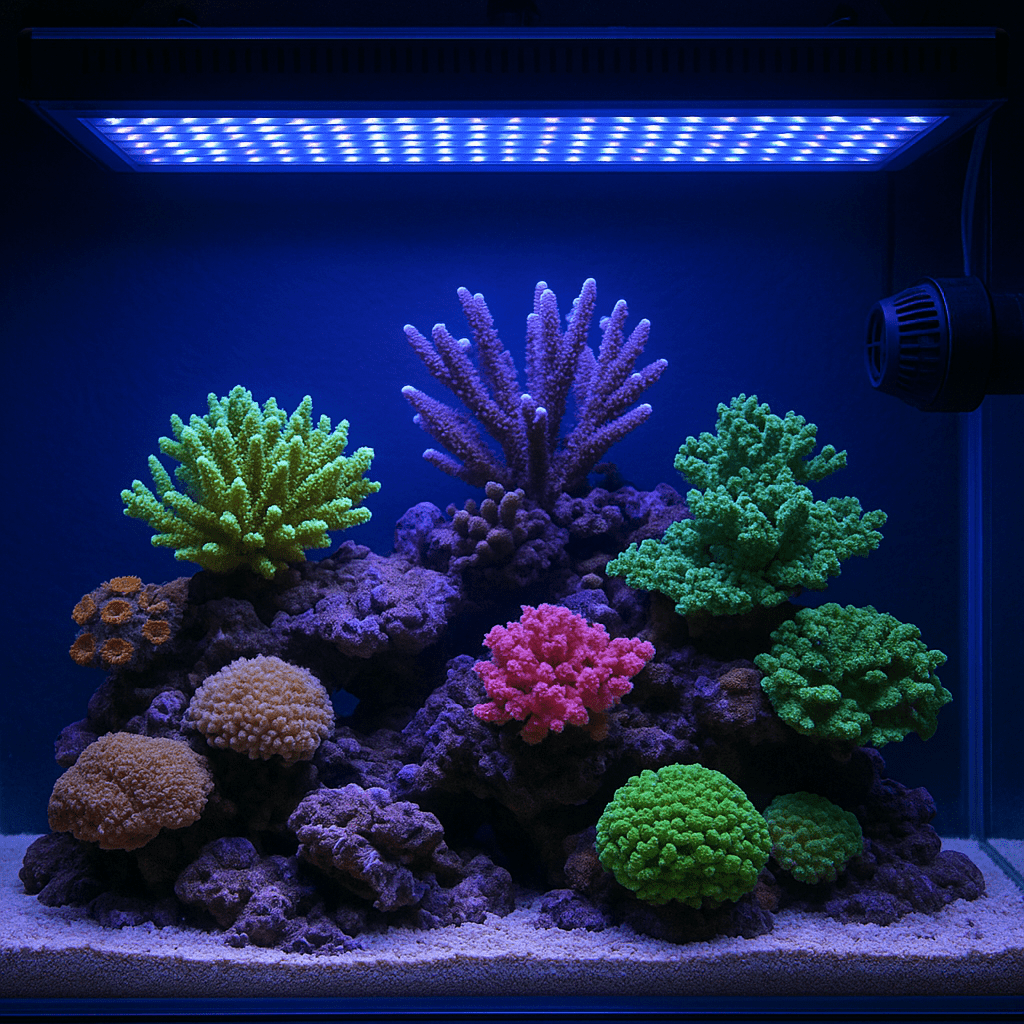
Best Filtration Systems
Best Filtration Systems for a Healthy Saltwater Aquarium Choosing the best filtration system for your saltwater aquarium is…
 By
By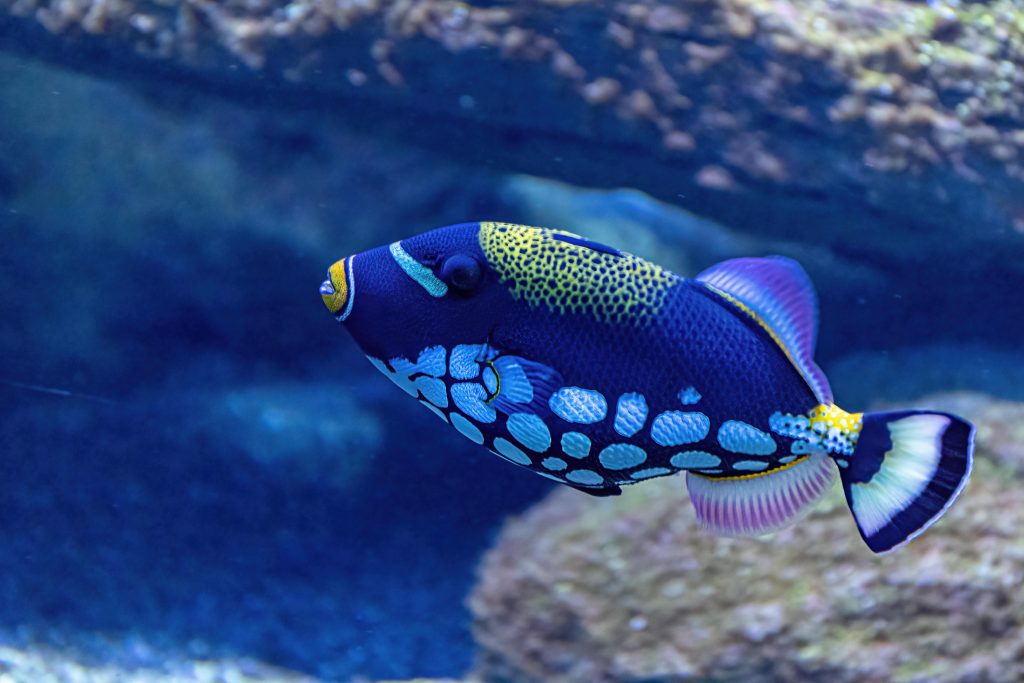
Clown Triggerfish (Balistoides Conspicillum)
Clown triggerfish are stunning but aggressive marine fish that need very large tanks, strong filtration, and careful tankmate…
[favorite_button]
My Bookmarks:
To see full list click here
[user_favorites user_id="" include_links="true" site_id="" post_types="" include_thumbnails="true" thumbnail_size="thumbnail" include_excerpt="false"]