

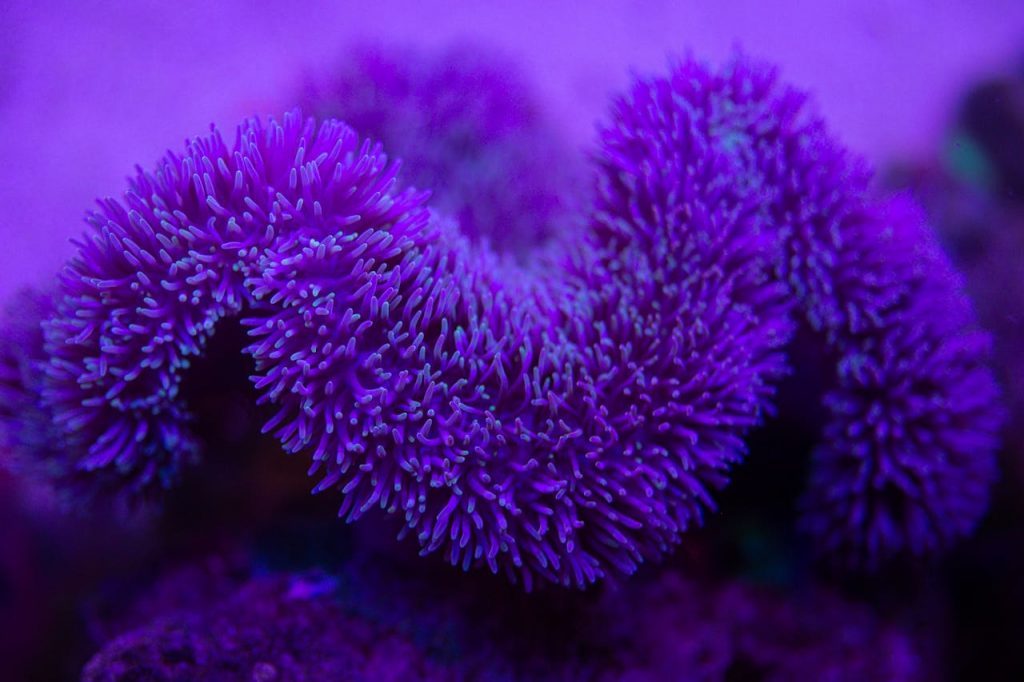
Carpet anemones are showpiece animals with a well-earned reputation: they can be hardy once established, but they demand space, stability, and respect. The Carpet Anemone (Stichodactyla haddoni) is a sand-dwelling species known for its sticky tentacles, strong feeding response, and the ability to host certain clownfish. It is also capable of capturing small fish, stinging nearby corals, and wandering when unhappy.
This guide focuses on practical, reef-tested husbandry for keeping S. haddoni successfully, including tank requirements, ideal placement, lighting and flow, feeding, compatibility, and troubleshooting common problems like deflation cycles, bleaching, and roaming.
Quick Care Summary
| Common Name | Haddon’s Carpet Anemone |
| Scientific Name | Stichodactyla haddoni |
| Difficulty | Intermediate (high consequence if mistakes) |
| Minimum Tank Size | 75 gallons (larger strongly recommended) |
| Placement | On sand, foot anchored to rock under the sand |
| Lighting | Moderate to high (stable, acclimated) |
| Flow | Low to moderate, indirect |
| Feeding | Meaty marine foods 1 to 2 times weekly |
| Temperament | Very sticky, strong sting, can eat fish |
| Reef Safe? | Conditional (needs wide buffer from corals) |
| Clownfish Hosting | Possible with select species |
Natural Habitat and Behavior
Stichodactyla haddoni occurs across parts of the Indo-Pacific on sandy flats and lagoon areas, often near reefs where it can anchor its pedal disc (foot) to hard substrate while keeping its oral disc on the sand. In nature it experiences:
- Bright tropical light that changes gradually through the day
- Gentle to moderate water movement, not constant blasting flow
- Stable salinity and temperature
- Regular access to food drifting by or delivered by currents
Haddoni carpets are ambush predators. Their tentacles are extremely adhesive, and they can capture fish that blunder into them, especially at night or when the anemone is newly introduced and fish are still figuring out boundaries. This is one reason they are best kept in a thoughtfully planned system with compatible tankmates.
Tank Requirements
Minimum Tank Size
While you will see carpet anemones sold for smaller tanks, a realistic minimum for S. haddoni is 75 gallons, with 100+ gallons being a much safer long-term target. The reason is not just water volume. It is the combination of:
- Footprint: They can expand large and need a wide sand area.
- Sting radius: Corals and other anemones need distance.
- Stability: Anemones respond poorly to swings in salinity, alkalinity, and temperature.
- Risk management: A wandering carpet can damage corals, and powerheads must be protected.
Aquascape and Placement
The single most important placement rule for a Haddoni carpet is: provide sand for the oral disc and a solid anchor point for the foot. In practice, that means a sandy area where the anemone can bury its foot down to the glass or to a stable rock ledge under the sand.
Best setup: create a “sand bowl” or open sand flat near a rock base. Many keepers place a flat rock under the sand to give the foot something to grab. Avoid placing it directly on loose rubble that shifts.
- Sand bed: 2 to 4 inches is usually enough for the foot to settle.
- Space: leave a wide buffer from corals (more on that below).
- Rock stability: ensure rockwork cannot collapse if the anemone digs.
System Maturity
Carpet anemones do best in mature, stable aquariums. A common failure pattern is adding one to a new tank that is still experiencing nutrient swings, bacterial blooms, or unstable alkalinity. As a practical guideline, aim for 6+ months of stable operation before introducing S. haddoni, longer if you are still learning your tank’s rhythm.
Water Parameters
Haddoni carpets tolerate a range, but they do not tolerate instability. Keep parameters steady and avoid rapid corrections.
| Parameter | Recommended Range |
|---|---|
| Temperature | 77 to 80°F (25 to 27°C) |
| Salinity | 1.025 to 1.026 SG (35 ppt) |
| pH | 8.1 to 8.4 |
| Alkalinity | 8 to 9.5 dKH (keep stable) |
| Calcium | 400 to 450 ppm |
| Magnesium | 1250 to 1400 ppm |
| Ammonia / Nitrite | 0 |
| Nitrate | 2 to 15 ppm (avoid 0 long-term) |
| Phosphate | 0.03 to 0.10 ppm |
Stability tips: use an auto top-off to prevent salinity swings, calibrate your refractometer with 35 ppt solution, and avoid big alkalinity corrections. If you run very low nutrients, watch for pale coloration and reduced stickiness.
Lighting Requirements
Stichodactyla haddoni hosts symbiotic zooxanthellae and benefits from moderate to high light. Many successful tanks keep them under quality LED, T5, or hybrid lighting. The key is appropriate intensity with slow acclimation.
- Target intensity (general): moderate to high PAR in the anemone’s settled location.
- Acclimation: start lower and ramp up over 2 to 4 weeks, especially if the animal looks pale or recently shipped.
- Photoperiod: 8 to 10 hours of strong daylight, with a ramp if your light supports it.
What good lighting looks like: the anemone remains expanded during the day, maintains rich coloration (not washed out), and has a responsive feeding and sticky tentacles. Too much light too fast often shows up as bleaching, shrinking, or repeated deflation.
Water Flow
Haddoni carpets prefer low to moderate, indirect flow. Think “gentle surge” rather than a constant jet. Too little flow allows detritus to settle on the oral disc and can contribute to bacterial issues. Too much flow causes the anemone to pucker, fold, or detach and wander.
- Ideal pattern: broad, indirect movement that gently ripples the tentacles.
- Avoid: direct powerhead streams aimed at the anemone.
- Critical safety: cover all powerhead and overflow intakes with guards or foam. Anemones and unprotected pumps are a disaster pairing.
If you see the anemone repeatedly detaching, folding into a taco shape, or creeping toward higher flow areas, treat it as feedback that something about flow, light, or water chemistry is off.
Feeding
Even under strong lighting, a Carpet Anemone (Stichodactyla haddoni) benefits from regular feeding. Feeding supports growth, color, and recovery from shipping stress. The goal is small, marine-based meaty foods offered consistently, not huge meals that rot in the gut.
Best Foods
- Chopped raw shrimp, scallop, clam, or mussel (marine sources)
- Pieces of silverside (sparingly, not as a staple)
- Thawed marine blends (mysis, krill) pressed into a small clump
- High-quality frozen carnivore foods
How Often to Feed
For most established specimens, feed 1 to 2 times per week. Newly imported or pale specimens may benefit from slightly more frequent small meals, as long as water quality stays strong.
Portion size: aim for pieces roughly the size of the anemone’s mouth or smaller. Overfeeding is a common cause of regurgitation and foul water.
Feeding Technique
- Use feeding tongs to place food on the tentacles near the mouth.
- Temporarily reduce flow for 5 to 10 minutes so food is not blown away.
- Watch for food theft by clownfish, shrimp, or wrasses. If needed, use a feeding dome or guard.
Compatibility
With Clownfish
S. haddoni can host clownfish, but not every clown will naturally accept it. Some species are more commonly associated with carpets in the wild. Even when hosting works, be aware that:
- Large, enthusiastic clowns can irritate a newly introduced anemone.
- Clowns may drag food into the anemone, which can be helpful, but they can also steal food during target feeding.
- Hosting does not guarantee safety for other fish. A carpet can still capture tankmates.
With Reef Fish
This is where many “reef safe” assumptions break down. Haddoni carpets can and do eat fish. Risk is highest for:
- Small gobies, blennies, firefish, and dartfish
- Newly introduced fish that are stressed or disoriented
- Fish that sleep on the sand
- Sick fish with reduced swimming ability
Faster, midwater swimmers tend to do better, but there are no guarantees. Plan your stocking with the anemone in mind, not as an afterthought.
With Corals and Other Anemones
Carpet anemones have a potent sting and can damage corals on contact. They also may move, especially after introduction or if conditions change. To keep a reef layout functional:
- Give the carpet a dedicated sand zone with a wide “no coral” buffer.
- Avoid placing LPS or soft corals close enough to touch when the carpet expands.
- Do not mix multiple anemone species in small to medium tanks. Chemical and physical warfare is real.
With Invertebrates
Most snails and hermits will be ignored, but wandering inverts can get snagged. Cleaner shrimp may try to steal food and can be stung. Urchins can bulldoze near the anemone and trigger movement. If you keep shrimp, watch feeding time closely.
Choosing a Healthy Specimen
Success starts at the store. A healthy S. haddoni typically shows:
- Sticky tentacles that grab gently when touched (do not handle if you can avoid it)
- Closed, tight mouth (slightly puckered is fine, gaping is not)
- Good inflation without being limp
- Foot intact with no tears or mushy areas
- Normal color (not stark white or translucent)
Avoid specimens that are repeatedly deflated in the store, have a widely gaping mouth, show strong odor, or have visible foot damage. Foot injuries are a common cause of rapid decline after purchase.
Acclimation and Placement: Step-by-Step
- Match salinity and temperature carefully. Use drip acclimation if there is a significant difference.
- Dim the lights or use a light acclimation mode for the first few days.
- Place on sand where the foot can reach a firm surface. Do not force the foot into a hole.
- Reduce flow temporarily so it can attach.
- Protect pumps and overflows before introduction, not after.
- Do not feed immediately. Wait 3 to 7 days, then offer a small meal once it is attached and responsive.
If the anemone moves the first night, that is not automatically a failure. Many carpets “test” a few spots. Continuous roaming for days usually means something is off: light intensity, flow direction, salinity swing, or poor health from shipping.
Common Problems and Troubleshooting
1) The anemone keeps deflating and inflating
Some deflation is normal as anemones expel waste and exchange water. Concern starts when deflation is prolonged, repeated multiple times per day, or paired with a gaping mouth.
- Check: salinity stability (ATO issues), alkalinity swings, temperature swings, ammonia, and nitrite.
- Also check: direct flow blasting the oral disc.
- Action: stabilize parameters, reduce stress, avoid handling, and hold off on feeding until it stays inflated reliably.
2) Gaping mouth or expelled brown strings
A slightly open mouth during feeding is normal. A persistently gaping mouth can indicate severe stress, infection, or rapid decline. Brown stringy material can be waste, but it can also accompany stress events.
- Check: ammonia, nitrite, and recent changes (big water change, lighting change, dosing mistake).
- Action: improve oxygenation, run fresh carbon, ensure stable salinity, and consider a large but careful water change if something is clearly off.
- Important: do not attempt “treatments” that irritate the foot unless you are experienced and have a clear diagnosis.
3) Bleaching (turning very pale or white)
Bleaching usually means loss of zooxanthellae due to stress, often from shipping, sudden light increase, or temperature issues. A bleached Haddoni can recover, but it needs time and supportive care.
- Action: reduce light intensity and ramp up slowly over weeks.
- Feed: small meals 2 times per week if it accepts food and stays inflated.
- Keep nutrients non-zero: ultra-low nitrate and phosphate can slow recovery.
4) The carpet anemone won’t stick or won’t attach
Healthy carpets are typically very sticky and attach firmly. Failure to attach can be caused by foot damage, unsuitable substrate, too much flow, or poor health.
- Check: foot for tears, abrasions, or mushy tissue.
- Adjust: provide a calmer area with sand and a stable rock base under the sand.
- Safety: keep it away from pumps while it is unattached.
5) It keeps moving and stinging corals
Movement is almost always a response to conditions. The anemone is trying to find a better spot for light, flow, or footing. It may also move after a major change like a new powerhead, bulb swap, or a big parameter swing.
- Action: stop making frequent adjustments. Pick a reasonable light and flow zone and let the tank settle.
- Coral protection: temporarily relocate nearby corals or use a physical barrier of rock to create separation.
- Do not: try to peel it off rock. Foot tears are a common fatal injury.
6) The anemone ate a fish
Unfortunately, this is a known risk with S. haddoni. If it happens:
- Do not pull the fish out unless it is barely caught and can be gently freed without tearing tissue.
- Monitor water quality: a large meal can increase waste production. Watch ammonia especially in smaller systems.
- Re-evaluate stocking: avoid small sand-sleepers and timid fish that hover near the substrate.
Propagation or Splitting
Unlike some bubble tip anemones, Stichodactyla haddoni is not commonly propagated by hobbyists. Natural division in captivity is uncommon, and intentional cutting is risky due to the thickness of the tissue, the importance of an intact foot, and the high chance of infection.
If you want an anemone that is routinely tank-propagated, consider species with established captive propagation histories. For Haddoni carpets, the best “propagation” practice is simply keeping the animal healthy long-term and avoiding injuries that lead to loss.
FAQ
How big does a Haddoni carpet anemone get?
In aquariums, many specimens reach 12 to 20 inches across when fully expanded, and large individuals can exceed that. Plan tank footprint and coral spacing for its fully expanded size.
Is a Carpet Anemone (Stichodactyla haddoni) reef safe?
It is reef safe only in the sense that it does not “pick at” corals, but it can sting and kill corals on contact and may move. It is best treated as a dedicated-zone animal with a wide buffer.
What clownfish host Haddoni carpet anemones?
Some clownfish species are more likely to accept carpets than others, but hosting is not guaranteed. Even when clowns host, introduce the anemone to a stable tank first so it can attach and settle.
Why is my carpet anemone not sticky?
Reduced stickiness is often a stress sign. Common causes include recent shipping, salinity swings, poor water quality, insufficient lighting, or a damaged foot. Focus on stability and gentle conditions before feeding heavily.
How often should I feed a Haddoni carpet anemone?
Most established specimens do well with small meaty marine foods once or twice per week. Avoid oversized meals, which can lead to regurgitation and water quality problems.
Final Tips for Long-Term Success
- Stability beats chasing numbers: keep salinity, alkalinity, and temperature steady.
- Give it a sand zone: foot anchored, disc on sand, wide coral buffer.
- Protect equipment: guarded powerheads and safe overflow intakes are mandatory.
- Feed modestly: small marine pieces 1 to 2 times weekly.
- Stock thoughtfully: assume small fish are at risk.
Was this helpful?
Related Posts
Setting Up A Reef Tank
Setting up a reef tank is easier when you focus on stability, smart equipment, and slow stocking. This…
 By
By
Powerhead Placement for Reef Tanks
Dial in reef tank flow with smart powerhead placement. Learn proven layouts, targets, and troubleshooting for cleaner sand…
[favorite_button]
My Bookmarks:
To see full list click here
[user_favorites user_id="" include_links="true" site_id="" post_types="" include_thumbnails="true" thumbnail_size="thumbnail" include_excerpt="false"]