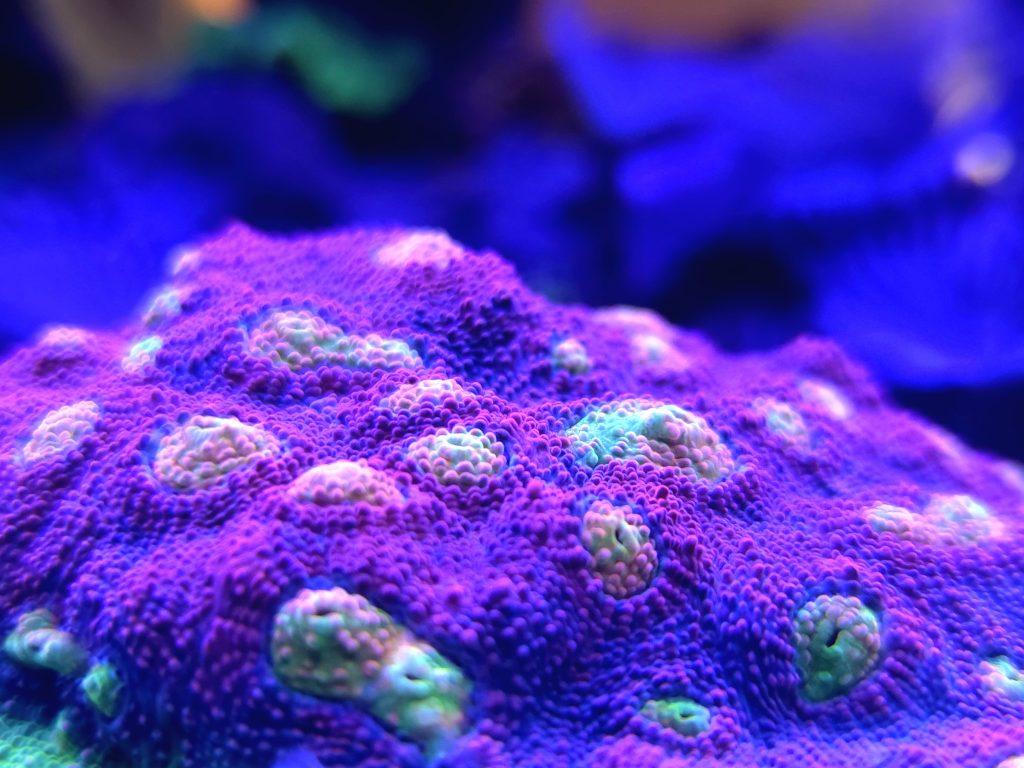
Chalice corals are prized for bold colors and glowing eyes. They can also be unforgiving when conditions swing. This guide covers stable parameters, placement, feeding, and common fixes.
Water parameters and stability
Chalices do best with stable, reef-range numbers. Aim for 25–26°C (77–79°F) and salinity 1.025–1.026. Keep pH 8.1–8.3 and alkalinity 8–9 dKH. Hold calcium at 420–460 ppm and magnesium 1300–1400 ppm.
Nutrients should not be zero. Target nitrate 5–15 ppm and phosphate 0.03–0.10 ppm. Very low nutrients can pale tissue. High nutrients can fuel algae on the skeleton. Test weekly until the tank is predictable.
Chalices react poorly to fast alkalinity changes. Limit alk swings to 0.3 dKH per day. Use a doser if daily demand is high. If you hand dose, split into two smaller doses.
Start with a simple routine. Change 5–10% water weekly. Match salinity and temperature before adding. If you run carbon, change it every 2–4 weeks. Old carbon can irritate sensitive corals.
- Stability first: keep alkalinity steady within a 0.5 dKH weekly band.
- Use a refractometer and calibrate with 35 ppt solution monthly.
- Log tests in a notebook or in reef tank parameter log.
Lighting, flow, and placement
Most chalice corals prefer low to moderate light. Start around 50–100 PAR on the sand bed. Many color up well at 80–150 PAR once adapted. Too much light can bleach the rim and flatten color.
Acclimate slowly when moving under stronger LEDs. Reduce intensity by 20–30% for one week. Or use a screen layer and remove one layer every 3–4 days. Watch for tissue paling or a receding edge.
Flow should be gentle and indirect. Aim for a slow sway, not a blast. Strong laminar flow can peel tissue at the edge. Dead spots can trap detritus and grow film algae.
Give chalices space at night. Many extend sweepers 2–6 inches after lights out. Some can reach farther in high flow. Leave 4–8 inches from other LPS to avoid stings.
- Place on a flat rock or frag tile to prevent sand abrasion.
- Keep the growing rim clear of algae and vermetid mucus.
- Plan “night space” for sweepers, not just daytime spacing.
Feeding, growth, and troubleshooting
Chalices can grow faster with targeted feeding. Feed 1–2 times per week. Offer small meaty foods like mysis, brine, or reef roids slurry. Turn off pumps for 10–15 minutes so food stays put.
Feed after lights dim, when feeding tentacles show. Use a pipette to place food on the mouths. Do not smother the tissue with large chunks. If fish steal food, use a feeding dome for 10 minutes.
Common problem one is recession at the rim. Check alkalinity swings and direct flow first. Then check for pests and irritators. Look for vermetid snails, flatworms, or algae creeping onto the skeleton.
Common problem two is bleaching or “burnt” edges. Lower PAR by 20% and shorten photoperiod by one hour. Verify phosphate is at least 0.03 ppm. If you recently changed lights, extend acclimation to two weeks.
Quarantine helps with expensive chalices. A simple 10–20 gallon coral QT works well. Dip new frags and inspect the underside. For more setup details, see coral quarantine basics. For placement planning, review reef lighting PAR guide.
- If tissue recedes, stabilize alk at 8–9 dKH for two weeks.
- If algae grows on the rim, increase cleanup crew and reduce detritus.
- If sweepers sting neighbors, move the chalice, not the other coral.
Chalice corals reward patience and consistency. Keep parameters stable, start with lower light, and feed modestly. With good spacing and gentle flow, most chalices will encrust and color up over time.
Sources: Borneman, E. (2001) Aquarium Corals; Sprung, J. (2005) The Reef Aquarium Vol. 3; Delbeek & Sprung (1994) The Reef Aquarium Vol. 1.
Was this helpful?
Related Posts
Best Reef Safe Cleanup Crew
The best reef safe cleanup crew includes hardy snails, selective scavengers, and a few specialty invertebrates matched to…
 By
By
Dragonets Fish Care
Dragonets are beautiful reef fish, but they need mature tanks and steady food sources. Learn how to keep…