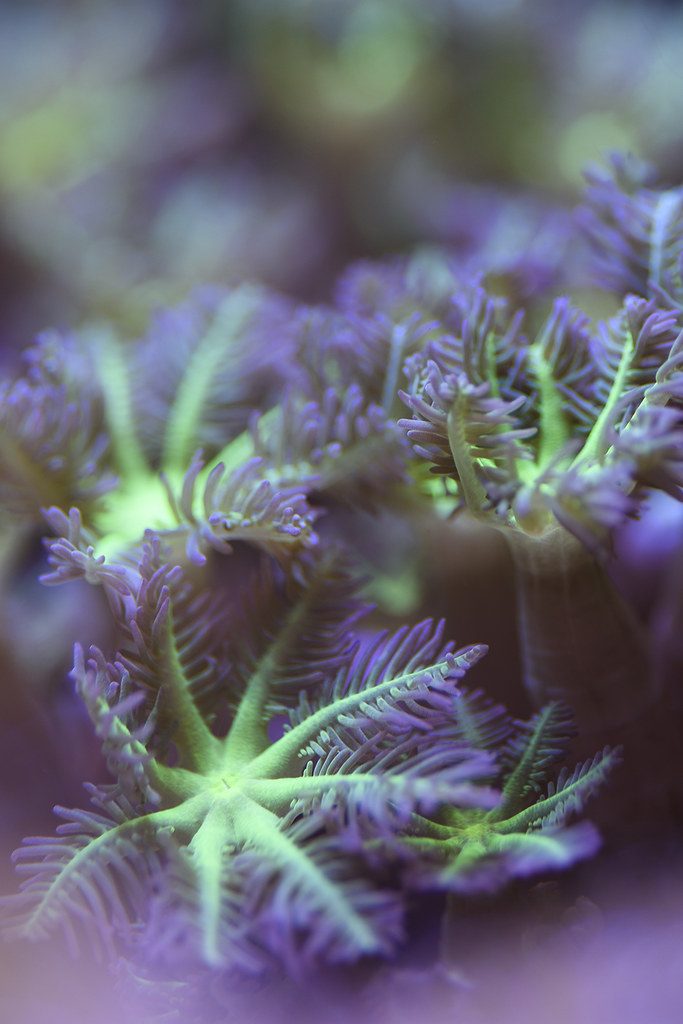
Clove polyps are hardy, fast-growing soft corals with a waving, feathery look. They can thrive in many reef tanks if you control nutrients and flow. This guide covers simple, repeatable steps for long-term success.
Choosing placement, light, and flow
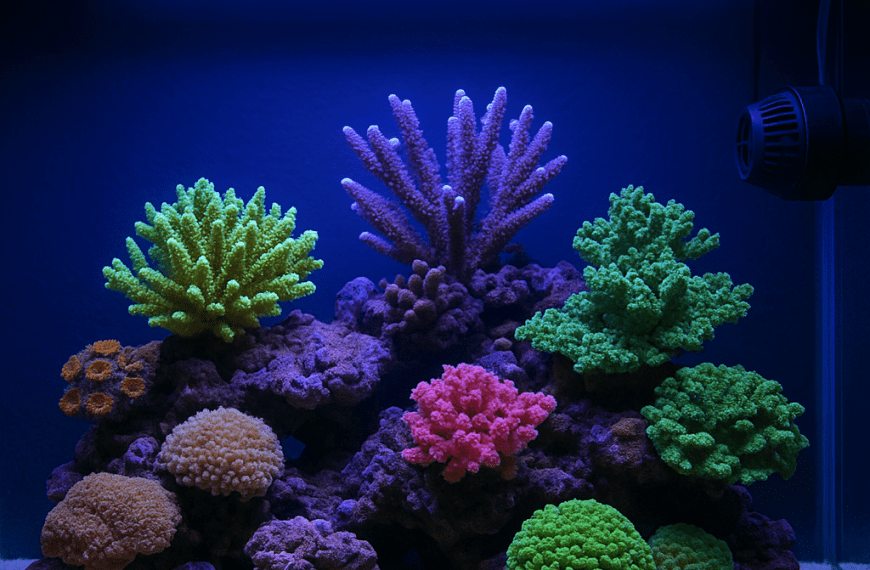
Start with stable rockwork and a clear plan for spread. Clove polyps can creep onto nearby rocks and equipment. Place them on an isolated “island” rock if you want easy control. Keep a 2–3 inch buffer from prized corals.
Use moderate light for best extension and color. Aim for PAR 50–150 at the colony. Many tanks hit this range in the lower to mid zone. If you run strong LEDs, begin low and ramp up over 2–3 weeks.
Provide moderate, variable flow that makes polyps sway but not fold. A good target is 10–30x total turnover per hour. Avoid direct jet flow that keeps them closed. If detritus settles on the mat, increase random flow slightly.
- Start new frags on a small rubble piece for easy relocation.
- Adjust flow until polyps stay open for most of the photoperiod.
- Keep them away from LPS sweepers and aggressive encrusters.
For more on dialing in circulation, see reef tank water flow guide. If you are planning rock islands, reef aquascape basics can help you prevent future headaches.
Water parameters and nutrient balance
Clove polyps tolerate a wide range, but stability matters most. Keep salinity at 1.025–1.026 specific gravity. Hold temperature at 77–79°F with minimal daily swing. Sudden changes often cause days of poor extension.
Maintain reef-safe alkalinity and calcium for overall tank health. Target alkalinity 8–9 dKH and calcium 400–450 ppm. Magnesium around 1250–1400 ppm helps keep parameters steady. Test alkalinity weekly in growing systems.
Nutrients drive growth and color, but excess can fuel nuisance algae. Aim for nitrate 2–15 ppm and phosphate 0.03–0.10 ppm. “Zero” readings often mean starvation or unstable swings. If polyps look pale, raise nutrients slowly.
Use small, consistent corrections instead of big resets. Change 10–15% water weekly or 20% every two weeks. Clean mechanical filters every 2–3 days if you run socks. If phosphate climbs above 0.15 ppm, reduce feeding first.
- Mix new saltwater to match salinity within 0.001 specific gravity.
- Limit alkalinity shifts to 0.5 dKH per day.
- Log nitrate and phosphate to spot trends before problems show.
If you are still learning parameter targets, read reef tank water parameters. It pairs well with this care plan.
Feeding, propagation, and troubleshooting
Clove polyps get much of their energy from light and dissolved nutrients. They still benefit from fine foods in many tanks. Feed 1–3 times per week with reef roids, powdered plankton, or rotifers. Turn off pumps for 10 minutes to keep food near the colony.
Propagation is simple and helps you control spread. Peel or cut a small section of mat with a scalpel. Rubber band it gently to rubble, or use a mesh cup until it attaches. Expect attachment in 7–14 days with good flow.
Closed polyps are usually a sign of irritation or instability. Check for detritus buildup, low flow, or sudden light changes. Also inspect for nudibranchs and vermetid snails nearby. Run carbon for 48 hours if you suspect chemical warfare.
A common mistake is letting them overtake the reef. If they encroach, remove the rock and scrape the mat. You can also apply a small amount of reef-safe epoxy over the edge to block growth. Do not use household chemicals in the display.
- If polyps stay closed for 48 hours, test alkalinity and salinity first.
- If algae grows on the mat, increase flow and reduce nutrients gradually.
- Quarantine new frags for 7–14 days to avoid pests.
Conclusion
Clove polyps reward steady parameters, moderate light, and random flow. Keep nutrients in a healthy range and plan for their spread early. With simple weekly habits, they can become a reliable, motion-filled centerpiece.
Sources: Borneman, E. (2001) Aquarium Corals; Delbeek, J. & Sprung, J. (1994–2005) The Reef Aquarium series; Fenner, R. (2003) The Conscientious Marine Aquarist.
Was this helpful?
Related Posts
Protein Skimmer Reef Tank Guide
Learn how a protein skimmer works, how to size one, and how to tune it for a cleaner,…
 By
By
Reef Aquarium Water Parameters
Learn the ideal reef aquarium water parameters, safe ranges, and how to keep salinity, alkalinity, nutrients, and pH…