

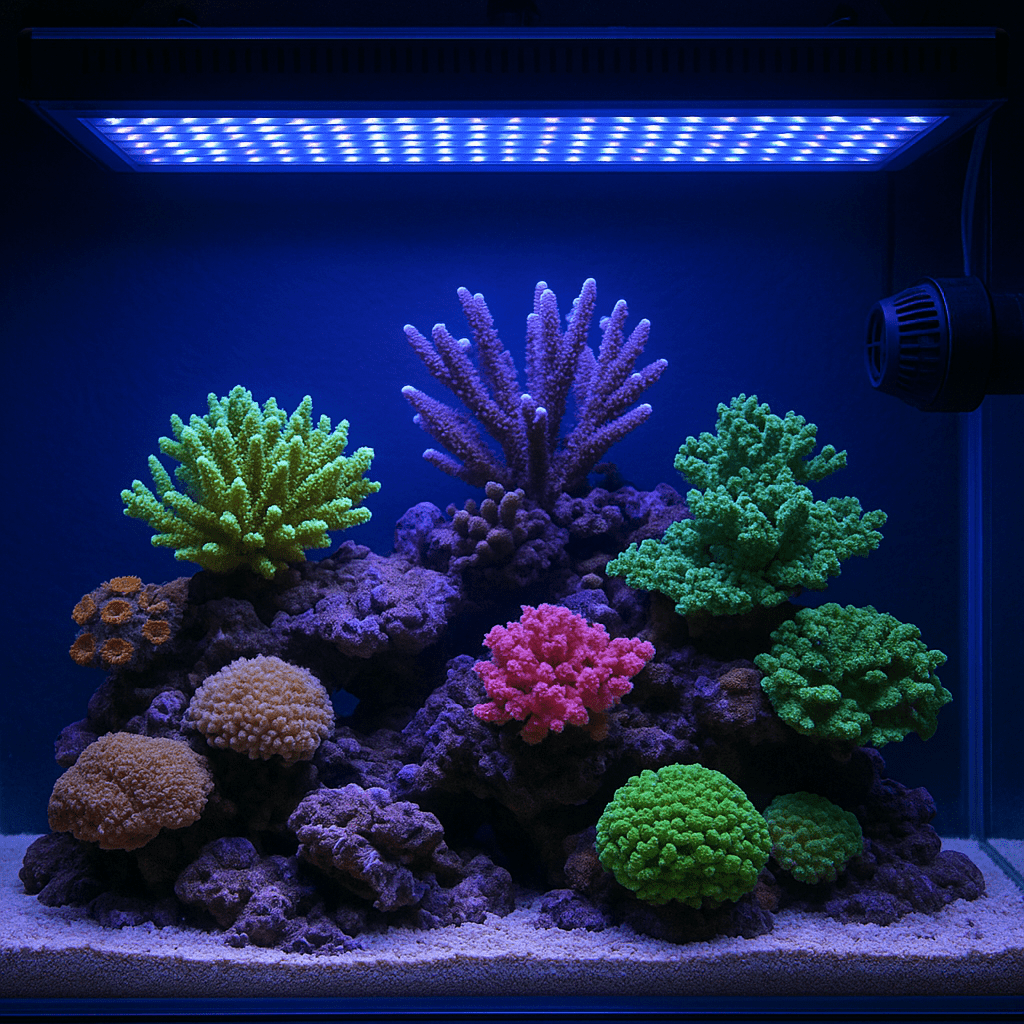
Reef algae control starts with balance. Most algae problems come from excess nutrients, weak export, old maintenance habits, or unstable tank conditions. The good news is that nearly every outbreak can be managed. You need the right diagnosis, a simple plan, and steady follow-through.
In this guide, you will learn how to identify common reef algae, what causes it, and how to remove it without harming corals. We will cover nutrient control, lighting, flow, cleanup crews, refugiums, and practical troubleshooting. The goal is not a sterile tank. The goal is a stable reef where nuisance algae stays under control.
Quick Reference Table
| Issue | Likely Cause | Best First Step | Helpful Long-Term Fix |
|---|---|---|---|
| Green hair algae | High nitrate or phosphate | Manual removal | Improve export and reduce feeding waste |
| Bubble algae | Stored nutrients in rock | Careful hand removal | Stable nutrients and strong husbandry |
| Film algae on glass | Normal nutrient buildup | Scrape glass often | Adjust photoperiod and export |
| Cyanobacteria | Low flow and imbalance | Siphon mats out | Increase flow and stabilize nutrients |
| Dinoflagellates | Ultra-low nutrients and instability | Confirm ID first | Raise nutrients carefully and improve biodiversity |
| Brown diatoms | New tank phase or silicates | Wait and clean lightly | Use good source water and patience |
Use this table as a starting point. Algae control works best when you match the solution to the exact problem. Treating every outbreak the same way often makes things worse.
Why Reef Tanks Grow Algae
Algae is normal in every reef aquarium. It uses light, nutrients, and available surface area to grow. A little algae is expected. Heavy algae means something in the system favors it over corals and beneficial microbes.
The main drivers are nitrate, phosphate, trapped detritus, and long photoperiods. Weak flow also plays a role. So does poor source water. Many hobbyists overfeed fish, skip filter maintenance, or let waste collect in low-flow areas. That creates a steady fuel source for nuisance growth.
Some outbreaks happen in new tanks. This is part of normal maturation. Dry rock systems often go through ugly phases. They can cycle through diatoms, film algae, cyanobacteria, and hair algae before stabilizing. Patience matters here. Do not chase every change with harsh chemicals.
Your first job is simple. Identify the algae. Your second job is to remove the cause. If you only kill the visible growth, it usually returns.
Common Types of Reef Algae and Look-Alikes
Green hair algae is one of the most common problems. It forms soft green strands on rock, pumps, and frag plugs. It thrives when phosphate and nitrate stay available. It also loves trapped detritus.
Bubble algae appears as shiny green bubbles. It often grows in cracks and shaded areas. It can spread fast in tanks with nutrient-rich rock. Manual removal helps, but rough handling can leave fragments behind.
Film algae is the thin green or brown layer on glass. This is common and manageable. Fast buildup can signal excess nutrients or too much light.
Cyanobacteria is not true algae. It forms red, maroon, dark green, or black slimy sheets. It traps bubbles and peels off in mats. It often appears in low-flow areas.
Dinoflagellates are another look-alike. They can form brown strings with bubbles and often return hours after cleaning. Many bloom in tanks with very low measurable nutrients. Correct identification matters because standard algae advice can worsen dinos.
Step-by-Step Reef Algae Control Plan
Start with source water. Use zero-TDS RO/DI water if possible. Poor source water adds phosphate, nitrate, and silicates. That feeds future outbreaks before they even enter the tank.
Next, test nitrate and phosphate. Do not guess. Aim for stable, reasonable levels. Many mixed reefs do well with nitrate around 2 to 15 ppm and phosphate around 0.03 to 0.10 ppm. Exact numbers vary, but stability matters most.
Then remove as much algae as possible by hand. Pull hair algae during water changes. Scrub removable rocks in old saltwater. Siphon cyanobacteria mats. Clean the glass often. Physical removal reduces the nutrient mass inside the tank.
After that, improve export. Empty and clean the skimmer cup. Replace or rinse filter socks often. Vacuum detritus from the sump. Increase water changes if needed. Add or tune a refugium if your system supports one.
Finally, adjust inputs. Feed smaller portions. Rinse frozen foods if they are messy. Avoid adding more fish food than your export can handle. Small corrections work better than dramatic swings.
Natural Habitat and What It Teaches Us
On wild reefs, algae is always present. It grows on rock, rubble, and shallow reef flats. Yet it rarely covers healthy coral colonies for long. That is because natural reefs have strong herbivory, heavy water movement, and constant nutrient processing.
Tangs, rabbitfish, blennies, urchins, snails, and countless tiny grazers crop algae every day. Waves and currents keep waste suspended. Bacteria and other microbes break down organics quickly. Corals also compete for space and light.
Our tanks lack that scale and diversity. Many are overfed and undergrazed. Some have beautiful lighting but weak export. Others have strong skimmers but not enough biodiversity. The lesson is clear. Reef algae control is not about one magic product. It is about building a system that behaves more like a reef.
When you improve flow, maintain nutrients, and use herbivores wisely, you copy nature’s checks and balances. That approach lasts longer than quick fixes.
Aquarium Setup for Better Algae Prevention
Good reef setup prevents many algae problems before they start. Begin with enough flow for your tank size and coral type. Dead spots collect detritus. Detritus becomes nitrate and phosphate over time.
Aquascaping matters too. Avoid rock piles packed too tightly. Leave room around and behind the structure. This helps pumps move waste into filtration instead of letting it rot in hidden pockets.
Use mechanical filtration correctly. Filter socks and floss work well, but only if changed often. Dirty media can become a nutrient factory. Protein skimmers help remove dissolved organics before they break down. Refugiums add extra export and support microfauna.
If you use dry rock, expect a longer ugly phase. Mature live rock often stabilizes faster because it carries more biodiversity. Quarantine and inspection also help. Many nuisance algae and pests arrive on coral plugs and frag racks. Clean or replace plugs when practical.
A stable setup makes every future algae battle easier to win.
Lighting Requirements and Algae Growth
Light does not create nutrients, but it drives algae growth when nutrients are available. Many tanks run lights too long. A shorter, more controlled schedule often helps. Most reef tanks do well with a total photoperiod around 8 to 10 hours for main lighting.
Very white spectrums can encourage visible algae on rock and glass. Blue-heavy reef lighting often looks cleaner, though nutrients still matter more than color alone. Sudden intensity changes can stress corals and shift the balance toward nuisance growth.
If algae is severe, reduce intensity modestly or shorten the schedule. Do not black out the tank unless you know the problem. Blackouts may help cyanobacteria in some cases. They rarely solve the root issue on their own. Corals also need consistency.
Clean salt spray and dust from fixtures and covers. Weak, dirty lighting can create uneven hotspots and shaded algae zones. Keep lighting stable while you fix nutrients and export. That produces more reliable results.
Water Flow and Detritus Control
Flow is one of the most overlooked tools in reef algae control. Strong, random flow keeps waste suspended so filtration can remove it. Weak flow lets food and fish waste settle into rockwork and sand.
Cyanobacteria especially loves low-flow areas. If you see slime in the same corner each week, that spot needs attention. Reposition powerheads. Aim one pump behind the rockwork if possible. Watch how food particles move through the tank.
Do not create a sandstorm. The goal is broad movement, not constant blasting. LPS corals often prefer gentler indirect flow. SPS corals usually need more turbulence. Adjust around your livestock while keeping debris from settling.
Turkey basters and small powerheads help during maintenance. Blow detritus from the rocks before a water change. Let the filtration catch it or siphon it out. This simple habit can reduce algae fuel dramatically over time.
Feeding, Nutrients, and Cleanup Crews
Feeding is often the hidden cause of algae. Fish need regular nutrition, but extra food becomes waste fast. Feed what your fish can consume quickly. Spread feedings out if needed. Target feeding corals can also add nutrients if done heavily.
Cleanup crews help, but they are not a cure. Snails, hermits, urchins, tangs, blennies, and rabbitfish all have roles. Trochus snails are excellent for film algae. Tuxedo urchins can mow down some growth on rock. Lawnmower blennies may graze soft algae. Tangs help in larger tanks.
Choose herbivores that fit your tank size and livestock. Do not overload the tank with cleaners if little food exists. Many cleanup crew losses happen from starvation after the visible algae declines.
Balanced nutrients are important. Ultra-low nutrients can stress corals and trigger dinoflagellates. Excess nutrients fuel hair algae and film algae. Aim for measurable but controlled levels. That usually supports corals better than chasing zeros.
Compatibility With Fish, Corals, and Invertebrates
Most algae control methods are reef-safe when used carefully. Manual removal, better export, stronger flow, and adjusted feeding rarely cause compatibility issues. Herbivores need more thought.
Tangs need swimming room and oxygen-rich water. Rabbitfish are useful grazers, but some have venomous spines. Urchins can knock over frags and carry loose items. Hermit crabs may bother snails for shells. Some blennies ignore algae once they discover prepared foods.
Chemical algae treatments can affect oxygen levels, bacteria, or sensitive invertebrates if misused. Always research the exact product and problem first. Never treat blindly. Corals already stressed by unstable alkalinity, heat, or pests may react poorly to sudden changes.
The safest path is gradual correction. Build a cleanup crew that matches the tank. Keep corals stable. Let fish and invertebrates support your husbandry instead of replacing it.
Common Problems
Why does algae keep coming back after I remove it?
Because the fuel source remains. Manual removal only handles the symptom. Test nutrients, inspect flow, clean detritus traps, and review feeding. Also check your source water. Recurring algae usually points to an unresolved input or export problem.
Why do I have algae if my test kits read zero?
Algae may be consuming nutrients as fast as they appear. That can make test results look low. The tank can still be nutrient rich at the surfaces where algae grows. In this case, visible algae is part of the evidence.
Should I use phosphate remover or carbon dosing?
These tools can help, but they require care. GFO can lower phosphate effectively. Carbon dosing can reduce nitrate and phosphate through bacterial growth. Both can cause instability if used too aggressively. Start slowly and monitor results.
Can I solve reef algae with a blackout?
Usually not by itself. A blackout may weaken some outbreaks, especially cyanobacteria. It does not remove trapped waste, poor source water, or overfeeding. Use it only as a supporting tool, not the main plan.
Frequently Asked Questions
How long does it take to control reef algae?
Minor issues may improve in two weeks. Established outbreaks often take one to two months. Tanks with dry rock can take longer. Consistency matters more than speed.
Is some algae normal in a reef tank?
Yes. A little film algae and occasional patches are normal. The goal is control, not perfection. Healthy reefs still contain algae.
What is the best cleanup crew for algae?
There is no single best crew. Trochus snails, turbo snails, urchins, and selected herbivorous fish all help. Match the crew to the algae type and tank size.
Should nitrate and phosphate be zero?
No. Many reef tanks perform poorly at true zero. Corals need stable, available nutrients. Very low nutrients can invite dinoflagellates and pale coral color.
Do refugiums help with algae control?
Yes, when sized and maintained well. A refugium can export nutrients and support pods and other life. It works best as part of a full nutrient management plan.
Final Tips for Long-Term Success
Reef algae control rewards patience. Make one or two changes at a time. Track test results. Watch how your tank responds. Stable habits beat panic every time.
Clean detritus before it breaks down. Feed with purpose. Use herbivores wisely. Keep nutrients measurable but controlled. Most important, identify the problem before treating it. That is how you protect corals while bringing the tank back into balance.
Helpful reading: reef tank water parameters, best cleanup crew for reef tank, reef tank lighting guide, how to lower phosphate in a reef tank, refugium for reef tank.
Was this helpful?
Related Posts
Juvenile Orange Shoulder (acanthurus Olivaceus)
Juvenile orange shoulder tangs are bright, hardy, and reef safe, but they grow large and need a spacious…
 By
ByBest Filtration Systems
Best Filtration Systems for a Healthy Saltwater Aquarium Choosing the best filtration system for your saltwater aquarium is…
[favorite_button]
My Bookmarks:
To see full list click here
[user_favorites user_id="" include_links="true" site_id="" post_types="" include_thumbnails="true" thumbnail_size="thumbnail" include_excerpt="false"]