

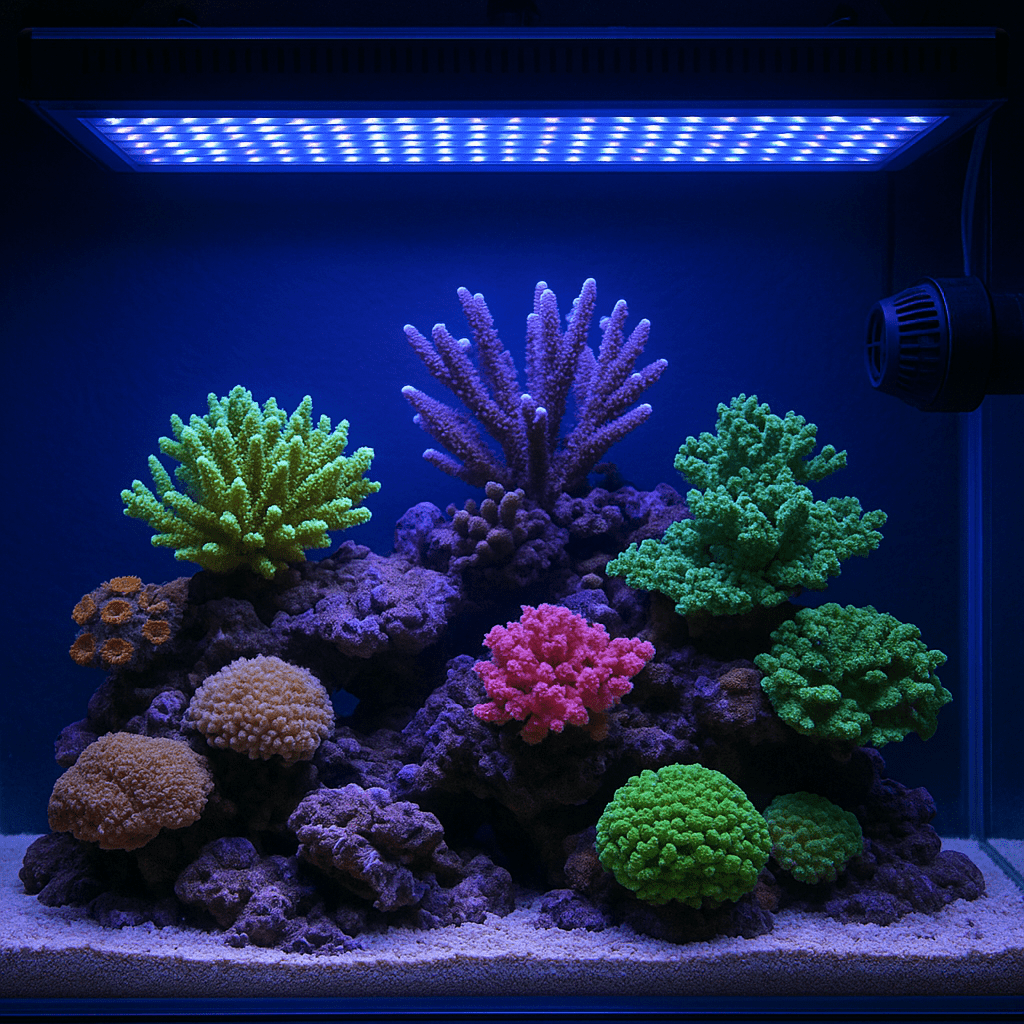
Coral problems usually trace back to a few core issues. Light, flow, nutrients, pests, and unstable chemistry cause most setbacks. This guide helps you spot common warning signs, match them to likely causes, and make practical corrections before minor stress becomes coral loss.
Coral care can feel confusing, especially when a healthy colony suddenly closes, fades, or recedes. Many symptoms look similar at first. A bleaching acropora, a shrinking zoanthid colony, and a receding torch coral may all point to very different problems. The key is to troubleshoot in a calm, organized way. In this article, you will learn how to read coral behavior, test the right water parameters, evaluate lighting and flow, and fix the most common reef tank mistakes. You will also find a quick reference table, step-by-step troubleshooting process, and answers to frequent reef hobby questions.
Quick Reference Table
| Symptom | Likely Causes | First Actions |
|---|---|---|
| Coral bleaching | Too much light, heat, alkalinity swings | Check PAR, temperature, and alkalinity stability |
| Tissue recession | Low flow, pests, bacterial stress, parameter swings | Inspect tissue line, test alkalinity, increase observation |
| Brown coral color | High nutrients, weak light | Test nitrate and phosphate, review lighting schedule |
| Closed polyps | Flow irritation, pests, fish picking, recent stress | Inspect for pests, adjust flow, watch tankmates |
| Slow growth | Low nutrients, low calcium, low alkalinity, weak light | Test calcium, alkalinity, magnesium, nitrate, phosphate |
| Algae on coral base | Dead spots, recession, excess nutrients | Improve flow, remove algae, address root cause |
Use this table as a starting point only. Coral symptoms overlap often. Always confirm with testing and close observation before making major changes.
How to Troubleshoot Coral Problems Step by Step
Start with the simplest rule. Do not make several big changes at once. Rapid corrections can stress corals further. Instead, work through a short checklist and record what you find.
- Observe the coral closely. Note color, tissue condition, polyp extension, and slime production.
- Check nearby corals. A tank-wide issue often points to chemistry or temperature.
- Test key parameters. Focus on temperature, salinity, alkalinity, calcium, magnesium, nitrate, and phosphate.
- Review recent changes. New lights, new salt mix, dosing errors, or new livestock matter.
- Inspect for pests. Look for flatworms, nudibranchs, red bugs, vermetid snails, and algae irritation.
- Evaluate placement. Corals may be getting too much flow or too little light.
- Correct one main issue first. Then give the coral time to respond.
This method prevents guesswork. It also helps you avoid chasing numbers. Stability matters more than perfection in most reef tanks. If your alkalinity is acceptable but swinging daily, that instability can hurt coral more than a slightly off target value. The same applies to salinity and temperature. Corals tolerate many conditions better when those conditions stay steady.
Water Chemistry Problems
Water chemistry is the first place to look when several corals decline at once. Sudden alkalinity swings are a common trigger. SPS corals often react first. You may see burnt tips, pale tissue, or rapid recession. LPS corals may stay inflated less often. Soft corals may remain closed for days.
Keep salinity stable around 1.025 to 1.026 specific gravity. Aim for temperature stability between 76 and 79 degrees Fahrenheit. Avoid daily swings over one degree if possible. Alkalinity should remain consistent. Many hobbyists keep it between 7.5 and 9 dKH. Calcium often does well around 400 to 450 ppm. Magnesium usually stays stable near 1250 to 1400 ppm.
Nutrients also matter. Ultra-low nutrients can starve some corals. Excess nutrients can darken tissue and slow calcification. Many mixed reefs do well with nitrate between 2 and 15 ppm and phosphate between 0.03 and 0.1 ppm. Sudden nutrient drops can shock corals. This often happens after aggressive media use, oversized skimmers, or heavy bacterial dosing.
Lighting Requirements and Light Stress
Lighting problems are extremely common. Corals can bleach from too much light. They can also brown out under weak light. The challenge is that both issues may develop slowly. Hobbyists often raise intensity too fast after buying new lights or moving corals higher.
Use PAR values when possible. Soft corals and many zoanthids often thrive in lower to moderate PAR. Many LPS corals prefer moderate PAR. Most SPS corals need moderate to high PAR, depending on species. Acclimation is critical. Increase intensity slowly over two to four weeks. Use a built-in acclimation mode if your fixture offers one.
Watch for signs of light stress. Bleaching on upper surfaces suggests excessive light. Stretching, dull color, and weak growth suggest too little light. Also review spectrum and photoperiod. A long schedule can stress corals even when peak intensity seems reasonable. In many tanks, eight to ten hours of full lighting is enough. For more help, see reef tank lighting guide and PAR for corals.
Water Flow and Placement Issues
Flow keeps corals clean. It delivers oxygen and food. It also removes waste and mucus. Poor flow creates dead spots where detritus settles. Excess flow can tear tissue or prevent polyp extension. The right pattern depends on the coral.
SPS corals usually prefer strong, random flow. LPS corals often prefer moderate, indirect movement. Soft corals vary, but many enjoy moderate, varied flow. A torch coral blasted by direct flow may stay retracted. An acropora in stagnant water may lose color and collect film algae at the base.
Check how the coral moves. Gentle swaying is usually good for fleshy LPS. Violent whipping is not. Tissue should not fold sharply against skeleton. If detritus collects around the coral, increase flow or change the pump angle. Repositioning a coral by a few inches can make a major difference. Learn more in reef tank flow basics.
Feeding and Nutrient Balance
Corals rely on both light and nutrition. Many hobbyists underfeed their reef, especially after hearing that low nutrients are always better. In reality, corals need available nitrogen and phosphorus. Many also benefit from direct feeding, though not every coral requires it.
LPS corals often respond well to occasional target feeding. Small meaty foods work well. Zoanthids and soft corals usually depend more on dissolved nutrients and suspended food. SPS corals can benefit from fish waste, amino acids, and planktonic foods, but overdoing supplements can cloud the water and fuel algae.
If corals look pale and growth stalls, test nitrate and phosphate before adding more bottled products. If nutrients are near zero, feed fish more consistently or reduce export slightly. If nutrients are very high, improve husbandry first. Clean filters, siphon detritus, and review feeding habits. For deeper coverage, visit reef tank nutrients.
Compatibility Problems in the Reef Tank
Not every coral issue comes from chemistry. Sometimes another animal is the problem. Angelfish, butterflyfish, some wrasses, and even certain clownfish may irritate corals. Crabs can pick at tissue. Peppermint shrimp may steal food from LPS corals. Nearby corals may also sting each other at night.
Look for sweepers on euphyllia, galaxea, and other aggressive corals. Check spacing after lights out with a flashlight. Chemical warfare can also affect soft coral and LPS mixes. Running fresh carbon often helps in mixed reefs. If one coral stays closed while neighbors look fine, watch for fish nipping or hidden invertebrate irritation.
Coral placement is part of compatibility. Give aggressive species room. Avoid packing new frags too tightly. If a coral improves after moving away from a neighbor, stinging was likely involved. Quarantine and observation help prevent many avoidable problems.
Common Problems
Why Is My Coral Bleaching?
Bleaching means the coral has lost much of its color. This usually happens from light shock, heat stress, or sudden chemistry changes. Test temperature first. Then review recent light increases. Check alkalinity logs if you dose daily. Lower stress by stabilizing conditions. Reduce light intensity if needed. Avoid moving the coral repeatedly.
Why Is My Coral Turning Brown?
Brown coral often points to elevated nutrients or insufficient light. Zooxanthellae density increases, which darkens the coral. Test nitrate and phosphate. Review bulb age or LED settings. Improve export slowly if nutrients are high. Increase light only after confirming the coral can handle it.
Why Are My Zoanthids Closed?
Closed zoanthids may be reacting to pests, detritus, unstable parameters, or irritation from flow. Inspect for nudibranchs, sundial snails, and spider-like pests. Blow debris off the colony with a turkey baster. Check alkalinity and salinity. Also make sure hermits or fish are not disturbing the polyps.
Why Is My LPS Coral Receding?
LPS recession often starts with tissue damage near the skeleton. Common causes include direct flow, brown jelly infection, low alkalinity, or aggression from neighbors. Isolate the coral if infection appears. Increase observation. Improve water quality and flow placement. Fragging healthy heads may save part of the colony in severe cases.
Why Is My SPS Losing Tissue From the Base?
Base recession often points to low flow, pest pressure, shading, or unstable alkalinity. Inspect for acropora-eating flatworms or red bugs if acropora are affected. Increase random flow around the colony base. Keep alkalinity stable. Remove algae and detritus from surrounding rockwork.
Propagation and Fragging Recovery Tips
When Fragging Helps
Fragging can save a coral when recession is spreading. This works best when healthy tissue remains. Cut well above damaged areas. Use clean tools and iodine-based dips when appropriate. Mount frags in stable, moderate flow.
How to Support Recovery
Keep conditions stable after fragging. Avoid heavy handling. Moderate light is often safer than intense light during recovery. Watch for infection, algae growth, or continued tissue loss. Healthy frags usually show extension before they show strong growth.
Frequently Asked Questions
How long should I wait after making a coral correction?
Wait several days to two weeks in most cases. Corals respond slowly. Avoid stacking new changes too quickly.
Should I dip a stressed coral?
Only if pests or infection are likely. Dips add stress. Do not dip without a clear reason.
Can perfect test numbers still lead to coral problems?
Yes. Stability, flow, pests, and lighting still matter. Good numbers do not rule out placement issues.
Is chasing ultra-low nutrients good for coral color?
Not always. Very low nutrients can pale corals and slow growth. Balanced nutrients usually work better.
What is the best first test when a coral looks bad?
Check temperature and salinity first. Then test alkalinity. Those three reveal many hidden problems fast.
Successful coral care comes from pattern recognition and patience. Most reef problems are fixable when caught early. Observe closely, test carefully, and correct slowly. That steady approach protects your corals and builds long-term reef keeping confidence.
Was this helpful?
Related Posts
Reef Tank Plumbing Basics
Learn reef tank plumbing basics, including drains, return pumps, sump flow, noise control, and flood prevention for a…
 By
ByOur Reef Emergency Plan
A reef emergency plan helps you act fast during outages, leaks, and water quality crashes. Here is the…
[favorite_button]
My Bookmarks:
To see full list click here
[user_favorites user_id="" include_links="true" site_id="" post_types="" include_thumbnails="true" thumbnail_size="thumbnail" include_excerpt="false"]