
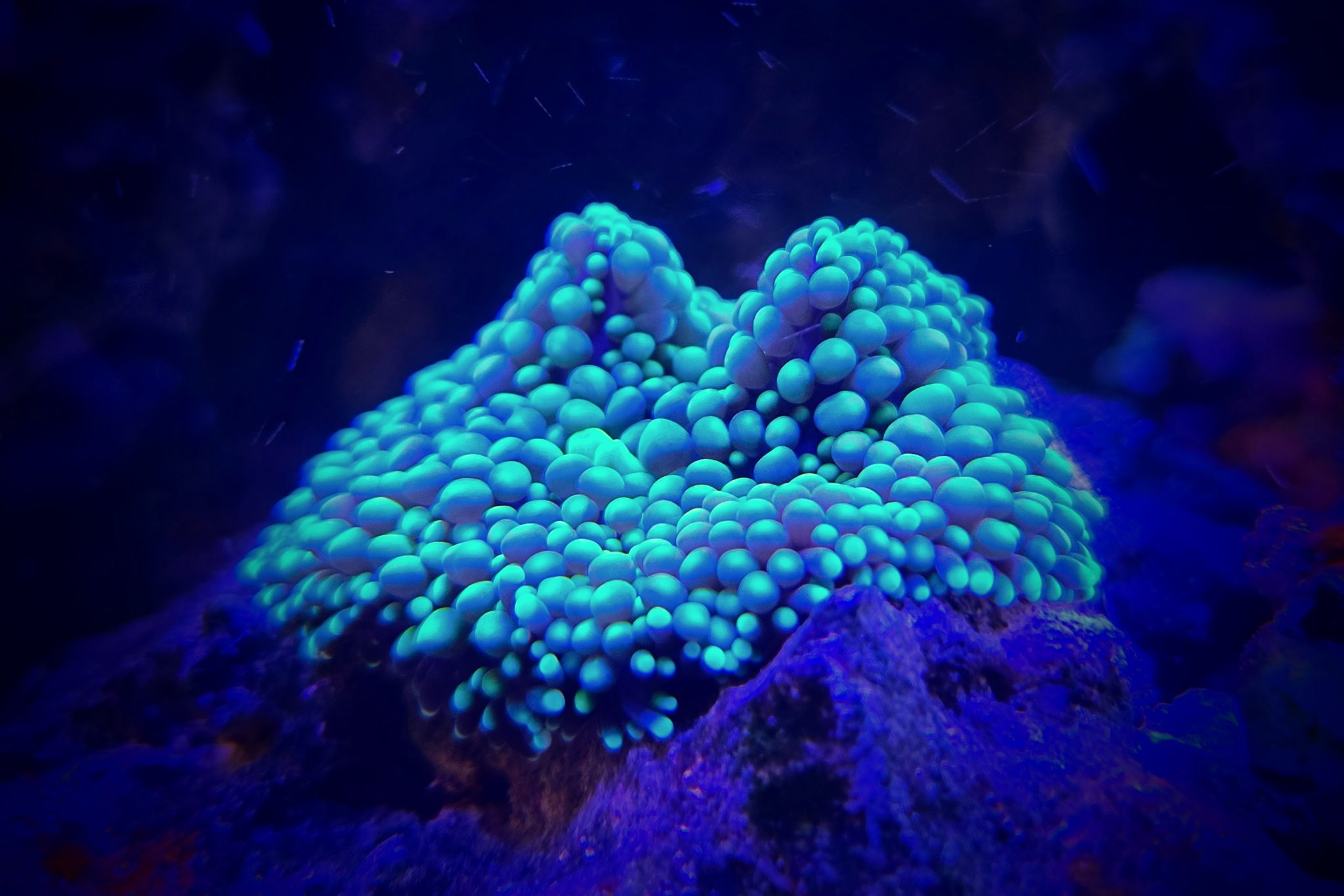
Growing coral in a small reef tank is absolutely possible. The key is stability, not size. Keep water parameters steady, match coral choices to your tank, and avoid fast changes. When a nano reef stays consistent, many soft corals, LPS, and even some easier SPS can grow well.
Small reef tanks are rewarding, but they magnify mistakes. A little extra food, a missed top off, or one bad equipment choice can affect coral growth fast. That is why nano reef success depends on simple systems, strong habits, and careful stocking. In this guide, you will learn how to improve coral growth in small reef tanks with better lighting, flow, feeding, chemistry, placement, and maintenance. You will also learn which problems slow growth and how to fix them before corals decline.
Quick Reference for Better Coral Growth
| Factor | Best Practice | Why It Matters |
|---|---|---|
| Tank stability | Keep salinity, alkalinity, and temperature steady | Corals grow best without sudden swings |
| Lighting | Match PAR to coral type | Too little slows growth, too much causes stress |
| Flow | Use random, indirect flow | Helps gas exchange and waste removal |
| Nutrients | Maintain measurable nitrate and phosphate | Ultra-low nutrients can starve corals |
| Feeding | Feed fish and corals in moderation | Supports tissue growth and coloration |
| Water changes | Perform small, regular changes | Replaces trace elements and limits buildup |
| Coral placement | Place according to light and flow needs | Prevents stress and poor extension |
| Stocking | Avoid overcrowding | Reduces chemical warfare and instability |
Why Coral Growth Can Be Harder in Small Reef Tanks
Small tanks change fast. That is the biggest challenge. In a large reef, a small dosing error may barely register. In a nano tank, the same error can swing alkalinity hard. Corals react to those shifts quickly. Growth slows first. Tissue recession may follow.
Evaporation is another major issue. In a small aquarium, even a little evaporation raises salinity. Corals dislike that instability. An auto top off system helps a lot. It is one of the best upgrades for a small reef.
Space also creates limits. Corals compete more aggressively in compact aquascapes. Sweeper tentacles, shading, and chemical warfare can all reduce growth. This is common with LPS and soft corals. Good spacing matters more than many hobbyists expect.
Still, small tanks have one big advantage. They are easier to observe closely. You can spot early stress, adjust placement, and fine tune husbandry faster. If you keep the system stable, a small reef can grow coral very well.
Choose Corals That Fit a Nano Reef
Coral growth starts with coral selection. Not every coral is ideal for a small tank. Fast growers can quickly crowd the aquascape. Aggressive species can sting neighbors. Delicate SPS may struggle in tanks with unstable chemistry.
For beginners, soft corals and many LPS are the safest place to start. Zoanthids, mushrooms, leathers, candy canes, blastomussa, and many euphyllia can do well in small systems. These corals tolerate minor variation better than demanding SPS.
If your tank is mature and stable, you can try easier SPS. Birdsnest, montipora, and some stylophora often adapt well. They still need stable alkalinity, calcium, and light. Do not add them too early.
Think about final size, not frag size. A tiny frag can become a large colony. Leave room for growth and maintenance. A small reef looks better when each coral has space to expand naturally.
Helpful reading: best beginner corals for nano reefs, how to place corals in a reef tank.
Lighting Requirements for Faster Coral Growth
Light drives photosynthesis. Without enough light, coral growth stays slow. With too much light, corals bleach or remain retracted. The goal is the right intensity for each coral type.
Soft corals often grow well in lower to moderate light. Many LPS prefer moderate light. Easier SPS usually need moderate to high light. In practical terms, many nano reefs succeed with PAR around 50 to 100 for low-light corals, 75 to 150 for LPS, and 150 to 250 for easier SPS.
Use a quality reef light with a stable schedule. Aim for eight to ten hours of full lighting. Avoid changing intensity often. Corals need time to adapt. If you upgrade lighting, acclimate slowly over several weeks.
Mounting height matters too. Small tanks can create hotspots. A powerful light placed too close can burn upper corals while lower corals stay shaded. Spread and balance are more important than raw power.
Helpful reading: reef tank lighting guide.
Water Flow: The Secret to Healthier Tissue and Better Growth
Many hobbyists focus on lighting first. Flow deserves equal attention. Corals need moving water to bring oxygen and nutrients. Flow also removes waste and mucus from the colony surface.
In a small reef, direct flow can be too harsh. A single powerhead pointed at a coral may keep polyps closed all day. Instead, aim for broad, indirect, and random flow. The coral should sway or pulse gently, not fold over or strip tissue.
LPS usually prefer moderate, indirect flow. Soft corals enjoy moderate, varied movement. SPS often need stronger, turbulent flow. Even then, avoid blasting one side constantly. Dead spots are also a problem. Detritus buildup around the base of a coral can reduce health over time.
If your tank only has one pump, use rockwork to diffuse the stream. Better yet, use controllable flow if your budget allows. Small changes in pump angle can make a big difference in coral extension.
Water Chemistry That Supports Coral Growth
Stable chemistry grows coral faster than chasing perfect numbers. In small tanks, consistency wins. Corals use alkalinity, calcium, and magnesium to build skeleton. They also need stable salinity and temperature.
A good target range for many mixed reefs is salinity 1.025 to 1.026, temperature 77 to 79 degrees Fahrenheit, alkalinity 8 to 9 dKH, calcium 400 to 450 ppm, and magnesium 1250 to 1400 ppm. Nitrate and phosphate should not be zero. Corals often grow better with nitrate around 2 to 15 ppm and phosphate around 0.03 to 0.10 ppm.
Test alkalinity often. In a small reef, it can drop faster than expected once stony corals begin growing. If consumption rises, water changes alone may not keep up. That is when simple dosing becomes useful.
Do not make large corrections quickly. Rapid swings stress coral more than slightly imperfect numbers. Slow adjustments are safer and usually more successful.
Helpful reading: reef tank alkalinity guide, how to lower phosphate in a reef tank.
Feeding Corals in a Small Reef Tank
Corals need more than light. Many benefit from feeding. This is especially true for LPS and some soft corals. Fish feeding also helps. Waste from fish and leftover fine particles can support coral nutrition in a healthy reef.
Feed lightly and consistently. Overfeeding is risky in nano tanks. Nutrients can spike fast. Start with small amounts of frozen food, reef roids, phytoplankton, or target-fed coral foods based on the species you keep. Watch your nitrate and phosphate after feeding changes.
LPS corals like acans, blastos, and candy canes often respond well to direct feeding once or twice weekly. Zoanthids and mushrooms usually rely more on dissolved nutrients and light. SPS can benefit from stable nutrients and fine suspended foods, but they do not need heavy target feeding.
A healthy fish population can improve coral growth too. Fish add nutrients naturally. The trick is balance. Too few nutrients can pale corals. Too many can fuel algae and reduce growth.
Step-by-Step Plan to Improve Coral Growth
Use this simple process if your corals are alive but not growing.
- Test salinity, temperature, alkalinity, calcium, magnesium, nitrate, and phosphate.
- Fix any major instability first. Do not chase minor perfection.
- Check lighting intensity and photoperiod. Adjust only if clearly too low or too high.
- Observe flow around each coral. Reposition pumps to remove dead spots.
- Move corals only when placement is obviously wrong.
- Feed fish consistently and feed select corals lightly once or twice weekly.
- Perform small weekly water changes. Ten percent works well for many nano reefs.
- Track coral response for two to four weeks before making more changes.
This slow approach works better than changing everything at once. Coral growth often improves after stability returns.
Compatibility and Space Management
Compatibility affects growth more than many hobbyists realize. In a small tank, corals can sting each other, shade each other, and release chemicals into the water. Soft corals and LPS are common offenders.
Leave room between colonies. Euphyllia, galaxea, favia, and other aggressive corals need extra space for sweepers. Fast-growing soft corals can overrun slower species. Mushrooms can spread into areas meant for LPS or SPS.
Fish compatibility matters too. Some fish nip coral tissue. Others stir sand onto low corals. Invertebrates can also cause issues. Large hermits may knock over frags. Urchins can bulldoze unsecured pieces. Good placement and secure mounting help prevent these problems.
If you run a mixed reef, use carbon and maintain strong husbandry. This can reduce chemical warfare. It will not eliminate aggression, but it often helps corals coexist better in smaller water volumes.
Common Problems
Why are my corals alive but not growing?
This usually points to weak light, unstable alkalinity, low nutrients, or poor flow. Corals can survive in suboptimal conditions for a long time. They just do not thrive. Test your parameters, review placement, and make one change at a time.
Why did coral growth stop after doing well?
Consumption may have increased as corals grew. Alkalinity often starts dropping faster in maturing tanks. Bulbs or lenses may also have aged. Pumps can clog and reduce flow. Recheck your equipment before assuming the coral is the problem.
Can low nutrients slow coral growth?
Yes. Corals need some nitrate and phosphate. Ultra-clean tanks can produce pale tissue and stalled growth. If both are unreadable, feed a bit more, reduce export slightly, and watch for improvement over time.
Why are corals browning in a nano reef?
Browning often suggests excess nutrients, weak light, or both. It can also happen during acclimation. Improve export gently, confirm PAR, and avoid sudden lighting increases that can shock the coral.
Why do coral frags struggle in small tanks?
Fresh frags are sensitive to swings. They also need time to encrust before visible growth begins. Keep them stable, avoid moving them repeatedly, and resist the urge to overcorrect every small change.
Frequently Asked Questions
What is the best coral for growth in a small tank?
Zoanthids, mushrooms, green star polyps, candy canes, and many leathers grow well in stable nano reefs. Choose species that match your lighting and flow.
How often should I dose a small reef tank?
Only dose when testing shows a real need. Many new nano reefs do fine with water changes alone. As stony coral growth increases, daily dosing may become necessary.
Do corals grow faster with more light?
Not always. More light can help only if the coral needs it. Too much light causes stress and can reduce growth. Match intensity to the species.
Is a protein skimmer necessary for coral growth in a nano reef?
No. Many small tanks grow coral well without one. Regular water changes, smart feeding, and stable parameters matter more. A skimmer can help if nutrients stay too high.
How long does it take to see coral growth?
Some soft corals grow within weeks. Many LPS take a few months to show clear expansion. SPS often encrust first, then branch later. Patience is part of reef keeping.
Final Thoughts
The best coral growth tips for small reef tanks are simple. Keep the tank stable. Choose the right corals. Match light and flow to each species. Maintain measurable nutrients. Feed with restraint. Make changes slowly. In nano reefs, consistency beats complexity every time. If you build good habits and resist constant tinkering, your corals will reward you with better extension, stronger color, and steady long-term growth.
Was this helpful?
Related Posts
Palytoxin in the Marine Aquarium
Palytoxin in the marine aquarium is a real risk during coral handling. Learn safe practices, warning signs, and…
 By
By
Reef Tank Water Chemistry Basics
Learn reef tank water chemistry basics, including ideal parameters, testing routines, and simple ways to keep corals healthy…
[favorite_button]
My Bookmarks:
To see full list click here
[user_favorites user_id="" include_links="true" site_id="" post_types="" include_thumbnails="true" thumbnail_size="thumbnail" include_excerpt="false"]