

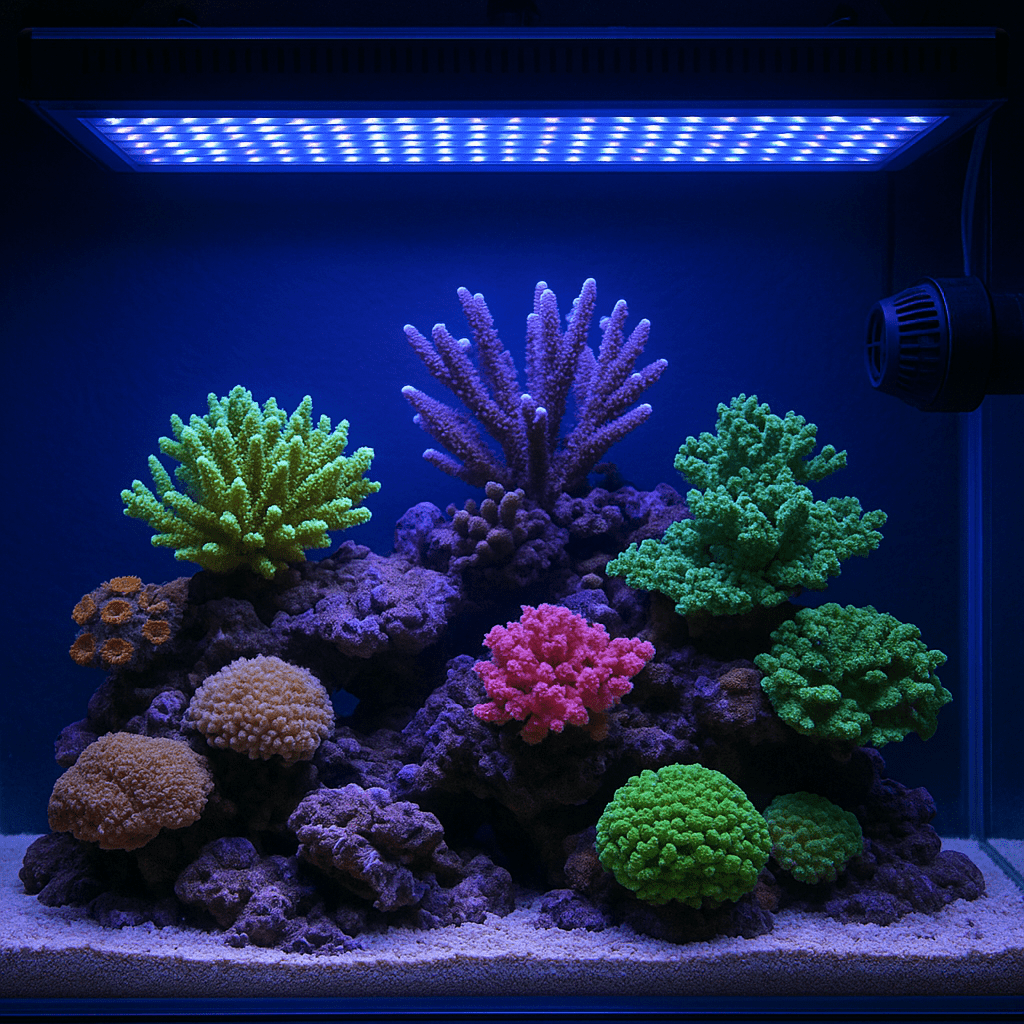
Coral STN, or slow tissue necrosis, is one of the most frustrating problems reef keepers face. Unlike rapid tissue necrosis, STN tends to progress gradually over days or weeks, often starting at the base or along an edge before exposing clean white skeleton. The slower pace can make it harder to notice early, but it also gives you a better chance to correct the cause and save the colony.
In most aquariums, STN is not a single disease. It is usually a stress response linked to instability, poor coral placement, chemical aggression, pests, or a mismatch between lighting, flow, and water chemistry. SPS corals such as Acropora, Montipora, and birdsnest are the most commonly affected, but LPS corals can also develop slow recession under chronic stress.
What coral STN looks like
Slow tissue necrosis typically appears as a steady recession of living tissue from one area of the coral. Common signs include:
- White exposed skeleton at the base, branch tips, or one side of the colony
- Tissue pulling back over several days instead of hours
- Reduced polyp extension
- Faded coloration or dull tissue before recession starts
- Algae beginning to grow on newly exposed skeleton
STN is different from bleaching. A bleached coral still has tissue but has lost much of its zooxanthellae, so it looks pale or bright white while remaining covered. With STN, the tissue is actually gone.
Common causes of slow tissue necrosis
Because coral STN is usually a symptom, successful treatment starts with identifying the most likely stressor. In many tanks, more than one issue is involved.
Parameter instability
Corals tolerate less-than-perfect numbers better than they tolerate constant swings. The biggest triggers are unstable alkalinity, salinity, and temperature.
- Alkalinity swings from inconsistent dosing
- Salinity creep from evaporation or calibration errors
- Temperature swings from undersized heaters or poor controller settings
- Large water changes with mismatched parameters
If your alkalinity moves more than about 0.5 to 1.0 dKH in a short period, sensitive SPS corals may begin to recede. Keeping levels stable is often more important than chasing an exact number.
Lighting stress
Too much light, too little light, or sudden changes in PAR can all contribute to STN. This is especially common after upgrading fixtures, changing schedules, or moving corals higher in the rockwork without acclimation.
If a coral was healthy in lower light and begins receding after a move upward, light shock is a strong possibility. If it has been shaded for a long time, chronic low light may also weaken it.
Improper flow
Dead spots allow detritus to settle and reduce gas exchange around coral tissue. On the other hand, harsh direct flow can damage tissue, especially on delicate branches or fleshy LPS. Corals generally do best with broad, turbulent, changing flow rather than a narrow jet pointed directly at the colony.
Nutrient imbalance
Ultra-low nutrients can starve corals over time, while excessive nutrients can reduce resilience and encourage nuisance algae on damaged areas. A tank with undetectable nitrate and phosphate is not automatically healthy for SPS. Corals need some available nutrients to maintain tissue and color.
As a general target, many successful mixed reefs maintain nitrate in the low single digits to low teens and phosphate at a low but measurable level.
Pests and disease
Acropora-eating flatworms, red bugs, nudibranchs, and bacterial infections can all present as tissue loss. Inspect the coral closely, especially if only one species is affected while others look healthy.
Check for:
- Bite marks or irregular recession patterns
- Egg spirals or clusters on the underside of frags
- Tiny moving pests under blue or white light
- Localized tissue loss on recently added corals
Chemical warfare and aggression
Soft corals and some LPS release compounds that can stress nearby SPS corals, especially in tanks with limited carbon use or low water volume. Sweeper tentacles, mesenterial filaments, and direct contact can also trigger recession.
If STN starts only on the side facing another coral, aggression is worth investigating.
How to diagnose coral STN
Work methodically instead of making several major changes at once. Sudden corrections can create more stress than the original problem.
Start with this checklist:
- Test alkalinity, calcium, magnesium, nitrate, phosphate, salinity, and temperature
- Compare current values to your recent trend, not just one test result
- Review any changes in lighting, dosing, flow, salt mix, or maintenance routine
- Inspect for pests with a flashlight and magnification if possible
- Check for detritus buildup, dead spots, or direct flow damage
- Look for nearby corals that may be stinging or shading the colony
If multiple SPS colonies begin showing STN at the same time, instability is more likely than a single pest issue. If only one coral is affected, placement, pests, or localized aggression may be the real cause.
How to stop slow tissue necrosis
1. Stabilize the basics
Your first goal is stability, not perfection. Correct obvious issues slowly and avoid dramatic swings.
- Keep salinity stable around 1.025 to 1.026 specific gravity
- Maintain temperature around 76 to 79 F with minimal daily fluctuation
- Hold alkalinity consistent, ideally within your normal target range
- Avoid large corrections unless a parameter is dangerously off
2. Adjust placement and flow if needed
If the coral is getting blasted by direct flow or sitting in a stagnant area, reposition it or redirect pumps. If you suspect light shock, move the coral to slightly lower PAR and acclimate it gradually.
Do not keep moving the coral every day. Make one thoughtful adjustment and observe.
3. Remove nearby stressors
Increase spacing from aggressive neighbors and run fresh activated carbon if you suspect chemical warfare. In mixed reefs, carbon and regular water changes can make a noticeable difference.
4. Inspect and dip if pests are suspected
If the affected coral is removable and pests seem likely, a coral dip may help identify or reduce the problem. Follow the dip manufacturer instructions carefully. Dips are useful for many pests but will not fix parameter-related STN by themselves.
5. Frag healthy tissue if recession continues
When STN keeps advancing, fragging healthy sections above the recession line is often the best way to preserve the coral. Cut well into unaffected tissue using clean coral cutters or a saw depending on the species. Mount frags in stable, moderate conditions and monitor them closely.
This approach is especially useful for branching SPS corals where the base is dying but upper branches still have strong color and polyp extension.
Should you dip a coral with STN?
Sometimes, but not automatically. A dip makes sense when:
- You suspect pests
- The coral is newly acquired
- Only one coral is affected and the pattern looks localized
A dip is less likely to help when the real issue is unstable alkalinity, poor flow, or lighting stress. In those cases, dipping may add more stress without addressing the cause.
Can a coral recover from STN?
Yes, if the cause is corrected early. Once tissue is gone, the exposed skeleton will not regrow tissue instantly, but healthy margins can stop receding and eventually encrust over damaged areas. Recovery is usually slow. You may not see obvious improvement for several weeks.
Good signs include:
- No new tissue loss for several days to weeks
- Improved polyp extension
- Better coloration
- Fresh encrusting growth at the base or edges
How to prevent coral STN in the future
Prevention comes down to consistency and observation. Most cases of slow tissue necrosis can be reduced by keeping your system predictable and avoiding sudden changes.
- Test alkalinity regularly, especially in SPS-heavy tanks
- Calibrate refractometers and probes on schedule
- Acclimate corals to new light levels gradually
- Provide random, turbulent flow instead of direct blasting
- Keep nitrate and phosphate low but measurable
- Dip and inspect new corals before adding them
- Use carbon in mixed reefs if soft corals are present
- Watch corals closely after any equipment or dosing change
The most successful reef keepers catch STN early because they notice subtle changes in polyp extension, color, and tissue thickness before a colony declines significantly.
Final thoughts
Coral STN is a warning sign that something in the system is off, even if test results look acceptable at first glance. Instead of searching for a miracle cure, focus on stability, placement, flow, and careful inspection. In many cases, slowing down and correcting one underlying issue is enough to stop the recession and save the coral. If the tissue loss continues, fragging healthy sections can often preserve the colony while you continue troubleshooting the tank.
Was this helpful?
Related Posts
Reef Lighting For Soft Corals
Learn the ideal PAR, spectrum, and photoperiod for reef lighting for soft corals, plus placement and troubleshooting tips.
 By
ByCoral Care Troubleshooting
Learn how to diagnose coral stress, match symptoms to causes, and fix common reef tank problems before they…
[favorite_button]
My Bookmarks:
To see full list click here
[user_favorites user_id="" include_links="true" site_id="" post_types="" include_thumbnails="true" thumbnail_size="thumbnail" include_excerpt="false"]