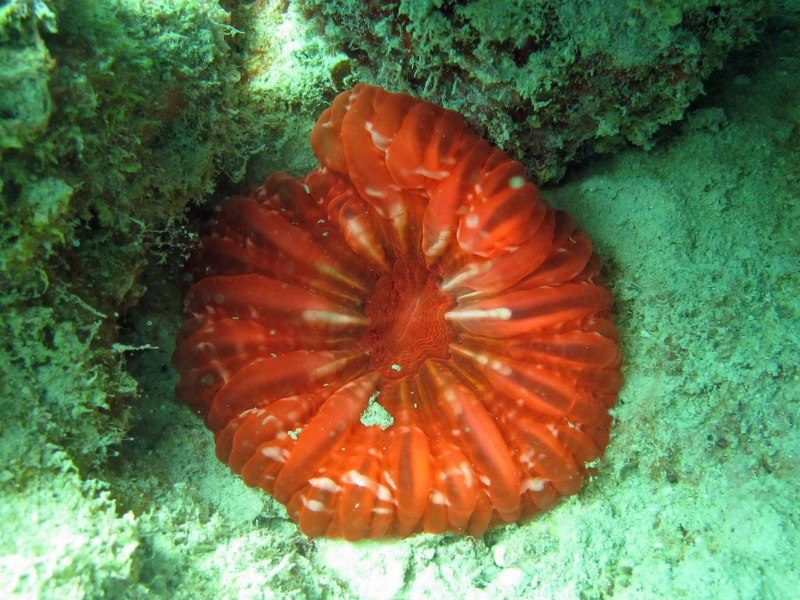
Cynarina corals are showpiece LPS with big, fleshy tissue. They can thrive in mixed reefs when you meet their needs. This guide covers placement, feeding, and common problems.
Tank setup and placement
Cynarina likes stable, mature systems. Aim for at least a 6 month old tank. Keep temperature at 25–26°C (77–79°F). Hold salinity at 1.025–1.026 specific gravity.
Place Cynarina on sand or a low rock shelf. Its tissue can inflate and touch nearby corals. Leave 10–15 cm of space on all sides. Avoid sharp rock edges that can cut the mantle.
Use low to moderate light at first. Target PAR of 50–120 for most specimens. Start lower if it looks pale or shrunken. Increase by 10–15 PAR per week if it stretches upward.
Flow should be low to moderate and indirect. Strong jets can tear tissue and cause recession. You want a gentle sway and light debris lift. If the coral stays tightly closed, reduce flow.
- Suggested parameters: Alk 8–9 dKH, Ca 420–460 ppm, Mg 1300–1400 ppm
- Nutrients: nitrate 5–15 ppm, phosphate 0.03–0.10 ppm
- Placement tip: keep it away from stinging neighbors and urchin paths
For more on building a stable baseline, see reef tank water parameters. If you run a mixed reef, review LPS coral placement guide for spacing rules.
Feeding and daily care
Cynarina can live on light and dissolved nutrients. It still benefits from direct feeding. Feed 1–2 times per week for best growth. Overfeeding can spike nutrients and fuel algae.
Feed after lights dim or during evening. Tentacles often extend more then. Turn off return flow for 10–15 minutes. Use a pipette to place food on the mouth.
Use small, meaty foods that stay put. Good options include mysis, chopped shrimp, and LPS pellets. Pieces should be 5–10 mm for average heads. If it spits food out, reduce size.
Watch for fish and shrimp stealing food. Clownfish can also irritate the tissue. Use a feeding dome if needed. You can cut a plastic bottle to make a simple shield.
- Rinse frozen foods to reduce phosphate input
- Feed smaller portions if nitrate rises above 20 ppm
- Keep a log of feeding, inflation, and color changes
If you want a step-by-step routine, read target feeding LPS corals. It helps you avoid common mess and waste.
Troubleshooting and common mistakes
A healthy Cynarina inflates during the day and shows full tissue. Mild deflation at night is normal. Sudden, repeated deflation often signals stress. Check salinity first, then alkalinity stability.
Tissue recession usually comes from high flow, damage, or pests. Move it to calmer water and soft sand. Inspect for brown jelly and remove infected tissue fast. Run fresh carbon after any treatment.
Bleaching can happen under strong LEDs. Lower PAR by 20–30% and shorten photoperiod. Keep nutrients in the target range. Ultra-low nutrients can starve the coral and fade color.
Swelling with a gaping mouth can mean irritation or poor water quality. Test ammonia and nitrite, which should be zero. Check for stray voltage and aggressive tankmates. Keep alkalinity swings under 0.3 dKH per day.
- Do not place Cynarina on bare rock with high flow
- Do not chase numbers with big dosing changes
- Do quarantine new corals for 14–30 days when possible
Sources: Borneman, E. (2001) Aquarium Corals; Sprung, J. (2002) The Reef Aquarium Vol. 3; Delbeek & Sprung (1994) The Reef Aquarium Vol. 1.
Cynarina corals reward steady care and gentle conditions. Start with low light, calm flow, and stable chemistry. Feed modestly and watch for early stress signs. With patience, they become reliable centerpieces.
Was this helpful?
Related Posts
Protein Skimmer Reef Tank Guide
Learn how a protein skimmer works, how to size one, and how to tune it for a cleaner,…
 By
By
Best Reef Safe Cleanup Crew
The best reef safe cleanup crew includes hardy snails, selective scavengers, and a few specialty invertebrates matched to…