

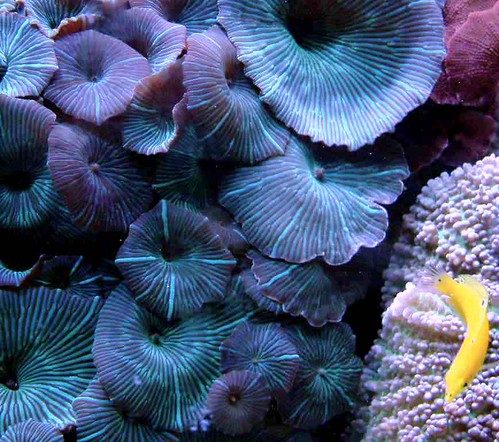
Discosoma mushrooms are among the easiest corals in reef keeping. They tolerate minor mistakes and adapt well to many tanks. Most varieties prefer low to moderate light and gentle flow. Stable water, smart placement, and patience are the keys to long-term success.
For many reef hobbyists, Discosoma mushrooms are the first coral that truly thrives. They come in bright reds, blues, greens, stripes, and speckles. They also stay attractive without demanding intense light or heavy feeding. That makes them ideal for beginners and useful for filling lower-light areas in mixed reefs. In this guide, you will learn how to identify Discosoma mushrooms, where to place them, what water conditions they prefer, how to feed and propagate them, and how to solve common problems before they spread or decline.
Quick Reference Table
| Common Name | Discosoma mushroom coral |
| Scientific Group | Discosoma spp. |
| Care Level | Easy |
| Temperament | Peaceful but can spread |
| Lighting | Low to moderate |
| Water Flow | Low to moderate, indirect |
| Placement | Lower rockwork, shaded ledges, isolated islands |
| Diet | Mostly photosynthetic, occasional fine foods |
| Growth Rate | Moderate to fast in stable tanks |
| Propagation | Splitting, pedal laceration, cutting |
| Best For | Beginner reefs, nano tanks, lower-light zones |
Use this table as a quick care snapshot. The details below will help you avoid the most common mistakes.
What Are Discosoma Mushrooms?
Discosoma mushrooms are soft-bodied corallimorphs. They look like corals, but they are not true stony corals. They have a flat, fleshy disc and a central mouth. Many have smooth surfaces. Others show bumps, streaks, or metallic patterns. Their simple shape is part of their appeal.
These mushrooms are hardy and forgiving. They handle slightly nutrient-rich water better than many SPS corals. They also recover well from mild stress. This is why they are common in beginner tanks. Still, easy care does not mean no care. They can melt under sudden light changes. They can detach in strong flow. They can also overrun nearby rock if left unchecked.
Discosoma are often confused with Rhodactis and Ricordea. In general, Discosoma have a smoother disc and a flatter profile. Rhodactis usually look hairier or more textured. Ricordea have more distinct bubble-like vesicles. Correct identification helps with placement and expectations.
Natural Habitat
Discosoma mushrooms occur across tropical Indo-Pacific reef zones. They are often found in sheltered areas rather than exposed reef crests. In nature, they grow on rock faces, shaded crevices, lagoon structures, and lower-light reef slopes. These spots usually receive softer water movement and less direct sunlight than shallow SPS habitats.
This habitat explains their aquarium preferences. They do not need blasting flow. They do not want extreme PAR. They thrive where detritus does not settle heavily, but water still moves gently around them. They also do well where light is diffused by overhangs or neighboring rock.
In the wild, these mushrooms benefit from dissolved nutrients, suspended particles, and stable seawater chemistry. Reef tanks that mimic this balance usually produce the best color and expansion. Very sterile systems can keep them alive, but growth may slow. Slightly dirtier systems often suit them better, as long as nitrate and phosphate remain controlled.
Aquarium Setup
Discosoma mushrooms fit well in nano tanks and large reefs alike. Tank size matters less than stability. A small reef can keep them successfully if salinity, temperature, and alkalinity stay consistent. In larger systems, they are excellent for lower rockwork and shaded corners.
Place them on isolated rocks if possible. This is one of the best long-term tips. Mushrooms can spread by dividing or leaving small bits of tissue behind. If they are attached to your main aquascape, removal becomes difficult. An isolated island gives them room to grow without invading prized acans, zoas, or LPS colonies.
Use mature live rock or biologically stable dry rock. Avoid placing fresh frags in areas with sand blasting onto the disc. Keep them away from aggressive corals with long sweepers. Good baseline parameters include salinity at 1.025 to 1.026, temperature at 76 to 79°F, alkalinity around 7.5 to 9 dKH, calcium near 400 to 450 ppm, magnesium around 1250 to 1400 ppm, nitrate roughly 5 to 15 ppm, and phosphate around 0.03 to 0.1 ppm.
Lighting Requirements
Discosoma mushrooms prefer low to moderate light. In many tanks, a PAR range of about 40 to 100 works well. Some colorful strains can handle a bit more, but sudden increases often cause stress. If a mushroom shrinks, bleaches, or stays tightly closed after a lighting change, the light may be too intense.
These corallimorphs usually show their best expansion under gentler lighting. Too much light can wash out color. It can also cause them to detach and move. In mixed reefs, the lower third of the tank is often the safest starting point. Shaded ledges also work well.
Always acclimate new mushrooms slowly. Start in a dimmer area and move them only after one to two weeks of normal expansion. If you use powerful LEDs, reduce intensity or use acclimation mode. Sudden jumps in PAR are a common cause of mushroom decline. Stable lighting is more important than chasing maximum brightness.
Water Flow
Discosoma mushrooms like low to moderate, indirect flow. Their disc should move gently, not fold over or whip in the current. Strong direct flow often causes them to stay small. It can also make them release their grip and drift around the tank.
The goal is steady water movement that prevents waste buildup. If detritus collects on the oral disc, increase flow slightly or redirect a pump. If the edges curl hard, the mouth gapes, or the mushroom never fully opens, reduce flow. Watch the coral rather than relying only on pump settings.
Flow also affects growth shape. In calm areas, mushrooms often expand wide and flat. In stronger zones, they stay compact. This is useful when planning aquascape placement. Keep in mind that neighboring corals may need more flow. That is another reason isolated placement works so well for mushroom gardens.
Feeding
Discosoma mushrooms are primarily photosynthetic. Their zooxanthellae provide most of their energy. In many tanks, they do not need target feeding at all. That said, occasional feeding can improve growth in nutrient-poor systems.
Offer very fine foods only. Good choices include reef roids, powdered plankton foods, oyster eggs, or tiny bits of mysis juice. Large chunks are often rejected. Feed lightly once or twice per week at most. Turn off strong flow for a few minutes so food can settle. Watch for a feeding response. Some mushrooms fold slightly around particles, while others show little visible reaction.
Do not overfeed the tank just for mushrooms. Excess food can raise nitrate and phosphate too quickly. In most home reefs, fish feeding and dissolved nutrients already provide enough support. If your Discosoma are colorful, open, and multiplying, your current feeding routine is likely sufficient.
Compatibility
Discosoma mushrooms are generally peaceful with fish and invertebrates. Most reef-safe fish ignore them. Cleaner shrimp, snails, and hermits usually cause no issues. They also coexist well with many soft corals in tanks with moderate nutrients.
The main compatibility issue is space. Mushrooms can crowd nearby corals by simple overgrowth. They may also irritate delicate neighbors through contact. Keep them away from acropora, montipora, euphyllia, chalices, and slow-growing LPS colonies. Their sting is mild compared with many LPS, but they often win by persistence.
Be careful with angelfish and some large butterflyfish. These fish may nip fleshy corals. Also avoid placing mushrooms where sand-sifting gobies constantly bury them. In mixed reefs, the best plan is to dedicate one low-light section to mushrooms. This creates a natural look and reduces future pruning work. Helpful reading for mixed reefs includes reef tank parameters, best beginner corals, coral placement guide, and reef lighting basics.
Propagation and Fragging
Natural Reproduction
Discosoma reproduce naturally in captivity. They divide, stretch, and leave tissue behind as they move. This process is called pedal laceration. Small tissue bits can grow into new mushrooms over time. Stable conditions and moderate nutrients often speed this up.
How to Frag Discosoma Mushrooms
Fragging is simple, but cleanliness matters. Remove the mushroom and attached rubble if possible. Use a clean scalpel or razor. Cut the disc into halves or quarters, making sure each piece includes part of the mouth when possible. Place the pieces in a low-flow container with rubble or mesh so they cannot drift away. After attachment, move them back to the display.
Post-Frag Care
Fresh cuts can look rough for several days. Keep light and flow moderate. Avoid direct blasting flow. Good iodine dips are sometimes used, but many hobbyists skip them if the system is clean. Watch for melting or bacterial slime. Most healthy pieces recover quickly and attach within one to two weeks.
Common Problems
Why Is My Discosoma Shrinking?
Shrinking usually points to stress. Common causes include too much light, too much direct flow, recent transport, unstable salinity, or rapid alkalinity swings. Start by checking placement. Move the coral to lower light and gentler flow if needed. Then test salinity, temperature, alkalinity, nitrate, and phosphate. Stability matters more than chasing perfect numbers.
Why Is It Detaching From the Rock?
Detachment often happens when flow is too strong or lighting is too intense. It can also occur after handling. A healthy mushroom may simply move to find a better spot. Reduce direct flow and place it in a shallow cup with rubble until it reattaches. Covering the cup with mesh can prevent it from floating away.
Why Is My Mushroom Bleaching?
Bleaching means the coral has lost color, often from excess light or sudden parameter changes. Lower the PAR immediately. Shorten the photoperiod if needed. Keep nutrients from bottoming out. Ultra-low nutrient systems can worsen pale tissue. Recovery takes time, so avoid making several big changes at once.
How Do I Stop Mushrooms From Taking Over?
Prevention is easier than removal. Keep them on isolated rocks from the start. If they spread onto the main structure, manual removal is difficult because leftover tissue regrows. You can remove the covered rock, chip off the area, or cover the spot with epoxy after scraping. Expect regrowth if any tissue remains.
Step-by-Step Placement Guide
Step 1: Inspect the new mushroom for damage and pests. Healthy tissue should look intact and fleshy.
Step 2: Start low in the tank. Choose a shaded or mildly lit area.
Step 3: Provide indirect flow. The disc should sway gently, not fold.
Step 4: Leave space around the frag. Plan for future spreading.
Step 5: Observe for one to two weeks. Good signs include full expansion and strong color.
Step 6: Adjust only one factor at a time. Change light or flow, not both together.
Step 7: Move to an isolated rock if growth becomes aggressive. This saves work later.
Frequently Asked Questions
Are Discosoma mushrooms good for beginners?
Yes. They are one of the best beginner corals. They tolerate moderate nutrients and minor mistakes well.
Do Discosoma mushrooms need feeding?
Usually no. They rely mostly on light. Occasional fine foods can help growth in low-nutrient tanks.
How fast do Discosoma mushrooms grow?
Growth is moderate to fast in stable tanks. Nutrients, placement, and strain all affect the rate.
Can Discosoma live in a nano reef?
Yes. They do very well in nano reefs if salinity and temperature stay stable.
What is the best place for Discosoma mushrooms?
The best place is low to mid level rockwork with low to moderate light and gentle, indirect flow.
Final Thoughts
Discosoma mushrooms earn their popularity. They are colorful, durable, and rewarding. They fit beginner reefs, nano tanks, and mixed coral systems. Their care is simple, but placement matters. Give them lower light, gentle flow, stable parameters, and room to spread. If you do that, they will often reward you with steady growth and vivid color for years.
Was this helpful?
Related Posts
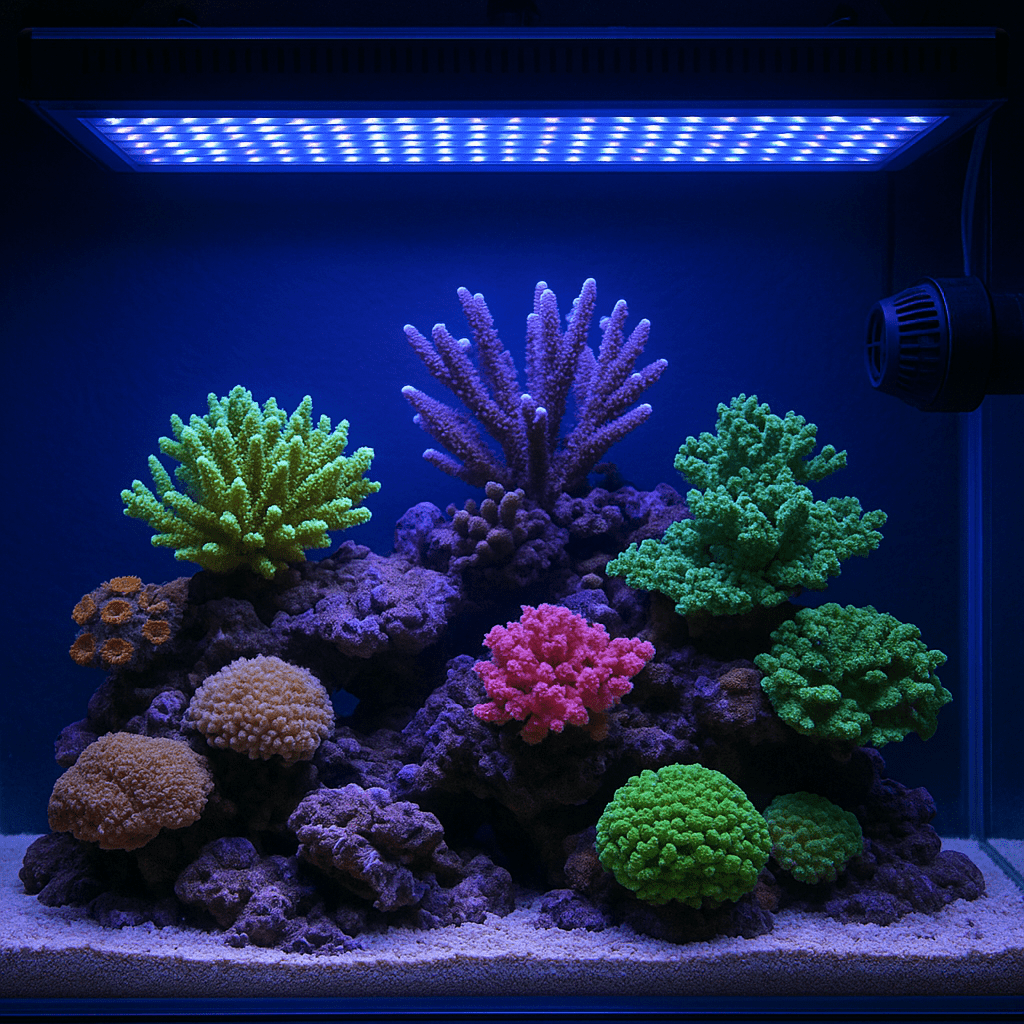
Our Reef Emergency Plan
A reef emergency plan helps you act fast during outages, leaks, and water quality crashes. Here is the…
 By
ByReef Alkalinity and Calcium Guide
Learn the ideal reef alkalinity and calcium ranges, how they interact, and how to test, dose, and troubleshoot…
[favorite_button]
My Bookmarks:
To see full list click here
[user_favorites user_id="" include_links="true" site_id="" post_types="" include_thumbnails="true" thumbnail_size="thumbnail" include_excerpt="false"]