Flame Angelfish (Centropyge loricula): A Fiery Reef Showstopper
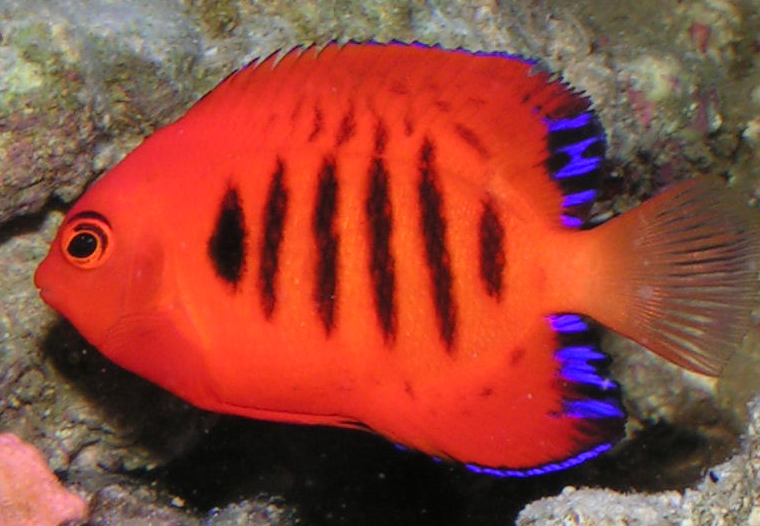
The Flame Angelfish (Centropyge loricula) is one of the most eye-catching dwarf angelfish in the saltwater aquarium hobby. With its vivid orange-red body, bold vertical black bars, and electric blue edging on the dorsal and anal fins, it instantly becomes a centerpiece in any reef tank. While hardy once settled, this species does best in a mature, stable system with attentive care and thoughtful tank mates.
Tank Requirements & Compatibility
As a dwarf angelfish, the Flame Angel stays relatively small, usually around 3–4 inches in captivity, but it is still an active swimmer that needs room to roam and graze.
- Minimum tank size: 55 gallons is recommended for a single Flame Angel.
- Aquascape: Provide plenty of live rock with caves, arches, and overhangs for hiding and constant grazing.
- Water parameters: 72–78°F, salinity 1.023–1.026, pH 8.1–8.4, and stable alkalinity and calcium levels.
Flame Angelfish can be semi-aggressive, especially toward similar-shaped or similarly colored fish. They generally mix well with peaceful to moderately aggressive community fish such as wrasses, gobies, and tangs, but can be territorial toward other dwarf angels.
If you’re planning a community reef, it helps to think through your entire stocking plan in advance. For more ideas on building a balanced fish list, see our guide on saltwater fish compatibility.
Reef Safety & Feeding Behavior
One of the biggest questions about Flame Angelfish is whether they are truly “reef safe.” The honest answer: they are reef safe with caution. Many hobbyists successfully keep them in mixed reefs, but there is always some risk of nipping.
Corals at Risk
- LPS corals: Fleshy corals like acans, open brains, and trachyphyllias may be nipped.
- Clams: Mantles can attract curious picking behavior.
- Zoanthids & soft corals: Usually less attractive to Flame Angels, but individuals vary.
Well-fed Flame Angels are less likely to bother corals. Offer a varied diet that mimics their natural grazing behavior:
- High-quality marine angelfish pellets and flakes.
- Frozen foods such as mysis shrimp and finely chopped seafood.
- Algae-based foods: spirulina, nori sheets, and angelfish formulas containing sponge.
Hobbyist tip: Feed small portions 2–3 times per day and keep a healthy growth of microalgae on your live rock. A busy grazer is less likely to turn to your prized corals.
If you’re still planning your coral selection, you may want to start with hardy soft corals and test how your Flame Angel behaves before adding more delicate LPS. Our article on soft corals care is a good place to start.
Acclimation, Health, and Long-Term Care
Flame Angelfish can be sensitive during shipping and acclimation. A slow drip acclimation and a proper quarantine period (4–6 weeks) are strongly recommended to monitor for parasites like marine ich and flukes.
- Quarantine: Observe appetite, breathing rate, and body condition; treat proactively if necessary.
- Oxygenation: Provide strong surface agitation and good flow; Flame Angels appreciate well-oxygenated water.
- Stable parameters: Avoid rapid swings in temperature, salinity, or pH—these stress dwarf angels quickly.
With proper care, Flame Angelfish can live 5–7 years or more in captivity. Many aquarists report that once established, they become bold, active, and full of personality—often front and center at feeding time.
If you’re comparing different dwarf angelfish species, check out our overview of the best dwarf angelfish for reef tanks to see how the Flame Angel stacks up against Coral Beauty, Potter’s, and others.
Final Thoughts
The Flame Angelfish (Centropyge loricula) is a stunning addition to a well-planned saltwater aquarium. While it carries some risk around certain corals, careful feeding, thoughtful tank mates, and a mature reef system greatly improve your chances of long-term success. For aquarists willing to accept a bit of unpredictability for a big payoff in color and personality, the Flame Angel is hard to beat.
Sources
- Michael S. Paletta – The New Marine Aquarium
- Scott W. Michael – Angelfishes & Butterflyfishes
- Fenner, R. – The Conscientious Marine Aquarist
Was this helpful?
Related Posts
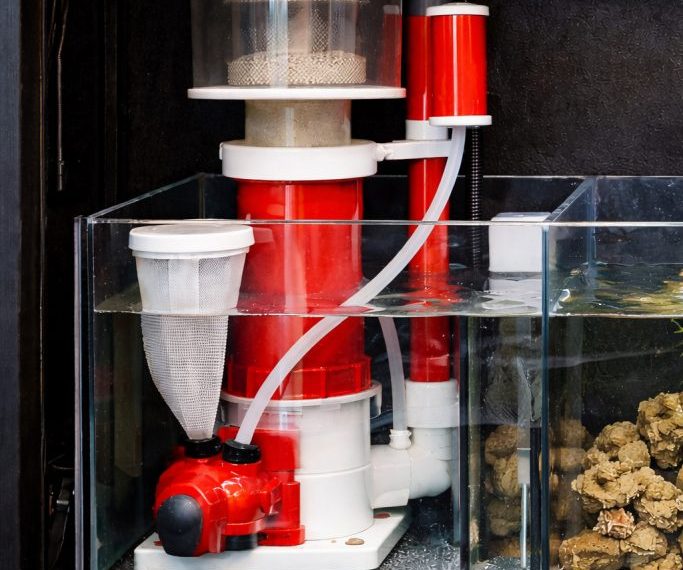
Protein Skimmer Reef Tank Guide
Learn how a protein skimmer works, how to size one, and how to tune it for a cleaner,…
 By
By
Reef Aquarium Water Parameters
Learn the ideal reef aquarium water parameters, safe ranges, and how to keep salinity, alkalinity, nutrients, and pH…