

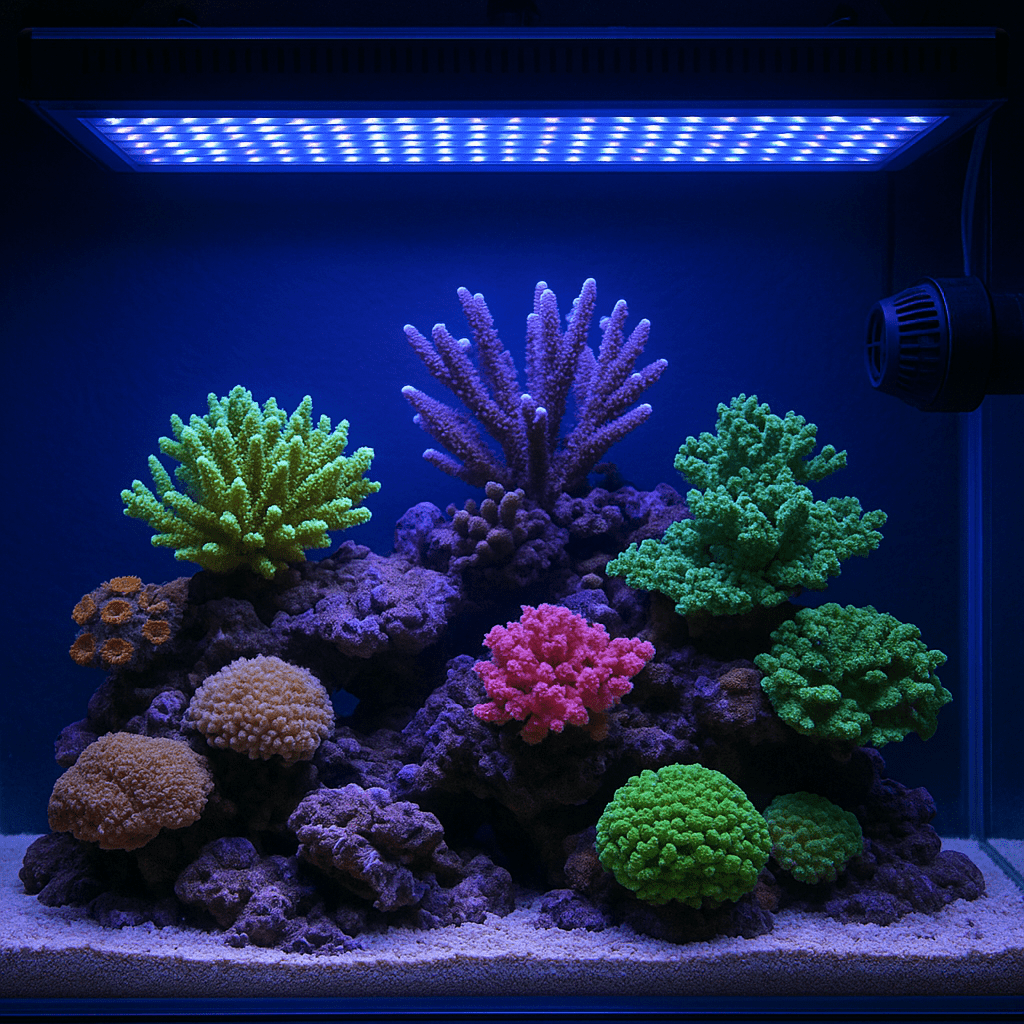
Water flow is one of the most important reef tank variables. Good flow keeps corals clean, delivers oxygen, moves food, and prevents waste buildup. The best flow techniques create random, varied movement instead of a harsh constant blast. That balance helps both beginner and advanced reef keepers build healthier, more stable aquariums.
Many hobbyists focus on lights and water chemistry first. Those matter a lot. Still, poor circulation can limit coral growth even in a well-equipped tank. Flow affects gas exchange, nutrient export, detritus control, and coral shape. It also changes how fish use the aquascape. In this guide, you will learn practical reef tank flow techniques, pump placement strategies, coral-specific flow needs, and simple ways to troubleshoot dead spots and sandstorms. The goal is simple. Help you create strong, natural movement that supports long-term reef success.
Quick Reference Table
| Flow Topic | Best Practice | Why It Matters |
|---|---|---|
| Overall pattern | Use random, alternating flow | Prevents dead spots and coral tissue stress |
| Pump placement | Aim pumps to intersect indirectly | Creates turbulence without a direct blast |
| SPS corals | High, chaotic flow | Supports gas exchange and polyp health |
| LPS corals | Moderate, indirect flow | Protects fleshy tissue from damage |
| Soft corals | Low to moderate, swaying flow | Encourages natural extension and feeding |
| Sand bed tanks | Keep pumps elevated | Reduces sandstorms and bare spots |
| Detritus control | Keep debris suspended for export | Improves filtration and water quality |
| Night mode | Reduce flow slightly, not fully | Maintains oxygen and pH stability |
Why Water Flow Matters in a Reef Tank
Flow does much more than move water around. It delivers oxygen to coral tissue. It removes mucus and waste. It also brings coral food and dissolved nutrients into contact with polyps. In nature, reefs experience constant surge and turbulence. Aquarium flow should mimic that energy in a controlled way.
Good circulation also supports your filtration system. Suspended debris can reach filter socks, roller mats, skimmers, and mechanical media. Without enough movement, detritus settles behind rocks and under coral shelves. That trapped waste slowly breaks down. Nitrate and phosphate can rise over time. Cyanobacteria and nuisance algae often follow.
Fish also benefit from proper flow. Strong oxygenation helps active species breathe easier. Gentle sheltered zones give timid fish a place to rest. The best reef tanks include both high-energy areas and calmer pockets. That range supports more species and more coral types in one display.
Natural Reef Flow and What It Teaches Us
Wild reefs are not exposed to one steady current all day. They experience surge, tidal shifts, wave action, and changing intensity. Water moves around coral branches, over reef ledges, and through channels. That movement is chaotic. It is also multidirectional.
This matters because corals evolved for changing flow. A single narrow stream from one powerhead can irritate tissue. It can strip flesh from LPS corals. It can also leave the opposite side of the colony stagnant. Random flow solves that problem. It changes direction and intensity over time. More coral surfaces receive circulation.
Natural reef structure offers another lesson. Rockwork shapes current. In aquariums, dense walls often block circulation. Open aquascapes work better. Arches, islands, and swim-throughs help water reach more surfaces. If you design the scape with flow in mind, pump performance improves immediately.
Aquarium Setup for Better Flow
Tank size affects flow planning. Small tanks need careful pump selection. Too much output can damage corals or blow sand everywhere. Large tanks need multiple pumps to avoid weak zones. One strong pump rarely covers a long reef tank evenly.
Aquascaping matters just as much as hardware. Leave space behind the rockwork if possible. Avoid stacking rock tightly against the back glass. Create channels where water can pass through. Elevated structures help flow reach the sand bed and lower coral branches. This also makes detritus easier to export.
Return nozzles can help with surface movement. They should not be your only source of circulation. Dedicated wavemakers or gyre pumps provide better in-tank flow. Use your return for gas exchange and broad support. Use powerheads to shape the reef environment itself. For broader setup guidance, see reef tank aquascaping tips, reef tank filtration basics, and reef tank water parameters.
Core Flow Techniques Every Reefer Should Know
The most effective flow techniques rely on variation. Constant linear flow is the least natural option. Alternating pumps create shifting currents. Pulse modes can simulate surge. Random modes often work best for mixed reefs because they prevent repetitive tissue stress.
Another strong technique is indirect intersection. Instead of aiming pumps straight at corals, aim them so streams collide nearby. This creates turbulence and dispersed energy. Corals receive movement from many angles. Tissue is less likely to whip violently in one direction.
Gyre-style flow can work very well in longer tanks. It pushes water across the top, down the far side, and back along the bottom. This pattern helps reduce dead spots. It also keeps debris suspended. Even so, gyres often benefit from a second pattern source. A small random pump can break up overly uniform movement.
Finally, use the surface. Slight agitation improves oxygen exchange and supports pH stability. A glassy, still surface is usually a warning sign. Good reef flow should be visible at the top without causing salt spray everywhere.
Step-by-Step Guide to Positioning Your Pumps
Start with two pumps if your tank allows it. Place them on opposite ends or offset positions. Keep them high enough to avoid blasting the sand bed. Aim each pump slightly upward or across the front third of the tank. This protects substrate and improves surface movement.
Next, observe how food or fine particles move. Drop in a small amount of frozen food or reef-safe particulate food. Watch where it settles. If debris drops behind rocks quickly, that area needs more circulation. Reposition one pump to sweep that zone indirectly.
Then adjust intensity slowly. Increase output in small steps. Look at coral response, not just pump percentages. Polyps should extend naturally. Fleshy corals should sway, not fold over. Sand should stay mostly in place. If a coral retracts all day, flow may be too direct.
Finally, reassess after coral growth changes the tank. Colonies become flow blockers over time. A setup that worked six months ago may now create stagnant pockets. Revisit pump angles often. This is especially important in SPS-dominant reefs.
Lighting and Flow Work Together
Lighting gets most of the attention in coral care. Yet flow and light are closely linked. Strong lighting increases coral metabolic demand. Corals under bright light often need stronger water movement to support gas exchange and waste removal. Without enough flow, high light can become more stressful.
This is common with SPS corals. Acropora under intense reef lighting usually perform best with chaotic, high-energy flow. In contrast, many LPS corals under moderate light need gentler movement. Their fleshy tissue can tear if flow is too harsh. Match flow to both coral type and light intensity.
Placement matters too. Corals high in the rockwork often receive more light and more flow. Lower zones may be calmer and dimmer. Use that gradient to your advantage. Place acros and montis in energetic zones. Keep euphyllia, acans, and similar corals where movement is softer. If you are refining placement, reef tank lighting guide can help.
Flow Needs by Coral Type
SPS corals usually need the strongest flow. They prefer high, turbulent movement from changing directions. This keeps their branches clean and supports healthy polyp extension. Acropora, stylophora, and birdsnest generally fit this profile. Direct blasting is still a mistake. Chaotic flow is the goal.
LPS corals need more caution. Euphyllia, acans, blastos, and scolys often prefer moderate, indirect flow. Their tissue should sway gently. If tentacles are pinned in one direction, flow is too strong. If mucus and debris settle on them, flow is too weak.
Soft corals usually tolerate a wider range. Zoanthids, leathers, and mushrooms often enjoy low to moderate movement. Many look best with a natural swaying motion. Still, some mushrooms dislike strong flow and may detach if stressed. Observe each coral closely. Coral behavior gives better guidance than generic charts.
Feeding, Nutrients, and Detritus Control
Flow has a direct effect on feeding. Broadcast coral foods stay suspended longer in well-designed circulation. Filter feeders and small-polyp corals get more feeding opportunities. Fish also benefit because food spreads through the tank more evenly.
During target feeding, some hobbyists reduce pumps briefly. That can help LPS corals grab larger foods. Just restore circulation soon after. Leaving pumps off too long allows food and waste to settle. That can create nutrient spikes in hidden areas.
Detritus management is where flow techniques really pay off. The goal is not to blast every surface. The goal is to keep waste mobile until filtration removes it. If debris collects in the same places every week, your circulation pattern needs work. Adjust pumps before adding more chemical media. Better movement often solves the root issue.
Compatibility With Fish, Invertebrates, and Tank Style
Different livestock prefer different flow zones. Tangs, wrasses, and anthias often enjoy stronger movement and high oxygen. Seahorses, pipefish, and some timid fish need calmer areas. A mixed reef should provide both. Rock islands and branching structures can create natural shelter from stronger current.
Invertebrates also vary. Many shrimp and snails handle moderate flow well. Feather dusters and some filter feeders benefit from suspended particles. Sand-sifting animals may struggle in tanks with constant substrate disturbance. If your sand bed shifts daily, lower pumps or change their angle.
Tank style matters too. Bare bottom tanks can run stronger flow more easily. High-energy SPS systems often use this approach. Sand bed reefs need more finesse. You can still achieve excellent circulation. You just need broader pump output and smarter placement. For livestock planning, reef-safe fish compatibility is worth reviewing.
Common Problems
Why is detritus collecting behind my rocks?
This usually means you have a dead spot. Water is not reaching that area with enough force. Reposition one pump to sweep behind the structure. You can also open the aquascape slightly. Regular turkey basting helps, but it is only a short-term fix.
Why are my corals closed after adding a new wavemaker?
The new flow is likely too direct or too intense. Lower the output first. Then change the angle so the stream hits glass or intersects another current. Corals often need time to adapt, but constant retraction means something is wrong.
How do I stop a sandstorm in my reef tank?
Raise the pumps higher in the tank. Angle them slightly upward. Use wider flow patterns instead of narrow jets. You can also reduce pulse intensity. Fine sand moves easily, so substrate choice matters as well.
Why is surface film forming?
Surface agitation is too weak. Aim a return nozzle or pump toward the top. Make the surface ripple without excessive splashing. This improves gas exchange and helps break up oily film.
Why do some corals thrive while others struggle?
Flow may not match coral placement. High-flow corals can decline in stagnant zones. Fleshy corals can tear in strong jets. Reevaluate each coral based on movement, not just location on the rockwork.
Frequently Asked Questions
How much flow does a reef tank need?
It depends on coral type and tank design. SPS tanks need much more flow than soft coral tanks. Focus on random movement and coral response, not one fixed turnover number.
Should powerheads point directly at corals?
Usually no. Direct streams often irritate tissue. Indirect, turbulent flow works better for most reef aquariums.
Is stronger flow always better?
No. Excessive flow can damage LPS corals, stress fish, and move sand constantly. The best flow is appropriate, varied, and controlled.
Do I need different flow during the night?
A slight reduction can work well. Do not shut circulation down completely. Corals and fish still need oxygen exchange overnight.
How often should I clean wavemakers?
Check them monthly. Clean them when output drops or coralline buildup appears. Dirty pumps lose performance and create weaker circulation.
Final Thoughts
Smart flow techniques can transform a reef tank. Better circulation improves coral health, oxygenation, nutrient control, and overall stability. Start with broad, random movement. Watch your corals closely. Then fine-tune pump placement over time. Small adjustments often produce the biggest gains. If you build flow around your aquascape and livestock, your reef will look better and function better for years.
Was this helpful?
Related Posts
Best Filtration Systems
Best Filtration Systems for a Healthy Saltwater Aquarium Choosing the best filtration system for your saltwater aquarium is…
 By
By
Clown Triggerfish (Balistoides Conspicillum)
Clown triggerfish are stunning but aggressive marine fish that need very large tanks, strong filtration, and careful tankmate…
[favorite_button]
My Bookmarks:
To see full list click here
[user_favorites user_id="" include_links="true" site_id="" post_types="" include_thumbnails="true" thumbnail_size="thumbnail" include_excerpt="false"]