

Forest Fire Montipora samarensis is a bright, fast-growing SPS coral with fiery orange, red, and green tones. It suits reef keepers who can provide stable water chemistry, moderate to strong light, and steady flow. When conditions stay consistent, this coral encrusts quickly and can become a standout centerpiece.
This coral draws attention for good reason. Its vivid color contrast looks intense under blue reef lighting. It also grows faster than many Acropora species. That makes it appealing to hobbyists moving into SPS corals. Still, success depends on more than strong light alone. Forest Fire Montipora samarensis needs stable alkalinity, low nutrient swings, and smart placement. In this guide, you will learn how to identify it, where to place it, what to feed it, and how to solve common problems. You will also learn fragging basics and compatibility tips for mixed reefs.
Quick Reference Care Table
| Common Name | Forest Fire Montipora samarensis |
| Scientific Group | Montipora spp. |
| Care Level | Moderate |
| Temperament | Peaceful |
| Lighting | Moderate to high |
| Flow | Moderate to strong, turbulent |
| Placement | Mid to upper rockwork |
| Diet | Mostly photosynthetic, benefits from fine coral foods |
| Growth Rate | Moderate to fast |
| Ideal Temperature | 76–79°F |
| Salinity | 1.025–1.026 specific gravity |
| Alkalinity | 8–9 dKH, stable |
| Calcium | 400–450 ppm |
| Magnesium | 1250–1400 ppm |
| Nitrate | 2–15 ppm |
| Phosphate | 0.03–0.10 ppm |
Use this table as a starting point. Fine tuning matters more than chasing exact numbers. Stability beats perfection with SPS corals.
How to Identify Forest Fire Montipora Samarensis
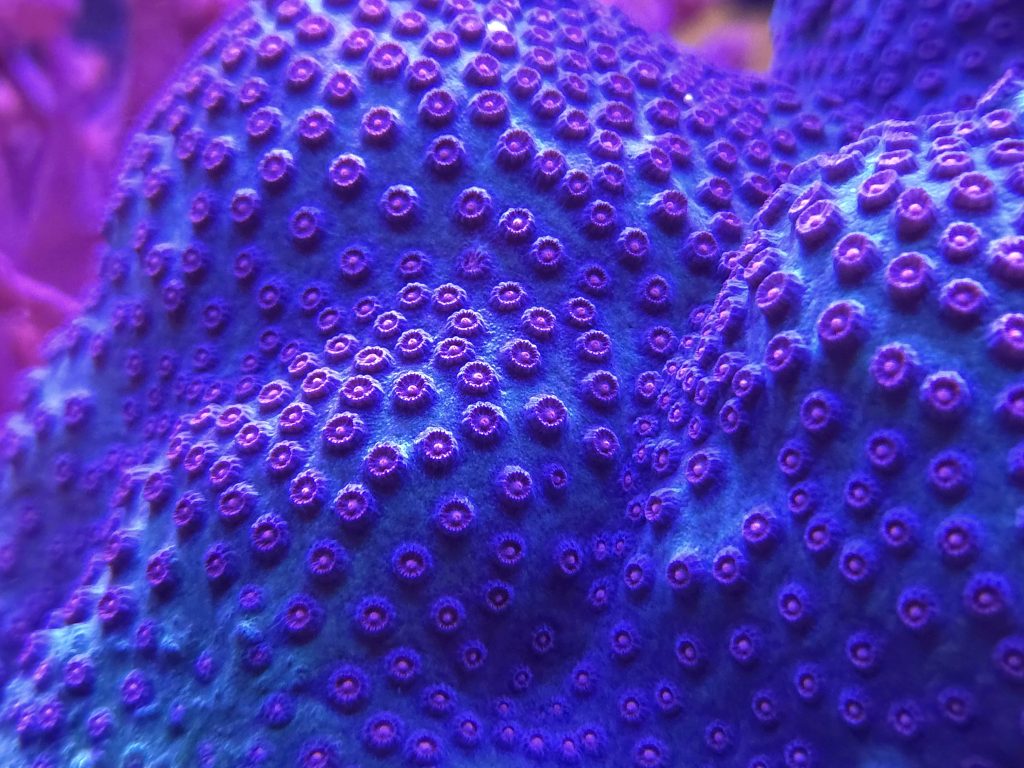
Forest Fire Montipora samarensis is usually sold for its strong contrast. Many colonies show a green base with orange to red polyps or margins. Under heavy blue spectrum, the colors can look almost neon. Growth is often plating, encrusting, or a mix of both, depending on flow and placement. The surface has small corallites and a textured look that differs from smoother plating montis.
Like many named corals, appearance can vary by vendor and lighting. A frag may look dull under white store lights. It can color up dramatically in a stable reef. Do not buy only by the photo. Ask about the coral’s current PAR, nutrient levels, and how long it has been healed after fragging. Healthy tissue should fully cover the skeleton. Polyps should extend at least somewhat during the day or evening. Avoid frags with pale edges, exposed skeleton, or tissue recession around the base.
Natural Habitat
Montipora species occur across the Indo-Pacific on shallow reef slopes and lagoons. In nature, they often grow where light is strong and water movement stays active. Waves and surge bring oxygen, remove waste, and deliver suspended food. These corals attach to hard reef structure and spread outward over time.
Forest Fire varieties in the hobby are aquacultured far more often than wild collected today. That is good news for reef keepers. Aquacultured Montipora usually adapt better to aquarium life. They also reduce pressure on natural reefs. Understanding the natural setting still helps. It explains why this coral dislikes stagnant spots and rapid chemistry swings. It also explains why stable, bright systems tend to produce the best color. Think reef crest energy, but not direct blasting flow. The goal is strong, varied movement and reliable light across the colony.
Aquarium Setup
A mature reef tank works best for Forest Fire Montipora samarensis. New tanks often swing too much. That can lead to tissue loss or poor color. Most hobbyists should wait until the tank is at least four to six months old. A nano reef can keep this coral, but larger systems offer more stability. A 20-gallon tank is the practical minimum. Bigger is easier.
Place the coral on stable rockwork with room to grow. Montipora can shade nearby corals as it plates outward. Leave space around the frag plug or mounting point. Avoid dead spots where detritus collects. Keep it away from aggressive LPS with long sweeper tentacles. Good aquascaping matters here. Build shelves and ledges that receive broad, indirect flow. This coral does well in tanks with quality export methods, such as a protein skimmer, refugium, or regular water changes. For more reef planning basics, see: reef tank setup guide, reef tank water parameters, coral placement guide.
Lighting Requirements
Forest Fire Montipora samarensis prefers moderate to high light. A PAR range of about 180 to 300 works well in most tanks. Some colonies tolerate higher PAR, but acclimation is critical. Sudden jumps can bleach tissue fast. Start lower if the frag came from dimmer conditions. Then increase over one to two weeks.
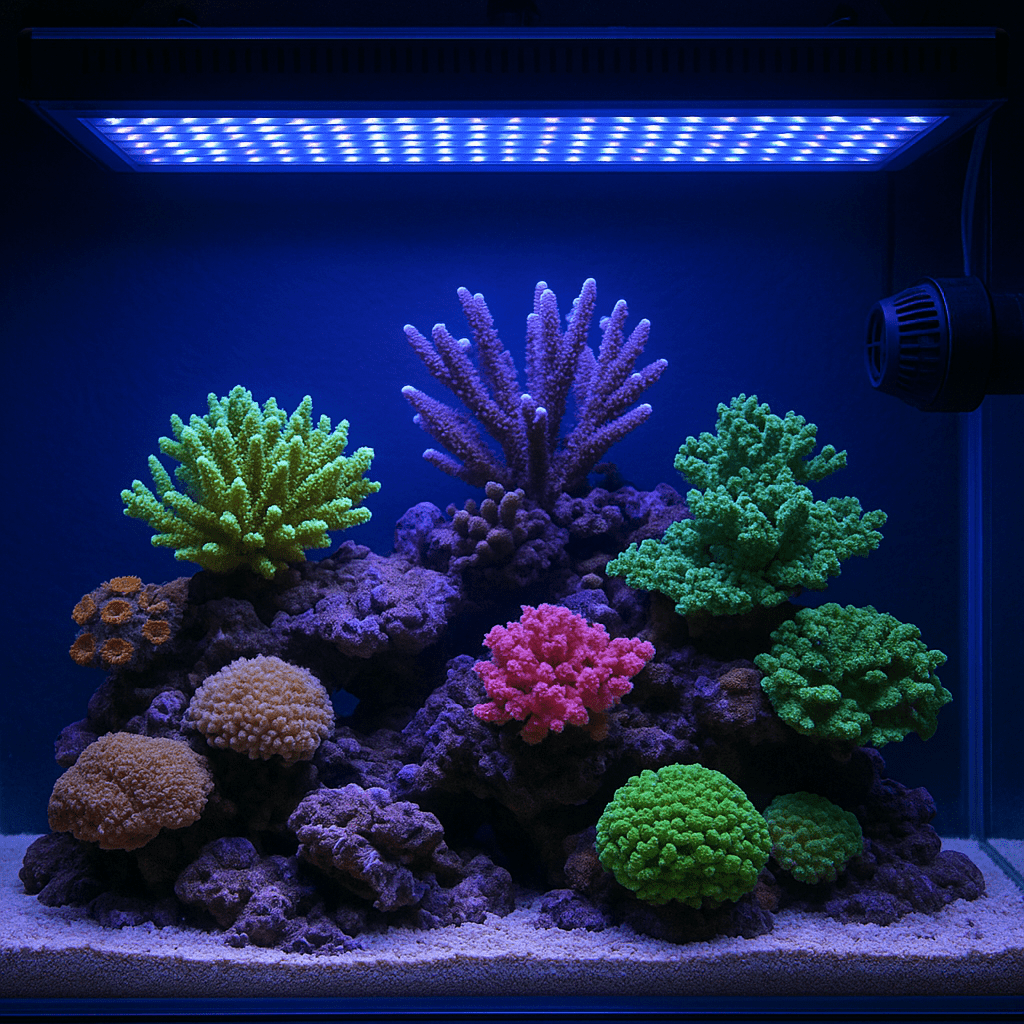
Blue-heavy reef lighting usually brings out the strongest color. Still, do not sacrifice overall spectrum for appearance alone. Balanced reef LEDs, T5s, or hybrid systems all work. Watch the coral, not just the numbers. Faded color can mean too much light, too little nutrition, or unstable alkalinity. Browning often points to lower light, excess nutrients, or both. If the frag is new, place it in the mid-level area first. Let it settle. Then move it upward only if color and polyp extension remain strong. For more on PAR and acclimation, see: reef lighting schedule and PAR for SPS corals.
Water Flow
This coral wants steady, turbulent flow. Moderate to strong movement helps keep the surface clean. It also improves gas exchange and supports calcification. Random flow is better than a constant direct blast. If one pump points straight at the colony, tissue can recede on the exposed side.
Aim for broad crossflow from multiple sources. Gyres, wavemakers, and alternating pump schedules work well. Watch how detritus moves around the colony. If debris settles on the surface, flow is too weak. If polyps stay tightly retracted and tissue looks irritated, flow may be too harsh. Montipora often responds well when flow shifts direction during the day. This mimics reef surge and helps all sides receive oxygen and nutrients. Good flow also reduces the risk of algae taking hold on damaged edges. In mixed reefs, adjust pumps so nearby fleshy corals are not battered while the Montipora still gets enough motion.
Water Chemistry and Stability
Stable chemistry is the real key to long-term success. Forest Fire Montipora samarensis can handle a range of nutrient levels. It cannot handle constant swings. Keep alkalinity stable between 8 and 9 dKH. Match your salt mix and dosing schedule to that target. Large alkalinity jumps often trigger burnt tips, pale tissue, or recession.
Calcium should stay around 400 to 450 ppm. Magnesium should remain near 1250 to 1400 ppm. Nitrate should not hit zero for long periods. A range of 2 to 15 ppm is usually safe. Phosphate should remain measurable, but controlled. Around 0.03 to 0.10 ppm works for many tanks. Ultra-low nutrients can wash out color and slow growth. Excess nutrients can brown the coral and encourage nuisance algae. Test regularly, especially in small tanks. If the colony starts growing fast, calcium and alkalinity demand will rise. That often surprises newer SPS keepers. Automated dosing can help once consumption becomes consistent.
Feeding
Like other SPS corals, Forest Fire Montipora samarensis gets most of its energy from light. Its zooxanthellae do much of the work. Still, the coral can benefit from occasional feeding. Fine particle foods are best. Think rotifers, reef roids-style powders, amino acid supplements, or broadcast plankton blends.
Feed lightly once or twice each week. Turn off the return pump briefly if needed. Keep powerheads running at a lower setting so food stays suspended. Overfeeding causes more harm than underfeeding. Extra nutrients can fuel algae and reduce color. If fish are fed well, the coral may already receive enough dissolved and suspended nutrition from the water column. In many healthy reefs, stable parameters and fish waste support better growth than heavy target feeding. Watch the coral’s response over time. Good color, active growth margins, and polyp extension matter more than chasing a feeding routine that works in someone else’s tank.
Compatibility
Forest Fire Montipora samarensis is peaceful, but not defenseless against poor neighbors. It has no long sweeper tentacles. That means it can lose space battles against aggressive LPS corals. Keep distance from Euphyllia, Galaxea, chalices, and large Favia colonies. Soft corals can also cause trouble through chemical warfare, especially in crowded tanks.
Most reef-safe fish ignore this coral. Still, some angelfish, butterflyfish, and large crabs may nip tissue. Certain blennies and crabs may perch on frags and irritate them. Montipora-eating nudibranchs are a major concern. Always inspect and dip new frags before adding them. In mixed reefs, give this coral room to plate outward. It can eventually shade zoanthids, mushrooms, or low-light LPS below it. Think ahead when placing a tiny frag. That small disk can become a broad shelf in time. Good spacing now prevents future coral warfare and difficult rescapes later.
Step-by-Step Placement and Acclimation
Start with a healthy aquacultured frag from a trusted source. Inspect for pests, eggs, and damaged tissue. Dip the frag using a reef-safe coral dip. Rinse it in clean saltwater before placement. Mount it securely so it cannot fall. A loose frag often suffers edge damage.
Place the coral in a mid-level area first. Choose a spot with indirect, turbulent flow. Start under moderate PAR. Let it adjust for several days. Watch for polyp extension and tissue color. If the frag looks stable, slowly move it higher over one to two weeks. Test alkalinity often during this period. New SPS additions react poorly to hidden swings. Avoid moving the coral repeatedly. Constant relocation adds stress. Once settled, leave it alone and monitor the growth rim. A bright, clean edge often signals active growth and good health.
Propagation and Fragging
When to Frag
Frag only healthy colonies with active growth. Wait until the coral has encrusted well and shows strong color. Avoid fragging stressed or freshly imported pieces. A stable, established colony heals much faster.
How to Frag Safely
Use bone cutters, coral shears, or a rotary tool for thicker growth. Cut cleanly through the plating edge or a branching section if present. Wear eye protection. Small fragments can snap unpredictably. Mount the new frag on a plug or rubble with reef-safe glue gel. Keep the cut area in good flow, but not direct blast. Dipping after fragging can help reduce infection risk, though many hobbyists skip it on clean systems. Allow the new frag to heal in moderate light before moving it higher.
Common Problems
Why is my Forest Fire Montipora turning white?
White areas can mean bleaching or tissue loss. Bleaching usually follows excess light or sudden chemistry shifts. Tissue loss often starts at the base or damaged edges. Check alkalinity first. Then review recent lighting changes, temperature spikes, and salinity stability. Reduce stress fast, but avoid drastic corrections.
Why is it turning brown?
Browning usually points to lower light, elevated nutrients, or both. It can also happen after shipping stress. Test nitrate and phosphate. Improve export if needed. Confirm PAR is adequate. Give the coral time. Color recovery is often slow.
Why are the edges receding?
Edge recession often follows physical damage, unstable alkalinity, or poor flow. Detritus buildup can worsen the problem. Inspect for nudibranchs and pests at night. Increase random flow around the colony. Frag away dead sections if recession continues.
What pests attack Montipora?
Montipora-eating nudibranchs are the most feared pest. They can hide well and match the coral. Look for bite marks, missing tissue, and tiny egg spirals. Dip affected frags and repeat inspections often. Quarantine is the best prevention.
Frequently Asked Questions
Is Forest Fire Montipora samarensis good for beginners?
It is better for beginners who already keep stable reef parameters. It is easier than many Acropora. It is still an SPS coral and needs consistency.
How fast does Forest Fire Montipora grow?
Growth is moderate to fast in stable systems. Good light, flow, and balanced nutrients can produce visible encrusting within weeks.
Can it live in a mixed reef?
Yes, if placed away from aggressive corals. Give it room to expand and avoid chemical warfare from crowded soft coral systems.
Does it need target feeding?
No. It can thrive without direct feeding. Light feeding of fine foods may help color and growth in some systems.
Where should I place it in the tank?
Start in the middle of the tank with moderate light and strong, indirect flow. Move upward slowly if needed after acclimation.
Final Thoughts
Forest Fire Montipora samarensis rewards patience. It is colorful, hardy for an SPS, and often grows quickly once settled. The secret is not a magic additive. The secret is stability. Keep alkalinity steady. Provide strong, varied flow. Use moderate to high light and avoid sudden changes. If you do that, this coral can become one of the brightest and most dependable SPS pieces in your reef.
Was this helpful?
Related Posts
Gold Spotted Rabbitfish (Siganus Punctatus)
Gold Spotted Rabbitfish care includes large tanks, heavy algae feeding, and caution with corals. Learn tank size, diet,…
 By
By
Sharknose Goby (Elacatinus evelynae)
Sharknose Goby care is simple in stable reef tanks. Learn feeding, tank setup, compatibility, and common problems for…
[favorite_button]
My Bookmarks:
To see full list click here
[user_favorites user_id="" include_links="true" site_id="" post_types="" include_thumbnails="true" thumbnail_size="thumbnail" include_excerpt="false"]